|
 _____________________________________
Dear Wisconsin nurseries, Christmas tree growers, and gardeners:
We hope that you have had a productive, prosperous growing season and are able to recharge and relax with family and friends for Thanksgiving and the upcoming winter holidays. Take a moment to read through a few updates from the DATCP nursery program and send any feedback, questions, or ideas for future e-news updates to datcpnursery@wisconsin.gov.
Having trouble viewing this email? View it as a Web page.
_____________________________________
|
|
|
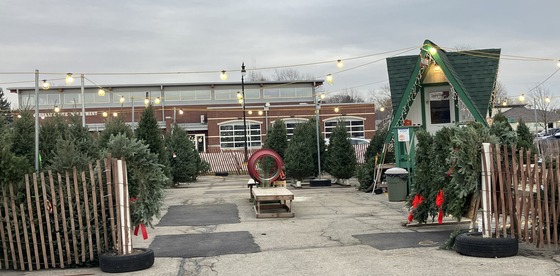
Christmas tree sales lot inspections begin soon| DATCP K. Jerabek
Inspectors are wrapping up Christmas tree field inspections and will be moving onto Christmas tree lot inspections. The purpose of inspecting cut Christmas trees and holiday home décor is to intercept material potentially infested with exotic pests and diseases and to verify that Christmas trees harvested in Wisconsin are from a licensed producer.
Elongate Hemlock Scale (EHS) and Balsam Woolly Adelgid (BWA) are two exotic, invasive pests of concern inspectors are looking for on stock brought in from out of state suppliers. These pests are not established in Wisconsin. Inspections and proper treatment or disposal of infested material aim to prevent that from happening. Some other issues inspectors will be looking for include boxwood blight, spongy moth egg masses and invasive plants.
Due to the number of interceptions of material infested with EHS coming into Wisconsin from other states, Wisconsin instituted an exterior quarantine for EHS in 2023, which requires growers or vendors importing stock from an infested area to sign an annual compliance agreement with DATCP. Regulated articles include Christmas trees, boughs, wreaths, roping, and nursery stock or seedlings. Documentation verifying the imported plant material is free of EHS and pre-notification of incoming shipments are requirements of the compliance agreement. If no compliance agreement has been issued, each shipment of regulated material from an infested area must be accompanied by a state phytosanitary certificate verifying the materials were inspected by a pest control official from the state of origin and found to be free of injurious pests. Failure to adhere to the exterior quarantine may result in a Pest Abatement Order and require the imported material to be destroyed.
When importing Christmas trees, boughs, wreaths, or roping, inspect the material as it comes in and contact your local nursery inspector if you suspect they may be infested with an injurious pest or disease.
If you have questions regarding EHS regulations or need to obtain a compliance agreement with DATCP, please contact Meg Sanders, Forest Pest Regulatory Coordinator, at (715) 891-8158 or MeganT.Sanders@wisconsin.gov.
If you are planning on shipping cut trees out of state and out of the federal spongy moth quarantine but do not have a signed, unexpired 2025 USDA Spongy Moth compliance agreement, please contact Shahla Werner at (608) 957-5100 or Shahla.Werner@wisconsin.gov.
|
|
|
_____________________________________
|
|
|
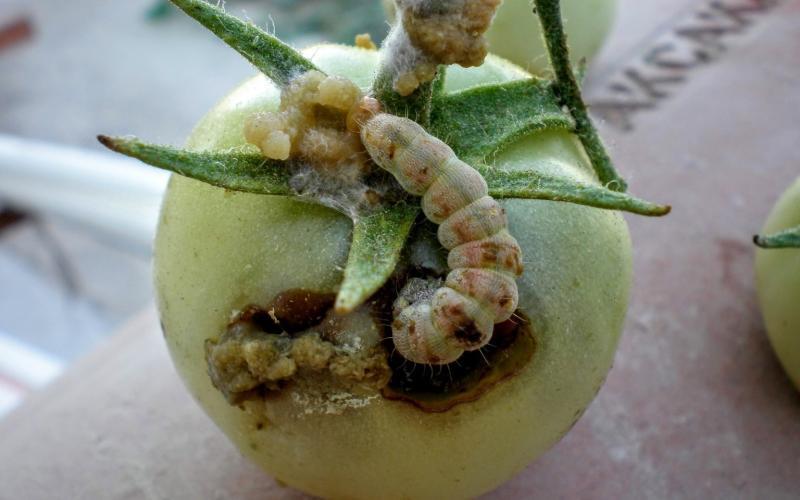
Old World Bollworm caterpillar (larva) damaging tomato | Metin Gulesci, Bugwood.org
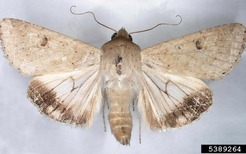
Cut flowers are a pathway for numerous pests and pose a high risk of introduction into the U.S. In 2025, DATCP’s State Survey Coordinator completed the second year of a two-year survey targeting three invasive moth species commonly intercepted on cut flower exports from overseas. The cotton cutworm (Spodoptera litera), Old World bollworm (Helicoverpa armigera) (image left: OWB adult Photo by Julieta Brambila, USDA APHIS PPQ, Bugwood.org), and Silver-Y moth (Autographa gamma) have the potential to reach Wisconsin via the cut flowers pathway. Traps for each of these three species were placed inside five wholesale flower importers in five southeastern and central Wisconsin counties. The survey began in early May and was completed in October. All samples were negative for the target species.
|
_____________________________________
|
|
|
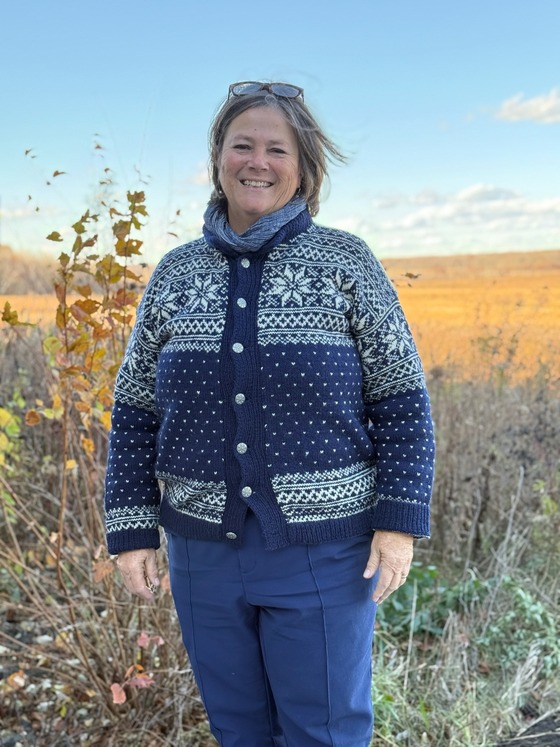
Konnie Jerabek, nursery inspector for NW Wisconsin, is retiring | DATCP L. Meils
Since 1997, Plant Protection Inspector Konnie Jerabek has been contributing to the health of plant industries and forests across the state by growing and sharing her knowledge of plant pests, plant diseases, and plant protection regulations. In October 2025, after 28 years of exemplary service to green industry businesses and citizens of Wisconsin, Konnie announced her plans to retire.
Konnie is a life-long learner, bringing her knowledge, curiosity, and passion for plants and the natural world to all aspects of her work. She has been an active member of the Horticultural Inspection Society – Central Chapter, attending group inspection events and annual conferences. She regularly attended annual green industry conferences such as the Northern Green Expo to stay current on plant pests and diseases of significance to the horticulture industry. Konnie has always been willing to share her insights by writing articles on specific plant pests to help growers identify and properly manage potential concerns in their growing fields, and even invested time in mentoring the next generation of green industry professionals by annually presenting to students in the UW-River Falls horticulture program.
Throughout her career at DATCP, Konnie has taken a thoughtful and proactive approach to plant protection regulations based on her comprehensive knowledge of state and federal regulations and strong understanding of the industries she has served. Konnie has collaborated with Plant Industry Bureau team members to develop thorough, easy-to-understand compliance guides for industry. Contacting individual businesses and growers in advance of regulatory changes was always a priority in her work, appraising them of new rules and requirements that would impact their business operation. Konnie has always made time to provide hands-on spongy moth identification training for businesses who need state or federal spongy moth compliance agreements.
Konnie approached each field inspection day with professionalism, energy, and thoughtful organization. When growers saw Konnie arrive at their nursery or Christmas tree field, they knew that she was ready to speak with them about their concerns, answer their questions, and provide sound and accurate regulatory guidance. Growers have strongly valued Konnie’s participation at industry trade shows, whether staffing the DATCP booth or providing informational presentations. They have relied on Konnie to help answer their plant pest and disease questions and appreciate her field observations from the growing season.
Konnie’s career achievements include receiving the Outstanding Employee Recognition Award for the DATCP Agricultural Resource Management Division in 2015, the H.I.S. Central Chapter Robert McAdams Award in 2015, and the Carl E. Carlson Distinguished Achievement Award in Regulatory Plant Protection awarded by the National Plant Board in 2016.
Konnie has set a high standard of excellence for her colleagues. She has served as a positive voice and thoughtful role model throughout her career. In the words of one Christmas tree grower upon hearing of Konnie’s retirement, “You all have big shoes to fill now!”
Konnie’s last day of work will be Thursday, November 20, 2025. The Plant Industry Bureau would like to gratefully acknowledge and thank Konnie for her years of service. We congratulate Konnie as she celebrates her retirement and the new opportunities and adventures that await her. Thank you, Konnie, and best wishes!
Until a new inspector is hired, licensees in Konnie's territory can direct questions to Jen Oestreich at (715) 701-1375 or jennifer.oestreich@wisconsin.gov.
_____________________________________
|
|
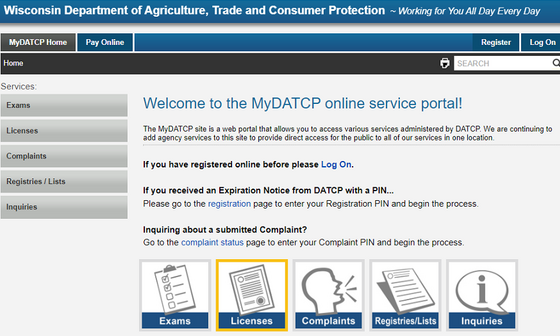
Wisconsin Seed Labeler License expiration notices for license renewals were mailed out in mid-October 2025. If you are a licensed seed labeler, you should have received a mailed notification via USPS and an email (if your email address is active and correct) with the expiration notice attached. Annual seed labeler licenses expire December 31 of each year. Renewal and payment can be completed online at MyDATCP.wi.gov (refer to Tips and Reminders section below.) If you have multiple seed labeler licenses, they each need to be renewed individually, but you can pay for them all at once by accessing your invoices from the My Invoices tab of MyDATCP. Late renewals are subject to a 20% late fee. Direct seed licensing questions to DATCPseed@wisconsin.gov.
Nursery and Christmas tree licenses for this growing season (LY2026) will expire on February 20, 2026. Expiration notices to renew your license for the next growing season (LY2027) were emailed on November 12. Paper notices will also be mailed out at the end of the month. Please contact us if your email or address has changed since your last renewal.
License renewals can be completed online by using the MyDATCP portal. If you have never used the online license portal, a PIN will be located on your expiration notice so you can register for a MyDATCP account. If you need assistance getting into your account, contact (608) 224-4574 or datcpnursery@wisconsin.gov.
Renewing online is an efficient way to update location information, contact information, and sources of plant materials without having to mail in a paper application. Also, once your license is issued, you have the ability to print your license certificate from your computer. No need to wait for the mail!
If you are no longer in business, or if you do not plan to sell perennials next year, please let us know so we can close or suspend your license. This avoids any compliance actions, which may occur for entities who fail to contact us or renew by the February 20, 2026 deadline.
Tips and Reminders for MyDATCP.wi.gov:
- Allow pop-ups from MyDATCP.
- Only one tab of MyDATCP can be open at a time.
- If you have multiple license types, they each need to be renewed individually; but you can pay for them all at once by accessing your invoices from the "My Invoices" tab of MyDATCP.
- Watch the video tutorial to guide you through the online renewal process.
- Renew your nursery license before February 20 to avoid the 20% late fee, and to check this off your busy to-do list!
For more information, call (608) 224-4574, email DATCPnursery@wi.gov, or visit the Nursery and Christmas tree licensing webpage.
|
|
|
_____________________________________
|
|
|
A compliance agreement is a written agreement between a person engaged in growing, handling, or moving regulated articles (plants and plant parts) and either DATCP or USDA to facilitate the movement of those plants. Nursery growers, nursery dealers, and Christmas tree growers are some of the businesses that may need compliance agreements. Compliance agreements are valid for one year and must be renewed annually as needed. There is no fee to enter into a compliance agreement. Compliance agreements are generally pest-specific, so depending on what plant species you move, you may need multiple agreements.
To help you determine what compliance agreements you may need, DATCP created an interactive guide to generate a list of potential, applicable compliance agreements based on how you operate. By simply answering a series of yes/no questions you can quickly learn what compliance agreements will help you facilitate the movement of the stock you’re buying in or selling out. Fill out the guide now to verify what agreements you may need.
_____________________________________
|
|
|
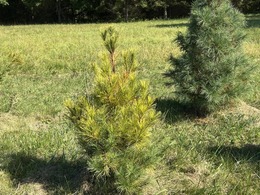
White pine blister rust on young white pine in Racine Co. | DATCP M. Wensing
|
|
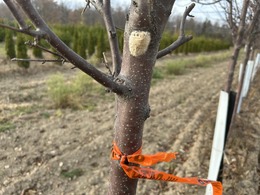
Spongy moth egg mass on crabapple nursery stock in Waukesha Co. | DATCP M. Wensing
|
|
|
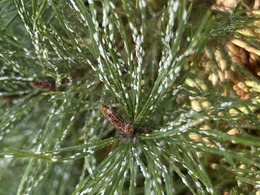
Pine needle scale on scotch pine in Marquette Co. | DATCP L. Meils
|
|
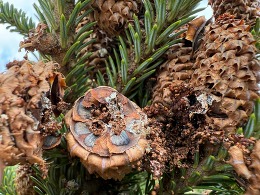
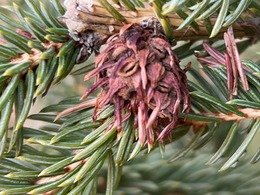
Feeding damage from fir coneworm on fraser fir in multiple Wisconsin counties. | DATCP L. Meils
|
|
|
Gall from eastern spruce gall adelgid on spruce in Marinette Co. | DATCP J. Oestreich
|
|
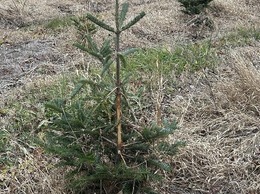
Buck rub damage on fraser fir in St. Croix Co. | DATCP K. Jerabek
|
|
|
_____________________________________
|
|
|
For more information about Wisconsin's Nursery and Christmas Tree Programs, visit DATCP's Nursery and Christmas Tree Program webpage.
Read past issues of What's Growing On?
If you haven't yet, please take this brief feedback survey for our monthly What's Growing On? e-newsletter. With this survey, we aim to measure your satisfaction regarding the format, frequency, and quality of the content provided. Please give us your most transparent feedback. The survey is anonymous.
For current counts during the growing season from our insect monitoring networks around the state, read our Pest Survey webpage. To read articles on economically important plant pests affecting Wisconsin's field crops, fruits, and vegetables, read our Field Notes publication put out weekly during the growing season.
|
|
|
|
|