|
 _____________________________________
Dear Wisconsin nurseries, Christmas tree growers, and gardeners:
We hope you are enjoying the beautiful fall colors on display across the state. As the growing season winds down, take a moment to read through a few updates from the DATCP plant protection programs and send any feedback, questions, or ideas for future e-news updates to datcpnursery@wisconsin.gov.
Having trouble viewing this email? View it as a Web page.
_____________________________________
|
|
|
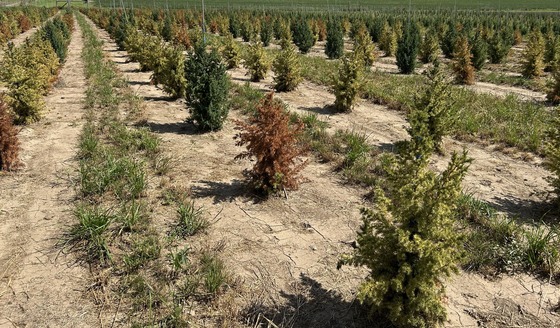
Symptoms of Phytophthora austrocedri on juniper | DATCP M. Wensing
Cypress mortality, a disease caused by the oomycete plant pathogen Phytophthora austrocedri, was detected for the first time in Wisconsin last month. This disease was causing severe damage to a field of 'Star Power' Juniper (Juniperus x 'J.N. Select Blue') at a Washington County nursery.
This disease mostly affects plants in the Cupressaceae family. Common nursery plants in this family include Arborvitae (Thuja spp.), Juniper (Juniperus spp.), and False cypress (Chamaecyparis spp.). Phytophthora austrocedri was first reported in the United States in 2024, in Oregon state. Previously, this pathogen had only been detected in Argentina in 2007 and in the U.K. in 2012, where it has caused mortality of native cypress and juniper plants on the landscape.
Growers who purchase or grow arborvitae, juniper, or false cypress should monitor plants for P. austrocedri symptoms, including:
- Stunting
- Dull green or yellowish foliage in early infections
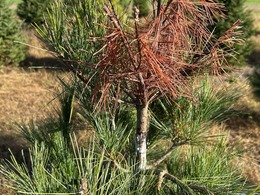
- Branch flagging and reddish brown/bronze foliage in advanced infections
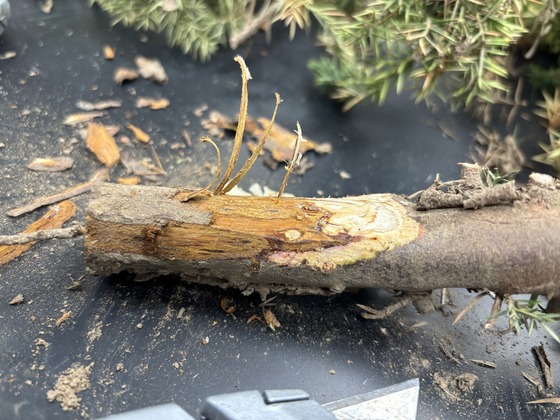
- Lesions or cankers at the base of the plant or branch
- Orange/brown discolored wood tissue under bark from lesions or cankers
This pathogen is spread through infected plants, soil, and water. Care should be taken when working with these hosts to prevent the accidental spread of this disease during routine activities, such as moving plants and pruning.
A Phytophthora austrocedri canker causing brown discoloration at crown of juniper | DATCP S. Fieweger
Infected junipers had been imported from the state of Oregon in fall 2024. When the pathogen was identified by the Plant Industry Bureau Laboratory earlier this fall, the 720 imported junipers were ordered to be removed from the field and destroyed. The nursery was fully cooperative and destroyed trees by burning on October 3.
Early detection of this pathogen is key to protecting Wisconsin green industries. If you are a licensed nursery grower and suspect you may have plants infected with P. austrocedri, please contact DATCP’s nursery program at (608) 516-7617 or DATCPnursery@wisconsin.gov. If you are a home gardener or horticulture professional and suspect you may have plants infected with P. austrocedri, contact the University of Wisconsin–Madison Plant Disease Diagnostic Clinic at (608) 262-2863 or pddc@wisc.edu.
|
|
|
_____________________________________
|
|
|
October brings National Firewood Awareness Month, as well as National Forest Products Week from October 19-25, 2025. Let’s celebrate our forests and their essential roles for all of us, whether it’s that beloved canopy and ecological biodiversity or wood products that keep our fires going and frame our homes. One of the best ways to celebrate our forests is to help protect them by learning about forest pests and diseases and what you can do to help prevent their spread.
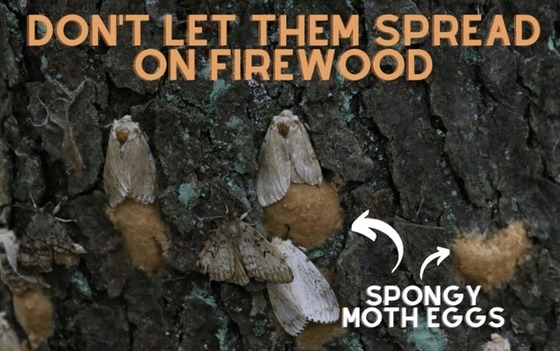
Don't move spongy moth egg masses on firewood | DontMoveFirewood.org
If you import/export forest or other plant products, you should familiarize yourself with plant and pest movement regulations, which you can find summarized via the National Plant Board: State Law & Regulation Summaries - National Plant Board. You may even need a compliance agreement with DATCP or the U.S. Department of Agriculture. You can learn more about Wisconsin’s regulated pests, including how to identify and report them, by visiting plantpests.wi.gov.
When it comes to firewood, make safe choices:
1. Buy firewood near where you’ll burn it.
2. Buy certified firewood (look for a state or federal seal).
3. Gather firewood on site when permitted.
To protect forest resources from harmful pests, find out the rules at your destination before bringing firewood and visit Wisconsin’s Firewood Rules and Resources page for statewide details. When in doubt, buy it where you burn it!
To find local firewood vendors in Wisconsin, visit Firewood Scout or Certified Firewood Dealers in Wisconsin.
Contact DATCP’s Forest Pest Regulatory Coordinator, Meg Sanders, with your forest pest and firewood questions. Call or text Meg at (715) 891-8158 or email MeganT.Sanders@wisconsin.gov.
Check out these Firewood Month Webinars:
-
October 16, 1-2 p.m. CST - Beyond Wooden Thinking: Getting to the Heartwood of the Matter. Register here.
-
October 28, 3-4 p.m. CST - Wildfire Fuel: How Destructive Forest Pests Travel in Firewood. Register here.
-
October 29, 12-1 p.m. CST - Updates on Emerald Ash Borer in the Pacific Northwest. Register here.
_____________________________________
|
|
|
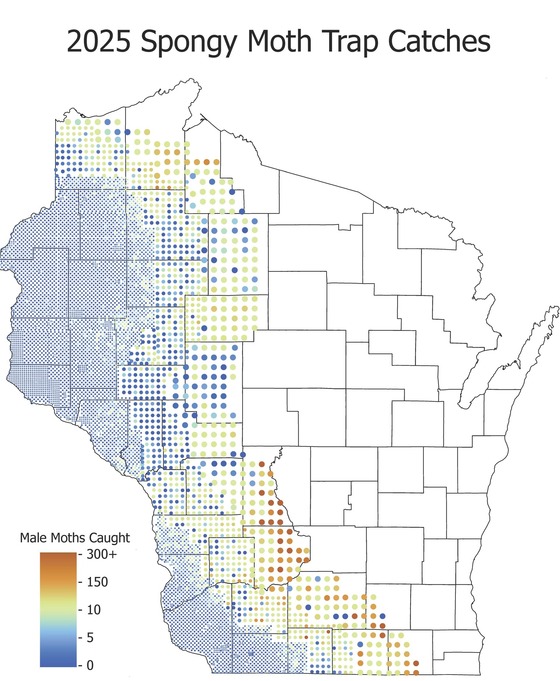
2025 Spongy moth trap catch map | DATCP A. Miller
Please note that this update includes preliminary data as final counts are still being verified.
In 2025, the Wisconsin Spongy Moth Program set 7,849 traps in 36 counties spanning from central to western Wisconsin. The statewide total of male spongy moth catch this year is 47,344, which is less than a quarter of the total moths caught last year. This year’s decrease marks the end of an outbreak that peaked with a record high moth catch of 397,415 in 2023 before the population collapsed from fungal and viral infections that spread through the caterpillars in 2024. This cycle is fairly typical as outbreaks often occur every 10 years in areas where spongy moth is established and usually persist for two to four consecutive years before populations collapse.
Spongy moth has been established in central and eastern Wisconsin for many years, and the highest trap catches were found in those regions again this year. However, outlier high moth catches were identified in western Wisconsin, and those locations were selected for follow-up egg mass surveys, which are currently underway. These surveys will help determine whether these outlier high trap counts in historically uninfested areas reflect the westward spread of persistent populations or if they are a spillover of transient male moths from infested areas to the east.
_____________________________________
|
|
|
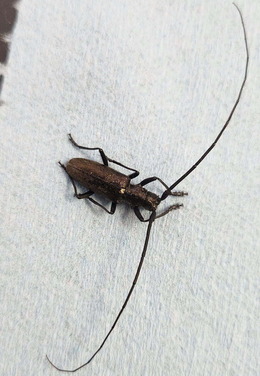
The Wisconsin Pest Hotline and Wisconsin Spotted Lanternfly (SLF) Hotline are both operated by DATCP and are intended for the reporting of new invasive plant pests and diseases. In total, the hotlines received 263 reports so far in 2025, compared to only 132 reports in 2024. This influx in reports was largely due to increased social media awareness for the invasive Asian longhorned beetle (ALB), making up over 50% of all reports. ALB has never been detected in the state but has many native lookalikes that make identification difficult.
|
|
|
White-spotted pine sawyer, a commonly reported native lookalike of Asian longhorned beetle | DATCP M. Lannan
|
|
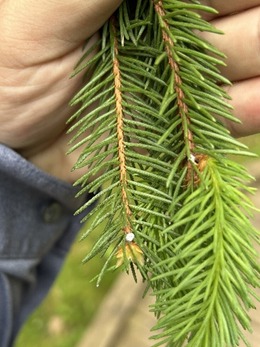
Spruce gall adelgid, a commonly reported native lookalike of hemlock woolly adelgid | DATCP M. Lannan
|
|
|
No new pest detections were made in 2025 as a result of the pest hotlines, with the majority of reports being either lookalikes or known established pests. Spotted lanternfly (17 reports), northern giant hornet (six reports), and hemlock woolly adelgid (five reports) were commonly reported invasives that are not yet in Wisconsin, with most reports being native lookalikes. Many pests established in the state, including Japanese beetle (five reports), jumping worm (three reports), and the bald-faced hornet (three reports) were also reported, possibly indicating their numbers were high this year. The species reported year-to-year vary due to changes in pest populations and public awareness, often impacted by the ever-changing media coverage that different invasive species receive.
All reports submitted to these hotlines are greatly appreciated, with those reports of concern receiving follow-up surveys to determine presence in the state. If you suspect you have observed a new and emerging plant pest or disease, please report it to the Wisconsin Pest Hotline at (608) 440-7523 or datcppesthotline@wisconsin.gov.
_____________________________________
|
|
|
A compliance agreement is a written agreement between a person engaged in growing, handling, or moving regulated articles (plants and plant parts) and either DATCP or the U.S. Department of Agriculture to facilitate the movement of those plants. Nursery growers, nursery dealers, and Christmas tree growers are some of the businesses that may need compliance agreements. Compliance agreements are valid for one year and must be renewed annually as needed. There is no fee to enter into a compliance agreement. Compliance agreements are generally pest-specific, so depending on what plant species you move, you may need multiple agreements.
To help you determine what compliance agreements you may need, DATCP created an interactive guide to generate a list of potential, applicable compliance agreements based on how you operate. By simply answering a series of yes/no questions, you can quickly learn what compliance agreements will help you facilitate the movement of the stock you’re buying in or selling out. Fill out the guide now to see what agreements you may need.
_____________________________________
|
|
|
Upcoming:
-
October 21, 11:30 a.m. CST: Effects of Invasive Woody Shrubs on Animal Behavior and Native Plants: Implications for Restoration. MIPN webinar series. Register here.
-
October 23, 12 p.m. CST: Herbal Distancing: Keeping Boxwood in Your Nursery Free from Blight. tHRIve webinar series. Register here.
-
November 12, 11:30 a.m. CST: Deer and Invasive Plants: Impacts and Interactions. MIPN webinar series. Register here.
-
November 14, 11:00 a.m. CST: Understanding and Managing the Two-Spotted Cotton Leafhopper. tHRIve webinar series. Register here.
-
December 2, 12 p.m. CST: Nature's Best Hope. tHRIve webinar series. Register here.
Recorded:
|
|
|
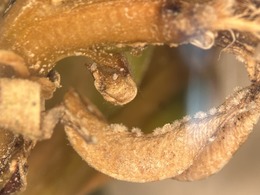
Sticky tufts of boxwood blight sporodochia on leaves of infected 'Green Mountain' boxwood in Ozaukee Co. | DATCP E. Voigt
|
|
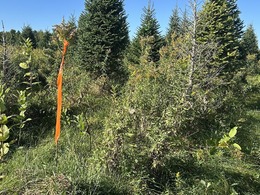
Balsam trees dying from Allegheny ant colony in Taylor Co. | DATCP K. Jerabek
|
|
|
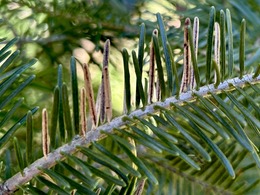
Lirula needlecast on balsam fir in multiple northern Wisconsin counties | DATCP L. Meils
|
|
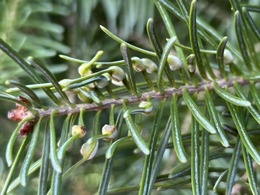
Balsam gall midge galls on balsam fir in multiple northern Wisconsin counties. | DATCP L. Meils
|
|
|
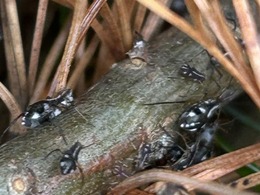
White pine aphids on white pine in multiple Wisconsin counties | DATCP T. Boyle
|
|
Dead leader from white pine weevil on white pine in multiple Wisconsin counties | DATCP image
|
|
|
_____________________________________
|
|
|
For more information about Wisconsin's Nursery and Christmas Tree Programs, visit DATCP's Nursery and Christmas Tree Program webpage.
Read past issues of What's Growing On?
If you haven't yet, please take this brief feedback survey for our monthly What's Growing On? e-newsletter. With this survey, we aim to measure your satisfaction regarding the format, frequency, and quality of the content provided. Please give us your most transparent feedback. The survey is anonymous.
For current counts during the growing season from our insect monitoring networks around the state, review our Pest Survey webpage. To read articles on economically important plant pests affecting Wisconsin's field crops, fruits, and vegetables, read our Field Notes publication put out weekly during the growing season.
|
|
|
|
|