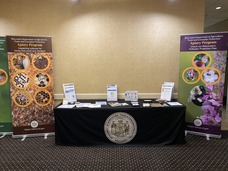
If you're a migratory beekeeper in need of a Certificate of Apiary Inspection required to move your honey bees from Wisconsin to another state (e.g., for crop pollination), please contact us at DATCPapiary@wisconsin.gov to request an inspection by October 15. After the inspection, the state apiarist will issue your Certificate(s) of Apiary Inspection once all fees are paid and data are evaluated. We advise bringing a check to your inspection to avoid the need for us to invoice you.
A DATCP apiary inspection is free, but each apiary certificate costs $50. Many states require certification to import honey bee colonies. If you are moving honey bees or regulated honey bee materials (e.g., beekeeping byproducts or beekeeping equipment) into another state, verify the destination state's requirements with their local apiary inspection service. For migratory inspections, colonies must be accessible in the yard and not yet loaded on the truck.
After overwintering your bees in another state, please remember to fill out a Honey Bee Import Report and send a copy of your most recent inspection (from up to 12 months prior, from Wisconsin or from inspection in another state) to DATCPapiary@wisconsin.gov before returning to Wisconsin with your bees.
For more information, check out our Moving Bees Into Wisconsin factsheet.
|
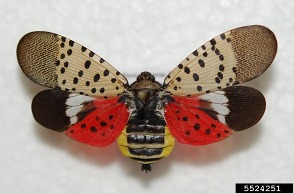
One of the fastest-moving invasive pests in the United States is the spotted lanternfly (Lycorma delicatula), or SLF. Even though SLF is not yet known to be established in Wisconsin, we are asking beekeepers and others to be on the lookout for all life stages of this pest, including adults, egg masses, and nymphs. |
|
 |
If found in Wisconsin, SLF should be reported immediately at slf.wi.gov. Migratory beekeepers and others traveling from Wisconsin to states like California, which has an exterior quarantine for SLF, should especially check carefully for this pest.
Before you leave, we recommend you check hives, trucks, and equipment for SLF, and take our industry training linked below. Once you complete this online training, you can complete a short quiz, and if you pass, you will be issued an SLF training certificate that can be used to assure other states that you know how to inspect for and report SLF.
Thank you for your vigilance in helping avoid spreading this emerging pest!
- Click here to take DATCP's SLF industry training
- Click here to report a suspected siting of SLF in Wisconsin to DATCP
- Click here to learn more about SLF
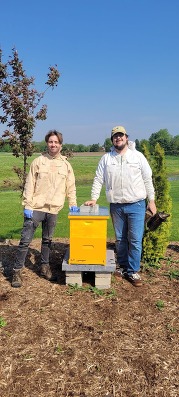
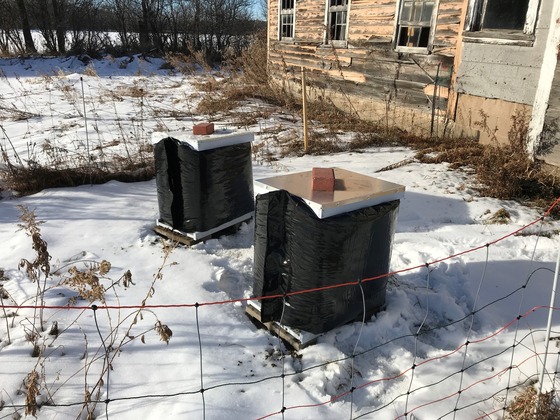 Honey bee colonies ready for winter. Photo by Brooke Nikkila-Sommerfeldt
Overwintering honey bee colonies is difficult, even for the experienced beekeeper. Whether the colony starts as a package, nuc, or overwintered colony, winter preparations begin in the spring and continue throughout the summer into fall. For the best chances at survival colonies should have all of the following:
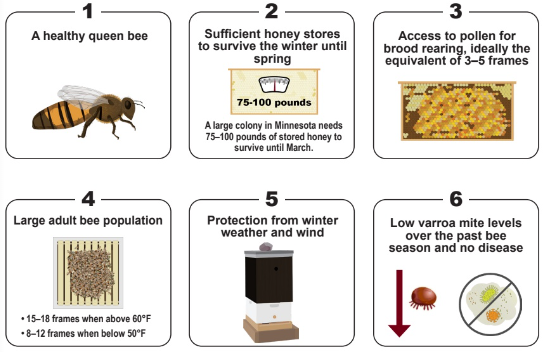 Increase chances of colony survival by following these steps. Graphic from the Beekeeping in Northern Climates Manual 3rd edition by the University of Minnesota Bee Lab.
1. A healthy queen young, prolific queen who will produce healthy winter bees, and produce a robust spring bee population.
2. 75-100 pounds of stored honey that is accessible to the bees. Honey should be stored near and above the cluster so the bees can easily move to it without breaking cluster. Any undrawn foundation should be moved to the outside of the bottom brood box. If there are empty combs within the hive, the colony should be fed heavy sugar syrup (2:1 = 2 parts sugar to 1 part water) until they stop taking it or daytime temperatures reach <50 degrees F. Remember, the bees need time to dry down the syrup!
3. Three to five frames of accessible pollen for when they begin brood rearing again in mid-to-late February.
4. Large bee population to ensure sufficient thermoregulation.
5. Protection from winter weather including a northwest wind block to prevent the cold winter air from blowing directly into the entrance.
6. Pest and disease free. Varroa mite levels ideally are kept at a 1% infestation level (one mite per 300 bees) throughout the season and virtually zero going into winter.
|