|
 _____________________________________
Dear Wisconsin nurseries, Christmas tree growers, and gardeners:
Growing degree days (GDD) (simple B50) as of September 14 were 1667 in Bayfield; 1992 in Cumberland; 1825 in Medford; 2124 in Hancock; 2268 in Green Bay; 2415 in Racine; 2481 in Madison; 2563 in La Crosse; and 2823 in Dubuque, IA.
A few pests in vulnerable-to-treatment stages include flat-headed and round-headed apple tree borer, oystershell scale (brown), and pine needle scale at 1600-1700; locust borer and fall webworm at 1800-2100 GDDs; and final applications for two-spotted spider mite at 2100-2200 GDDs. Apply second applications for viburnum crown borer and zimmerman pine moth at 2700-2900 GDDs. Other pests soon to be in vulnerable stages for fall applications include cooley and eastern spruce gall adelgid at 2800-3000 GDDs, spruce spider mite and woolly apple aphid at 2900-3100 GDDs, and spruce needle miner at 3000-3200 GDDs.
Take a moment to read through a few updates from the DATCP Nursery Program and send any feedback, questions, or ideas for future e-news updates to datcpnursery@wisconsin.gov.
Having trouble viewing this email? View it as a Web page.
_____________________________________
|
|
|
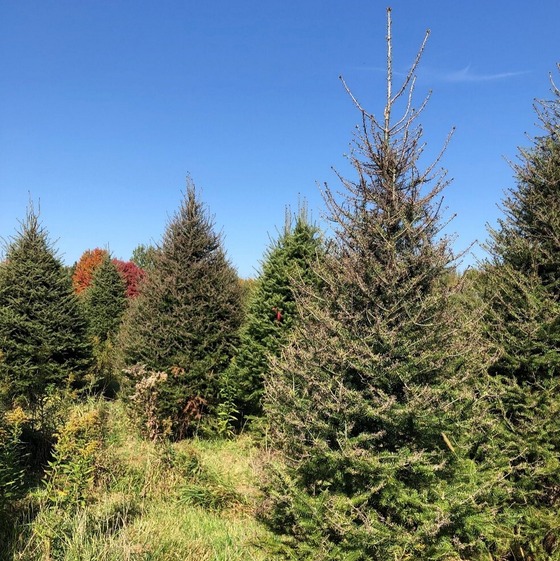
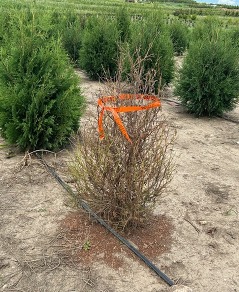
Large balsam fir trees showing heavily browned needles on new shoots from Delphinella Shoot Blight in a Christmas tree field | DATCP K. Jerabek
When growing fir trees in Wisconsin, there are common pests and diseases found that Christmas tree growers are familiar with, like balsam twig aphid, balsam gall midge, spruce budworm, broom rust, and fir-fern rust. Occasionally, a less common pest or disease can cause grower alarm and limit their ability to harvest their trees that fall.
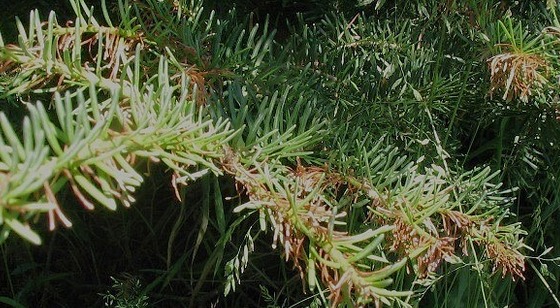
Delphinella Shoot Blight (Delphinella abietis) can infect fir needles causing needle browning in early June. The timing of this disease's symptoms is a clue to why new growth needles are browned and hang down from the shoots. Although the browned needles may look like frost damage, the presence of browned needles on the trees is often random, with the tips of shoots showing no symptoms while intermittent needles along the shoot are browned. Sometimes, the shoot tips are also infected and wilt. Unlike frost, these symptoms may skip some trees and heavily infect another next to it. Some trees almost look like a hot blow torch was directed at them. The lateness of the needles turning brown would also rule out frost.
Balsam fir shoot with the intermittent browned needles looks different than frost damaged needles | DATCP K. Jerabek
As the fir trees are growing larger and tighter together in the field, with less air circulation around them, the higher moisture levels on the needles promote this disease infection. Taking tissue samples at the time of needle browning in June will not show identifiable black fruiting bodies until several months later. If you have noticed browning and wilting of new needles in your balsam fir or concolor fir trees, sampling now in late summer may help confirm the cause as definitely Delphinella.
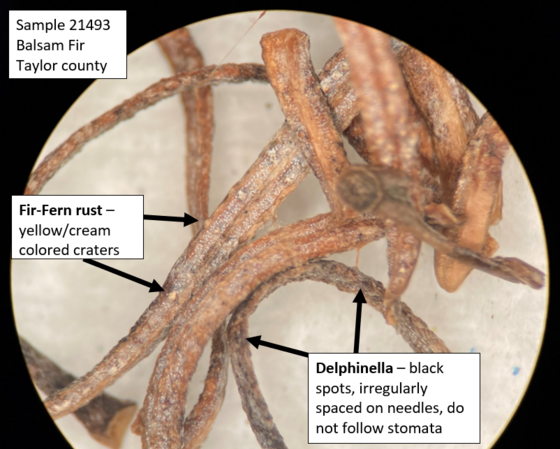
Occasionally, fir will have Delphinella fungal spores and evidence of fir-fern rust in the same sample when examined under a microscope. | DATCP S. Fieweger
Occasionally fir shoots will have Delphinella fungal spores on some needles and evidence of fir-fern rust on other needles. Both can be identified when examined under a microscope. You would not find fir-fern rust on the same needle that was earlier browned by Delphinella fungus, however, you can find both diseases on same branch while on separate needles. Fir-Fern rust disease symptoms of infection show up later in early July, after Delphinella has browned infected needles.
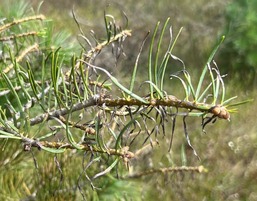
Once you know Delphinella is present in your field, you will want to improve air circulation around the trees and through the field. It may be helpful to remove the most heavily infected trees and burn them. Native balsam fir trees in the perimeter of your field can also host Delphinella shoot blight and promote infection in younger trees growing nearby. This disease can heavily damage large fir trees that are just too crowded in the field. A timely application of fungicide may aid in suppressing the spread of Delphinella spores following spring. (Image left: Delphinella on concolor fir, Credit: DATCP K. Jerabek)
Review the following fact sheets for more information:
|
_____________________________________
|
|
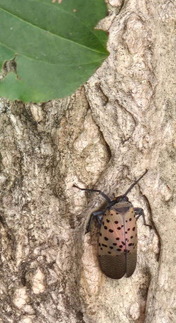
The invasive spotted lanternfly (SLF) continues to make its way closer to Wisconsin each year, with this insect now becoming established in the Chicago area. Public reporting tools such as iNaturalist have shown an influx of SLF reports in nearby states in 2025, such as Illinois, Indiana, and Ohio. With SLF not yet in Wisconsin, DATCP encourages people within the state to report sightings directly to the SLF Hotline to help us more quickly respond to all reports. (Image left: Spotted Lanternfly adult on Tree-of-heaven in Chicago. Credit: DATCP M. Lannan)
With SLF numbers growing in nearby states, DATCP is prioritizing surveys in Wisconsin’s southeast region to detect possible introductions. Surveys are focused on areas with high out-of-state traffic such as malls, roadways, train stations, and rest stops. SLF is a notorious hitchhiker, able to move on vehicles, plants, firewood, and outdoor furniture. Surveys also look for areas with host plants of SLF including tree-of-heaven, grape, walnut, and maple.
|
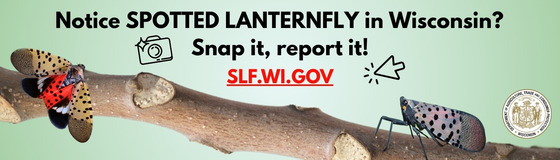 |
Spotted Lanternfly billboard in Milwaukee | DATCP image
DATCP placed a billboard in Milwaukee in August to encourage people to report sightings of the spotted lanternfly. The billboard was placed on along I-94 to reach as many commuters and out-of-state travelers as possible,
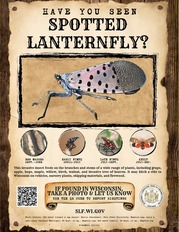
DATCP staff has also been hanging wanted fliers for the spotted lanternfly at rest stops, campgrounds, and public parks. Look for these fliers and the spotted lanternfly, and be sure to report anything suspicious!
|
_____________________________________
|
|
|
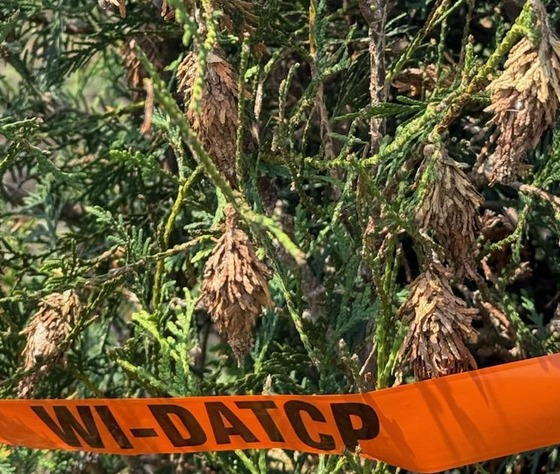
Heavy infestation of bagworm found on nursery stock in Kenosha County. | DATCP M. Luoma
For the second year in a row, DATCP nursery inspectors have detected bagworm infesting arborvitae, juniper, spruce, amelanchier, and beech in a handful of nursery fields in late summer in Kenosha County. UW Extension staff have not received any reports of bagworm in the area this year, suggesting this moth pest most likely came into southeastern Wisconsin by hitchhiking on infested nursery stock. Although the evergreen bagworm, Thyridopteryx ephemeraeformis (Lepidoptera: Psychidae) is native to the United States, it can reach damaging pest levels if left unchecked, especially in nursery plantings. Evergreen bagworms have only been reported in the southernmost counties of the state, especially Racine and Kenosha. Another related species, the common bagworm (Psyche casta), introduced from Europe, is more widespread in Wisconsin and feeds on grasses, mosses, lichens, and other low plants.
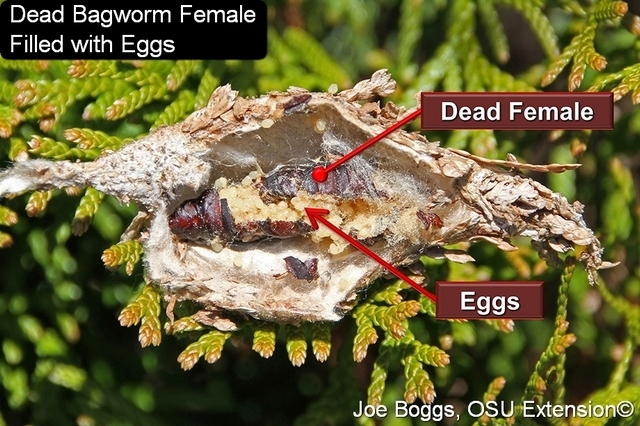
Bagworms eat the foliage of over 128 plant species, particularly evergreens such as juniper, arborvitae, pine, and cedar; and deciduous trees including oak, maple, and willow. Feeding weakens plants and repeated annual defoliation increases susceptibility to other pests and diseases, resulting in plant mortality. Caterpillars hatch in May. Once hatched, they begin to build a small conical, protective bag where larvae feed from June to late August. At maturation, the bag is about two inches long and hangs downward in a spindle shape. Adult females pupate but remain in a caterpillar-like form and do not leave their bag. Adult males pupate into a typical moth form with a dark body and clear, half-inch wings. The male mates with the female and she dies after laying 500-1,000 eggs, which overwinter in the bag.
Dead bagworm female filled with eggs. | OSU Extension, Joe Boggs
These late season defoliators are hard to control with pesticides, as bagworms are protected inside their bags. At this time of year, bagworms can be mechanically removed by hand-plucking bags and placing them in a bucket of soapy water to kill the eggs. If eggs are not removed and destroyed during the long overwintering stage, this local pest population could quickly expand.
For more information about bagworms, including management options, check out this resource from Massachusetts: Thyidopteryx ephemeraeformis: Insect & Mite Guide.
|
_____________________________________
|
|
DATCP's Plant Protection Section has an open full-time Plant Pest & Disease Specialist position. This position is responsible for inspecting assigned nurseries, Christmas trees, logs and other plant products for insects, diseases and other pests in southcentral Wisconsin. Recruitment is expected to be advertised online soon. Please watch for our posting on wisc.jobs, and apply or share our job announcement with any outstanding candidates you know.
|
_____________________________________
- September 16, 11:00am CST: Transplant Quality and Seedling Survival During Planting. The Real Christmas Tree Board webinar series. Register here.
- September 17, 11:30-1 p.m. CST: Major Insect and Mite Pests of Nursery Crops. What's That? Major Pest Problems in Nursery Crops MSU webinar series. Register here.
- September 23, 11:00am CST: Intentional Communications: How to Make the Most of the Moment. The Real Christmas Tree Board webinar series. Register here.
- September 24, 11:30-1 p.m. CST: Top Disease Problems in Deciduous and Coniferous Trees. What's That? Major Pest Problems in Nursery Crops MSU webinar series. Register here.
- October 1, 11:30-1 p.m. CST: Common Diseases of Herbaceous Perennials and Woody Ornamentals. What's That? Major Pest Problems in Nursery Crops MSU webinar series. Register here.
- October 8, 1:00 p.m. CST: Rootzone Management, Root System Measurements, and Potential Bottlenecks in Container Production Research. ASHS webinar. Register here.
- October 21, 11:30 a.m. CST: Effects of Invasive Woody Shrubs on Animal Behavior and Native Plants: Implications for Restoration. MIPN webinar series. Register here.
- October 25, 12:00 p.m. CST: Herbal Distancing: Keeping Boxwood in Your Nursery Free from Blight. tHRIve webinar series. Register here.
- November 12, 11:30 a.m. CST: Deer and Invasive Plants: Impacts and Interactions. MIPN webinar series. Register here.
Recently recorded webinar: Box Tree Moth Update and Q&A. OGIA and HRI webinar.
_____________________________________
|
|
|
A compliance agreement is a written agreement between a person engaged in growing, handling, or moving regulated articles (plants and plant parts) and either DATCP or USDA to facilitate the movement of those plants. Nursery growers, nursery dealers, and Christmas tree growers are some of the businesses that may need compliance agreements. Compliance agreements are valid for one year and must be renewed annually as needed. There is no fee to enter into a compliance agreement. Compliance agreements are generally pest-specific, so depending on what plant species you move, you may need multiple agreements.
To help you determine what compliance agreements you may need, DATCP created an interactive guide to generate a list of potential, applicable compliance agreements based on how you operate. By simply answering a series of yes/no questions you can quickly learn what compliance agreements will help you facilitate the movement of the stock you’re buying in or selling out. Fill out the guide now to see what agreements you may need.
_____________________________________
|
|
|
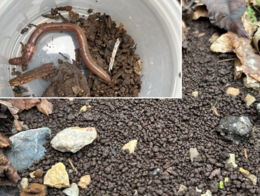
Distinct soil texture caused by jumping worm feeding (and jumping worm inset) in Rock Co. | DATCP L. Meils
|
|
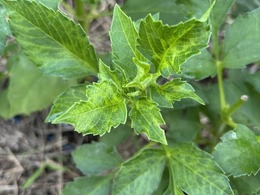
Confirmed Dahlia Mosaic Virus on Dahlia in Waukesha Co. | DATCP G. Meysembourg
|
|
|
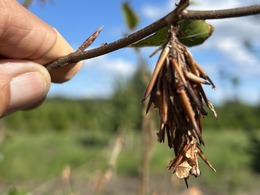
Bagworm on beech in Kenosha Co. | DATCP M. Wensing
|
|
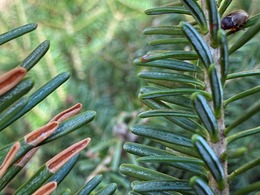
Pine leaf beetle (top right corner) and its feeding damage on fir in Waushara Co. | DATCP L. Meils
|
|
|
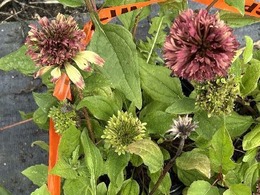
Confirmed aster yellows on purple coneflower in Kenosha Co. | DATCP M. Wensing
|
|
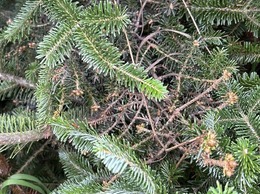
Broom rust on balsam fir in Jackson Co. | DATCP T. Boyle
|
|
|
_____________________________________
|
|
|
For more information about Wisconsin's Nursery and Christmas Tree Programs, visit DATCP's Nursery and Christmas Tree Program webpage.
Read past issues of What's Growing On?
If you haven't yet, please take this brief feedback survey for our monthly What's Growing On? e-newsletter. With this survey, we aim to measure your satisfaction regarding the format, frequency, and quality of the content provided. Please give us your most transparent feedback. The survey is anonymous.
For current counts during the growing season from our insect monitoring networks around the state, read our Pest Survey webpage. To read articles on economically important plant pests affecting Wisconsin's field crops, fruits, and vegetables, read our Field Notes publication put out weekly during the growing season.
|
|
|
|
|