|
 _____________________________________
Dear Wisconsin nurseries, Christmas tree growers, and gardeners:
Growing degree days (GDD) (simple B50) as of August 14 were 1373 in Bayfield; 1609 in Cumberland; 1493 in Medford; 1755 in Hancock; 1853 in Green Bay; 1947 in Racine; 2029 in Madison; 2075 in La Crosse; and 2288 in Dubuque, IA.
A few pests in vulnerable-to-treatment stages include flat-headed and round-headed apple tree borer, oystershell scale (brown), and pine needle scale at 1600-1700, locust borer and fall webworm at 1800-2100 GDDs, and final applications for two-spotted spider mite at 2100-2200 GDDs. Apply second applications for Viburnum crown borer, and Zimmerman pine moth at 2700-2900 GDDs. Other pests soon to be in vulnerable stages for fall applications include cooley and eastern spruce gall adelgid at 2800-3000 GDDs, spruce spider mite and woolly apple aphid at 2900-3100 GDDs and spruce needle miner at 3000-3200 GDDs.
Take a moment to read through a few updates from the DATCP nursery program and send any feedback, questions, or ideas for future e-news updates to datcpnursery@wisconsin.gov.
Having trouble viewing this email? View it as a Web page.
_____________________________________
|
|
|
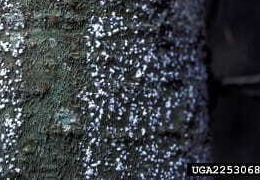
August is national Tree Check Month, which means it is time to check your trees for signs and symptoms of invasive pests and diseases. One pest to be on the lookout for is the balsam woolly adelgid (BWA), which has not yet been detected in Wisconsin.
|
|
|
BWA on the trunk of a tree | USDA Forest Service, Jerald E. Dewey, Bugwood.org
|
|
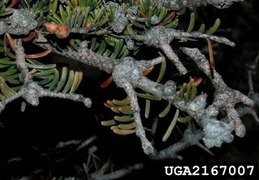
Gouting caused by BWA | Forest Health Management International, William M. Ciesla, Bugwood.org
|
|
|
Check your fir trees, including balsam, fraser, and white fir, as these are the primary hosts of BWA. Look for characteristic woolly tufts on the trunk and branches of the tree, and gouting (swelling) on the outer twigs. Additionally, you may observe overall tree and branch decline when trees are heavily infested.
Balsam woolly adelgid is an insect related to aphids, causing damage to trees through sap feeding. This feeding can lead to tree decline and even death after several years, if left untreated. Infested trees will also have branch swelling, otherwise known as gouting, which is the plant’s response to chemicals released during feeding. Gouting leads to stunted growth and eventually branch dieback.
This invasive insect has never been detected in Wisconsin but could make its way into the state through the movement of nursery plants, Christmas trees, holiday greenery, or even migratory birds. BWA has been detected in central Michigan and many eastern states. If you suspect you have found balsam woolly adelgid or would like more information on how to check your trees, contact the Wisconsin Pest Hotline at datcppesthotline@wisconsin.gov.
_____________________________________
|
|
|
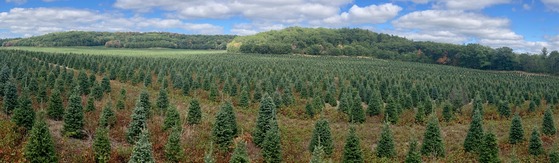
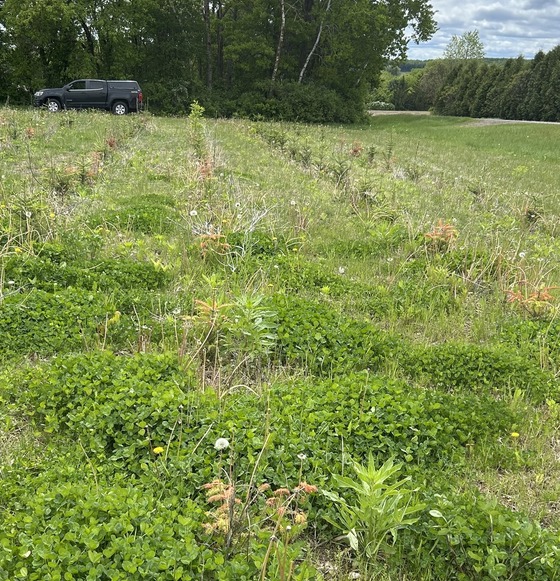
Field of Christmas trees in Jackson County ready for inspection and harvest | DATCP image
A lot can change from the time you renew your Christmas tree license to when you are harvesting. If additional fields will be harvested from than initially listed, or if you are purchasing trees from another Wisconsin grower, let us know prior to field inspection (beginning September 2) or as soon as possible to ensure all fields you plan to harvest from will be inspected in a timely manner. Inspectors prioritize growers that ship out of state or that receive a Plant Health Certificate, typically completing these inspections by mid-October. If you did not indicate on your license renewal you were shipping out of state and that has now changed, let Christmas Tree Program Coordinator Brooke Sanneh, or your inspector, know. Once out of state shippers are inspected, inspectors try to visit one third of all other growers in their territory each year.
Growers purchasing trees from out-of-state to fulfill orders will have to comply with Elongate Hemlock Scale (EHS) regulations. If purchasing seedlings, cut trees, wreaths, or roping material from EHS infested states, including CT, DE, GA, KY, ME, MD, MA, MI, NH, NJ, NY, NC, OH, PA, RI, SC, TN, VT, VA, WV, and the District of Columbia, the material must be certified free of EHS. The certificate must include at least one of the following three statements: The stock has been inspected and found to be free of EHS, the stock has been effectively treated to destroy EHS (and include detailed treatment information), or the stock originates from an area know to be free of EHS. If you plan to purchase cut trees from a grower in an infested state, confirm that the producer can provide this certification. Failure to comply with the EHS regulations may result in stock being removed from sale and destroyed.
_____________________________________
|
|
|
Field of Fraser fir transplants infected with Phytophthora root rot | DATCP K. Jerabek
For Christmas tree producers with phytophthora root rot in their fields, learning more about this disease, how it can spread, and what field management practices are suggested is critical. While most commonly confirmed in Fraser fir in Wisconsin, other species of fir as well as spruce and pine can be infected with Phytophthora. This disease can cause large losses to tree producers so ongoing management is important.
Phytophthora is a soilborne water mold that causes sudden tree decline, root rot, and death. This water-loving disease can become activated when soils experience prolonged periods of wetness either from rain or irrigation. When the air pockets in the soils surrounding tree roots fill with water, phytophthora spores germinate and move in the water, finding and infecting roots. Phytophthora root rot can be spread to new area by water moving through the soil, phytophthora contaminated irrigation water from retention ponds, and infected soil particles. Soil particles spread this disease when moved on machinery, tools, boots, and when attached to tree seedlings being transplanted.
A disease study by our Plant Industry Bureau Lab confirmed six different species of Phytophthora in Wisconsin that can cause tree death. Symptoms of root rot disease can show on branch tips as off-color yellow-green needles, stunted and drooping tip growth, browning in lower branches, and dark staining at the trunk collar near the soil level. A tree’s small root hairs die off and growth can’t be supported once infected. Phytophthora root rot disease spores can survive for many years in soils and in infected plant material making replanting of Fraser fir into these fields unfeasible. Growers should consider planting a more root rot disease resistant species as a replacement, like Canaan fir or white pine.
Once phytophthora has been confirmed in your tree field, you should take steps to limit its spread to new areas:
- Map out the known diseased tree locations, adding in nearby areas with symptoms of tree decline. Mark the field’s drainage patterns noting where soils stay wet longer. Use aerial images from map apps to add more details to your field map. Draw a buffer zone around symptomatic trees and identify potential water movement from diseased trees to new areas. You may still be able to grow Fraser Fir in other areas of this field but only those areas with well drained soils and no prior history of root rot.
- In your field, mark diseased areas with stakes or flags. This will remind workers to stay out of these areas until the end of each day. Remove any dead and dying trees. Always clean off soil particles when the day's work is done.
- Implement good tree growing practices like irrigating with well water, using ground covers to limit over ground runoff and soil erosion, and improving drainage from the field to limit the spread.
- Keep trees and roots healthy. Avoid management practices that damage roots (i.e. poor transplanting, tilling, herbicide use) or stress trees (i.e. incorrect soil pH, soil and needle tissue nutrient deficiencies). Stressed trees and damaged roots are more susceptible to root rot infection.
You can learn more from these resources:
_____________________________________
|
|
|
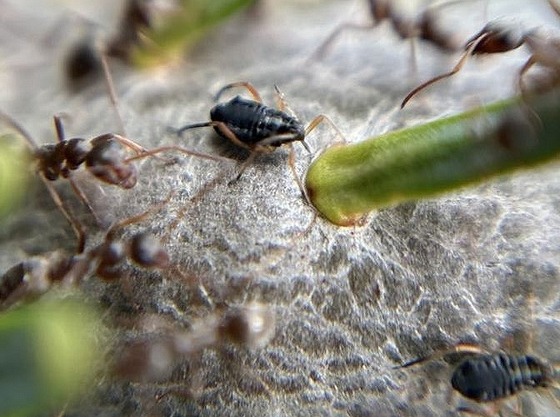
Bow-legged fir aphid, Cinara curvipes, on Fraser fir | DATCP T. Boyle
Black bark aphids of the species Cinara curvipes, also known as the “Bow-legged fir aphid,” were detected feeding on fir trees by a Jackson County Christmas tree grower scouting fields in mid-June this year.
Cinara curvipes is native to North America, but are commonly found in forests and plantations along the west coast with very few reported in our Midwest states. These aphids primarily live on domestic fir species but have also been noted feeding on other woody plants. Cinara curvipes colonies in the U.S. commonly reach two peaks during the year; May-June and September-October. Research shows that wingless viviparous females achieve peak fertility at lower temperatures (50-60 F°), explaining their mass spring appearances. Near 80° F, nymphs fail to molt or reach maturity, leading to summer population declines.
Aphids suck plant juices through the tree bark using their piercing proboscis, operating in colonies, normally on the undersides of branches or on the trunk. The aphids produce and excrete large amounts of sweet honeydew, which is typically harvested through a symbiotic relationship by colonies of ants, but harvesting by wasps and bees also occurs. Bark aphids in a Christmas tree field should be controlled before harvest. Control suggestions include:
- Regularly inspecting trees to assess the severity of any infestations and help determine the appropriate timing for treatments.
- Avoiding excessive nitrogen fertilization, as high nitrogen levels can make trees more attractive to aphids.
- Horticultural oil applied to the bark of the trunk and branches can be particularly effective against overwintering nymphs if applied before they mature. Neem oil can repel and disrupt aphid feeding. Thorough coverage with a natural insecticidal soap applied directly to the aphids, such as one containing potassium salts of fatty acids, can help.
- Encourage natural aphid predators such as ladybugs and lacewings. Maintaining good groundcovers and attracting aphid predators with forage plantings can provide habitat for these beneficial insects: Aphidoletes aphidimyza, Aphidius spp., Hippodamia spp., Chrysopa spp.
- Use of commercial insecticides may be warranted, but always ensure they are safe for your tree species. Also be aware that widespread treatment of a field with insecticide could inadvertently increase an existing mite population. Insecticides are specifically for treating insects - and mites are not insects. By killing all the insects, you may also be killing the beneficial predators that keep mite populations in check.
- For limited or localized populations, applying a sticky band around the trunk of the trees can prevent ants from climbing up to tend aphids. Do not apply the product directly to the bark of young or thin-barked trees; apply to a wrap placed around the trunk instead.
_____________________________________
|
|
|
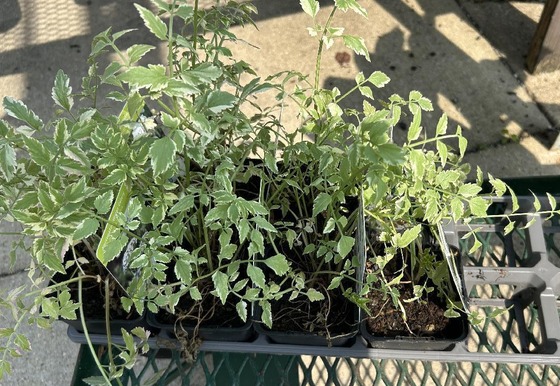
The invasive Java waterdropwort (Oenanthe javanica) was part of an aquatic plant package sent to retailers in Door, Ozaukee, and Racine counties| DATCP M. Wensing
If you are planning ahead for your 2026 plant needs and placing orders soon, please take a look at the NR 40 list of regulated plant species and ensure that your grower/supplier is not including them in a “package” or bundle. This year there were at least two interceptions of regulated invasive plants, one a vine and another an aquatic pond plant found in a “package” plant order. Other states have different regulations for invasive species which may allow plants to be produced and sold in that state—but that doesn’t mean they can be grown or sold here in Wisconsin.
In the vine category, Fiveleaf akebia or Chocolate vine (Akebia quinata) was intercepted. In the past, we have found other vine assortments that included Wisteria, both the Chinese (Wisteria sinensis) and Japanese (Wisteria floribunda); Japanese honeysuckle vine (Lonicera japonica); and Porcelain berry (Ampelopsis brevipedunculata).
For aquatic pond plants, most garden centers that market pond plants are familiar with the fact that water hyacinth (Eichhornia azurea and Eichhornia crassipes) and water lettuce (Pistia stratiotes) cannot be sold in Wisconsin. This season, a vendor “filled the rack” to complete an order and included the invasive Java waterdropwort (Oenanthe javanica) without informing the garden center of that addition.
Groundcover bundles may include Bishop’s goutweed or Snow-on-the-Mountain (Aegopoduim podograria), which is a regulated invasive species.
For perennial bundles, forget-me-not (Myosotis sylvatica) is still popular in the industry and being grown for distribution. Although it’s been listed as invasive since 2015 in Wisconsin, we intercept this plant every year, and often multiple times around the state.
Ornamental grasses bundles may include Blue lyme grass (Leymus arenarius/Elymus arenarius) or Ribbon grass (Phlaris arundinacea var. picta).
To prevent any unneeded regulatory action or enforcement from the Wisconsin Department of Natural Resources, please review this list of regulated plant species and confirm with your grower/suppliers that these are not part of any packages or bundles that are ordered for the 2026 sales season.
_____________________________________
|
|
|
A compliance agreement is a written agreement between a person engaged in growing, handling, or moving regulated articles (plants and plant parts), and either DATCP or USDA to facilitate the movement of those plants. Nursery growers, nursery dealers, and Christmas tree growers are some of the businesses that may need Compliance agreements. Compliance agreements are valid for one year and must be renewed annually as needed. There is no fee to enter into a compliance agreement. Compliance agreements are generally pest-specific, so depending on what plant species you move, you may need multiple agreements.
To help you determine what Compliance agreements you may need, DATCP created an interactive guide to generate a list of potential, applicable Compliance agreements based on how you operate. By simply answering a series of yes/no questions, you can quickly learn what Compliance agreements will help you facilitate the movement of the stock you’re buying in or selling out. Fill out the guide now to see what agreements you may need.
_____________________________________
|
|
|
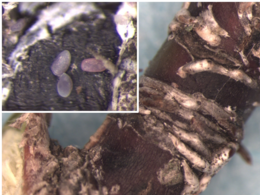
Japanese maple scale (and purple eggs inset) on pagoda dogwood in Sheboygan Co. | DATCP M. Lannan
|
|
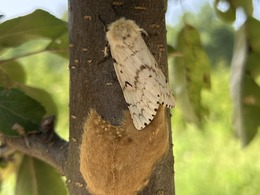
Spongy moth laying an egg mass on nursery stock in Ozaukee Co. | DATCP G. Meysembourg
|
|
|
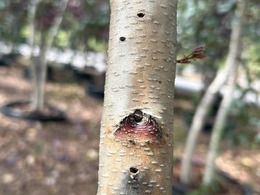
D-shaped bronze birch borer exit holes in Jackson Co. | DATCP T. Boyle
|
|
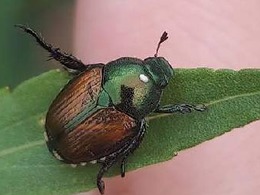
Japanese beetle with a parasitic winsome fly egg in Vilas Co. | DATCP M. Sanders
|
|
|
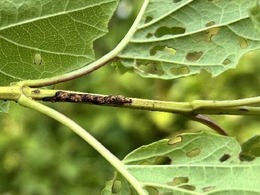
Viburnum leaf beetle egg pits on Arrowwood viburnum in Kenosha Co. | DATCP M. Wensing
|
|
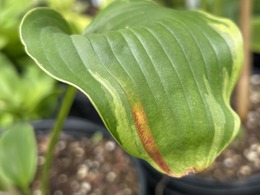
'Andy Murray' hosta with foliar nematodes in Juneau Co. | DATCP L. Meils
|
|
|
_____________________________________
|
|
|
For more information about Wisconsin's Nursery and Christmas Tree Programs, visit DATCP's Nursery and Christmas Tree Program webpage.
Read past issues of What's Growing On?
If you haven't yet, please take this brief feedback survey for our monthly What's Growing On? e-newsletter. With this survey, we aim to measure your satisfaction regarding the format, frequency, and quality of the content provided. Please give us your most transparent feedback. The survey is anonymous.
For current counts during the growing season from our insect monitoring networks around the state, read our Pest Survey webpage. To read articles on economically important plant pests affecting Wisconsin's field crops, fruits, and vegetables, read our Field Notes publication put out weekly during the growing season.
|
|
|
|
|