|
Prevention, Restoration, Accountability
December 2025 |
|
Justice Project Community Engagement Draws Crowds
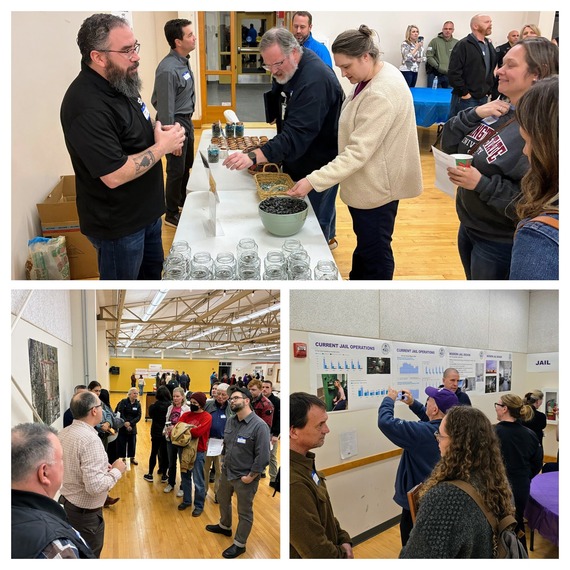
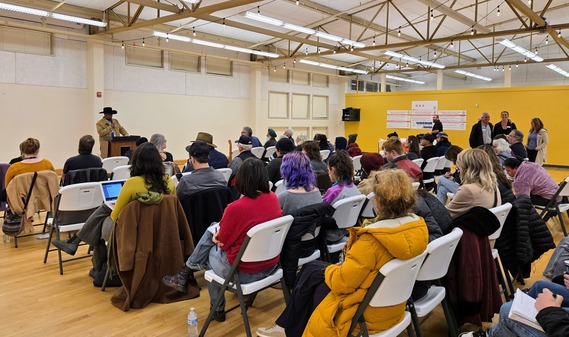
Thank you to the over 100 attendees from the public who joined our recent Justice Project Community Engagement Workshop in Ferndale. Participants learned about the progress being made and provided direct feedback to our elected officials and design-build team about their priorities for our new jail and behavioral care center.
|
|
Visualizing the Justice Project Choices
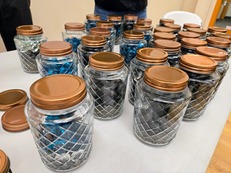
As part of the event, participants had a chance to visualize the tradeoffs and challenges for the new jail and behavioral care center.
The sand in each jar represented the soft costs (permitting, site mitigation, architects, etc), the black stones represented beds in a Behavioral Care Center, the white beads represented administrative space in the new jail (programming space, courtroom area, etc), the blue beads represented jail beds.
Participants could decide and share what mix they preferred for the Justice Project
|
|
|
 Community Feedback Received
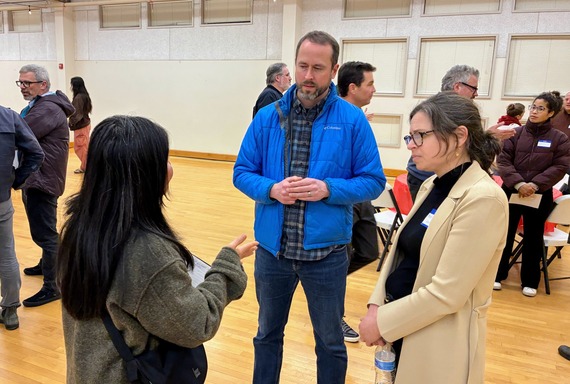
The focus of the event was the public engaging with the decision makers and design-build team to provide substantive feedback on the project. Here is some of the feedback we received:
- Many participants shared their support for behavioral health and support services to be prioritized as part of the Justice Project, with a focus on reentry support and housing.
- Many participants voiced their need for visible and public data to track the progress being made.
- Some participants shared their critiques of incarceration in the United States as a whole and voiced their concerns that this new jail is unnecessary, too large, and too costly.
- Some participants voiced concerns about the proposed jail not being big enough to meet the needs of our community and urged a faster timeline for construction.
- Many participants shared specific questions (and received answers) around transportation to and from the LaBounty site, the location of the Behavioral Care Center, what diversion programs are currently in place and what could be used with the new facility, and what the eventual size of the justice project facilities will be.We will be using this feedback to update our FAQ on the Justice Project website in the next couple of weeks.
Elected officials, staff, and the design-build team will be reflecting on the feedback received and utilize that in the decision-making process going forward.
|
|
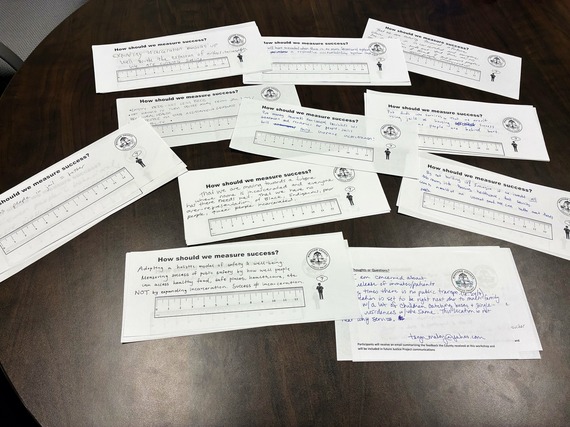 How Do We Measure Success?
One of the critical questions we asked our community was how do we measure the success of the Justice Project.
Here are some of the answers we received:
- Fewer incarcerated people
- Less time in jail pre-trial
- Fewer people with behavioral health problems incarcerated
- No one is incarcerated and everyone has their needs met
- Numbers of people using diversion and treatment programs increases
- No more booking restrictions because there is sufficient capacity in the new jail
- No jail is built, and we invest 100% of the money into housing, healthcare, and food security
- We are able to incarcerate everyone who has an active warrant and crime rates drop
Currently, we are using the Justice Project Implementation Plan as a guide for progress on the Justice Project. One of the stations at the event showcased progress made on the plan (see displays below)
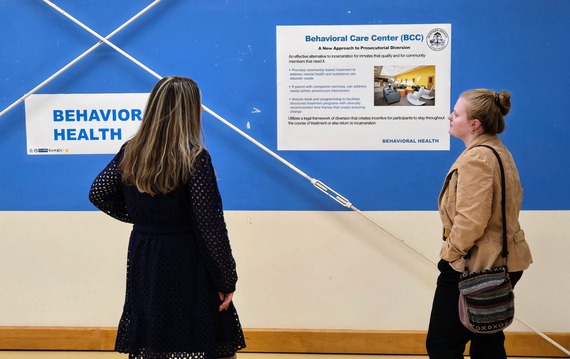 Review the Materials
We produced a number of informational displays showcasing different elements of the Justice Project. You can review those graphics and materials here.
Next Steps
This meeting was the first of three community engagement workshops with the Design Build team where we establish the size, scope, programming, location, and budget for the Justice Project facilities. The next meeting will be in early 2026 - stay tuned for details of that event.
As always, more information about the Justice Project is available on our website here.
|
|
|
|