CM Sadalge Updates on Affordable Housing and Home Ownership
City of Tacoma Washington sent this bulletin at 06/11/2025 03:21 PM PDT
Hello District 4,
This newsletter focuses in on issues related to housing, home ownership, and affordable housing. The length of this newsletter is a testament to the amount of work we’re doing to meaningfully address the shortage of affordable housing in the city and especially in our district. I’m committed to build on these policies and projects for as long as I am your Council Member.
As I have gone out and learned what barriers we face in addressing core issues in our communities, one thing has become crystal clear: The lack of stable, affordable housing in our city makes every single issue we face harder to solve. It increases police and fire response, it shows up consistently in our community courts and it exacerbates the difficulties in helping individuals experiencing housing instability
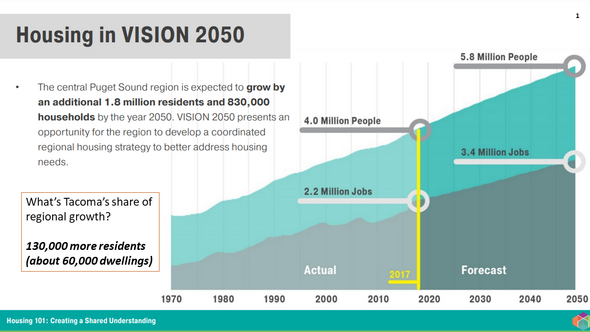
Tacoma’s housing production has not kept pace with its growth. From 2017 to 2023, the city’s housing stock has grown at an average annual rate of 0.8%. To achieve the 2050 housing target, average annual growth needs to be double this, at 1.6%.
I believe we are at least 10 years of housing production behind what is needed for our population. Basic supply and demand dictates that if we don’t have enough housing units, price for housing goes up. Affordable housing is key to the health and wellbeing of Tacoma individuals and families, from knowing ones’ belongings are secure to allowing children to attend the same school year after year. It is core to the vibrancy of Tacoma’s neighborhoods, allowing residents to participate in and nurture the cultural richness of Tacoma.
Sincerely, Sandesh Sadalge Tacoma City Council Member, District 4
In this newsletter, I want to showcase some of the work the Council and I been doing to address this challenge:
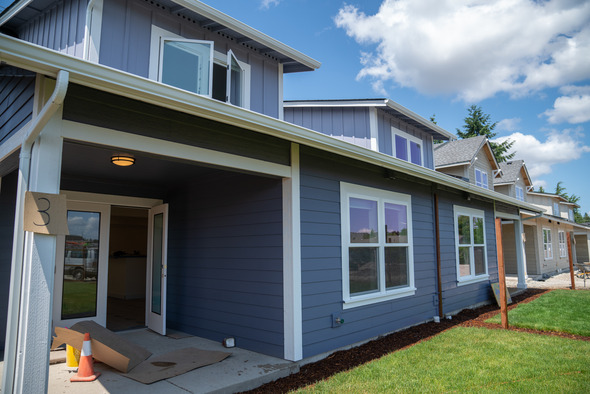
Tacoma City Council unanimously approved the Home In Tacoma zoning and standards package at the City Council meeting on November 19, 2024. It’s a landmark decision that paves the way for more diverse, affordable, and sustainable housing options throughout the City. The new zoning regulations went into effect on February 1, 2025.
In a nutshell, Home In Tacoma removes one of the biggest historical barriers to housing production by eliminating single-family exclusive zoning. Home in Tacoma is specifically designed to unlock a wider variety of housing options. We're already seeing developers propose innovative housing types that were previously more challenging to build, which is crucial for meeting diverse household needs and income levels. This includes DADUs, townhomes, and duplexes. The initial permit and pre-development numbers are very encouraging and demonstrate that Home in Tacoma is on the right track. It's important to remember that building new homes takes time, and the full impact of these changes will unfold over the coming months and years. We are committed to monitoring progress and making adjustments as needed.
In Tacoma, half of households own their homes while half of households rent. This rate is much lower than the state and national average. Affordability trends demonstrate that homeownership is becoming increasingly out of reach for moderate-income households as home prices have risen at more than double the rate of incomes from 2015-2023. First-time homebuyers are particularly hard-hit by the combined factors of increasing housing costs and mortgage lending rate spikes. Homeownership remains a path to building generational wealth for a family, and these higher costs raise the barrier to entry for many Tacoma households. It is for these reasons that I deliberately sponsored amendments to incentivize home ownership development. I worked hard over several weeks to craft this amendment in such a way that it incentivizes developers building homes for individuals and not corporations.
Home ownership incentives:
Additional incentives for making owner-occupied homeownership units
Up to 150% of Area Median Income (middle income, covers bottom ~75% of households in Tacoma)
Privately enforced via Title Restriction with five-year owner-occupant requirement
Incentives:
Increases rear yard heights (allows for more townhomes)
Eliminates Tree Credit Fees and Canopy Loss Fees
Allows non-alley loaded lots if an alley doesn't already exist
Additionally, Home In Tacoma and state law allow flexibility in new UR (Urban Residential) zones to create smaller, separate lots with a new minimum lot size of 2,500 sq ft that promote more homeownership. These unit Lot Subdivisions are a way to divide property for separate ownership, potentially with shared access, utilities, and infrastructure. Reducing the required minimum lot size in low-intensity (i.e. single family) neighborhoods creates flexibility for lower cost homes by reducing the land costs for each home. It is an excellent tool to support affordable homeownership and works well for townhouses, rowhouses, and cottages. See the Unit Lot Subdivision Summary sheet (page 5) for more information.
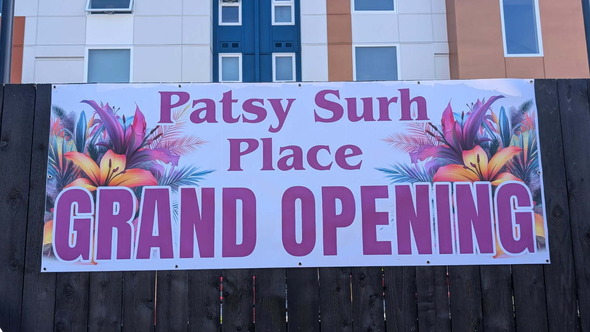
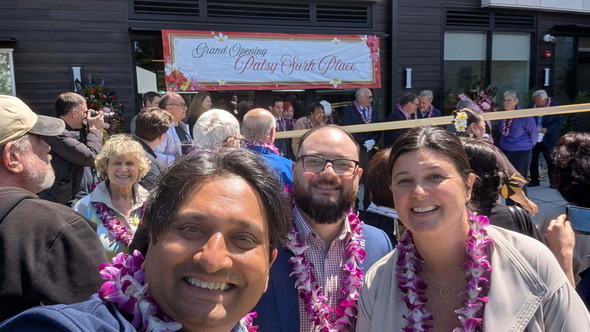
It was an exciting day in Tacoma when the Asia Pacific Cultural Center (APCC) and the Low Income Housing Institute (LIHI) celebrated the grand opening of Patsy Surh Place, an affordable housing community dedicated to seniors ages 55 and over. Located at 3740 South G Street in Tacoma’s Lincoln District, the six-story building offers a culturally inclusive environment for Asian Pacific Islander elders and other low-income seniors. The City of Tacoma was one of the funders for this project.
Named in honor of Patsy Surh O’Connell, a distinguished community leader and a founder of APCC, this development reflects her lifelong commitment to promoting Asian and Pacific Islander heritage, culture, and arts throughout the region. Born in Shanghai to Korean parents, Mrs. O’Connell immigrated to the United States in the 1960s and helped establish APCC in 1996 to create a central gathering place for people to connect through Asian Pacific art and culture.
Patsy Surh Place is a new six-story building that features 47 studio apartments and 30 one-bedroom units, all designated for seniors earning up to 30% and 50% of the Area Median Income. The building includes commercial space for small businesses along S. 38th St.
In 2019, the City created our Affordable Housing Fund. The state legislature authorized local governments to raise revenue for affordable housing, and in 2021, the City adopted Ordinance 28747 to authorize a one tenth of 1% sales tax to raise revenue for this fund. Since it’s initiation, the sales tax has raised over $20 million for affordable housing. Overall, the Affordable Housing Fund has raised $31 million and contributed to the financing of 1,238 units.
This revenue is critical to supporting housing creation across the City. It has directly provided over $14 million in funding for four projects in District 4, including:
Patsy Surh Place
The Heron on East 32nd street
Mercy Housing on 35th and Pacific
An upcoming family housing project in the Lincoln Business District
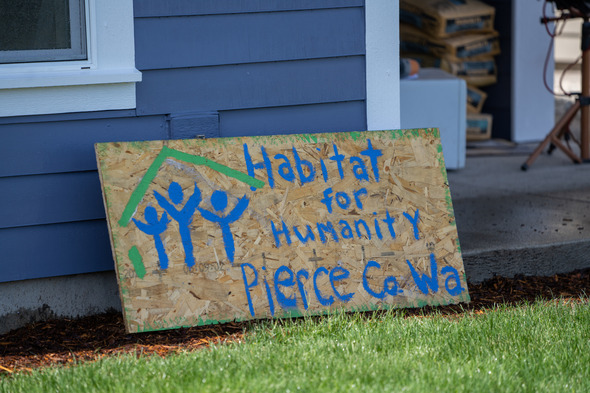
Since joining the Council, I have made a point to tour as many affordable housing developments and shelter services as I can. This spring, I joined now CEO Sherrana Kildun with Pierce County Habitat for Humanity to tour their active construction sites. We toured an infill project where Habitat was creating home ownership opportunities for moderate income individuals. I got to see all sorts of volunteers come in to help work on homes, including some of the people who would own the homes once they were completed. These are high quality homes that will offer economic stability and the opportunity for equity building to new homeowners.
This trip was my inspiration for allowing the development of non-alley loading lots if an alley doesn’t currently exist in the final Home in Tacoma package. I wanted to make sure that a developer seeking to create moderate-income home opportunities would have flexibility to add more housing units. Habitat shared that in one of their developments, because of my amendment, they will now be able to build 8 more homes.
Racial disparity in homeownership is stark in Tacoma, steeped in a long history of racial exclusion and discrimination. These gaps persist among demographics for first-time homebuyers, indicating that the trend may worsen rather than improve in coming years. The lowest homeownership rates today are observed among Black (32%), Pacific Islander (32%), Hispanic (43%), and households that identify as "Other race" (37%).
The City of Tacoma has contracted with the Tacoma Community Redevelopment Authority (TCRA) to operate a down payment assistance program. This program is designed to be consistent with and address disparities identified in the City’s 2021 Homeownership Disparity Study. This study found that one of the lowest homeownership rates in the City of Tacoma was for Black households. As a result of the outcomes of the study this program has a goal of serving at least 65% Black households.
This program can provide up to $60,000 as a down payment for a home. Assistance is provided as a no interest 30-year loan. This loan must be repaid:
At the end of the 30-year term;
If the home is sold; or
If the borrower does not occupy the home as their primary residence.
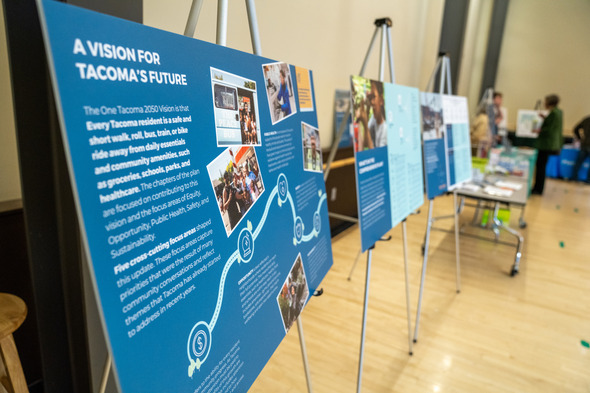
Everyone in Tacoma deserves a city that keeps us safe, lets us live sustainably with our land and water, and contributes to our physical, social, and economic health.
Tacoma’s current challenge is to provide housing with a diverse range of unit types and prices in locations that help meet the needs of all, including low-income populations, communities of color, and people of all ages and abilities. To meet that challenge, Tacoma continues its transformation toward a refreshed vision for housing growth that promotes production of different housing types and sizes, clustered in locations that connect households to daily essentials and amenities.
Tacoma’s Comprehensive Plan is an important tool that establishes the City’s future vision and policy direction, as well as guiding growth and development over the next 25 years. It helps us decide how to use our land and water, improve our city streets and transportation, build variety of housing options that satisfy the needs of our community at every stage of life, and maintain public facilities and services like parks, libraries, utilities, and more.
The City’s 25-Year Comprehensive Plan: One Tacoma is one of the strategic plans required by the Washington State Growth Management Act (GMA) that is updated by the City every 10 years.