|
I believe our budget is more than a set of numbers; it reflects our values. It is how we invest in the people, places, programs, and services that provide a strong foundation for our community.
As we prepare the county’s 2027-28 biennial budget, my priority is to set us on a sustainable fiscal path. We must preserve vital county services for our residents, businesses, and partner jurisdictions.
Like many other governments, Snohomish County faces a long-term budget deficit as costs outpace revenues. This is worsened by pressures like inflation driving up supply and staffing costs, uncertainty in federal funding, and continued unfunded state mandates. I’ll share one bit of data: from 2000 until 2020, construction costs increased by 70%. From 2020 until 2025, they increased by another 70%. This is the reality we are living in as your county government.
No single strategy will set us on a sustainable path. We need an approach that balances spending cuts and new revenue.
I recently asked a group of leaders from various sectors to give insight. This Fiscal Sustainability Taskforce spent long hours learning about the budget and issued thoughtful recommendations. I encourage you to read their report and opinion piece in The Daily Herald.
We will need to reduce spending. Multiple departments already are taking money-saving steps such as waiting to hire or not filling open positions. Our Operational Excellence (OpEx) team also has been working with departments to find budget savings through strategic use of resources and staff time, planning, and project management.
Along with cuts, decisions about new revenue will be considered this year, including a Transportation Benefit District (TBD), Public Safety Enhancement Sales Tax, and use of banked capacity on the county’s portion of the property tax levy. I am recommending that we seriously consider these revenue options. Without them, there will need to be drastic cuts to programs and services that are highly valued by our community members.
The TBD would mean $20 more a year for tabs on vehicles registered in unincorporated Snohomish County. It does not include incorporated cities or towns, though many of them already have their own TBDs. That money would go specifically to the Road Fund, ensuring we can keep the county’s 1,600-mile road network maintained. More is available on our TBD information page.
The Public Safety Enhancement Sales Tax would add 1 cent per $10 spent on retail sales, with exemptions for things like medications and most groceries. That money would be directed to the county’s law and justice system, ensuring we continue to prioritize public safety.
Finally, for every property tax dollar that a resident pays, the county’s share is about 6 cents. We have banked capacity due to past years when the county did not take the allowable 1% levy increase. Now, we need all our capacity to preserve services.
I know many in our community are worried about rising costs, and I also know many cannot afford to lose vital services the county provides. A measured and balanced approach to this budget is essential, balancing cuts with any revenues.
I encourage everyone to stay informed and engaged in the budget process, and I thank all the county employees, local leaders, and community partners who have been involved so far. I will share updates as things progress this year.
I look forward to giving my annual update during this crucial time as we face a mix of opportunities and challenges to ensure Snohomish County continues to be the best place in the world to live, work, and play. Residents, businesses, and other jurisdictions throughout the community have been crucial partners in all the county’s work, and they all rely on foundational county services in their day-to-day lives. I will be talking about how we preserve those foundational services to support a safe, welcoming, and thriving community.
Economic Alliance Snohomish County (EASC) will host the annual update on June 2 starting at 11:00 a.m. at Boeing’s Future of Flight. The event is presented by Boeing in partnership with Coastal Bank, North Sound Media, Community Transit, The Daily Herald, and Snohomish County PUD. Admission includes lunch, and tickets can be purchased online.
A free livestream will be available on EASC’s YouTube channel beginning at 11:30 a.m., with a recording later aired on Snohomish County TV at www.snocotv.org and on channels 22 and 322 for Comcast cable subscribers in the county.

We had a great turnout for the April 14 Town Hall at Everett Station about the future of light rail in Snohomish County. The event was hosted by the Transportation Choices Coalition, and Everett Mayor Cassie Franklin joined me in a conversation moderated by Snotrac Executive Director Brock Howell. More than 250 community members had the opportunity to learn more about the Enterprise Initiative in which the Sound Transit Board seeks ways to navigate a critical path forward to deliver the voter-approved ST3 package in light of a projected $34.5 billion budget shortfall.
The voices of Snohomish County residents are crucial for this initiative. I encourage you to take the online survey, learn more about the Everett Link Extension Project, and provide comments in writing or by attending a Sound Transit Board meeting.
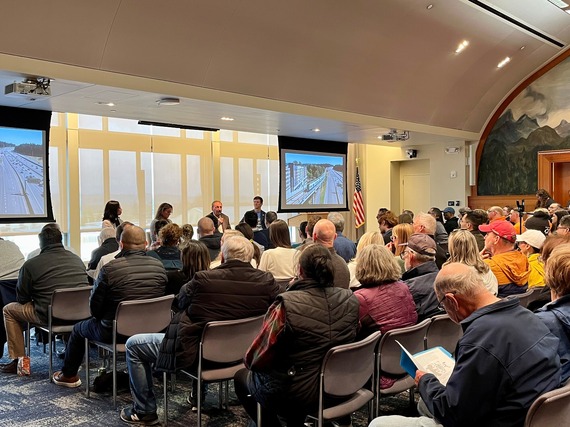 April 14 Town Hall at Everett Station
Apprenticeship programs are important for expanding opportunities for living-wage jobs and addressing workforce needs in critical areas like advanced manufacturing and aerospace, carpentry, construction, culinary, healthcare, information technology, and transportation. National Apprenticeship Week is April 26 to May 2 this year, and you can check out local events and resources like the ones listed below:

On April 11, a federal major disaster declaration was approved for the record flooding in December 2025. This declaration can help unlock additional resources to recover. Many families, farmers and businesses continue to experience impacts from flooding, and our county had more than $18 million in damage to public infrastructure.
The Federal Emergency Management Agency (FEMA) is now offering disaster assistance to help individuals recover from December's record flooding in Snohomish County. FEMA’s assistance is not income dependent. People who earlier did not qualify for state help should apply with FEMA now to see if there are federal programs that may be of assistance.
Individuals and families who sustained losses should first file claims with their insurance providers. At this time, they can apply for federal assistance online at www.DisasterAssistance.gov, by using the FEMA App on a mobile device, or by calling 1-800-621-3362. Anyone who has already received state disaster assistance must report that to FEMA to avoid duplication of benefits.
We continue to work with federal, state and local partners on next steps and potential timelines for public and individual assistance. We’ll share more information as it is available.

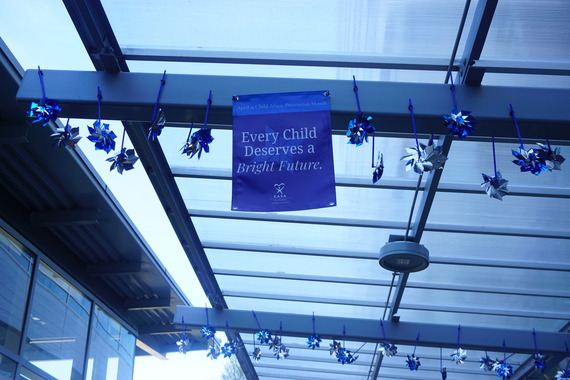
More than 400 pinwheels are suspended under the main lobby awning outside of the Snohomish County Admin East building at 3000 Rockefeller in Everett, near the elevators between the plaza and parking garage.
In honor of Child Abuse Prevention Month, the Court Appointed Special Advocate (CASA) Division of our Human Services Department, in partnership with Facilities, created this Pinwheels of Possibility display. Every pinwheel represents a child in our community who has been removed from the care of their parents due to abuse or neglect, either being served by a CASA volunteer now or waiting for one.
A CASA volunteer commits to knowing one child's story deeply and amplifying that child's voice until their case is resolved. The Pinwheels of Possibility campaign, introduced in 2008 by Prevent Child Abuse America, was built on the idea that preventing abuse starts with community support and families at the center. The blue pinwheel represents the joyful, carefree childhood every child deserves and the proactive community effort required to make that possible.
Learn more about CASA and how to become a volunteer at snococasa.org or stop by the display for information.
Last month, Snohomish County 911 – or SNO911 – shared that it has achieved all 20 standards to become an Accredited Center of Excellence (ACE) by the International Academies of Emergency Dispatch. SNO911 is only the third emergency communications center in Washington to achieve that accreditation, and the 364th out of more than 3,500 centers worldwide who use the academy’s protocols.
This accreditation reflects the hard work and dedication of the 911 dispatchers and supervisors who serve Snohomish County. I thank them for their commitment and skill. I hope you’ll join me in congratulating them on this prestigious accreditation.

|