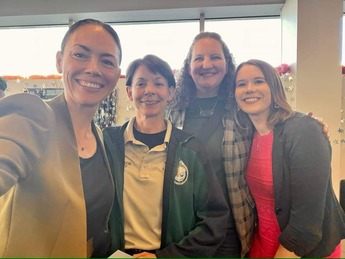
In January I started my second term as the County Councilmember for District 2. With the new year I continued on with leadership roles including as Chair of the Council’s Finance, Budget, and Administration Committee; Chair of the Snohomish County Board of Health; Chair of the Lodging Tax Advisory Committee; and I started the year as Chair of the Puget Sound Clean Air Agency and handed over the reins a few months later so a new chair could step in the role.
January also moved quickly with the kick off of the state’s legislative session. I serve on committees with both the Washington State Association of Counties and our internal county legislative steering committee to track legislation at the state and also provide testimony as needed to help advocate for the needs of residents in Snohomish County.
Swearing In Ceremony with Judge Rancourt
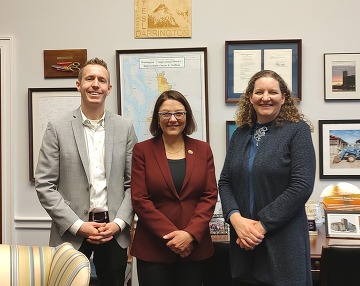
In February I traveled to the annual National Association of Counties conference in Washington DC. I serve on their Environment, Energy, and Land Use Policy Steering Committee where I help steer national-level policies that can affect change here in Snohomish County. While there I also took the time to meet with several of our federal representatives to lobby for funding to expand and remodel our county’s new sexually transmitted infections clinic, Chinook Marsh restoration, and adding a a mobile van unit to improve access to healthcare for rural communities. I am grateful to our federal delegates and the hard work they do to ensure our region is well taken care of at the federal level.
With Councilmember Nehring and Congresswoman DelBene in DC
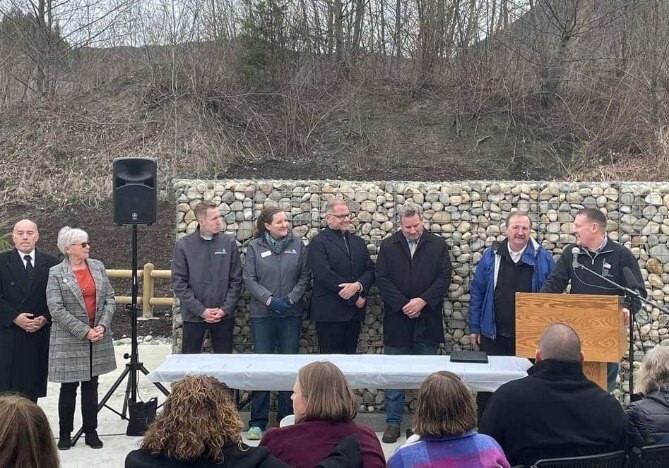
The county hosted a Remembrance and Site Dedication event at a site near the Steelhead Haven community in Oso to commemorate the 10th Anniversary of the Oso landslide. The landslide happened on March 22, 2014, at 10:37am, and was the deadliest landslide in United States history which tragically ended the lives of 43 people. I attended to show my respect for those who have passed, their loved ones, emergency responders, and all who have suffered from this tragedy. It was a somber event as survivors shared their stories and family members shared tributes to their loved ones. The memorial art installation is beautiful and I hope that the site brings healing to all who are able to visit.
L-R: Senator Wagoner, Representative Eslick, Councilmembers Nehring, Dunn, Peterson, and Low, County Executive Somers, and Dayn Brunner the MC for the Event
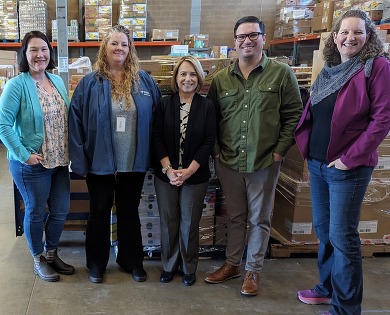
April was another busy month as we continued deliberations and input regarding the Comprehensive Plan. Paula and I also toured the Everett Food Bank operated by Volunteers of America Western Washington to learn more about their service to the community. It’s part of the larger Snohomish County Food Bank Coalition who works to address food insecurity across the county. Many of the food banks in our area rely on the good work of community volunteers. If you or someone you know is looking for volunteer opportunities in the new year, please consider reaching out to your local food bank to get involved.
L-R: Paula Rhyne, Tonya Glen the Everett Food Bank Manager, Chris Eck the Vice President of Programs with VOAWW, John Glennon the Executive Director of Hunger Prevention Services, and Myself
In May, Council worked on two policy matters that drew a lot of attention and public comment. First, we reviewed our county’s ban on the sales of fireworks in the Southwest Urban Growth Area. The discharge of fireworks in this area was already illegal, but it was causing confusion that the sale of fireworks in this area was allowed. Council voted unanimously to also ban the sale in this area and it will go into effect in spring of 2025. Also in May, council voted 3-2 to require the testing of county-owned housing facilities for drug contamination. I voted against this measure out of concern for the displacement of vulnerable individuals and because neither the State Department of Health nor Federal CDC have sent guidelines for contamination and mitigation standards. Though this matter passed, I will continue to follow it closely to ensure an equitable application of the policy.
June was an exciting month for me with several different council-driven initiatives I had been working on coming to fruition. First, I championed Ordinance 24-040 which implements Project Labor Agreements and Priority Hire Requirements for any Snohomish County project over five million dollars. I was proud to sponsor this initiative to support working families, increase local workforce entry points, and ensure fair labor practices at the county. That very same day, we celebrated the 4th Annual Pride Flag Raising and resource fair event at the county. It was another sunny beautiful day to support the county’s LGBTQIA+ community.
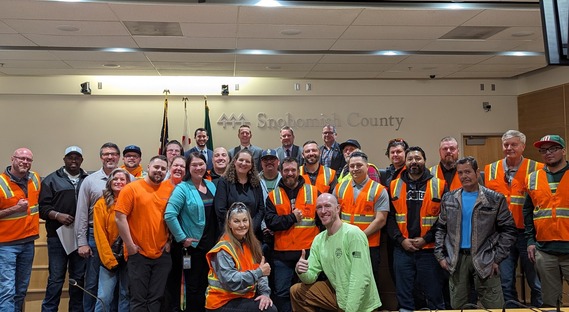
With Councilmembers and Labor Representatives after the passage of the PLA and Priority Hire Ordinance
--
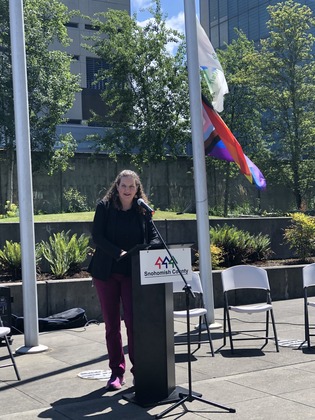
Speaking at the 4th Annual Pride Flag Raising Ceremony
Several events helped ring in summer during the month of July and I continued to serve on board and committees, namely the Fiscal Advisory Committee for the City of Everett’s Multipurpose Facility and as Chair for the county’s Lodging Tax Advisory Council. The month went by quickly with the Fourth of July holiday and council recess the last week of the month.
The Evergreen State Fair runs in August of each year and it’s always a good time to celebrate all that Snohomish County has to offer. I attended the fair’s kick-off event and events that recognized the volunteers and 4-H'ers who help make the fair a success every year. One of the most exciting events of August was the long-anticipated opening of the first Light Rail station in Snohomish County! On August 30, the newest segment of the light rail opened connecting the Northgate Station to Lynnwood. I was honored to join for a sneak preview ride before the public grand opening and am thrilled with the connectivity possibilities that this link brings to our county.
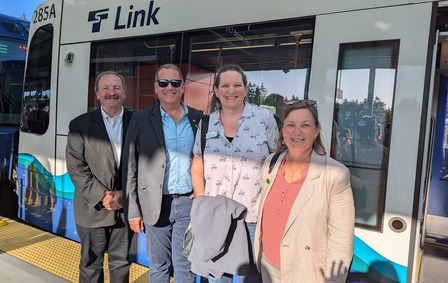
With Executive Somers, Councilmember Peterson, and Senator Robinson riding the new Light Rail Link
In early September, we kicked off “Budget Season” at the county. This year council worked to approve a biennial budget, a two-year budget that will span 2025-2026. Moving to a biennial budget will help streamline the budgeting process and provide more time for oversight of programs, reduce the total amount of time staff spend budgeting, and encourage longer-term strategic thinking. Keeping in mind the cuts that had already been made to address a looming budget deficit, I prioritized sustainability, equity, protecting staff, maintaining services, and ensuring stable revenues. The final vote on our budget came in November – more on final deliberations below.
With Councilmembers and Executive Somers at the 2025-2026 Budget Address
I hope you had a chance to read through my October Boosletter – my annual Halloween-themed newsletter. It was extra punny this year! In October we continued with Budget deliberations and discussions including presentations from each of the county departments about ways that they are working to trim costs and run as efficiently as possible. Council also hosted evening public hearing meetings so that we could hear feedback from the public. October also brought an uplifting event to celebrate 25 years of the Snohomish County Therapeutic Court programs. I was honored to speak and celebrate the transformational changes that have happened as a result of restorative justice programs. I have been supporting the county’s Therapeutic Court programs and catalyzing efforts to implement a Veterans Treatment Court track since my first term in office.
With Judge Whitney Rivera, Sheriff Susanna Johnson, and Representative Lauren Davis at the Recovery Court Event
On November 25, council approved the 2025-2026 budget on a 3-2 vote. The budget that was proposed by Executive Somers included a 4% increase on the county’s portion of your property tax bill (about 6% of your total bill) for each year of the biennium for a total of 8%. For the average house in the county valued at $650,000, the increase would amount to about $14-15 per year and would go to prevent cuts to the county’s essential services. This year’s budget process was challenging due to misinformation and misconceptions about the amount of the increase with many people having concerns that the increase was to their total tax bill. You may have seen the Op-Ed that I wrote to help correct the record. There were a series of budget amendments that were presented which included targeted cuts to certain positions –which I feel was an overstep of our council authority- and it was disappointing to see these pass. Council ultimately approved the budget on a 3-2 vote based on a property tax increase of 2% per year (4% total over the biennium) and included the targeted reductions and savings proposed by each Department to save tens of millions of dollars. Despite councilmember amendments which directed cuts to our Office of Social Justice and siphoning of funds from our Affordable Housing and Behavioral Health Fund, the adopted budget does not lay off staff dependent on the general fund. There were a few wins including funding for the Snohomish River Trail and the inclusion of the continuity of funding for our county’s therapeutic courts. I was also able to secure funding to correct the calculations for the Sheriff and Corrections Department for more accurate budgeting and spending authority.
Next fall, we will conduct a mid-biennium review of the budget and can make small adjustments if needed. I am hopeful that moving forward we will be able to remove heightened emotions from deliberations and focus on serving the public in a transparent and factual manner.
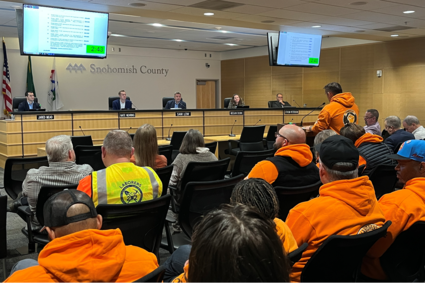
A full house at one of the Budget Hearing meetings
Over the past two years staff have worked diligently to prepare updates to the county’s Comprehensive Plan Update. The plan serves as a guiding policy document for growth management and we are required by state law to update the plan every ten years. Earlier this month, council adopted a series of amendments to our Comprehensive Plan including an amendment that I championed that protects and enhances the urban tree canopy in our county. I organized local stakeholders including the League of Women Voters of Snohomish County and Futurewise to draft policy goals that support climate protections. Of the eleven amendments that were considered, two amendments which expanded our Urban Growth Boundary were later vetoed by the County Executive. These two vetoed amendments returned to council for reconsideration. Here is a summary of the reconsideration (from the County’s 2024 Comprehensive Plan Update website):
-
The vote on the first action to override the Executive’s veto was 3-2, and therefore did not receive the four votes it would have needed, so that ordinance will not move forward.
-
Subsequently, a motion was made to approve Amended Ordinance No. 24-100 as originally drafted (for the SWUGA boundary to follow the rural/urban transition area). This version of the ordinance was approved by a 3-2 vote. However, this second action by the County Council constitutes adoption of a new ordinance and needs to be submitted again to the Executive for signature or veto.
-
The vote on Amended Ordinance No. 24-101 was 3-2, and therefore did not receive the four votes it would have needed to override the veto. This means the ordinance will not go forward, meaning the Maltby UGA will not be expanded to include properties to the west and east (Northshore School District property/MALT1 Docket Application).
Many thanks to staff for the hard work that they put into the update and to gather community feedback. I’m confident that the amendments and adjustments that had been made will go a long way to help direct and maintain growth in our county.

|