|
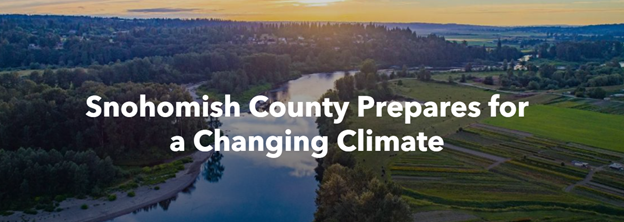
Executive Dave Somers recently announced that Snohomish County is launching a new tool to evaluate local communities’ vulnerability to climate change impacts. The Climate Vulnerability Tool (CVT) is accompanied by a new resource hub – Snohomish County Prepares for a Changing Climate – that houses the CVT and aggregates existing climate change plans, policies, and programs for Snohomish County residents and businesses.
“Snohomish County is committed to exploring every possible avenue to address climate change,” said Executive Somers. “Our natural environment makes us the best place to live, work, and play. Without it, we wouldn’t have people from all over the world visiting, investing their resources, and bringing innovative ideas here. I encourage communities across Snohomish County to engage with these new tools to learn more about our climate vulnerabilities and what we can do together to adapt, change our behavior, and mitigate the impacts of climate change.”
Addressing the impacts of climate change is an urgent issue for Snohomish County communities. As evidenced by the Bolt Creek Fire and recent flooding, the impacts of climate change are growing more acute for Snohomish County communities each year, particularly for communities furthest from opportunity. Climate emergencies present immediate impacts to life, safety, and property, but they also cause adverse long-term health effects.
Click here to learn more about how Snohomish County is preparing for a changing climate, and share the tool among your friends, family, and network: https://storymaps.arcgis.com/stories/05cec66c283346da854d6e3419f62b63.
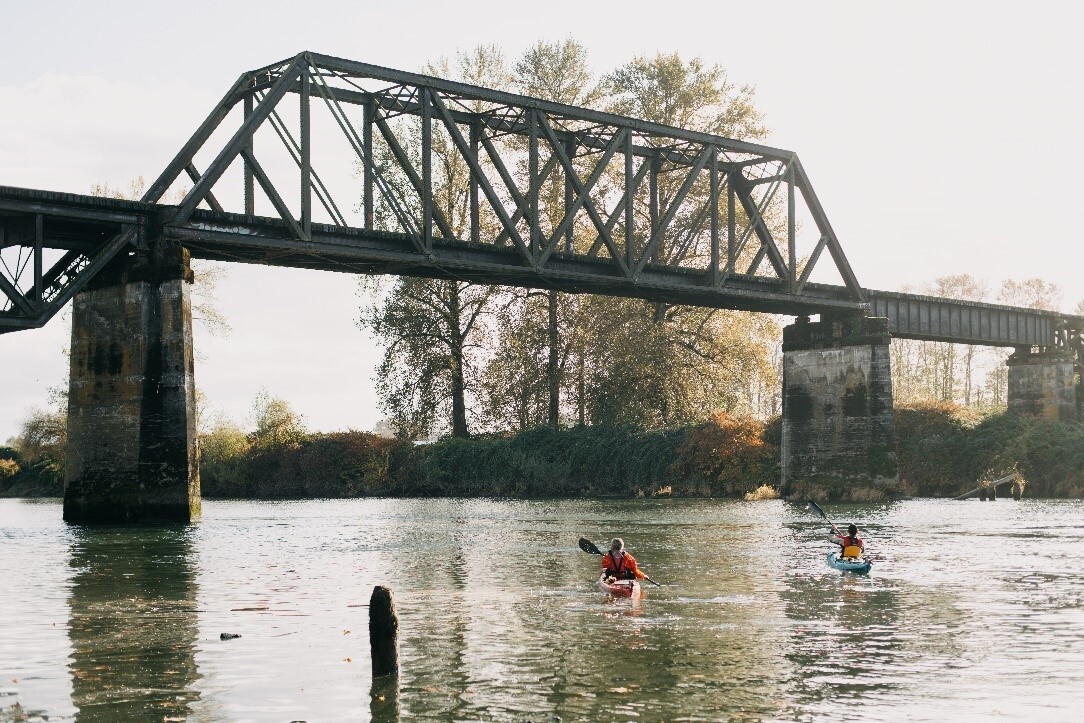
Executive Somers recently announced that Snohomish County has provided a total of $600,000 in grants to 39 tourism projects and events across the county in 2024. These grants are funded by the Hotel-Motel Small Fund, which invests in efforts that promote the tourism sector in Snohomish County.
“Tourism is a core component of Snohomish County’s economy, and many families depend on visitor spending for their livelihoods. People from across the world travel here to explore our beautiful and diverse natural resources, thriving small business community, and innovative aerospace sector,” said Executive Somers. “These grants help boost visitation so that more communities can sustainably explore our singular county with attractions that can’t be found anywhere else.”
Tourism is a crucial aspect of the county’s economy. In 2022, visitors traveling to Snohomish County spent $1.45 billion locally. Visitation accounted for 15,105 total jobs, representing five percent of all employment in the county.
Anyone interested can learn more here.
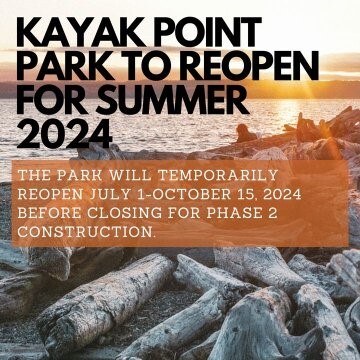
Snohomish County Parks plans to reopen the day-use area at Kayak Point Regional Park on July 1, 2024, after most of Phase 1 construction is complete and plan to close the day-use area again October 15, 2024, for the beginning of Phase 2 construction. Things will look different than what visitors are used to, as the park is still in an interim stage during construction that will continue during the summer.
The pier (usually used for fishing and crabbing) will remain closed the entire summer. The Washington Department of Fish and Wildlife requires in-water construction for the new pier during the summer months, when work is least likely to impact aquatic life. Most of the park will be open, including the new boat launch and parking areas, as well as parts of the park that have not yet been updated such as the restrooms and picnic shelters. Online reservations for the picnic shelters will open March 1 at 9:00 a.m. All dates are subject to change.
Anyone interested can find more information here: https://www.snohomishcountywa.gov/CivicAlerts.aspx?AID=2785.
Earlier this month, Executive Dave Somers issued a proclamation recognizing February as Black History Month in Snohomish County. The County acknowledges the disparate treatment of Black Americans and we commit ourselves as a government to continuing to fund programs that ensure safety and equity across our community.

|