Megan Dunn's eNewsletter
Snohomish County Council
3000 Rockefeller Ave., M/S 609
Everett, Washington 98201
8th floor, Robert J. Drewel Building
Phone: 425-388-3494
E-Mail: Megan.Dunn@snoco.org
Paula Rhyne, Legislative Aide
|
The leaves are turning colors, winds are a little blustery, and pumpkins are appearing on porches. It can only mean the beginning of a new season: Budget Season. On September 29, Executive Somers delivered his proposed budget to the County Councilmembers for review and consideration. Over the next five weeks or so, councilmembers and staff will pour over the budget line-by-line and make adjustments and propose amendments to the budget for final approval in early to mid-November. As the county continues to face the economic fall out of COVID, there are across the board cuts that must be addressed to meet our budget shortfall. Thankfully the cuts aren’t quite as deep as initially forecasted, and we are working diligently to avoid layoffs. Our County staff people have been so resilient in the wake of a tremendous number of changes and have been incredible at continuing to buoy county services. We owe it to them, and to every person living in the county, to balance a budget that best reflects our values and commitment to a better tomorrow.
In this newsletter, I will share more about the 2021 budget and my priorities, provide more information about Boeing’s announcement that they will be moving their 787 production line to South Carolina, an update on the county’s response to COVID, my recent visit to the Tulalip Hibulb Cultural Center, and upcoming area events.
If you have any questions or concerns, or if my office can be of assistance in any way, please don’t hesitate to get in touch with me at Megan.Dunn@snoco.org, or with my aide, Paula Rhyne, at Paula.Rhyne@snoco.org, or you can call us at 425-388-3494 and leave a message and we will return your call asap.
I am grateful that several years ago, my predecessor, Brian Sullivan, had the foresight to establish the County’s “Rainy Day Fund” as a way to maintain the county’s financial solvency just in case an unforeseen budget crisis happened. Because we have been able to tap into this fund, and because of the influx of federal CARES dollars, this year’s 2021 budget deliberations will not be as dire as originally expected. At this point, it looks like we will be able to fill several vacant positions which had been left open because of the county’s hiring freeze, and we will also be able to dedicate some funding to supporting our community. The Executive’s proposed budget includes an allocation of money for public safety and social justice measures in order to initiate the process to equip our sheriff’s deputies with body cameras, and with resources for the new Office of Social Justice to pursue several equity initiatives.
Studies have shown that it is beneficial to both law enforcement officials and to the public when officers wear a body camera. Officers are protected from fraudulent claims, and people who have been unfairly treated by officers have visual proof to support their case and discipline bad officers. The utilization of body cameras is supported by both the Washington Association of Sheriffs & Police Chiefs and by social justice advocate groups like NAACP of Snohomish County. We will continue this conversation to better understand potential oversight that body cams may offer and if this is a good fit for our County.
The budget also includes an allocation the Office of Social Justice so that they can complete studies and implement policies in equitable hiring practices, employee trainings, and outreach to underserved communities. My district includes several very diverse areas of the county with many people in these communities speaking a language other than English at home, and many are left out of being able to access services at the county because of a language barrier and a lack of outreach. This budget includes some funding for translation services and outreach which will go a long ways to ensure that county services are accessible to all homes, not just homes that can read and speak English.
In our deliberations, we’ve been having some robust discussions on emergency responses to mental health, our 911 system, and the County’s trained mental health crisis responders. We’re also discussing the need for dedicated funding for our human services, maintaining service levels and re-envisioning our Parks Department, and ensuring safe and secure local elections! The budget spans all departments and divisions and is the most important responsibility of the County Council.
If you have any specific concerns or suggestions about this year’s budget, please don’t hesitate to reach out to share them with the full council at contact.council@snoco.org. This budget is a document that reflects our county’s morals, and in doing so, I will be prioritizing working families, affordability, sustainability, livability, and public safety through more opportunity, better responses to mental and behavioral health crises, and increased oversight and transparency of our justice system.
 |
October 12 is Indigenous People’s Day and instead of a usual in-person celebration at Daybreak Star Indian Cultural Center, the event is going virtual and can be viewed on Facebook. This day had previously been recognized as Columbus Day but has recently been reclaimed as Indigenous People’s Day to celebrate and acknowledge the fact that Native people are the first inhabitants of the Americas and that their ancestors have been here since time immemorial. On October 12, the Council unanimously passed Joint Resolution 20-027 Recognizing October 12 as Indigenous People’s Day in Snohomish County. I am grateful for my relationships with our local tribal members and was honored to vote in favor of this joint resolution.
 |
I am disappointed in the announcement that Boeing will be moving production of the 787 to South Carolina to increase operational efficiency and adapt to the downturn. Everett has been home to Boeing for decades and we have a talented aerospace workforce that is unparalleled in dedication and expertise. So many working families and small businesses in my district have ties to Boeing and to the aerospace industry and there is no doubt that in a time of continued economic hardship from COVID, this will only add to those challenges. I will be working closely with representatives from the aerospace industry, labor unions, and workforce development to determine ways that the county can best support these working families in the wake of this news and will keep you updated as we receive more information on this developing matter.
 |
As the County moves into month nine of active response to the COVID-19 pandemic, the county continues to respond so that we can get back to normal as quickly as possible. The Snohomish Health District continues to provide drive-thru testing sites at various places around the county and you can continue to get testing through your healthcare provider. Here is a link with up-to-date information and schedules on where the sites are located. To get a test, you must register ahead of time and bring your testing identifier number and photo ID. Test results are available in 3-4 days. For a step-by-step overview of what to expect at a drive-thru test site, here is an informational video that you can watch. The Snohomish Health District also has a reformatted COVID-19 website with improved navigation. Check it out here.
A reminder to continue to rely on information from reputable sources. Organizations like the Snohomish County Health District, Washington State Department of Health, and the federal Center for Disease Control have teams of experts working hard with doctors, epidemiologists, scientists, and data experts to analyze the data and provide recommendations. It is still recommended to wear a face mask, practice social distancing, and regularly wash our hands. Let’s all do our part to adhere to these recommendations so we can move to Phase 3 of re-opening.
 |
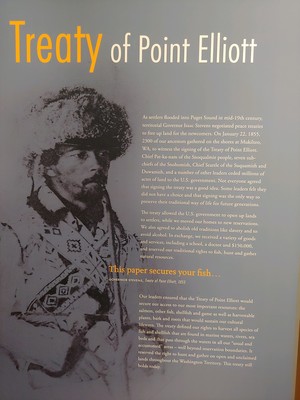
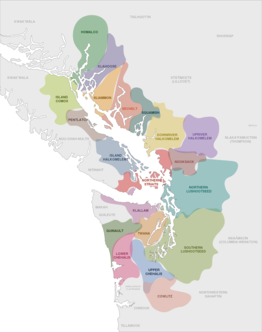
In January of 1855, Cost Salish tribal representatives from across the region signed the Treaty of Point Elliott with the Governor of the Washington Territory representing the interests of the US Government on the shores of the Salish Sea near what is now Mukilteo. The treaty was only in English and translation services were limited. With many of the tribal representatives speaking only their native language, many of the tribal signatories did not know the full extent of the treaty. Sam Barr, the Cultural Resource Specialist with the Stillaguamish Tribe, shared these points about some of the destructive effects that treaties have had on Coast Salish tribes:
-
Many cases were unclear of which lands were being traded. Many the tribes still consider certain territories as unceded.
-
Promises were made that hunting and fishing would remain intact for tribal peoples. This has never been the reality. It was illegal for tribes to practice fishing. Some settlers claimed that it was the Europeans who invented local reef netting. "Open and unclaimed lands" where tribes are allowed to hunt are being reduced every day. This was a critical part of the agreement in the treaties for tribal ancestors to agree. And the dominant party of the treaty has mismanaged the territory so that it can barely support tribal communities.
-
Treaties created reservations that divided families who were traditionally intertribal, and created infighting for scarce resources such as fish and game.
-
Some tribes were left out of the treaties, some were lumped in with other tribes, some were included in the treaty but not given a reservation.
-
The treaty signing was held in the middle of winter, during what is typically the coldest part of winter. For tribal peoples who travel by canoe, this was an extremely challenging and dangerous journey to the treaty signing. Typically tribes would hang up their paddles and not travel far distances in the winter. This meant that less people and less tribes actually attended the treaty signing.
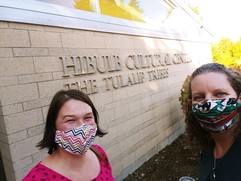
The actual Treaty of Point Elliott document has been stored at the National Archives since shortly after it was signed. This past January, the National Archives loaned the document to the Tulalip Tribes to put on display at the Hibulb Cultural Center. My aide, Paula, and I recently visited the Center to see the Treaty and learn more about the history and tribal rights. Seeing the treaty in-person was a very moving experience for me to gain further understanding of the impacts to our local tribes.
Here are some pictures from our visit:
 |
|
Paula and I outside of Hibulb Cultural Center
|
----
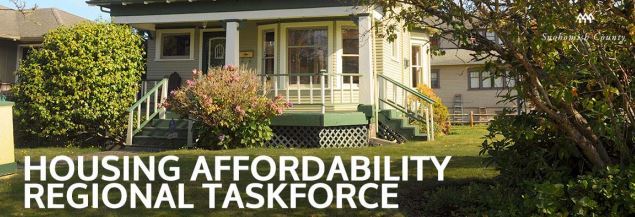
It is clear that the county is experiencing an increase in the number of people who are housing insecure and who are experiencing homelessness. Over the past few months I have worked with local human services providers who are providing services and offer housing to people in the area experiencing homelessness. The stories that I have heard from people are heartbreaking. The County’s Housing Affordability Regional Taskforce (HART) completed a comprehensive report and 5-year plan at the end of 2019. That report can be found here. Highlighted in the report is the fact that population growth in Snohomish County has far outpaced the production of housing. As a result, the demand for housing has soared, while the supply of housing has limped along. As a result of this imbalance, housing prices have continued to steeply rise while household incomes have stagnated leaving many households cost burdened to pay for rent or their mortgage.
The report outlines that one of the ways to bring this dynamic back into balance is to build more housing for “the missing middle”. Middle-income families who don’t make enough money to buy a single-family home, but make too much to qualify for subsidized housing, do not have many housing opportunities in the county. Building more duplexes, triplexes, and townhouses will help to address this housing affordability gap.
Also missing is access to affordable or income-based housing units for people who are low-income or experiencing homelessness. The current wait time for people who have signed up for a housing voucher is 7-10 years. The County must address this affordable housing crisis and I am working closely with the Executive and community members to come up with options.
If housing and homelessness has impacted you in any way, please don’t hesitate to reach out with your story. You can email me at megan.dunn@snoco.org.
A reminder that our general election is coming up on November 3. Be a Snohomish County Super Voter and earn some great badges for participating! Here are some important upcoming dates:
For more information, check out the county's Elections & Voter Registration page.

With Halloween quickly approaching, the State Department of Health has released this Tips for a Safer Halloween document, intended to help inform communities about ways to safely enjoy the holiday during the COVID-19 pandemic. Downtown Everett usually has a trick-or-treat experience, but this year is going to look a little bit differently. The Downtown Everett Association is putting on a Spooky Scavenger Hunt and opportunities for people to take pictures in front of fun Halloween-Themed backdrops. Check out their Facebook page for more details as the date gets closer. They are also asking the community, both business owners and the general public, to complete a survey about what types of activities they would be willing to engage in as a celebration.
I’ll post events and updates to my Facebook page about Halloween as they become available. Will you be celebrating Halloween this year? If so, what are some ways that you’ll be safely celebrating?
This month, the Snohomish Conservation District is celebrating Orcatober and has several events all month long to celebrate. Before COVID, Snohomish Conservation District would host in-person events to help restore habitats for Chinook salmon to help foster their numbers, and also to help our orca populations since salmon is their primary food source. This year, the Conservation District has provided self-guided tours and suggestions for restoration projects that people can do on their own. Check out this web page for more information and to see if there is a restoration project near you.
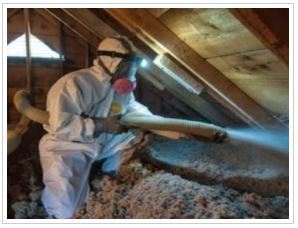
Snohomish County recently announced that they will continue with the County’s Weatherization Program. This program provides FREE home energy improvements and conservation education to qualifying low-income households. Low-income people in single-family homes, mobile homes, duplexes, and multi-family buildings up to three stories may apply. Check out the website linked above for income requirements and thresholds. Also included on the website is the application form. For additional information you can also call their office at 425-388-7205 or email them at weatherization@snoco.org.
 |
Thanks so much for taking the time to read through my newsletter. It's important to me to provide helpful information to you as we navigate through these difficult times. Again, as we proceed through budget season, don’t hesitate to reach out to me (megan.dunn@snoco.org) or the Council as a whole (contact.council@snoco.org) with suggestions or input on the budget. You can also tune into the budget meetings and deliberations via Zoom.
|