|
Photo of the Month
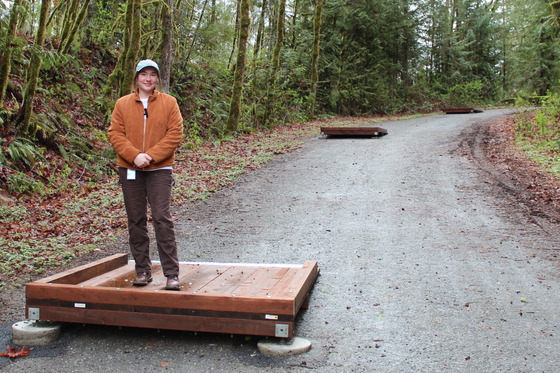 Renee McMinn stands on one of the wheelchair ramps she designed at Ovenell Slough. The ramps are made with high quality repurposed wood.
EXTRA!: Check out our Instagram or Facebook to see a quick video of Renee McMinn talking about the wheelchair ramps she designed.
Nestled in the Cedar Grove neighborhood, the new restoration site on Ovenell Slough is quickly growing green and lush as willows and other planted natives awaken with the spring sun. Frogs croak in the wetland, and the water babbles gently. Not long ago, the slough was once silenced by a narrow culvert. With the culvert removed and the area around it restored, this section of Ovenell Slough now provides both prime fish spawning habitat and beautiful scenery.
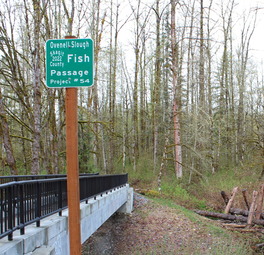
The path to the slough and the walking bridge is steep, though— steep enough to make it difficult for people who use wheelchairs to get down to the site.
To help solve this problem, our engineering technician, Renee McMinn, designed four wheelchair ramps to be placed along the length of the hill. These wheelchair ramps act as resting points for people using wheelchairs to take a break from going down the steep parts of the path.
These ramps are Renee's first design project here at the County. Her process was careful and measured.
"The ramps are placed at the steepest parts of the hill, where they're most needed," said Renee.
She took sustainability into account in her planning, too.
"We used old, leftover, pressure-treated lumber so we didn't have to get any new supplies," she said.
After Renee designed the ramps, our Environmental Services team built them at the site.
Learn more about the culvert removal and restoration work here at our Cedar Grove Fish Passage project page.
|
|
|
|
April held classic spring weather with a good mix of both sun and rain. The maximum average temperature at the Mount Vernon AgWeatherNet station in April was about average at 56.6°F. Total precipitation this month was about 2.62 inches, about 0.2 inches above the amount of rain that we normally see in April.
At the end of the month, two back-to-back storms caused quick rises in the Samish River and led to two closures of the commercial shellfish growing areas in Samish Bay. Bacteria results for these storms were high, meaning there was too much pollution for safe shellfish harvesting. Later on, we collected follow-up samples confirming lowered pollution levels, and harvesting was reopened. For the first storm, we were able to collect additional samples in waterways across the watershed. These results revealed that Colony Creek, Friday Creek, and the Upper Samish River looked good with low levels of bacteria. Bacteria levels started to rise around the Middle Samish River and continued to build from there. These storm samples provide more clarity on where pollution is coming from and helps direct our investigations.
Our routine sampling this month showed bacteria hotspots at Little Indian Slough, No Name Slough, and Big Ditch/Maddox Creek. The County and our partners are conducting investigations into the sources of this pollution and hope to see improvements in the future.
Check out our Water Quality Map if you’re interested in more!
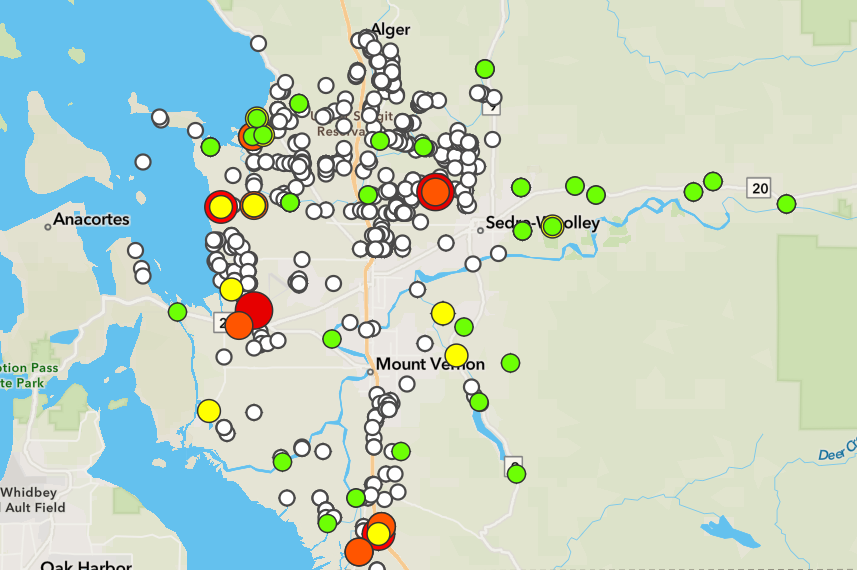 April's water quality results. Red dots represent sites with high levels of fecal bacteria, yellow represents sites with moderate levels of fecal bacteira and green dots represent sites with low fecal bacteria levels. Click on the map to go to the online water quality map, where you can explore sites in Skagit, Whatcom and Snohomish Counties.
|
|
Home Tip of the Month
Did you know? Landscaping with artificial turf is illegal in most places, including Skagit County. So, if one of your spring plans is replacing your lawn with turf, save yourself a LOT of money and choose a different path.

Why is artificial turf illegal?
Natural lawns with grass and dirt are permeable. They act like a sponge and absorb rainwater where it falls, slowing down and letting it return to the ground.
Development laws limit the amount of impervious surface added to a property.
Artificial turf is impervious. This means that water can't absorb into it, the same way it can't absorb into concrete or asphalt. When water can't be absorbed by the ground, it becomes runoff. When contractors install artificial turf, they need to make a stable base for the turf to sit on, so they add crushed rock underneath. Over time, the fine bits of rock in crushed rock lock together and reduce or eliminate the ability of water to flow into the ground.
Why is runoff bad?
Runoff flows across whatever surface it's on and picks up everything it touches before it flows into local waterways. Runoff carries dirt, garbage, chemicals, oil, and pet waste into our streams, rivers, and eventually Puget Sound.
Too much runoff can also flood streets, parking lots, or even your property. If the water can't sink into the ground, it can become an issue on the surface. Just 200 square feet of artificial turf creates 124 gallons of runoff during a one-inch rainstorm. That, plus all your paved areas and your roof, adds up to a LOT of runoff– maybe enough to cause flooding downstream.
Runoff from artificial turf also carries chemicals and plastic particles from the turf. These chemicals and microplastics harm fish and other wildlife. They can also harm the people that eat those animals.
My lawn is too much maintenance. What is an alternative to artificial turf?
Keeping a lawn green and free of moss and weeds year-round is difficult in the Pacific Northwest. Replacing your lawn with native shrubbery or ground cover can help reduce maintenance. Native plants are adapted to our climate and so are often heartier than lawns during our dry summers. If your lawn is in a moist, shaded area, you may choose to embrace a moss lawn.
Check out WSU’s guide to drought tolerant landscaping to learn more about planning your garden for our climate.
I still want to install artificial turf. What should I do?
Even if artificial turf isn't illegal where you live, you may still need a permit to install it. Contact the planning department of your city or county to apply for an artificial turf permit or ask more questions about your area's laws.
I was told I couldn't install artificial turf. What happens if I do it anyway?
You may be asked to remove the artificial turf you installed and replace it with a lawn or other permeable surface at your own cost.
|
|
|
Farm Tip of the Month
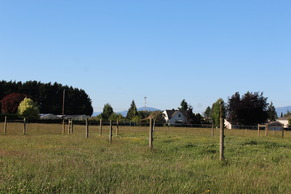
Farmers are starting to turn their animals out to pasture as grass reaches 6-8 inches and the ground becomes less saturated. These hungry mouths and heavy hooves can be hard on the landscape. Luckily there's a way to help keep your pastures looking lush all season long!
Rotational grazing is one option that is beneficial to your animals and your pastures. Rotational grazing means dividing your pasture into sections using fencing and letting animals graze one section at a time. This way, pastures are evenly grazed, but not overgrazed, and each section has a chance to rest and regrow.
Grass that is grazed this way grows back faster and healthier. Grazing on healthy pastures keeps your animals healthy, too! Overgrazed pastures lead to more mud, weeds, and parasites, some of which can kill livestock.
Here are some tips for successful pasture rotation:
- Wait until the grass in your first pasture has reached 6 to 8 inches before you start grazing.
- Rotate your animals to the next pasture when they have grazed the grass down to 3 inches.
- Try to divide pastures to allow each section to rest at least 30 days before grazing it again. Temporary fencing is a great way to trail run pasture sizes.
- Use this pasture stocking calculator to determine how many acres you'll need for each animal.
- Once you have rotated your animals through all available pastures, rotate back to the first pasture. If the pasture has not grown back to 6 to 8 inches, feed animals in a confinement area until the grass has reached the proper height. Check out the farm section of our March newsletter to learn why maintaining grass length is so important, and how to tell if it's time to graze.
Visit Skagit Conservation District's Farming Resources page and WSU's Pasture Grazing Management page to learn more about pasture health and confinement areas, as well as more farming tips and knowledge!
|
|
|
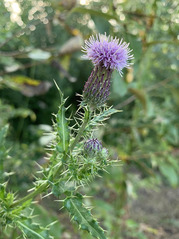
We've been regulating weeds in Washington State since 1881. The weed that started it all? Canada thistle!
Canada thistle, our noxious weed for May, is thought to have been brought over by European settlers, maybe even on the MAYflower (see what we did there?).
This prickly plant is known for invading pastures, pushing out grass and forage. Here's what you need to know about Canada thistle:
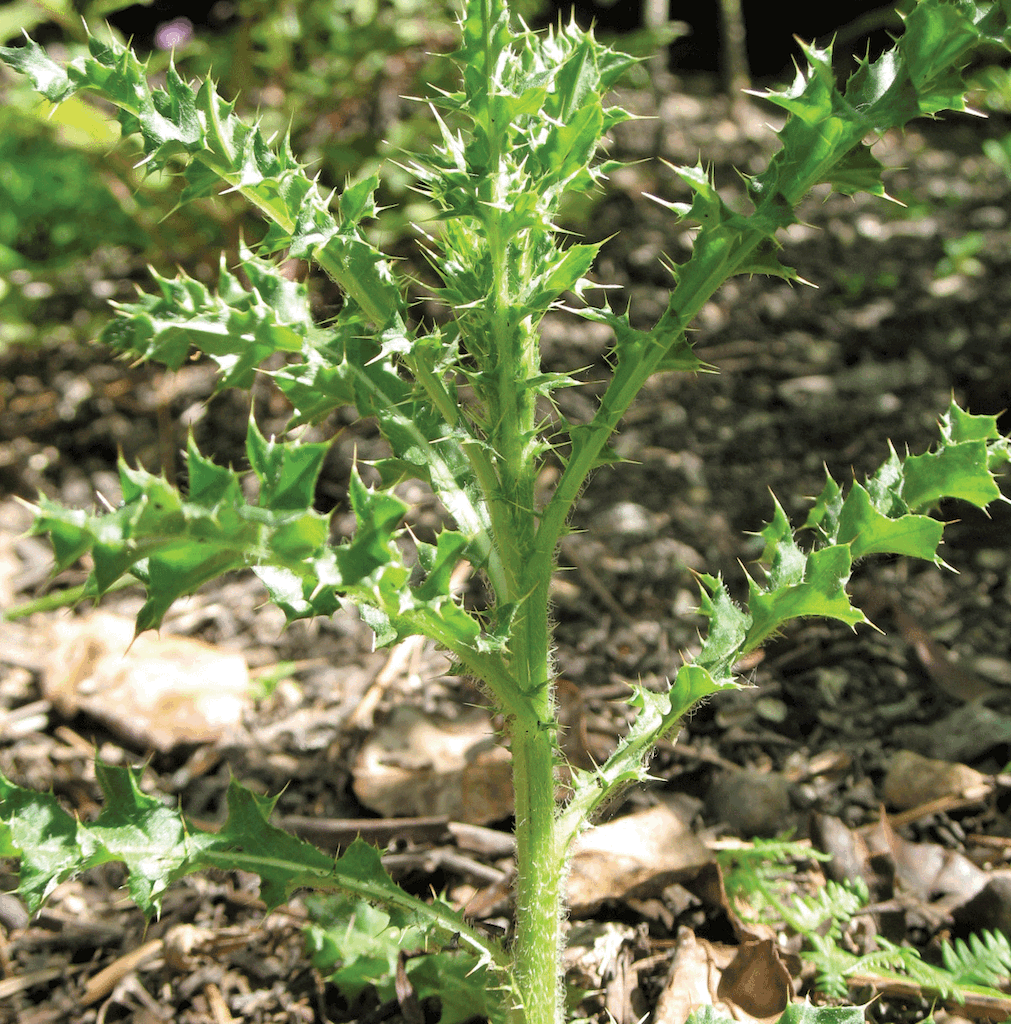
Description: Canada thistle grows in circular patches with green stems 2 to 5 feet tall. The stems branch at the top and grow many flowerheads. The flowers start out as scaled bulbs until fine purple, pink, or sometimes white petals emerge from their tops. In full bloom, the petals have a bursting appearance. Its leaves are narrow and lobed or toothed, often with thin, sharp spines along the edge.
Toxicity: Canada thistle is not particularly toxic, but its spines are certainly painful, and it results in economic loss by taking over pastures.
Control: Mowing Canada thistle and planting competitive, non-invasive grass over it can help control or eliminate it. Do not allow the plants to go to seed, or they will spread further. It can also spread via root if not adequately controlled. Canada thistle is hard to control once it gets established, so if you have an infestation, take care of it quickly.
If you are experiencing a larger infestation, please reach out to our Noxious Weed Coordinator, Madelyn Loy, at (360) 416-1467 or mloy@co.skagit.wa.us to discuss control options and support.
Learn more about Canada thistle from the Washington State Noxious Weed Control Board.
Photos courtesy of the Washington State Noxious Weed Control Board.
|
Program News
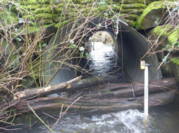
Skagit County recently received funding to remove and replace the farthest downstream culvert on Carpenter Creek!
This culvert, located on Cascade Ridge Road, is currently making it harder for fish including sockeye, coho, cutthroat trout, and steelhead to reach important upstream habitat. Once the culvert is removed, these species will have access to many more acres of feeding and spawning grounds.
Learn more about how we help fish access essential habitat at the Skagit County Fish Passage Improvement page.
Photo taken from Washington State Department of Fish and Wildlife report.
|
Classes and Events
Rainwater harvesting, enhancing your outdoor spaces, gardening for wildlife, and more! Check out Skagit Conservation District's Backyard Conservation Workshops in April and May! Learn more and RSVP at their events page.
Into the Weeds workshops, May 8, 8AM to 12PM and May 15, 12PM to 4PM, online: Join King County's FREE webinars on noxious weeds, with a potential for WSDA and ODA credits (pending). Register for Day 1 here and register for Day 2 here.
Get the WSU Plant Fair on your calendar, May 11, 8AM to 2PM: Pick from a variety of beautiful plants (including native options) for your garden or yard. We'll be there, too! Come say hello! Learn more on their website.
Western Washington Lakes Workshop, May 15, 6PM to 8PM: Do you live near a lake, care about lake health, or just want to learn more about lakes? Join the FREE Lakeside Dialogues virtual workshop put on by lake experts! Learn more and register on the event webpage!
Noxious weeds citizen science training, May 18, 9AM to 12PM, Edmonds: Attend this free training and hike from the Pacific Northwest Invasive Plant Council to learn how to identify invasive species, record basic data, and report findings on EDDMapS, a national early detection reporting system. Learn more and register on their website.
Salmon, soaring birds and signs of spring: Check out Padilla Bay National Estuarine Research Reserve's list of events for this season!
Vessel Turn-In Recycling Day, end of July: Do you have a boat you need to get rid of? Turn it in for FREE at the Skagit County Vessel Turn-In Recyling Day this July! Learn more and apply at their website.
Volunteer Opportunities
Bowman Bay Stewardship Days, May-August: Join the Northwest Straits Foundation and Skagit County Marine Resources Committee in stewarding the beautiful Bowman Bay! Once a month they will spend the morning nurturing the site and native plants with activities such as weeding, watering, and spreading compost and mulch. Learn more at their website.
Plant and pot with Skagit Fisheries Enhancement Group: Help our friends at Skagit Fisheries Enhancement Group plant and pot native plants that will help create habitat. See their volunteer event calendar for more details.
Volunteer with Skagit Land Trust: Help our friends at Skagit Land Trust restore our environment through plantings and invasive species removal! See their volunteer event calendar for more details.
|
|
Contact Us
For questions or more details, please contact Karen DuBose at kdubose@co.skagit.wa.us or 360-416-1460.
This project has been funded wholly or in part by the United States Environmental Protection Agency under assistance agreement PC01J18001-0 to the Washington Department of Health. The contents of this document do not necessarily reflect the views and policies of the Environmental Protection Agency, nor does mention of trade names or commercial products constitute endorsement or recommendation for use.
|
|
|
|
|