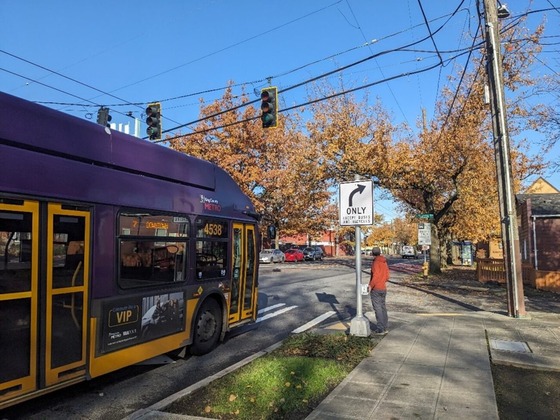
 A person waits at a crosswalk as a Route 7 bus travels along Rainier Ave S in a red bus lane, funded in part by the STM.
To reach more people who are interested in our work, we’re releasing a monthly newsletter that highlights what the voter-approved Seattle Transit Measure has made possible in that month. Learn more about the Seattle Transit Measure here.
You are receiving this email because you have expressed interest in projects and programs funded by the voter-approved Seattle Transit Measure. We will send you this newsletter in January as well, but to sign up to receive this monthly newsletter in the future, please visit this link and select the “Seattle Transit Measure” topic.
Thanks to Seattle voters and taxpayers, the Seattle Transit Measure has improved transit frequency, invested in new bus-only lanes to make taking the bus more reliable, made transit more accessible through our Transportation Access Programs, and more.
Use the links below to navigate directly to the section you are interested in:
Transit Service: More frequent, reliable service for those who rely on transit the most.
- Over half of Seattle Transit Measure revenue is used to pay for more bus trips in Seattle, on top of what King County Metro provides. In 2024, STM funded over 150,000 trips over the course of the year, or about 3000 weekly trips.
-
Starting in Fall 2025, STM funded 30 new bus trips on the weekend for the Route 106 (which serves neighborhoods like Rainier Beach and the Chinatown/International District). With this investment, STM now funds 30% of all weekend bus service on the Route 106.
- As of Spring 2025, the Route 106 served over 5,000 daily passengers on weekdays and 3,500 daily passengers on weekends, ranking within the top 20 highest ridership routes in Seattle. Traveling along Martin Luther King, Jr. Way S, it connects people to local businesses, homes, and Link light rail stations, operating reliably every day of the week.
- With this new service, the Route 106 now comes every 15 minutes all day on Saturdays and Sundays, matching the schedule on weekdays to make it easier to take transit every day of the week.
- The Route 106 service investment is part of the STM's goal to create frequent, reliable transit service every day of the week. This investment adds to the more than 3,000 weekly bus trips that STM funds across nearly 30 bus routes around the city.
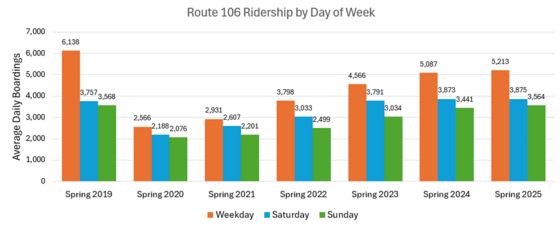
The above chart shows that Route 106 has grown in ridership year-over-year since the COVID-19 pandemic in 2020. Weekends have continued to play a prominent and growing role in overall route ridership despite having less frequent transit service compared to weekdays. STM’s Fall 2025 investment in the Route 106 added more service on weekends to create a consistent transit schedule seven days per week.
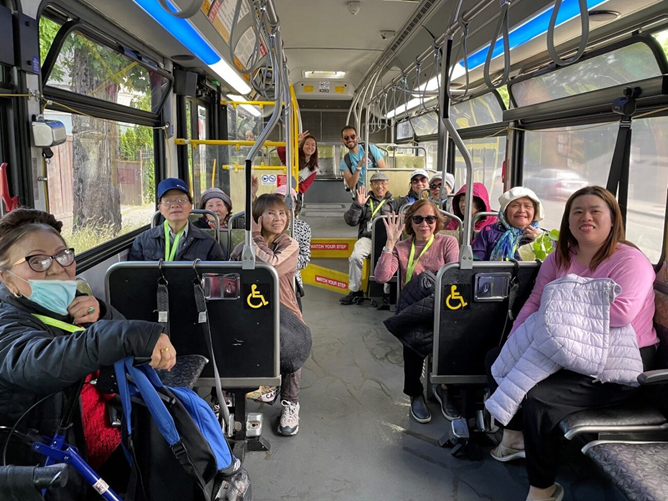 Participants in SDOT's Transportation Access Program ride a bus in Seattle.
Our Transportation Access Programs have funded ORCA cards for thousands of low-income riders, helping families and residents save money while staying connected to the opportunities our city has to offer. Additionally, our programs help young people and aging adults feel confident navigating transit, with education programs that build independence and support lifelong transit use.
Here’s what we do:
Read our latest STM TAP Newsletter for more information on what we’ve been up to in 2025, including:
Transit Capital Projects: Projects to improve transit reliability, accessibility, and safety
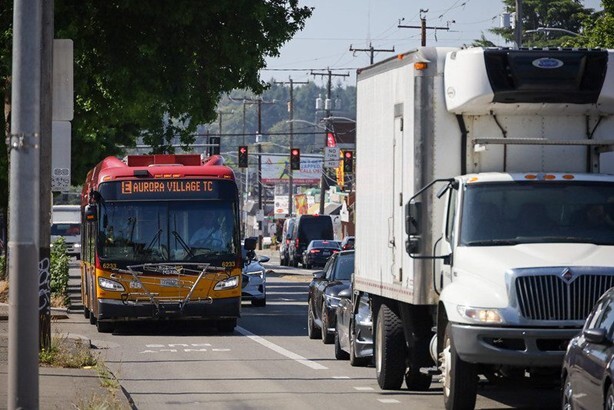 RapidRide E Line bus on extended bus lane on Aurora Ave N.
The STM has supported a dozen transit-supportive capital projects so far in 2025, investing approximately $6.6M throughout the year. This month, we’re sharing information on two recently-completed projects that STM helped fund:
Extended Rainier Ave Bus Lane Offers a Seamless, More Reliable Trip for Thousands of Daily Riders
- Phase 2 of the Rainier Ave S Bus Lane project is now complete!
- Riders can enjoy the longer northbound bus lane, which now extends for over 2 miles. This helps ensure a more reliable trip for Route 7 riders and several other bus routes to and from Downtown Seattle and destinations like the Judkins Park Light Rail Station scheduled to open in 2026.
- The project built more than just bus lanes: it also enhanced the pedestrian experience with safer, more comfortable street crossings and supported accessible travel with upgraded sidewalks and new ADA-accessible curb ramps.
- Comparing September 2024 (before the bus priority lane and queue jump were added to Rainier Ave S) to September 2025, people riding the bus on Rainier Avenue are now saving 35-60 seconds of per trip, depending on time of day. through this section of Rainier Ave during the day. SDOT and King County Metro will continue to monitor the performance of the transit priority elements of the Rainier Ave S project.
- The project was a close partnership with King County Metro, local community-based organizations, and residents in Southeast Seattle and along Rainier Ave S itself. Thank you to everyone who participated and helped us shape the project.
Seattle’s Aurora Avenue N Gets 24/7 Bus Lanes, Giving Nearly 14,000 Daily Riders Better Service
- We’ve completed major improvements along Aurora Avenue N in partnership with King County Metro, adding expanded 24/7 bus lanes from downtown Seattle to N 145th St, the city’s northern limits.
- STM helped with funding to make these new bus lanes come to life!
- These all-day bus-only lanes improve frequency and reliability on Metro’s highest-ridership route, the RapidRide E Line, for nearly 14,000 transit riders daily.
- The expanded bus lanes also arrived just in time for people to give the bus a try in anticipation of expected additional traffic on Aurora Ave N during the Revive I-5 lane closures this past summer.
- The bus lanes take the city closer to a bus system where a schedule isn’t needed, so riders can arrive at their bus stop and enjoy service every 5 to 15 minutes depending on the time of day.
Thank you for your interest in the Seattle Transit Measure!
|