|
|
 |
|
A program of the City of Seattle, Trees for Seattle is committed to growing and maintaining a healthy, awe-inspiring urban forest. |
There are a few questions to help determine if a plant or animal rises to the level of invasive species:
-
Is it originally from the area where it is found?
- Was it introduced by humans?
-
Is its overabundance damaging to the environment, wildlife, people and/or economy?
To be considered an invasive species, a plant or animal must be introduced by humans and cause significant negative impact to the local ecosystems. There are many great resources to find out what plants and creatures are causing significant problems and need help with management.
It is important to note than many PNW invasive plants, like English ivy, need to be managed by people even in their places of origin. Many introduced plants were brought here because they have long histories of medicinal or cultural value. For a more in-depth discussion around how we think and talk about invasive species check out the resources at Just Language in Ecology Education and their Invasive Species Language Guide. Join a Seattle Tree Stewards or Green Seattle Partnership work party to learn more about these weeds.
|
|
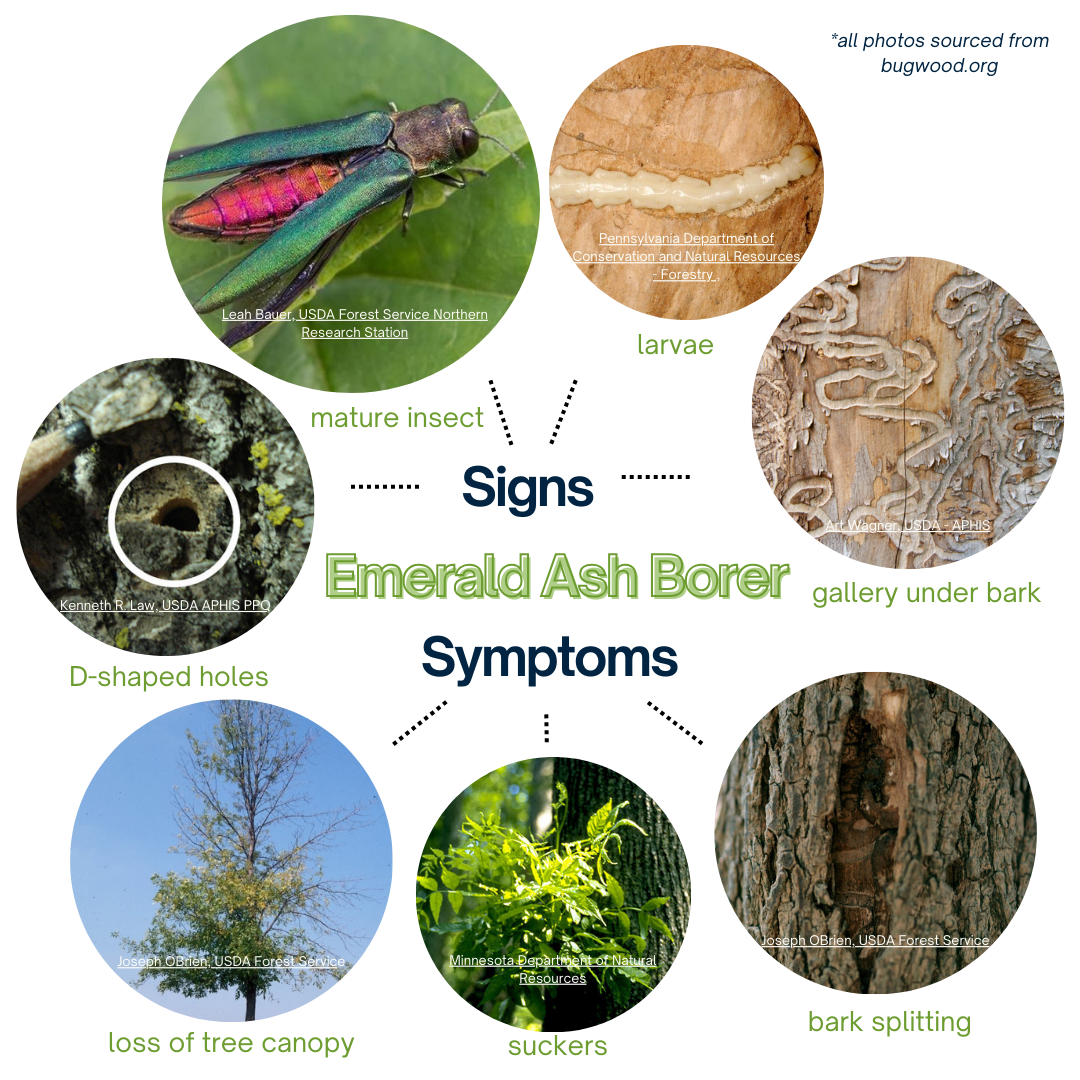
Calling all community scientists! We need your continued help keeping an eye out for Emerald Ash Borer (EAB) in our region. In May 2024 Emerald Ash Borer was confirmed to be present in Vancouver B.C. This is in addition to its confirmed presence in Oregon since 2022. While EAB hasn’t been found in Washington yet, its presence to the north and south is concerning. Seattle’s Ash tree population and the potential impact of the EAB on our urban trees, if and when it arrives, can be seen on this map.
Check out this article for in-depth information on EAB. Once infested, ash trees die within 2-4 years as EAB disrupts their ability to transport essential water and nutrients up and down the trunk.
If you own Ash trees or have some in your neighborhood, below are some signs and symptoms to look for that could indicate an Emerald Ash Borer infestation.
If you have questions, you can email us at treesforseattle@seattle.gov or call us at 206-684-TREE (8733) for guidance. You can also report a sighting to the Washington Invasive Species Council. Be sure to take photos, note date and location, and place any found insects in a container in the freezer.
The good news is there is a lot that we can do to help our trees, and the urban forest as a whole, be more resistant to harmful introduced species! These tips are great for where you live but also where you go to school, work or worship. Always check with property owners before doing any work.
-
Plant a variety of trees. Often damaging insects are associated with a specific tree species (like Emerald Ash Borer). If there are many of one tree type, they could all be lost at one time. The Trees for Seattle Storymap identifies the most planted species in Seattle, and you can see what tree species already exist in your neighborhood. When selecting new trees and plants, research or ask nursery staff about current or emerging threats to their health.Trees for Neighborhood's free trees are chosen for their resilience.
-
Don’t plant species identified as invasive. Unfortunately, some plants that impact local ecosystems may still be sold in stores, so research plants before you purchase or plant them.
-
Attract beneficial predators. Believe it or not, not all insects cause damage to trees. Many insects, birds, and other animals, especially those adapted to this area, are beneficial predators of introduced insects, and have an important role in tree health. You can plant shrubs or ground plants near your trees, creating habitat for birds, insects and spiders.
|
|
|
|
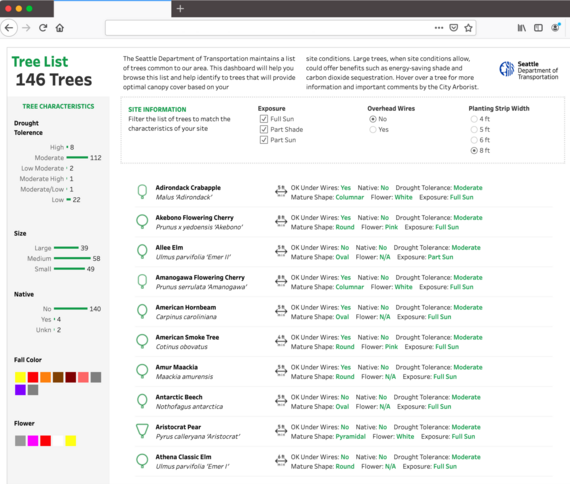
It can be overwhelming to try and decide what type of tree to plant on your property. There are so many things to consider: power lines, mature size and shape, light conditions, soil type, watering needs, maintenance levels, pest resistance, climate change resilience and tree diversity. Most of us also want to choose a tree based on its beautiful features like flowers or leaves or bark. The online SDOT Tree Selection Guidance Tool is a helpful resource when needing to make a decision. Check it out!
|
|
Tree Care & Skill Share: Harmful Weeds @ Meadowbrook Pond
Saturday, February 8, 2025
10am-1pm
Meet at the end of 36 Ave NE, 10700 36th Ave NE
Coordinates Here
Register Here
Join Trees for Seattle and Dirt Corps for our first Tree Care and Skill Share event at Meadowbrook Pond! We will be learning about English ivy and other harmful weeds, their history, how they relate to the ecosystem, and how best to remove them to allow our trees and native plants to thrive. We’ll then be practicing these skills while caring for the trees in this special wetland ecosystem. Come learn and care for this neighborhood greenspace with us!
Continue to join us at Meadowbrook Pond throughout the year for more upcoming lessons in our Tree Care and Skill Share series, including tree ID and benefits, mulching and watering, and right tree, right place. This series offers a foundational toolkit for how to care for your own neighborhood trees and lend a hand to our City’s trees!
Community Work Party at the Green Line with Seattle City Light Stewards
Saturday Feb 8: 10am-12pm
10601-10673 53rd Avenue South Seattle, WA 98178
For this Community Work Party we'll come together to remove weeds, flag native plants, build trails and more! Click this link to register and for more info!
Tree Care & Skill Share: Harmful Weeds @ Juneau SW at Longfellow Creek
Saturday, February 22, 2025
10am-1pm
Meet at the corner of 26th and Juneau at Longfellow Creek Trail (one block off Delridge)
Coordinates Here
Register Here
Join Trees for Seattle and Dirt Corps for our first Tree Care and Skill Share event at Longfellow Creek! We will be learning about English ivy and other harmful weeds, their history, how they relate to the ecosystem, and how best to remove them to allow our trees and native plants to thrive. We’ll then be practicing these skills while caring for the trees in this special riparian forest ecosystem. Come learn and care for this neighborhood greenspace with us!
Continue to join us at Longfellow Creek throughout the year for more upcoming lessons in our Tree Care and Skill Share series, including tree ID and benefits, mulching and watering, and right tree, right place. This series offers a foundational toolkit for how to care for your own neighborhood trees and lend a hand to our City’s trees!
Community Work Party at the Green Line with Seattle City Light Stewards
Saturday Feb 8: 10am-12pm
10601-10673 53rd Avenue South Seattle, WA 98178
For this Community Work Party we'll come together to remove weeds, flag native plants, build trails and more! Click this link to register and for more info!
The Green Seattle Partnership is a collaboration between the City of Seattle, community groups and non-profits, businesses, schools, and thousands of volunteers working together to restore and actively maintain the City's forested parklands. Check out their website and their calendar of volunteer events and signup to support Seattle's forested natural areas.
Events & Volunteer Opportunities
|
|
|
|
|