|
-
Program Updates
- Next VSP SAC Meeting,
Group 5 County Reviews
August 5, 2026
-
VSP Technical Panel
June Site Visits
- Grant County
- Benton County
-
Partner Updates
-
Tools & Training Opportunities
- Growing with Biochar: Washington Training
- EPA Webinar: Designing & Implementing Effective Participatory Science Projects
-
Funding Opportunities
- WSDA-Climate Smart Farm Equipment Grant
|
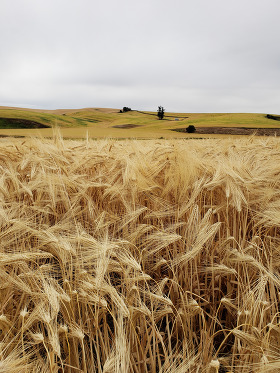 Titled: Fields Gold and Green.
Photo By: Zack Carter, Palouse CD. (December 2020).
Looking for forms, guidance or updates? Learn more at vsp.wa.gov.
|
|
Statewide Advisory Committee Meeting
August 5, 2026 (Lacey & Online)
Meeting Date: August 5, 2026
Meeting Time: 9:00 a.m. – 12:00 p.m.
In-Person Meeting Location:
WA State Farm Bureau Building – Harvest Room
975 Carpenter Rd NE, Lacey, WA.
Virtual Meeting Registration Link: HERE
This is a Statewide Advisory Committee meeting where Group 4 counties’ 10-year reports will be reviewed. Group 5 Counties include: Stevens, Ferry, Grays Harbor, & Lincoln.
All 10-year report review meetings will begin at 9:00a.m.
Please contact Mike or Victoria with any questions.
|
|
Grant County
June 1, 2026
The VSP Technical Panel met with Columbia Basin Conservation District staff to learn more about Grant County’s Voluntary Stewardship Program and the innovative conservation work taking place across one of Washington’s most productive agricultural regions. Discussions highlighted the district’s experienced staff, expanding technical capacity, and strong relationships with producers and partners. These strengths, combined with the district’s success in securing new funding sources, have increased its ability to implement restoration projects directly and broaden the range of voluntary practices available to local producers.
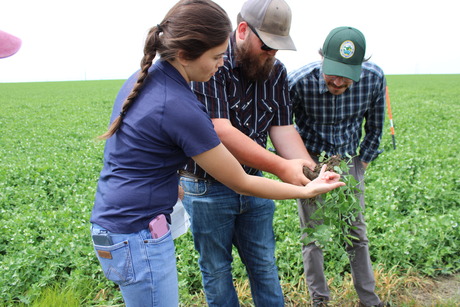 Photo By: Victoria Fischella, WSCC. Titled: Rooted in Thirty Years of No-Till. (July 2026). Photo Description: Columbia Basin Conservation District staff displaying pea root nodules with pink interiors, an indicator of active nitrogen fixation by Rhizobium bacteria.
The visit showcased the diversity and longevity of stewardship across Grant County. The Technical Panel toured a multi-crop irrigated farming operation that has implemented no-till practices for the past 30 years. This operation provided an impressive example of sustained producer commitment to soil health, water quality improvements and conservation farming. The group also visited a recently completed riparian planting project and participated in a virtual tour featuring groundwater-fed wetlands at Gloyd Seeps, dairy restoration, precision irrigation upgrades, and large-scale riparian, shrub, and wetland plantings along Crab Creek. Together, these projects demonstrated how Columbia Basin Conservation District is supporting agricultural productivity while advancing water conservation, habitat restoration, soil stewardship, and long-term ecological resilience across the Columbia Basin landscape.
Benton County
June 2, 2026
On June 2, the VSP Technical Panel met with Benton Conservation District staff for a full day of discussions and field tours highlighting the outstanding conservation work taking place across Benton County. The day began with a collaborative review of the county's 5-Year Report, current VSP Work Plan, critical area priorities, and opportunities for adaptive management. Throughout the visit, Benton Conservation District staff shared their local expertise, providing valuable context on the unique natural resource challenges and innovative stewardship efforts occurring within one of Washington's more diverse agricultural landscapes.
Field visits included tours throughout the county, where the group observed dryland farming operations, Conservation Reserve Program projects, shrub-steppe restoration projects, and the region's renowned Red Mountain vineyards while discussing both habitat conservation opportunities and the economic challenges facing many wine grape growers. The Technical Panel also visited a series of smaller, high-quality restoration projects that demonstrated how strategic establishment of diverse native grasses, shrubs, and wildflowers can create meaningful habitat improvements and strengthen landscape connectivity between upland shrub-steppe down into riparian corridors. These projects showcased an impressive diversity of native plant species and illustrated how thoughtfully designed conservation practices can provide lasting ecological benefits, even within highly productive agricultural landscapes.
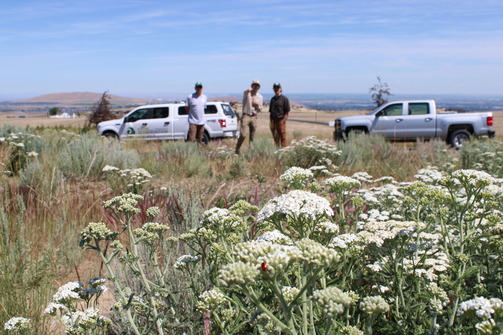 |
Photo By: Victoria Fischella, WSCC. Titled: Upland Habitat Corridors Amongst Dryland Wheat. (July 2026).
The day concluded with visits by the Yakima River, Barker Ranch wetlands, and canal-induced wetlands, highlighting the wide variety of conservation opportunities across the county. Benton Conservation District also demonstrated its innovative water stargrass management program, showcasing specialized equipment used to improve salmon spawning and rearing habitat while balancing the long-term challenges of managing aggressive aquatic vegetation. Throughout the visit, Technical Panel members and Benton Conservation District staff exchanged ideas on habitat connectivity, watershed-scale conservation, agricultural viability, and future collaboration, reinforcing the strong partnerships that support voluntary stewardship throughout Benton County.
|
|
Agricultural Viability Survey
The Washington State Department of Agriculture (WSDA) recognizes the critical role that profitability, sustainability and responsible land stewardship play in the success of Washington’s agricultural industry. Acknowledging that farmers, ranchers, and agricultural businesses are confronting both longstanding and emerging challenges that threaten viability and future prosperity. To address these issues, WSDA is committed to fostering opportunities that enhance the competitiveness of Washington state’s agricultural sector.
|
WSDA needs your help!
If you are a farmer, rancher, farm worker or community member interested in informing WSDA about the challenges and opportunities facing Washington agriculture then take their survey.
The information gathered will help WSDA better understand the challenges facing Washington agriculture, identify opportunities for improvement, and develop recommendations to inform policymakers and industry leaders.
Surveys Options
Agricultural Producer Survey:
Take this survey if you are an owner or manager of a farm or ranch.
Farm Workers Survey:
Take this survey if you are a farmworker or farmworker representative.
Community Survey:
Take this survey if you are a food processor, agricultural advocate, business that supports agricultural production, hunger relief organization, or interested consumer.
Additional survey language options available on the main WSDA survey webpage below.
|
|
Growing with Biochar:
A Training Event for Washington and Pacific Northwest Agriculture
Location: Washington State University, Richland, WA
Date: August 13, 2026
This event is designed to be a one-stop-shop for industry professionals interested in agricultural biochar application in Washington and the Pacific Northwest. It will be a unique opportunity to:
|
- Gain practical insights from leading researchers, practitioners, biochar producers and agency partners
- Explore crop-specific case studies and on-farm applications
- Understand cost-share programs and policy incentives
- Build a community of practice to support biochar outreach and implementation
This free full-day training is designed for agricultural professionals who are interested in supporting farmers to effectively incorporate biochar into farming practices but are unsure of where and how to start. Participants will gain practical knowledge, proven tools, and peer connections to support biochar adoption across Washington and the Pacific Northwest.
You will learn:
- What biochar is, how it’s made, and why it matters for soil health
- Best practices for handling, storing, and applying biochar safely and effectively
- The science behind the benefits of biochar application in agriculture
- How to select the right biochar for your operation and apply it using the 4Rs of sustainable nutrient management
- Integrating biochar into current regenerative agricultural practices
- How to access federal and state cost-share programs (NRCS Practice 336) to support grower adoption
- Local and regional case-studies highlighting biochar use
Event Information HERE
EPA Webinar Designing & Implementing Effective
Participatory Science Projects
Wednesday, August 19, 2026, at 12:00 to 1:00 PM PST
|
Participatory science is the involvement of the public in science. It uses the collective strength and knowledge of the public to collect, analyze, and use data to answer environmental and public health questions. Projects answer wide-ranging questions, can engage the public
in any or all steps of the scientific process, and operate using varying models ranging from community-led to institutionally driven. These efforts facilitate an increase in place-based connections, environmental stewardship, and human health and environmental protection.
This webinar will:
1. Introduce the building blocks to developing a participatory science project.
2. Share the Oklahoma Conservation Commission - Blue Thumb story.
3. Present the Oregon Department of Environmental Quality - Community Air Action Planning program.
4. Highlight collaboration approaches in Region 8 (Mountains and Plains) to test soil health using the soilSHOPs model.
|
|
 |
|
Not yet subscribed? Sign up here to receive the latest VSP updates and resources.
Questions? Contact Mike Poteet for more information.
|
|
|
Copyright 2026 - Washington State Conservation Commission |
|
|
|
|