|
Section 4
|
Program Updates
- Next VSP SAC Meeting,
Group 3 Review June 5, 2026
(No longer June 3, 2026)
- May - Kicks off the 2026 season of VSP Technical Panel Site Visits!
Tools & Training Opportunities
- VSP Open Office Hours: Moving to the THIRD Tuesday of every Month
- Shaping Salmon & Future Watersheds Webinar
- WDFW HRCD 2011 Data Now Available to All VSP Counties
- PNW Water Year
2025 Impacts Assessment
|
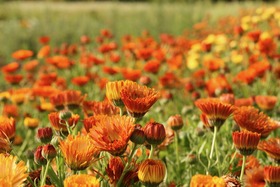 Titled: Calendula Pollinator Planting.
By: Zorah Oppenheimer, Clark CD.
(July, 2018).
Looking for forms, guidance or updates? Learn more at vsp.wa.gov.
|
|
Section 5
Statewide Advisory Committee Meeting
June 5, 2026 (Lacey & Online)
(Meeting is no longer on June 3rd)
Meeting Date: June 5, 2026
Meeting Time: 9:00 a.m. – 12:30 p.m. (PST)
In-Person Meeting Location:
WA Dept of Ecology Building, Room R0A-36, 300 Desmond Drive, Lacey, WA
Virtual Meeting Registration Link: HERE
This meeting will review all of Group 3's VSP 10-year reports.
These counties include: Columbia, Douglas, Skagit, Whitman, and Yakima. Counties’ reports that are being reviewed MUST have at least one representative attend either virtually or in-person.
All 10-year report review meetings will begin at 9:00a.m.
Please contact Mike or Victoria with any questions.
|
|
Section 6
2026 Season of VSP Technical Panel Site Visits Begin!
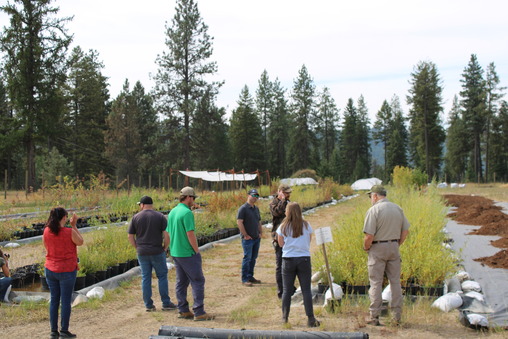
As spring gets underway, May marks the kickoff of the 2026 VSP Technical Panel site visit season. Through the spring and summer months, VSP Technical Panel members, coordinators and partners will travel across the state to tour conservation projects, share knowledge and learn from the on-the-ground efforts supporting voluntary stewardship, agricultural viability and resource protection.
Titled: Pend Oreille CD & Native Plant Nursery.
By: Victoria Fischella, WSCC. (August 2025).
|
|
Section 8
VSP Open Office Hours Have Moved!
May 19, 2026 - Please Join VSP staff & Technical Panel
WHEN: second THIRD Tuesday of every month. 10:30 a.m. - 12:00 p.m.!
What to expect and how to prepare:
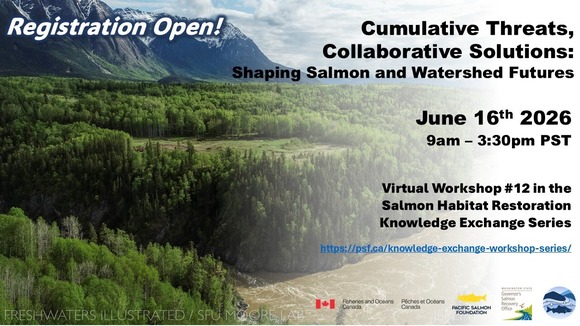
Cumulative Threats, Collaborative Solutions: Shaping Salmon and Watershed Futures
Date: Tuesday, June 16th, 2026
Time: 9:00 am - 3:30pm PST
This free virtual workshop will focus on the challenges of addressing cumulative threats in salmon watersheds and paths forward for recovery in this time of rapid change. It will showcase interdisciplinary research from Simon Fraser University’s Watershed Futures Initiative and include case study examples where collaborative efforts are yielding positive outcomes and paths toward healthy watersheds and salmon runs. The workshop will include presentations from expert speakers and both morning and afternoon panel discussions.

WDFW High Resolution
2011 Land Cover Data
Now Available to All VSP Counties
Exciting data is unfolding at WDFW's High Resolution Change Detection Program. 2011 land cover data is now available to all participating VSP counties and can be used to assist participants in better understanding baseline conditions to support their county’s critical area monitoring and 5-year reporting needs. WDFW encourages proactive review of the data to understand baseline conditions and the distribution of different land cover types (i.e., built, forested, herbaceous etc.)
If you have questions please contact WDFW employees:
Syler Behrens or Sean Williams.
How to obtain the data: Visit our land cover download website here, select 2011 and download your area of interest.
Support for using the data: Many resources and tools are available on the land cover page of the HRCD website: Land Cover | High Resolution Change Detection.
|
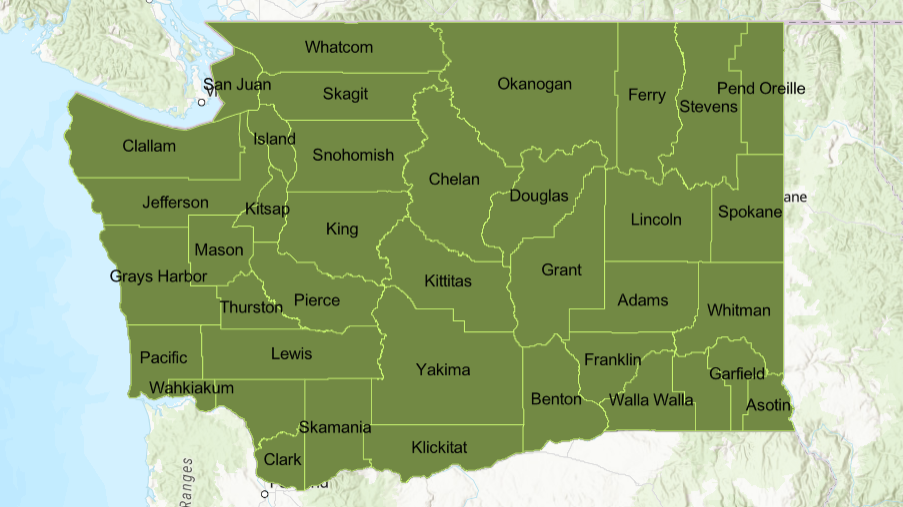 Map by WDFW HRCD Land Cover Dataset Website.
 |
|
Pacific Northwest Water Year
2025 Impacts Assessment |
The Pacific Northwest Water Year 2025 Impacts Assessment is now available. This year’s report summarizes climate conditions and sector-specific impacts across Idaho, Oregon, and Washington, during the 2025 water year (Oct. 1, 2024–Sept. 30, 2025). An unusually warm, dry spring led to rapid snowmelt, low streamflows, and expanding drought through the summer prompting ID, OR, and WA to issue drought emergencies. The assessment draws on regional Water Year meetings, surveys, on-the-ground condition reports, and contributions from regional experts to document how these climate conditions translated into real impacts to agriculture, forestry, drinking water, fisheries, recreation, and other sectors.
|
|
Section 9
 |
|
Not yet subscribed? Sign up here to receive the latest VSP updates and resources.
Questions? Contact Mike Poteet for more information.
|
|
|
Section 10
Copyright 2025 - Washington State Conservation Commission |
|
|
|
|