|
Welcome to Clean Air Quarterly, a newsletter from the Ports of Seattle, Tacoma, and the Northwest Seaport Alliance (the Ports) sharing clean air and climate efforts in our regional gateway. Each issue of the newsletter showcases projects and milestones across our gateway and highlights upcoming opportunities for engaging with many aspects of the Ports environment, including bus tours, commission meetings, webinars, and events!
The Northwest Seaport Alliance, Port of Seattle and Port of Tacoma recently launched NWCleanPorts.com, a first-of-its-kind regional web portal designed to provide clear, accessible information about the gateway's efforts to reduce air emissions and address climate impacts. The site brings together clean air strategies, plans, action and progress from all three port entities in one place, creating a transparent and user-friendly resource for businesses, community members and other stakeholders.
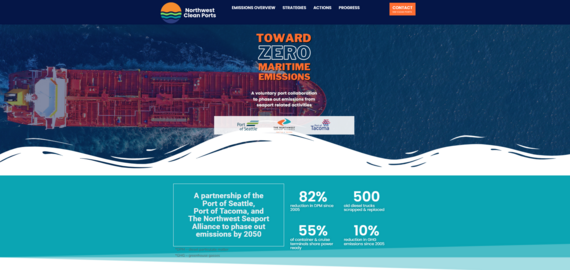 The portal provides up-to-date information, data and timelines related to the implementation of the Northwest Ports Clean Air Strategy (NWPCAS) and the shared vision to phase out all seaport-related emissions by 2050. A new progress dashboard highlights accomplishments to date, tracks the status of individual initiatives and outlines key milestones from each Port's implementation plan. Visitors can also explore efforts across major maritime sectors — from ocean-going vessels and harbor craft to cargo-handling equipment, trucks and rail — while learning about the strategies being deployed to reduce emissions across the gateway. NWCleanPorts.com offers a new way for stakeholders to stay informed and engaged as the region advances toward a more sustainable maritime future.
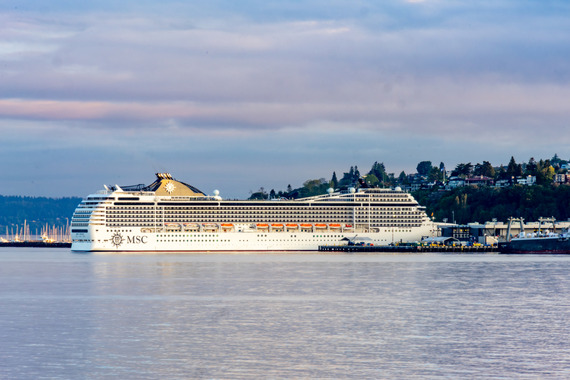
The Port of Seattle recently published its 2025 Environmental & Sustainability Report, highlighting major accomplishments and milestones from the past year. Maritime sustainability highlights include a record 68% of cruise ship calls connecting to shore power in 2025, allowing vessels to shut down auxiliary engines while at berth, reducing local air emissions. The Port also secured $3 million in federal Clean Ports Program funding to support the transition to sustainable maritime fuels and completed a technical analysis of green methanol deployment opportunities along the Pacific Northwest–Alaska green cruise corridor.
The report also highlights continued progress in renewable energy, energy efficiency and fleet electrification. Solar projects are advancing at Terminal 91, the Fishermen's Terminal Maritime Innovation Center and Smith Cove Cruise Terminal, while planning is underway for 16 dual-port Level 2 chargers and two Level 3 fast chargers to support electrification of Port fleet vehicles serving maritime operations.
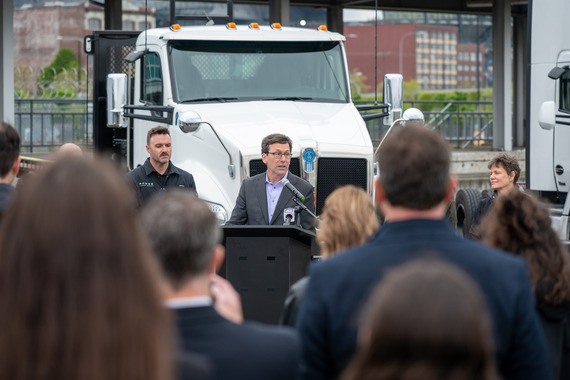 The Washington Zero-Emission Incentive Program (WAZIP) officially launched on April 28 at Terminal 46 with a ride-and-drive event featuring state, industry and community leaders. The new statewide incentive program provides up to $112 million in voucher funding to help businesses and fleet operators transition to zero-emission commercial vehicles and off-road equipment. Voucher amounts vary by vehicle and equipment type and are designed to cover approximately 40% of purchase costs. Enhanced incentives are available for drayage truck operators on a first-come, first-served basis. To help terminal and drayage operators take advantage of WAZIP incentives, the NWSA has launched two new programs aimed at providing free technical assistance and stackable funding, outlined below.
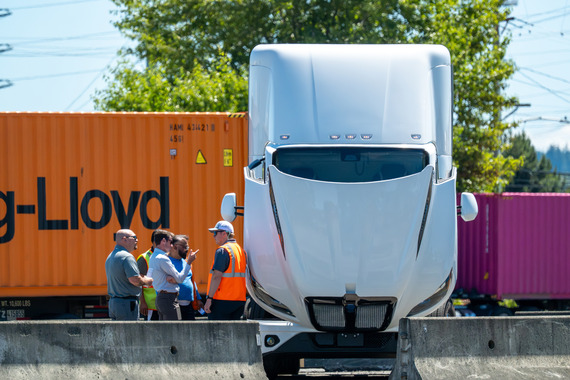
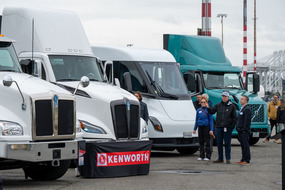
Through the program, drivers and fleet operators can receive free one-on-one confidential and technical assistance to evaluate vehicle options, understand available incentive programs, such as WAZIP, and plan for operational considerations including tailored individual charging needs and route planning. Administered by clean transportation nonprofit CALSTART, the program aims to provide practical guidance and reduce barriers for drayage operators considering a transition to zero-emission operations.
|
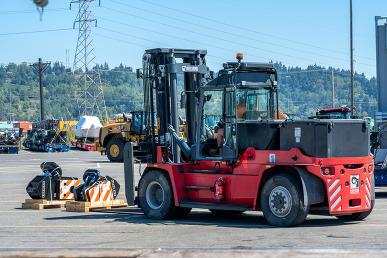
The NWSA also launched the Cargo Handling Equipment Zero Emission Accelerator Program (CHE-ZAP), an incentive program designed to accelerate deployment of zero-emission cargo-handling equipment and supporting infrastructure at NWSA terminals. The program supports the 2026-2030 NWSA Clean Air Implementation Plan target of deploying 30 additional pieces of zero-emission cargo-handling equipment across the gateway between now and 2030 while helping terminal operators gain practical experience with emerging technologies.
The initial phase of the program provides $2.3 million in NWSA funding for equipment purchases and supporting infrastructure. Incentive awards ranging from $200,000 to $250,000 per unit are intended to help bridge the cost gap between conventional diesel equipment and zero-emission alternatives when paired with funding from the WAZIP. If fully subscribed, the first phase is expected to support deployment of approximately 9 to 11 pieces of equipment.
|
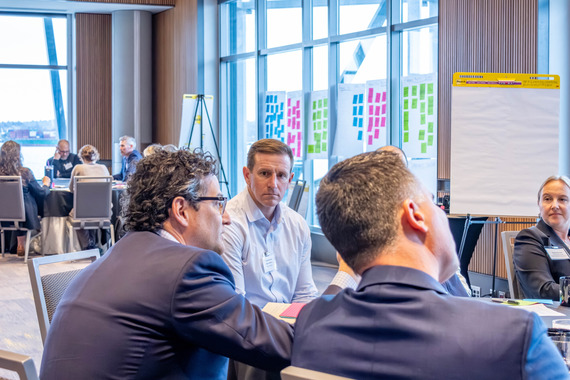
In March, the Port of Seattle hosted the Sustainable Maritime Fuels Summit, bringing together representatives from industry, government, community organizations and academia to discuss pathways for accelerating the adoption of sustainable maritime fuels.
Participants explored key barriers to market development, including fuel availability, cost, infrastructure needs and policy considerations, while identifying opportunities for collaboration and innovation. The summit supports the Ports' broader strategy to reduce emissions from ocean-going and harbor vessels and advance lower-carbon maritime operations. Learn more about the summit here.
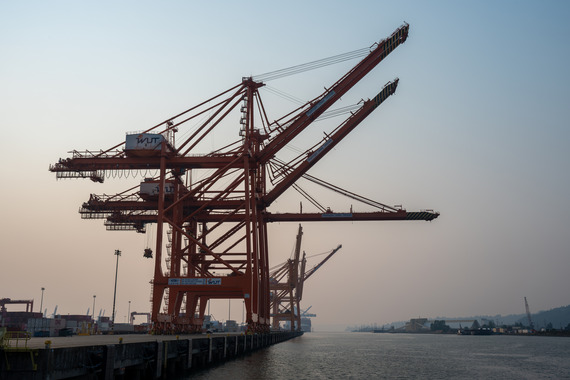
The NWSA has begun work on zero-emission terminal master planning projects at Washington United Terminal (WUT) and East Blair One (EB-1) in Tacoma, supported by a $3 million EPA Clean Ports Program planning grant accepted in 2025.
The planning effort, expected to continue through 2027, will include shore power infrastructure design at WUT, cargo-handling equipment electrification planning at EB-1 and comprehensive terminal decarbonization planning at both facilities. The work will help identify critical electrical infrastructure upgrades and prioritize near-term investments needed to support shore power, electrified equipment and future zero-emission operations. These projects represent an important step toward implementation of the NWSA's 2026–2030 Clean Air Implementation Plan, which calls for completion of zero-emission master planning at all NWSA terminals by 2030.
The Port of Seattle and the NWSA once again achieved certification through the Green Marine program, North America's leading voluntary environmental certification initiative for the maritime industry. Green Marine participants complete annual self-assessments, undergo independent third-party verification and publicly report their environmental performance.
In 2025, the Port of Seattle achieved Level 5, the program's highest performance level, in six of eight applicable indicators, while the NWSA achieved Level 5 in five of eight indicators. These results reflect continued leadership across priority environmental areas including greenhouse gas emissions, air quality, community impacts, environmental leadership and waste management.
|
For the 10th consecutive year, the NWSA has been recognized by Inbound Logistics as a Green Supply Chain Partner. The annual Green 75 list highlights organizations that demonstrate leadership in sustainable supply chain operations and a commitment to environmentally responsible business practices.
Selected from across the logistics industry, the 75 honorees represent companies and organizations that go above and beyond to make their operations more sustainable. The NWSA was one of only three U.S. port authorities included in the 2026 list, reflecting its continued investments in clean air initiatives, emissions-reduction programs and efforts under the Northwest Ports Clean Air Strategy to advance clean air and sustainability in our gateway. The June Sustainability Edition of Inbound Logistics is available here.
|
Tell us a little about CALSTART and your mission.
CALSTART is a global clean transportation nonprofit. We knock down barriers to innovation, convene cross-sector leaders worldwide, demonstrate and validate clean technologies, help shape evolving policy and drive the adoption of clean mobility solutions.
We don’t just talk about change — we deliver it. Our global network drives market transformation, creates green jobs across continents, cuts transportation emissions, and builds a prosperous, equitable, zero-emission future.
CALSTART has helped administer programs including the NWSA Drayage Truck Assistance Program and Washington's Zero-Emission Vehicle Incentive Program. Can you tell us about those programs?
The Washington Zero-emission Incentive Program (WAZIP) is a point-of-sale discount program that reduces the sticker price for zero-emission commercial vehicles and off-road equipment. Purchasers work with authorized WAZIP dealers to select eligible battery-electric or hydrogen fuel cell models that meet their needs, and the dealer handles the rest. Building on CALSTART’s experience administering California’s Clean Truck and bus Voucher Incentive Project (HVIP) and Clean Off-Road Equipment Voucher Incentive Project (CORE) programs, we were selected by the Washington Department of Transportation (WSDOT) to administer WAZIP, which is funded through Washington’s Climate Commitment Act. As program administrators, we work closely with WSDOT to create program policies, market the program, process funding request paperwork, reimburse dealers for incentives and educate fleets about WAZIP and zero-emission transportation more broadly.
Education about zero-emission trucks, how they work and whether they’re a good fit for a business can be a major barrier to trying innovative technologies. The NWSA’s Zero-Emission Drayage Assistance Program (ZDAP) wants to fill that information gap for drayage drivers, and CALSTART helps make that happen. Through ZDAP, drayage operators can receive free, personalized support to better understand zero-emission truck options, available incentives and key operational considerations, including charging and route planning. CALSTART blends years of experience working with drayage fleets in California with Washington state expertise to improve access to information, support informed decision-making and contribute to cleaner air and healthier ports and communities.
From your perspective, what are the biggest opportunities, and barriers, for fleets considering a transition to zero-emission trucks?
The biggest opportunity for fleets considering zero-emission trucks is cost savings. Fleets can save $27,000* on fuel per year and up to $7,000* in maintenance costs per year when owning and operating a zero-emission Class 8 truck compared to diesel. In addition, there are incentive programs available that help reduce the upfront costs of vehicles and infrastructure, such as WAZIP. Beyond the financial benefits of transitioning to zero-emission trucks, we also hear positive feedback on driver experience. Drivers often prefer operating zero-emission trucks because they are more enjoyable to drive due to the vehicle’s lower noise, lower vibrations and smoother accelerations.
The biggest barriers for fleets considering a transition to zero-emission trucks are understanding how the technology fits into their daily operations and, in some cases, access to charging infrastructure. Many drivers also feel more confident after having the opportunity to test-drive a zero-emission truck. Fleets benefit from clear information about maintenance, repair support and the availability of trained technicians. For smaller fleets, higher insurance costs can also be a challenge. Continued education, hands-on experience and supportive programs, such as ZDAP, can help address these barriers and make the shift to zero-emission trucks more accessible.
|
What lessons have you learned from working directly with fleets, drivers and other industry stakeholders?
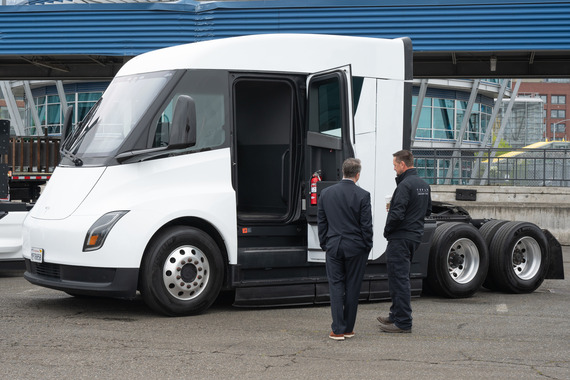
One of the biggest lessons we've learned is that firsthand experience is one of the most effective ways to build confidence in zero-emission trucks. Fleets and drivers tend to be hesitant to adopt new technology at first, but once they use zero-emission trucks, they report the benefits outweigh their initial concerns and are eager to continue using them. We've also learned providing education and training can make the transition easier, especially for smaller fleets. Industry stakeholders are seeing growing demand from shippers for zero-emission freight services, creating new opportunities for fleets that make the transition to partner with these shippers. Hearing directly from truck drivers and fleet operators who have successfully adopted the technology is another powerful way to help others understand the benefits and feel confident when purchasing and using zero-emission trucks.
Are there any other highlights or goals that you would like to share?
We’re looking forward to hosting the WAZIP Ride & Drive on Monday, September 21, from 10 a.m. to 1 p.m. PT at Pacific Raceways in Kent, Washington. This hands-on event is designed for commercial vehicle and equipment purchasers interested in exploring zero-emission technologies and the incentives available through WAZIP. Attendees can test drive a range of eligible medium- and heavy-duty vehicles, explore zero-emission equipment, compare models from multiple manufacturers, and connect with dealers, utilities, technical advisors and WAZIP staff.
Participants will also learn about WAZIP vouchers, funding opportunities and technical assistance available to support their transition to zero-emission vehicles and equipment. Whether businesses are exploring zero-emission technologies for the first time or preparing for their next purchase, the event provides practical information, hands-on experience and access to industry experts to help them evaluate their options and make informed decisions. Register for free today: https://tinyurl.com/bdzcrjp6.
|