|
Welcome to Clean Air Quarterly, a newsletter from the Ports of Seattle, Tacoma, and The Northwest Seaport Alliance sharing clean air and climate efforts across our gateway. Each issue of the newsletter showcases projects and milestones across our gateway, features a staff member or partner who is making a difference in our region, and highlights upcoming opportunities for engaging with many aspects of the Ports' environment, including bus tours, commission meetings, webinars, and events!
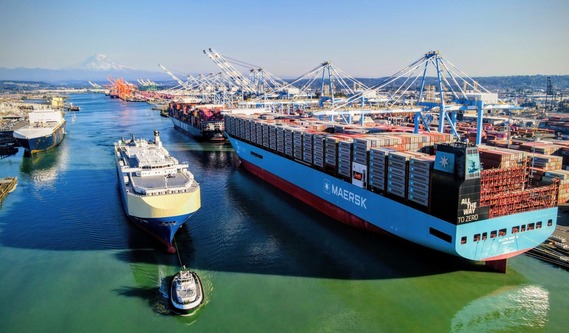
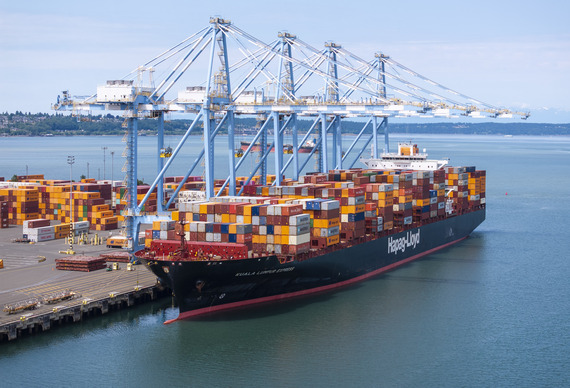 This summer, the NWSA successfully completed shore power installation at Husky Terminal in Tacoma, and welcomed Hapag-Lloyd’s Kuala Lumpur Express as its inaugural vessel to plug in to shore power. This makes Husky Terminal the second international cargo terminal in Washington State to be shore power capable, following the completion of Terminal 5’s system in 2023. Shore power at Husky Terminal is a significant step in the Northwest Clean Ports Clean Air Strategy (NWCPAS), the guide for our ports to drive toward emissions reductions. In addition to the overarching goal to eliminate all maritime emissions by 2050 or sooner, the NWSA has the interim goal of installing shore power at all international terminals by 2030.
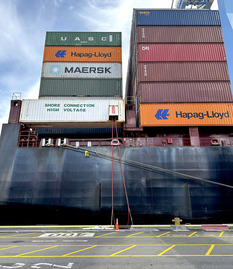
Emissions from vessels at berth represent about 14% of NWSA’s greenhouse gas emissions and 12% of diesel particulate matter emissions, impacting the air quality and health of our near port communities. Shore power, which allows vessels to turn off their diesel engines and ‘plug-in’ to the local power grid while being worked, is the primary strategy for eliminating these emissions. The next terminals to be equipped with this infrastructure will be Terminal 18 in Seattle and Washington United Terminals in Tacoma. TOTE, a domestic terminal in Tacoma, has been shore power capable since 2010.
|
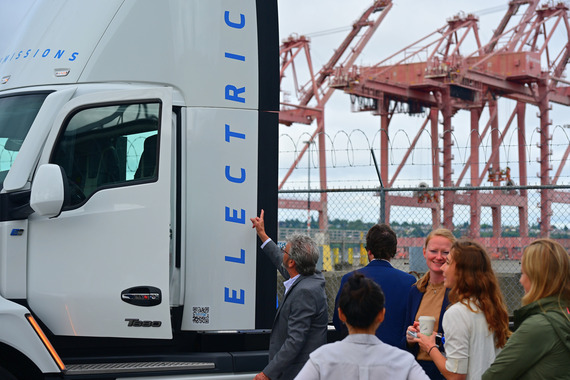
In July, the NWSA announced the launch of its inaugural incentive program for zero emission (ZE) truck and charging deployment. After a competitive bid process, the NWSA identified ZEEM Solutions as the award subrecipient. ZEEM has a proven track record deploying ZEVs and charging infrastructure in California, but this will be the first deployment in Washington State. Made possible by a $6.24 million dollar grant from Washington State Department of Transportation (WSDOT), the ZEEM project will bring 19 zero-emission trucks to the road as early as 2026. ZEEM partnered with 6 different local drayage companies for those 19 trucks and are also building out a charging site near SeaTac that will be able to charge 250 vehicles per day and 70 overnight. The project will break ground later this year and ZE trucks are expected to begin entering NWSA terminals in 2026. This program was made possible by Climate Commitment Act funding, Washington’s cap-and-invest program supporting climate, jobs and public health.
Drayage trucks, heavy duty class 8 trucks that mainly work short haul routes from our ports to warehouses, rail, or transloading facilities, frequently travel back and forth along our local roadways, meaning they have a high impact on our air. Diesel emissions from heavy duty trucks contribute to both diesel particulate matter (DPMs) and greenhouse gas (GHGs) emissions, affecting both the quality of the air we breathe and our impact on global warming and the associated climate impacts. Truck emissions represent about 6% of all seaport-related diesel pollution and about 30% of all seaport-related climate pollution in the region, emissions that disproportionately impact communities living near port operations and along freight corridors.
More information on the NWSA ZE Truck Program is available here.
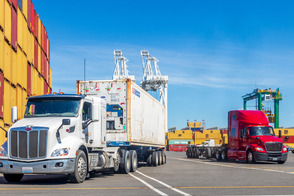
Since 2019, the NWSA has required that all trucks operating out of international terminals have a 2007 or newer engine, or a certified equivalent emission control system. This requirement has been a leading driver behind the 89% reduction in DPM in our gateway since 2005.
While the vast majority of our drayage fleet (approximately 4500 vehicles) operates out of our international terminals, we have approximately 500 drayage trucks that operate only out of our three domestic terminals, TOTE and SSA-West Sitcum in Tacoma and Terminal 115 in Seattle. Beginning in early 2026, these drivers will also be required to comply with the 2007 engine requirements. To support this transition, the NWSA is offering a domestic scrap and replace program which provides bonuses up to $30,000 for drivers to replace pre-2007 trucks with a 2018 model year or newer truck. The NWSA has already scrapped 15 pre-2007 trucks in 2025 and has approximately $450,000 remaining to support the transition to cleaner diesel engines by the end of the year.
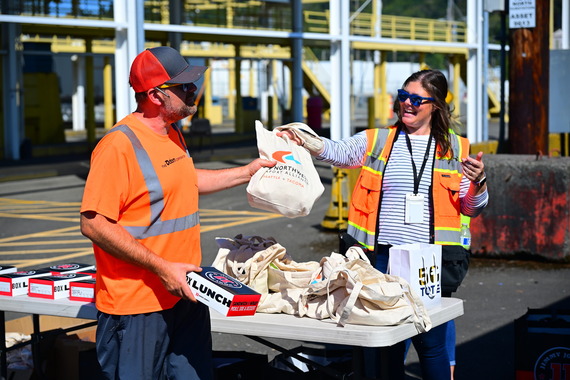
NWSA staff have been out on all domestic terminals hosting trucker appreciation events to ensure truckers know about the upcoming requirements and fund availability.
|
There is growing interest across the global maritime industry in next generation fuels, which can power cargo vessels, cruise ships and harbor craft with zero or near-zero emissions of greenhouse gases and other pollutants. To explore and plan for how these fuels could be deployed in the Puget Sound gateway, the Port of Seattle is leading a three-year Powering Maritime Innovation (PMI) project in collaboration with The Northwest Seaport Alliance and the Port of Tacoma. The PMI project is funded by a $3 million grant from the U.S. Environmental Protection Agency’s Clean Ports Program.
The project will undertake multiple studies to inform the development of a new maritime fuels roadmap. Research partners will assess potential demand for next generation fuels, feasibility issues associated with fuel delivery, storage and bunkering, opportunities for electrifying vessels, strategies to address hazards and ensure safety, workforce development needs, and other topics. Engaging directly with the maritime industry and with communities located near port terminals is a core project goal. Between now and December 2027, there will be multiple opportunities to learn about the project, discuss the implications of study findings for industry and community stakeholders, and help shape strategies for supporting a robust, safe, and equitable transition to next generation maritime fuels in the Pacific Northwest.
The Port of Seattle maintains a Cruise Activity and Performance Dashboard, which tracks current and historic cruise activity including shore power utilization, ship visits, and passenger volumes. With all cruise terminals now shore power enabled, visitors can now see the amount of greenhouse gas and diesel particulate matter emissions avoided per cruise ship visit. As of September, the 2025 season’s CO2e emissions avoided is equivalent to 9.29 million miles driven per EPA data. In addition, 76% of cruise ships calls to Port of Seattle were shore power capable, and 87% of shore power capable ships connected to on-shore power.
Today, agreements that allow cruise ships to berth at Port of Seattle terminals require shore power capable ships to plug in when a connection is available. The Port has also accelerated its goal to require 100% of all cruise vessels homeported in Seattle to be shore power capable and utilize shore power by 2027.
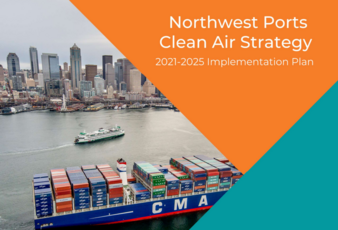
NWSA and Port of Tacoma are in the process of updating their Clean Air Implementation Plans, the five -year action plan under the Northwest Ports Clean Air Strategy (NWPCAS). This process will result in updated actions and milestones for 2026-2030. In addition, the update will reflect the recent commitment by the three ports to eliminate all Scope 1 and 2 emissions by 2040 or sooner. Scope 1 and 2 emissions refer to those under the Ports’ direct control. Over the summer, staff has engaged community, government, and industry stakeholders to solicit input on the draft actions and milestones. The current 2021-2025 Implementation Plans can be found here for NWSA and here for Port of Tacoma, and the updated plans are expected to be finalized in early 2026.
In addition, Port of Seattle is developing a supplemental update to its Maritime Climate and Air Action Plan (MCAAP). The MCAAP, first published in 2021, identifies strategies and actions the Port will take to reduce maritime‐related air and GHG emissions through 2030 to advance towards a vision of zero emissions by 2050. In this update, the Port is providing a discussion of implementation progress to date and updating priority actions within the 2026-2030 time horizon. The supplemental document is expected to be published in early 2026.
|
The Northwest Seaport Alliance has again earned the distinction of being an Inbound Logistics’ Green Supply Chain Partner for the 9th consecutive year! This recognition, given to only 75 supply chain partners, highlights NWSA’s commitment to clean environmental practices throughout the gateway.
The 75 organizations selected by Inbound Logistics editors represent various trade sectors, including trucking companies, railroads, shipping lines, freight forwarders and air cargo carriers. These companies are recognized for their commitment to supply chain sustainability and going “above and beyond to ensure…operations are socially and environmentally friendly.” The NWSA is recognized for implementing best practices that “leave a positive footprint on the world.”
The NWSA was one of only two U.S. port authorities selected this year. The complete list of honored partners is featured in the magazine's June 2025 issue.
|
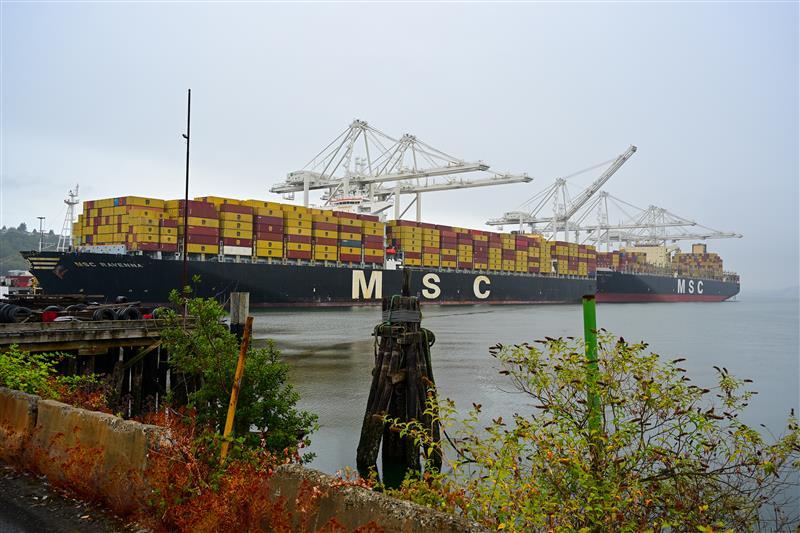
Use of renewable diesel (RD) is expanding across the gateway, with SSA beginning use of RD at Terminal 5 and Terminal 18 earlier this summer. RD is also being used by Husky Terminal and the ports have been using it in our own fleets since May 2024.
Renewable diesel is a substitute for conventional diesel fuel made from renewable feedstocks. While not a zero-emission solution, it can reduce lifecycle (from production through use) carbon intensity of fuel upwards of 50% relative to conventional diesel. Unlike biodiesel, which must be blended with conventional fuel, RD is a “drop in fuel,” meaning it can be used pure without any engine modifications.
Implementation of the Washington State Clean Fuel standard has increased availability of RD in the state and helped bring it to cost parity with conventional diesel. Staff are encouraging tenants to consider switching and are exploring mechanisms to increase use in drayage trucks. RD is an easy and accessible interim solution as we work toward a full zero emission maritime future.
Tell us a little about Husky Terminal
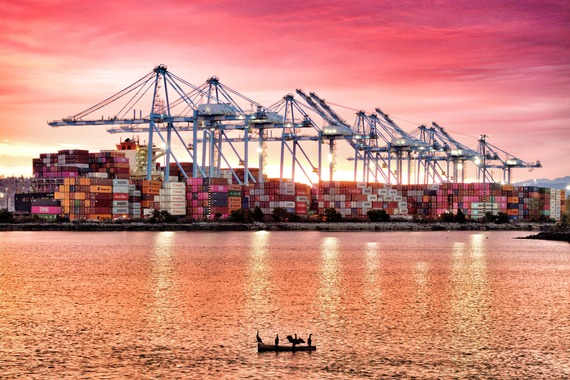
Husky Terminal, a 120-acre container terminal at Piers 3 and 4 in the Port of Tacoma, plays a critical role in the movement of goods throughout the Pacific Northwest. Guided by our core value of being good stewards of the environment, we are committed to advancing sustainable operations while supporting regional and global commerce. We have a unique challenge in the broad variety of equipment, including straddle carriers, top picks, side picks, reach stackers, forklift, rubber-tired gantry cranes, yard hustlers, and ship-to-shore cranes. This diversity of equipment enables operational flexibility and efficiency but also adds complexity to our energy transition, as each equipment type presents unique technological, infrastructure, and operational challenges in the shift to low- and zero-emission alternatives.
What about your environmental and sustainability program? Any main projects of interest?
Husky has set ambitious climate goals, achieving a 50% reduction in Scope 1 and 2 greenhouse gas emissions by 2030 and reaching net-zero by 2040. A key step toward these goals was our 2024 conversion of the entire fleet to R99 renewable diesel, a fuel that significantly reduces lifecycle emissions compared to petroleum diesel. This transition is an effective tool in reducing our carbon footprint, but we view it as progress, not perfection. A milestone in a much longer journey that will require continued innovation, investment, and operational change.
In addition, our 2023 Port Infrastructure Development Program (PIDP) grant will help drive the next phase of our decarbonization strategy. This grant supports major terminal development, including a new utility feed scheduled to come online in 2029. This critical upgrade will provide the electrical capacity needed to support large-scale terminal electrification, enabling the deployment of zero-emission cargo-handling equipment and other clean energy infrastructure.
What type of challenges have you encountered or do you expect with implementing these programs?
As we look toward our 2040 net-zero goal, our decarbonization strategy extends far beyond fuel switching. It encompasses electrification of cargo-handling equipment, significant on-site energy storage, adoption of emerging zero-emission technologies, and optimization of operational efficiency. Achieving this transformation presents several challenges: the maturity and availability of large-scale zero-emission equipment, the need to integrate evolving technologies into a 24/7 operational environment, the scalability of charging and fueling systems for a large fleet with limited downtime, securing adequate and reliable utility power, and the significant complexity of designing, permitting, and deploying new infrastructure within an active marine terminal.
|
 What are some important partnerships to ensure these projects are successful?
Collaboration is essential to making progress on clean air and decarbonization goals. We work closely with our ILWU and IAM union partners, whose members operate and maintain our equipment; the Northwest Seaport Alliance, which provides coordination and support for regional environmental initiatives; Tacoma Power, a critical partner in planning for future energy needs and utility rates; equipment manufacturers developing the next generation of low- and zero-emission technologies; and engineering and consulting firms who help us design and deliver complex infrastructure projects. We also partner with organizations like Maritime Blue, which connects industry, government, and research institutions to accelerate maritime innovation and clean technology adoption. These partnerships allow us to test new solutions, share lessons learned, and align efforts to maximize environmental benefits across the harbor.
Any other highlights or goals you want to share?
Environmental stewardship is a core value of Husky Terminal. We have successfully implemented a number of projects related to this. Shore power systems at both Piers 3 and 4 allow vessels to connect to clean electricity provided by Tacoma Power while at berth, eliminating thousands of hours of diesel generator use each year. We have invested in advanced stormwater treatment systems to protect local waterways and aquatic life. Our LED lighting conversion has improved both energy efficiency and safety across the facility. We have deployed hybrid rubber-tired gantry cranes, reducing fuel use and emissions during container moves. And with our terminal-wide R99 renewable diesel conversion in 2024, we have already made significant strides in lowering our greenhouse gas footprint. These initiatives, combined with our long-term net-zero roadmap, reflect our commitment to continual improvement and our responsibility as environmental stewards in the maritime industry.
 * Photos courtesy of Ryan Lucido, Husky Terminal
|