|
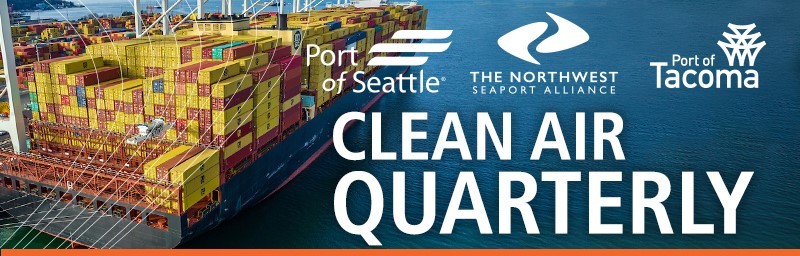
Welcome to Clean Air Quarterly, a newsletter from the Ports of Seattle, Tacoma, and The Northwest Seaport Alliance sharing clean air and climate efforts across our gateway. Each issue of the newsletter showcases projects and milestones across our gateway, features a staff member or partner who is making a difference in our region, and highlights upcoming opportunities for engaging with many aspects of the Ports environment, including bus tours, commission meetings, webinars, and events!
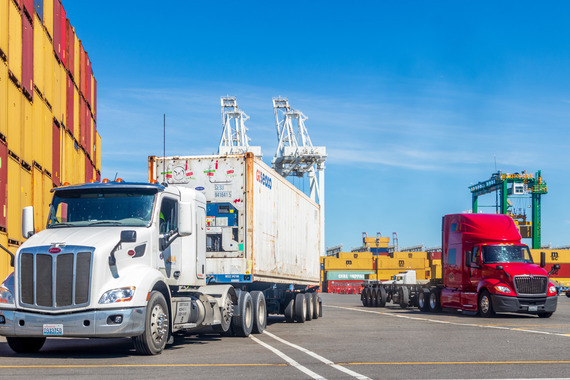 The Northwest Seaport Alliance (NWSA) hit a big milestone earlier this year with the release of the Decarbonizing Drayage Roadmap (the Roadmap). The Roadmap was produced by the Puget Sound Zero Emission Truck Collaborative, which worked for almost two years looking at issues facing the drayage truck fleet’s transition to zero emissions. The Roadmap, published in April, identifies the key issues brought forward by the Collaborative members, truck drivers, and the community. The three key areas for recommendations are vehicles, infrastructure and equity and opportunity. Each area is additionally divided into near-term, mid-term and long-term action items.
In this move to a new technology and new infrastructure, planning is key to ensuring this major shift is successful. This success depends on ensuring that our current driver community who serve our gateway have the opportunity to be part of this transition. Developed through extensive outreach and deliberation, these recommendations chart a path to get us there. The final Roadmap is available here.
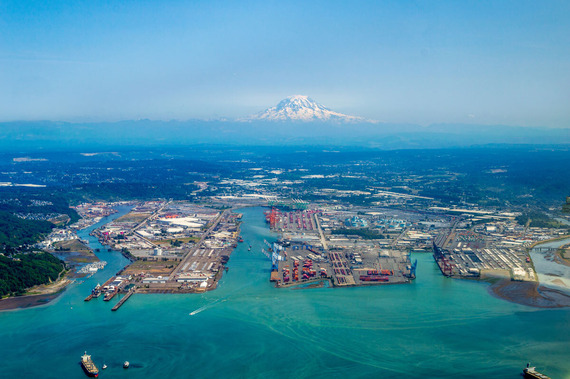
The Port of Seattle and the NWSA recently published the Seattle Waterfront Clean Energy Strategy (SWCES) in partnership with Seattle City Light. The SWCES provides a roadmap to electrify the Seattle waterfront and enable the transition away from fossil fuels through clean energy infrastructure and technology investments.
The SWCES forecasted Port electricity demand growth through 2050 and identified future electrical capacity constraints. The analysis found that Port peak electricity demands will increase four-fold by 2050 from a 2019 baseline, driven in the near-term by the use of shore power for ocean-going vessels, and in the longer term by the charging of electric vehicles, vessels and terminal equipment. To address these constraints, the SWCES identifies approximately $208 to $457 million in needed investments to electrical distribution infrastructure across the Port of Seattle, the NWSA, and Seattle City Light, including both on-terminal port infrastructure and supporting utility infrastructure. Next steps include developing an implementation framework and assessing the near-term capital projects identified in the SWCES and incorporating these into capital improvement plans for the Ports and the utility.
In addition to the SWCES, the NWSA and Port of Tacoma are also in the final stages of developing a South Harbor Electrification Roadmap (SHERM), an energy planning study that is expected to be released this summer.

In 2019, the NWSA introduced the Clean Truck Program to international container terminals and set a requirement that all trucks serving the terminals must operate a 2007 or newer engine, or a certified retrofit system. This program has had a major impact on air quality since its implementation, diesel particulate matter emissions from trucks have been reduced by 93% since our first emissions inventory in 2005.
Starting in 2026, the Clean Truck Program will expand to three domestic terminals: TOTE and West Sitcum in Tacoma, and Terminal 115 in Seattle. To help the transition to cleaner diesel trucks at these terminals, the NWSA is running its domestic scrapping program which offers bonuses up to $20,000 to purchase a 2016 or newer model year truck, and up to $30,000 to purchase a 2018 or newer model year truck. The NWSA website has up-to-date information about what the Clean Truck Program means for your truck, and how to see if you qualify for a bonus here.
|
 The US-Korea Green Shipping Corridor Project took a big step forward when a delegation of port officials traveled to Busan, South Korea in late April for face-to-face meetings with key partners. The delegation, led by CEO John Wolfe, Port of Seattle Commissioners Sam Cho and Toshiko Hasegawa, and Port of Tacoma Commissioner John McCarthy, met with their counterparts from the Korean ports of Ulsan and Busan, as well as partners from the Korean Ministry of Oceans and Fisheries, the Korean Register, and two ocean carriers: Hyundai Merchant Marine (HMM) and Wallenius Wilhelmsen (WWL). During the 10th Annual Our Oceans Conference, project partners delivered a joint statement of commitment and discussed a draft Memorandum of Understanding (MOU) to strengthen coordination and collaboration in the future.
Since the project launch in December 2023, NWSA has been working with its Green Corridor partners to establish near-zero or zero-emission shipping corridors between Korean ports and the NWSA gateway. Following a pre-feasibility assessment that identified a potential Ro/Ro and container ship corridor, we have been developing feasibility assessments to deploy green methanol-fueled car carrier vessels and container ships as early as 2027. The assessments are looking at what volumes of green methanol would be needed, where that fuel would come from, how much it would cost, how the cost gap (compared to conventional fuels) would be bridged, and what is needed at the ports to get ready to receive and serve the vessels. At the same time, the Korean Register has also produced an implementation roadmap titled “Comprehensive Policy Measures for Establishing and Sustaining a Green Shipping Corridor,” with was introduced at this year’s Our Ocean Conference. This roadmap serves as an essential step in our efforts to introduce zero-emission vessels to our gateway.
The Pacific Northwest to Alaska Green Corridor project is assessing the feasibility of four cruise ships powered by green methanol by 2032. But what is green methanol, and what makes it a viable candidate as a next generation maritime fuel? The recent blog post from PoS on green methanol provides deeper insight on this future fuel that has the potential to achieve low and near-zero GHG emissions. It explores what makes methanol green, how green methanol is produced differently than conventional fossil fuel-based methanol, and how green corridors can support the development of green methanol and other next generation maritime fuels.
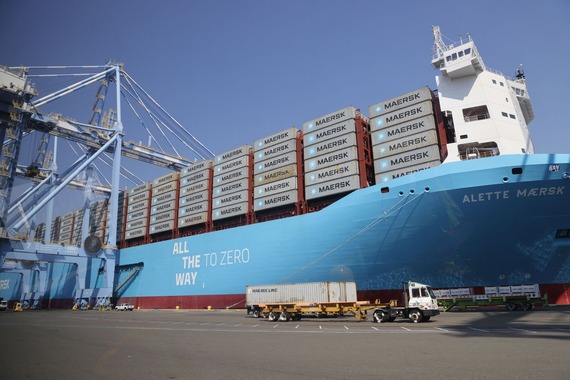 The NWSA, Port of Tacoma, and Port of Seattle are partnering with state-wide government, industry, and community partners to accelerate the availability, affordability, and deployment of sustainable maritime fuels with the recently launched Sustainable Maritime Fuel Collaborative. Sustainable maritime fuels are the next generation of zero and near-zero-emission energy sources needed for the global maritime industry to address climate change, improve human health, and drive shipping decarbonization globally and in the Pacific Northwest.
The Collaborative is funded by the Climate Commitment Act and led by Maritime Blue. Over the next eighteen months, the Collaborative will establish a Leadership Committee to include diverse representation from all sectors involved in the sustainable fuels value chain and establish a sustainable model for ongoing regional collaboration and action. The Leadership Committee will refine the Collaborative's objectives, mission, strategy, and structure, with a report due to the Washington Legislature this summer.
The Port of Seattle just published its 2024 Environment and Sustainability Report, providing a progress update on the Port’s climate actions, environmental investments, and community-focused programs. Climate and clean air updates include a Verified Scope 1 and 2 greenhouse gas (GHG) inventory, the completion of the Pier 66 shore power project, and the Port’s commitment to become the first to require shore power use by homeport cruise vessels starting in 2027. In addition, the report highlights community engagement and equity developments, including more than 75 community stewardship and learning events that the Port of Seattle hosted or participated in. More information is available here.
After years of negotiation, the International Maritime Organization (IMO), the United Nation agency that develops standards for international shipping, recommended a binding framework with a goal to achieve net-zero emissions by or around 2050. In a historic moment, this framework “is the first in the world to combine mandatory emissions limits and [greenhouse gas] pricing across an entire industry sector.”
What does this mean for the ports of Seattle, Tacoma, and the NWSA? Once it is formally adopted in October 2025, the framework will require the gradual introduction of carbon reduction targets to reduce greenhouse gases from ships, as well as a pricing and reward system that will be mandatory for “large ocean-going ships over 5,000 gross tonnage, which emit 85% of the total CO2 emissions from international shipping.” These changes will impact port customers who visit our gateway, and will align with organizational commitments to phase out emissions from maritime operations by 2050. A new blog post from the Port of Seattle highlights key takeaways from the IMO agreement and dives deeper into Port of Seattle and NWSA efforts to reduce GHG emissions in our gateway, such as shore power and Green Corridor projects.
|
 A new video from PoS on the Pier 66 shore power installation takes a closer look into the groundbreaking project. Hear directly from Port Commissioner Ryan Calkins, port staff, Seattle City Light CEO Dawn Lindell, and Mike Watts of Watts Marine as they detail this vital initiative for a more sustainable waterfront. The project is one of many that demonstrates how collaboration is driving innovation and reducing emissions in the heart of Seattle.

Nicola Graham is a Project Manager on the Air Quality & Sustainable Practices team and has worked for the Northwest Seaport Alliance and Port of Tacoma for nine years. She works on a wide variety of programs, ranging from installation of EV chargers on port property, the NWSA Green Marine program, grant writing and leads the NWSA Clean Truck Program.
The Clean Truck Program encompasses the transition to newer cleaner diesel trucks, a project that has been on-going for nearly a decade, as well as the transition to zero emission drayage trucks. Around 5,000 truck drivers regularly call the NWSA gateway and coordinating and supporting that critical part of our supply chain is no small feat. Nicola’s dedication to the driver community has led to strengthened relationships, robust funding support and her work has had significant measurable impacts on our regional air quality.
Before joining the NWSA, Nicola grew up and went to university in Scotland (University of Edinburgh and Aberdeen alumni). After getting her Masters, Nicola worked in agricultural research, at a lab at a brewery (with the daily free beers!) and on circular economy projects at Scottish Canals, before her husband’s work moved her to the U.S. Originally, and reluctantly signing on for 6 months in America, the two of them loved it so much they settled down and stayed. She lives in Tacoma with her husband Alasdair, her two young daughters and dog Jura.
|
|