|
You can find more information on the MBLC website or check out our Google Calendar of Events.
Impact Fellows Meeting (note that Fellows have already been selected)
Tuesday, February 10th, 2026
3:30 p.m. - 5:00 p.m. PST
The MBLC Impact Fellows are a group of educators from across the Mastery-Based Learning Collaborative who work to achieve educational equity in schools through leading and facilitating learning in their own schools and districts, and through the facilitation of sharing and learning among MBLC schools.
MBLC Spring Virtual Meeting
Tuesday, March 17th, 2026
3:30 p.m. - 5:00 p.m. PST
An important forum for our shared learning and collaboration will be our MBLC Virtual Meetings, which occur once in the fall and once in the spring. Each online meeting will begin with a webinar presentation, followed by opportunities for discussion and connection in breakout rooms with educators from across the MBLC.
Save the date: MBLC School Intervisitation at Innovation Heights Academy (in-person event, only open to MBLC members)
Tuesday, March 24th, 2026
Time TBD
Save the date for an intervisitation at Innovation Heights Academy, a Cohort 1 School in the Highline School District, on Tuesday, March 24th, 2026! More details to come.
Interest Survey: May 5th Spring Gathering
SBE is looking at hosting a 2026 MBLC Spring Gathering, given the great success of our past all-community MBLC gatherings. We would like to see if our Friends of the MBLC community would be interested in attending this event on Tuesday, May 5th, 2026 at The Sea-Tac Conference Center. If you are interested and can confirm that you would register and attend the event, please fill out this survey (the survey is an interest form, and the registration form would be sent out if we move forward with the event).
Please note the following as you consider your availability for this event:
- This is a full-day event run by our exemplar MBLC schools (Living Lab Schools) and our lead MBLC educators working to coach others on MBL practices (our Impact Fellows).
- Priority registration will be reserved for MBLC school teams, but we expect spaces to be available for Friends of the MBLC. We will cap this event at 60 participants.
- There will be highly interactive small-group protocols run by our Impact Fellows in the afternoon. Participation in these sessions will require some knowledge of MBL frameworks and practices. We ask that non-MBLC participants come with some knowledge or awareness of MBL practices.
Our growing event archive on the MBLC Community Site is a treasure trove of recordings and resources from past events.
OTHER ANNOUNCEMENTS AND OPPORTUNITIES
Help Spread the Word: State Board Accepting Applications for New Student Board Member
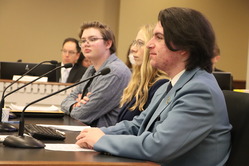
The Washington State Board of Education is now accepting applications from current high school sophomores to serve as its next Student Board Member for the 2026–2028 term. Applications are open until Tuesday, March 31. Learn more and access the application on the Board’s website.
About the Position
Serving on the Board is a unique professional development opportunity and a powerful platform for student voice. Student Board Members help shape statewide education policy by representing over one million students across Washington and sharing perspectives and lived experience that might otherwise go unheard. Students gain leadership skills, policy experience, and professional connections that can support future goals after high school.
Student board members are trusted with the same responsibilities as adult members. They attend all Board meetings, contribute to discussions, and vote on policy changes. In fact, Washington is one of only a handful of states that gives students full voting power on its State Board of Education!
In addition to professional development, students earn a stipend of up to $100/day when engaged in board activities. All travel expenses are covered.
Eligibility
Applicants must be current sophomores (rising juniors) who will attend a public or private school in Washington during the 2026–2028 term and demonstrate a positive academic and/or extracurricular record. No prior experience in education policy or formal student leadership is required.
Virtual Q&A session on March 3 at 5:30
Our current Student Board Members will be hosting a virtual Q&A session on March 3 at 5:30 to answer any questions interested students might have about the role, the application process, and what it’s like to represent students across Washington. Click here to register!
|
“Competency-Based Learning in Action” at Gibson Ek
Registration is now open for Competency-Based Learning in Action: A Deep Dive into Student-Centered Learning and Mastery-Based Records. on February 25, 2026. This one-day learning experience will be co-hosted by Mastery Transcript Consortium and Gibson Ek High School.
Getting Smart's List of 2026 Education Conferences
Check out Getting Smart’s list of can’t miss education conferences in 2026! These events bring together educators and thought leaders who are committed to the future of education. From exploring emerging edtech to advancing personalized learning, there are many opportunities for schools to connect this year.
MBLC SCHOOL HIGHLIGHTS
“Off and Away” Cell Phone Policy Makes Space for Learning at Tumwater High School
By Kate Gardoqui
In the spring of 2025, I conducted my regular MBLC coaching visit to Tumwater High School (THS). By the time I had visited a few classrooms, it was clear that THS was doing something special: I saw a remarkable absence of cell phones. I did not see students looking at phones under desks, or walking the halls with their heads down towards the screen, or balancing their phones against their laptop screens for a double digital dose. It was a striking contrast to many schools I have visited around the country in the past decade. Almost all schools have cell-phone policies, but Tumwater’s comprehensive and consistent implementation was noteworthy.
I knew that THS had been working on crafting and implementing a cell-phone policy that would support all of their work on teaching and learning. As the school sought to move towards more culturally responsive and mastery-based approaches which put students in the driver’s seat of learning, they knew that student engagement would be essential, and cell phones are one of the most significant causes of student disengagement.
In addressing cell-phone use head-on, they were joining an ever-growing group of schools across the nation that have transformed their learning environments through comprehensive and well-implemented cell phone bans. Numerous articles in Education Week and other publications have chronicled the remarkable success of these bans over the past few months, with schools reporting reduced conflict and disciplinary problems, increased book checkouts in libraries, improved student engagement, and the resurgence of analog hobbies like dominoes and volleyball.
Tumwater High School is seeing those same positive results, all of which have supported their work to create a welcoming, culturally responsive, and mastery-based learning environment.
In November, I interviewed Zach Suderman, the principal of Tumwater High School, to hear about how THS has made their policy work and the advice he would share with other schools. (This interview has been edited for clarity)
Tell me about your policy - what are the nuts and bolts? Are there documents that you can share with other schools?
The basics of our policy are “Off and Away.” If a phone is out, there’s a little slip of paper that the teacher fills out and gives to that student, and the student has to bring it up to the front office. With the first infraction, we hold on to the phone for the rest of the day. If they have a second infraction, a parent has to come pick it up. And then if there is a third infraction, it's not just parent pickup; we have to work with the student and family on additional interventions. We have a few students who need this - we had five or six last year that had upwards of five or six infractions. However, that is less than one half of a percent of our students who are getting to that level. There's over 99% of our students who are able to follow the Off and Away guidelines. They just put it away.
The policy can be summarized like this:
- Phones Off and Away - student can only be looking at phones before school, after school, or between classes
- If a phone is out, the teacher fills out a slip of paper and student brings it to the office and loses the phone till the end of the day
- Second infraction, parent needs to pick up the phone
- Less than one half of a percent are recurrently problematic
- Here are some resources from our project:
- Email to families
- Slide About the Policy
- One pager - device expectations for teachers
How did you get staff buy in?
The most important piece that made this successful was taking the power struggle off of the teacher’s plate. The teacher’s role is to say, “Your phone’s out, take this slip of paper to the front office.” Teachers already have so much going on, and it's so easy to get in a power struggle over a phone that pulls them from the work of teaching. So for the teacher to be able to say, “hey, phone’s out, here's your slip, just take it up to the front office,” that makes space for everything to be handled outside of the classroom in the office.
How did you get parental buy in?
We got our communications out early! There was a bit of a grace period in the first few days of school where kids were told, “that would have been a device infraction if the policy had started.” This coaching helped kids learn how it was going to work.
I experienced overwhelmingly positive feedback from parents. Some parents were concerned about reaching students, and we had to emphasize that the student would still have access to the phone during the passing period and lunch, so they can still track their student and the student will see messages at appropriate times of day. But the vast majority of parents said, “thank you, thank you, thank you.”
How does this work connect with building a welcoming school culture?
There is a general sense of more students talking to each other in the hallways and making connections. At the same time, social media intimidation, HIB (Harassment, Intimidation, Bullying) reports and incidents all went way down. As administrators, we are spending much less time dealing with HIB reports.
We have also seen impacts for teachers. When we took the phones out of students' hands, there was this pressure that was put on teachers. It actually pushed teachers to design more engaging classroom activities - and it gives them more incentive. Now the teachers can come and know, “if I put in all the extra effort to design something engaging and real, they're actually going to do it because they're not distracted by their device.” In this way, the cell phone ban supports both culturally-responsive sustaining education and mastery-based learning, by building a more welcoming and connected school environment.
What is your advice for other schools?
There is a fear factor for administrators and teachers when they think about policies like these. They think - what if every kid takes out their phone during class? My answer was, well, if 15 students take out their phones, you write 15 notes. What we found is that this didn't happen. The vast majority of students and parents understand that this policy truly helps students, and they appreciate it, support it, and are willing to partner in its implementation.
READ THIS, WATCH THAT!
Give Students Meaningful, Work-Oriented Learning, U.S. Executives Say
Read how senior corporate executives in several industries responded to the following EdWeek question: What types of career learning experiences for K-12 students in school and actual workplaces do you think would help?
KnowledgeWorks: The top 10 resources from the past year
Review the top KnowledgeWorks resources from 2025 related to topics such as systems change, Portraits of a Leader, policy frameworks for personalized learning, and student agency.
In Maine, a new initiative is helping students connect math with the real world
Engaging, real-world learning from Maine!
|