Celebrating Excellence: ONE Thanks NIEA for Honoring Outstanding Leaders
ONE would like to extend its sincere appreciation to the National Indian Education Association (NIEA) for recognizing and uplifting the following individuals who distinguished themselves at the conference:
Lifetime Achievement Award
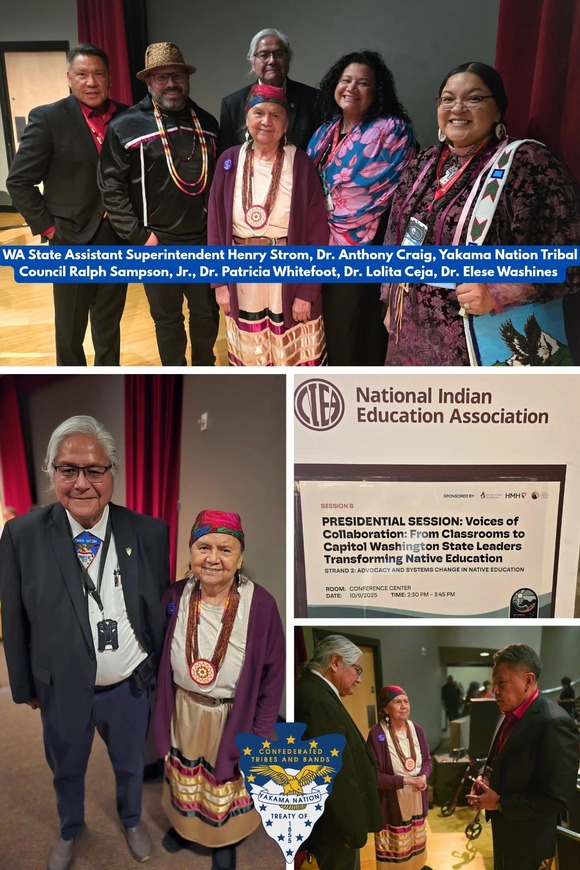
Patsy Whitefoot
Raised by her grandparents in Medicine Valley, her ranching roots fostered a lifelong respect for land and seasons. For 50+ years she has championed Native education from early childhood to adult learning, served on the Yakama Tribal Council and ATNI leadership, and steadfastly advocated for treaty rights and MMIWR. She received Senator Patty Murray’s Golden Tennis Shoe Award and a 2025 WSU Honorary Doctorate (with the Yakama Tribal Council). Proud mother, grandmother, and great-grandmother.
Educator of the Year
Kamea Pino
Curriculum Developer for the Colville Youth Development Program, Kamea created culturally grounded curricula across Colville territories. She led a Colville-specific Natural Resources pathway—embedding language and traditional knowledge with high school/college credit and paid apprenticeships—developed with the Natural Resources Division and Career Connect WA; cohorts launched in Omak and Inchelium. Recognized statewide (WSIEA Educator of the Year), her work builds identity-rooted routes into natural resources careers for Native youth.
William J. Demmert Cultural Freedom Award
Salish School of Spokane
Recognized for sustained leadership in Salish language revitalization, the Salish School of Spokane delivers immersive education from early childhood through K–12, alongside family classes and teacher training that build an intergenerational pathway for speakers. Centering Salish knowledge, land-based learning, and academic excellence, it strengthens identity and well-being, grows new fluent speakers, and—through partnerships with families, Elders, and regional schools—models educational sovereignty for programs across Indian Country.
|
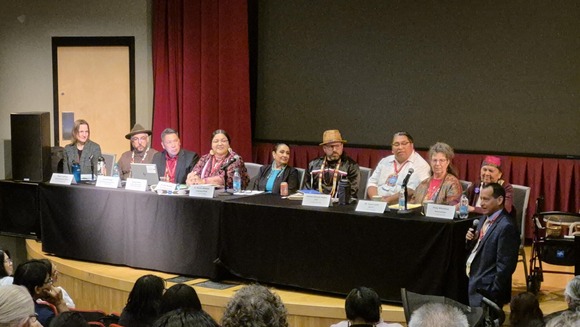 NIEA Presidential Panel (from left to right): Susan Lathrop, Jerad Koepp, Henry Strom, Dr. Elese Washines, Dr. Martina Whelshula, Dr. Anthony Craig, daniseten (Michael) Vendiola, Dr. Laura Lynn, Dr. Patricia Whitefoot
NIEA Conference Highlights the Work of ONE
Empowering Sovereignty Through Policy: Washington State's Collaborative Approach to Native Education
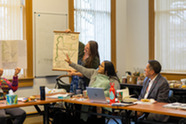
The Office of Native Education presented on Washington State's collaborative framework for Native education at a workshop led by Assistant Superintendent Henry Strom and team members Shandy Abrahamson, Bawaajigekwe Boulley, Maxine Alex, Destiney Petty, and Kathrine Lawrence. Presenters shared about the tribal advocacy and state policy that shapes, supports, and informs Native education in Washington State, covering topics including the 1989 Centennial Accord, the Since Time Immemorial curriculum, State-Tribal Education Compact schools, the First Peoples' Language certification program, and Government-to-Government training requirements. Throughout the session, participants engaged with the content through community-centered reflection prompts, exploring how sovereignty-centered policy frameworks can advance educational equity for Native students.

Indigenous People's Day 2025
We Are Still Here
Indigenous People's Day honors the resilience, cultures, and contributions of Indigenous peoples across this land. It is a day to recognize that Native peoples have been here since time immemorial and continue to thrive, despite centuries of attempts to erase our cultures, languages, and ways of life. It is a day to celebrate survival, resistance, and the ongoing presence of Indigenous nations.
Our Commitment
The Office of Native Education serves as a bridge between Tribal governments, school districts, State-Tribal Education Compact schools, Native communities, families, and educators across Washington. We work alongside the 29 federally recognized Tribes in our state and the diverse Native communities who call this place home.
Recently, our team has had the honor to review some of the policy and advocacy that has helped shape, inform, and sustain Native Education in Washington State. With grateful hearts and spirits, we extend our thanks to the relatives, communities, educators, administrators, language and culture bearers, and the Washington State Native American Education Advisory Committee (WSNAEAC) for their words, wisdom, knowledge, policy shaping and making, and unwavering care and stewardship of Native education and youth. It is through your advocacy and knowledge that Washington's Tribes and state are leaders in Native Education.
Education is sacred. Education is sovereignty.
It is our shared responsibility to ensure that Native children experience education rooted in belonging and Indigenous pedagogy, education that honors who they are and where they come from. We stand with all the communities, educators, administrators, and partners who work with and for Native children so they may have positive experiences in the classroom and beyond. So they may grow into the people they are meant to be while remaining grounded in their identity, knowing they can accomplish whatever they choose to do, with strong communities behind them and the love of their ancestors around them.
Through programs like Since Time Immemorial, Tribal language revitalization efforts, the Native Literacy Workgroup, State-Tribal Education Compact schools, Tribal Consultation, and Government-to-Government trainings, we continue the work of reclaiming educational sovereignty and centering Indigenous voices, knowledge, and ways of learning in our schools.
A Call Forward
We invite you to walk with us in this sacred work. Learn the true and complete history of this land and its first peoples: the stories that have been silenced, the truths that have been marginalized, and the Indigenous knowledge that has sustained communities since time immemorial.
This is not history confined to the past. Native peoples are here now, thriving, leading, and shaping the future. Their stories are living, their wisdom is present, and their sovereignty demands recognition and respect.
To those willing to listen deeply, learn authentically, and stand in solidarity with Indigenous communities, we see you, and we thank you. Your commitment to truth and to creating educational spaces where Native children thrive matters more than you know.
Together, we can ensure that every child in Washington learns the full story of this place and carries forward a legacy of respect, understanding, and partnership.
Thank you,
Office of Native Education Washington
Office of Superintendent of Public Instruction
|

Share Your Words
púti kwu aláʔ (We are still here)
In the nselxcin dialect of Interior Salish, shared by sn̓ʕaýckstx (Arrow Lakes) members of our team
This powerful affirmation reminds us that Indigenous peoples have lived in connection to and kinship with these lands since time immemorial, and we will continue to do so, honoring our responsibility to these lands, our languages, traditions, ancestors, and our children.
Do you have a phrase, a word, or statement in your Indigenous language that resonates with you, similar to púti kwu aláʔ? Something that brings you joy, purpose, a sense of identity?
We would love to hear it and share it with others.
If you would like to share your words of purpose, please reach out to:
Destiney Petty (Skwekwiw)
Tribal Language Program Supervisor
Office of Native Education
destiney.petty@k12.wa.us
|
Indigenous Peoples’ Day: Honoring Our Stories, Celebrating Our Continuance
Boozhoo Relatives,
The Native Student Success Program at the Office of Native Education honors Indigenous Peoples’ Day as a time to recognize the strength, beauty, and brilliance of Native nations—our languages, lands, teachings, and ongoing presence. It is also an opportunity for reflection and learning. For those of us working in education, it serves as a reminder that Indigenous knowledge systems are not part of history; they are living, evolving, and essential to the future of teaching and learning.
The Native Student Success Program is guided by the 6RS: respect, responsibility, relationship, reciprocity, relevance, and representation. Indigenous Peoples’ Day invites us to ask: How are we lifting up Indigenous voices in our daily practice? How are we creating space for students to see their identities reflected in what they learn?
This day is for all of us, Native and non-Native alike, to pause and celebrate the diversity of Indigenous People and Tribal Nations across this land, and to remember that joy and sovereignty go hand in hand.
Engagement Opportunity: Reflection and Connection
We invite you to share your reflections with us:
- What does Indigenous Peoples’ Day mean to you?
- How are you uplifting Indigenous identity of students, educators, or community partners in your work?
- What is one way you are committing to learning or unlearning this year?
You can share your reflections by emailing me and sharing a few words or photos from your classrooms and communities. I will highlight a few in our next newsletter to continue the celebration and awareness throughout the year.
Miigwech (thank you) for walking this good road together in partnership and joy.
In community,
Bawaajigekwe Boulley
Native Student Success Program Supervisor
Office of Native Education
bawaajigekwe.boulley@k12.wa.us
|
Resources for Reflection and Learning
We invite educators, families, and community members to engage with resources that center Indigenous voices, stories, and perspectives.
Since Time Immemorial Elementary Curriculum
Our office has developed curriculum materials that help students understand the continued impacts of colonization on Tribal peoples from a Tribal perspective. In Unit 1: Encounter, Colonization, and Devastation, students participate in poetry enactment, engage in critical thinking about fairness and justice, and study maps to examine how colonization has affected Indigenous communities and their relationships with the land. This curriculum provides age-appropriate pathways for learners to understand Indigenous perspectives and the ongoing realities facing Tribal nations today.
Access Unit 1: Encounter, Colonization, and Devastation (Elementary Level 2)
Engaging Minds and Hearts: Learning from Sugarcane
The award-winning documentary Sugarcane sheds light on the lasting impacts of Indian boarding schools and the resilience of Native communities. Our Office of Native Education has created a companion guide to support educators in viewing the film through a culturally responsive and trauma-informed lens. This resource includes reflection questions, discussion topics, and self-care guidance for deep, meaningful engagement.
Sugarcane guide
Indigenous Podcasts from Washington
For adults and youth seeking to deepen their learning and curiosity about Indigenous perspectives, we recommend these podcasts from Washington Tribal communities:
All My Relations is hosted by Matika Wilbur (Swinomish and Tulalip) and Temryss Lane (Lummi Nation). The podcast explores relationships to land, to our creatural relatives, and to one another, featuring conversations with Indigenous artists, activists, educators, and changemakers.
Listen to All My Relations
Young and Indigenous is a youth-led podcast from the Lummi Nation where young people research, write, interview, record, and edit episodes about relevant topics in their community. This podcast keeps ancient oral traditions alive through modern technology while ensuring that youth voices are heard and valued.
Listen to Young and Indigenous
Indigenous-Created Art Resources
Keepers of the Water offers beautiful coloring pages created by Indigenous artists that can be used for classroom activities, personal reflection, or family engagement. These resources provide meaningful ways to honor Indigenous cultures and connect with Indigenous teachings.
Explore the coloring pages at keepersofthewater.ca

Native Student Success Spotlight
Each month, the Native Student Success Spotlight highlights educators, leaders, and advocates whose work uplifts Native students and communities across Washington State. In recognition of Indigenous Peoples’ Day, we are honored to share this month’s feature, submitted by Superintendent Kristi Dominguez from Ferndale School District.
Nominee: Mia Owings, Districtwide Native Liaison
Mia Owings, a proud member of Lummi Nation, serves as the districtwide Native Liaison for Ferndale School District. Many of the students affectionately call her “Auntie,” a reflection of the deep trust and care she builds with each of them. Mia is relentless in her support, ensuring that every Native student not only has what they need to be successful but also feels seen, valued, and encouraged to reach high expectations.
Her work goes far beyond daily check-ins. She organizes tutoring supports, Native clubs, family events, and jam sessions that bring students and families together in ways that celebrate culture and strengthen community. She connects families to needed resources and advocates fiercely so that each student can find and use their voice.
Last year, Mia noticed that Native student attendance was lagging behind. Rather than accept this as a fixed challenge, she created a system where, if a student missed the bus or could not get to school, she would drive to pick them up or arrange transportation herself. This simple yet powerful act removed barriers, built family trust, and resulted in stronger attendance across the district. One student in particular, who had nearly stopped attending, is now coming daily because Mia kept showing up and would not give up.
As a direct result of her continued support, 32 Native students graduated last year, the largest cohort since she began working in Ferndale. Mia’s work is a model of both heart and action. She embodies the belief that Native student success is everyone’s responsibility and shows us every day what it means to put that belief into practice.
Office of Native Education Comment: The Office of Native Education extends deep gratitude to Mia Owings and Ferndale School District for modeling what it means to center Native Student Success in daily practice. Through relational leadership and steadfast advocacy, Mia demonstrates how Indigenous values of care and community strengthen our schools statewide. Her work reflects the spirit of Native Student Success, grounded in belonging, relationships, and the brilliance of Native learners.
Want to Nominate Someone for the Native Student Success Spotlight?
Do you know a student, educator, program, or community member doing something amazing to support Native Student Success?
I would love to feature them in an upcoming newsletter!
To submit a spotlight, simply email Bawaajigekwe Boulley with the following:
- Your name
- School, district, or organization
- Who you are nominating (name + role)
- A few sentences about what they are doing and why it matters
Photos, links, or student-created work are always welcome!

2025 Conference—Future Native Teachers Initiative
FNTI is for high school students from tribes, schools, and communities who are interested in becoming educators in public and private schools. FNTI is a 2.5-day program for Native high school students exploring careers in education. Students connect with Native educators, visit a local elementary classroom, and explore college pathways.
When: October 28-30
Where: Pierce College Puyallup, Farm 12 Puyallup, UW Tacoma
| Visit the FNTI website for more details | View and print the flyer
Registration deadline: Friday, October 17 at 5:00pm, or until capacity is reached.
|

Honoring Sovereignty, Partnerships in Education & the Right to Wear Regalia
District Leadership, Administrators, Senior Graduation Teams and Educators:
Puyallup Tribe is honored to invite you for a day of meaningful dialogue, shared learning, and collaboration focused on Honoring Sovereignty, Building Partnerships, and Advancing Education.
This special gathering will highlight the importance of the Right to Wear Regalia and explore ways to strengthen relationships between Tribal communities and local school districts. Together, we aim to ensure Native students are honored, respected, and fully supported throughout their educational journeys.
When: Wednesday, October 29 | 10:00 AM – 3:00 PM
Where: Chief Leschi Schools Auditorium | 5625 52nd St. E., Puyallup
Please RSVP by 10/24/2025 | View and print the flyer
|

YES! Program Empowers Youth, Prevents Sexual Violence in Middle Schools
Youth-centered Environmental Shift (YES!) is a new free sexual violence prevention program (not a curriculum) developed by OSPI for Washington middle schools.
YES! relies on youth involvement to create a safer and more supportive school environment, using strategies that are proven to prevent both perpetration and victimization among youth. Schools can choose between several recommended activities to address their students' specific needs, such as a social norms campaign, school protocols and plans, hot spot mapping, and more!
Free technical assistance from OSPI is available for schools to implement YES! in the 2025-26 school year. Contact nikki.vanwagner@k12.wa.us to learn more. See the handout for more details.
Image by wokandapix from Pixabay
|
|