Welcome Back—Shared Vision for Native Education Excellence
Way' slx̌lax̌ts (hello friends),
As we begin this new school year together, I am filled with both excitement and deep purpose as I write to you in my role as Director of the Washington State Office of Native Education. This marks not just the beginning of another academic year, but an opportunity to strengthen the foundation of relationships and shared commitment that makes transformative education possible for our Native students. As we embark on this journey together, I want to share with you some of the priorities and values that guide my intention for collective work in the months ahead.
At the heart of everything we do lies our commitment to community. Native education thrives when it is rooted in the wisdom, traditions, and aspirations of the Washington state tribal nations and communities we serve. This year, I am committed to ensuring that our programs and initiatives are not developed in silos, but rather emerge from a deep listening to leaders, elders, families, and students themselves. These voices are essential to this vision.
The challenges and opportunities before us require us to work together with intention and mutual respect. The Office of Native Education is committed to developing and strengthening meaningful collaboration between State Tribal Education Compact schools, traditional public schools, tribal governments, and our state agency. We each bring unique strengths, perspectives, and resources to this work. When we share best practices, support one another through challenges, and celebrate successes together, we create an environment where every Native student can thrive.
As we navigate the complexities of educational policy, funding, and programming, we will remain committed to upholding tribal sovereignty. This principle guides us to recognize that tribes possess the inherent right to shape the educational experiences of their children. Whether we are working with State Tribal Education Compact schools that directly exercise this sovereignty or public districts serving Native students from tribal communities, we will ensure that tribal voices lead, that cultural protocols are honored, and that educational approaches align with the values and aspirations of tribal communities.
I look forward to sharing space with each of you, learning, growing, and advocating for our youth and communities.
Shandy Abrahamson, Director
Office of Native Education
Washington State Office of Superintendent of Public Instruction
|
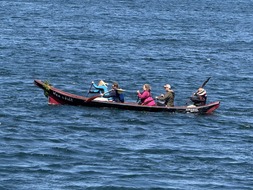
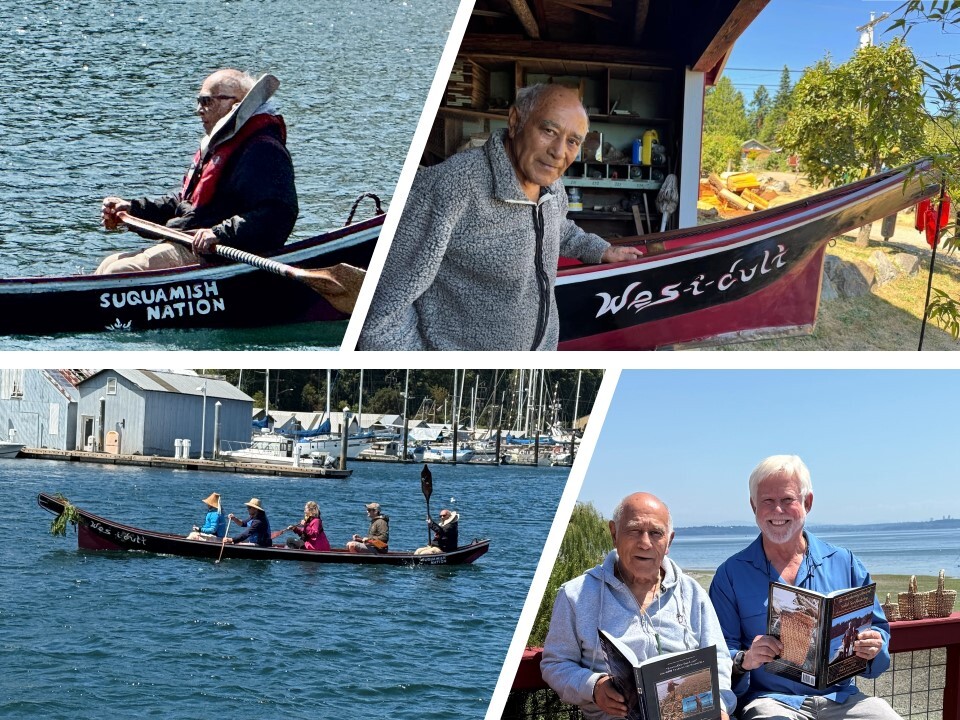
Insightful Book Chronicles Indigenous Use of Suquamish Land and Resources
A Valuable New Resource for Teachers!
A newly released publication, co-authored by a Suquamish elder and a local archaeologist, offers fresh insights into the traditional ways tribal members utilized the plants, animals, and marine life of the Pacific Northwest over thousands of years.
Suquamish tribal member Ed Carriere collaborated with retired Washington State University archaeologist Dale Croes to author Living-Off-The-Land for 4,000 Years on the Salish Sea. This comprehensive work blends Carriere’s personal memories of learning to gather and prepare traditional foods and plants during his youth with archaeological findings that trace Indigenous resource use in the region back four millennia. Read the article in Northwest Treaty Tribes
Images: Ed Carriere skippers his canoe to Elwha. Below right: Ed with Dale Croes
|

56th Annual NIEA Convention & Trade Show
The Office of Native Education (ONE) is proud to represent Washington State at the NIEA 2025 Convention and Trade Show this October. This year’s event, hosted in our home state, will highlight the impactful work of ONE in partnership with the Washington State Native American Education Advisory Committee (WSNAEAC) and the broader agency’s commitment to Native education.
Our participation underscores the state’s dedication to fulfilling the responsibilities outlined in RCW 28A.300.105, which defines the duties of ONE. Through this work, our agency continues to set a national standard for how states can support Native students, families, and communities.
Washington’s approach—grounded in state-tribal partnerships and government-to-government collaboration—has positioned ONE as a national leader. Other states are increasingly looking to our model for guidance, innovation, and inspiration.
This recognition is not just about one office—it reflects the collective effort and vision of an agency that prioritizes equity, cultural responsiveness, and meaningful engagement with tribal nations.
Representatives from ONE and WSNAEAC will be attending the event and look forward to seeing you. Stop by our booth for Native education materials, conference freebies, and chances to win prizes!
When: October 8-11, 2025
Where: Spokane Convention Center
|

Native Student Success Spotlight
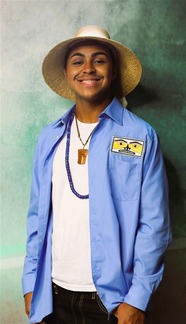
Meet Caleb Sequoia Lee (Haida Tribe, Northern Arapaho)
Caleb, from Tacoma, WA, graduated as Valedictorian of Tacoma Online High School while earning his associate's degree through Running Start. Now headed to UW Tacoma to study Business Administration and Marketing, he plans to create affordable housing opportunities in collaboration with Native communities—carrying forward his grandfather’s legacy of resilience and leadership.
“I hope to be a role model to Native youth—to show we can accomplish great things, regardless of our circumstances.”—Caleb Sequoia Lee
Read more about Caleb Sequoia Lee.
|
Want to Nominate Someone for the Native Student Success Spotlight?
Do you know a student, educator, program, or community member doing something amazing to support Native Student Success?
I would love to feature them in an upcoming newsletter!
To submit a spotlight, simply email Bawaajigekwe Boulley with the following:
- Your name
- School, district, or organization
- Who you are nominating (name + role)
- A few sentences about what they are doing and why it matters
Photos, links, or student-created work are always welcome!
NAKIA Academy Launches Indigenous Educators Cohort
The Office of Native Education is pleased to share that applications are now open for NAKIA Academy’s new Indigenous Educators Cohort. This professional learning community is created by and for educators of color in partnership with OSPI’s Beginning Educator Support Team (BEST), the Washington Education Association (WEA), the Washington School Counselor Association (WSCA), and the Office of Native Education (ONE).
The Indigenous Educators Cohort fulfills RCW 28A.300.105 by developing and retaining educators who serve American Indian and Alaska Native students, advancing culturally responsive mentoring, and honoring sovereignty, language, culture, and community.
Over four months, participants will:
- Complete the full BEST Mentor Academy 101 and 201 curriculum.
- Strengthen mentoring skills and engage in culturally responsive leadership.
- Build relationships and join a statewide network of peers committed to Native student success.
- Lead systems change that uplifts Native students and communities.
Applications are open now and will close on September 15, 2025.
👉 Apply here through the OSPI Nakia Academy Application
Learn more about Nakia Academy: Nakia Academy | Washington Education Association
Together, we can build a strong and sustained network of Indigenous educators and allies who center equity, sovereignty, and community in Washington’s schools.
|
Native Student Success Framework and How It Aligns with Our Statutory Duties
By Bawaajigekwe Boulley, Native Student Success Program Supervisor, Office of Native Education
In the spring, I shared how community voices are shaping Washington’s Native Student Success (NSS) Framework—highlighting what success means to Native students, families, and educators. This summer, I have been working on connecting the framework to the responsibilities of the Office of Native Education as defined in state law (RCW 28A.300.105).
The NSS Framework strengthens our ability to:
-
Assist school districts in meeting the educational needs of American Indian and Alaska Native students through guidance, technical assistance, and community-informed solutions.
-
Support Native curriculum and language, ensuring schools integrate tribal sovereignty, history, culture, and language into classrooms in partnership with tribes.
-
Cultivate Native educators by addressing recruitment, retention, preparation, and professional development, helping build pathways for Native teachers and leaders.
-
Improve data and accountability by including both academic indicators and culturally relevant measures of success.
-
Report system progress by organizing initiatives in a way that highlights successes, identifies needs, and informs statewide decision-making.
In this way, the NSS Framework is not just a vision for the future—it is also a tool for fulfilling our office’s statutory duties while advancing Native student success across Washington.
What’s next: In the coming months, I’ll share how this framework is being refined in consultation with the Washington State Native American Education Advisory Committee (WSNAEAC), tribal leaders, and community partners as we move toward a statewide model for Native student success.
|

Native Literacy Principles & Indicators
Guidance for All Learners
The Office of Native Education invites educators to engage with the newly developed OSPI Native Literacy Guidance, a living resource designed to guide effective and equitable literacy instruction. While created to honor the unique strengths and needs of American Indian/Alaska Native students, these principles provide valuable direction for teaching all children. Rooted in Indigenous Knowledge Systems, this framework affirms that literacy is more than reading and writing—it is identity, community, and cultural practice.
Seven (7) Native Literacy Principles:
- Foster trust and belonging through relationships and community
- Use a strength-based approach to assessing and instructing AI/AN learners
- Center identity development as a pillar of literacy
- Develop oral language and storytelling as foundations for literacy
- Ground curricular and instructional choices in the concept of Indigenous excellence
- Engage with students in deliberate, multifaceted, and culturally respectful ways
- Integrate criticality into reading, writing, and community engagement
Together, these create opportunities for students to thrive academically while also supporting emotional, cultural, and spiritual growth. We encourage educators, schools, and communities to explore these principles as a guide for equitable, inclusive, and culturally sustaining practice.
Stay tuned for the full publication of the complete set of principles and indicators, as well as upcoming professional learning opportunities designed to support educators in understanding and applying this framework effectively. By implementing them, we not only uplift Native learners but also strengthen literacy for every child in Washington.
|

Native Student Success Office Hours: Let’s Connect
Dear Readers,
I hold virtual office hours every Friday at 10:00 am. If you are a student, family member, educator, or community partner and want to connect, share feedback, or process together, I invite you to email me for the Zoom link. We are doing this work together, and I would love to hear from you.
Sincerely,
Bawaajigekwe Boulley
p.s. Visit the Native Student Success website for resources, programs, and opportunities designed to:
- Strengthen cultural connections and language learning
- Support student wellness and leadership
- Build educator capacity for culturally sustaining teaching
- Foster collaboration between Tribal nations, families, and schools
|

Don't Miss the Sense of Place Speaker Series
"The Human Connection to Earth, Water and Sky"
Deep Roots: Dialogue between a Southern Appalachian medical anthropologist and a Cherokee linguist and knowledge holder about health, well-being and the deep connection to community and land, through language and sacredness of all life, featuring Lisa J. Lefler, Ph.D. and Dr. Thomas N. Belt.
September 11th at 12:00 Noon | Space is limited, so please Register Now!
|
|