Inclusionary Practices Technical Assistance Network (IPTN) Update and Video Release
Inclusive learning environments benefit all students—with and without disabilities. When classrooms reflect the full diversity of our communities, students learn with and from one another, build empathy, and develop a deeper sense of belonging.
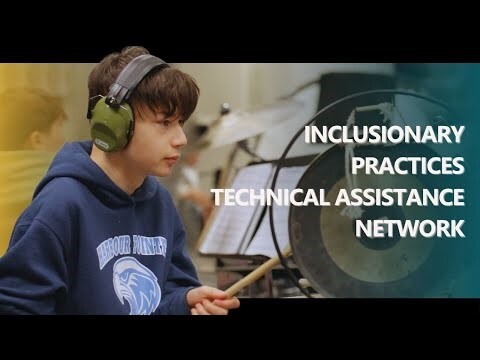
Washington’s Inclusionary Practices Technical Assistance Network (IPTN) supports schools and educators statewide in reducing exclusionary practices and expanding access to core instruction in general education settings.
These efforts are making a difference: In 2024–25, 66.2% of Washington students with disabilities spent 80–100% of their day in general education—a nearly 10-point increase since 2018.
Learn more about IPTN and how inclusive practices help all students thrive: Inclusionary Practices Technical Assistance Network | OSPI.
Visit the Inclusionary Practices webpage: Inclusionary Practices and the IPTN website: Inclusionary Practices Technical Assistance Network (IPTN)
 Washington State MTSS Integrated Conference Recap
The Washington State Integrated (MTSS) Conference, held in Wenatchee, brought together educators and changemakers from across the state to explore how a Multi-Tiered System of Supports (MTSS) can drive school and district transformation. The conference focused on developing and implementing strategies and systems, so all students have access to high-quality, rigorous instruction. With inspiring keynotes from Dr. Erik Carter, Dr. Meredith Honig, and Ally Hearn, attendees engaged in deep learning around belonging, values-driven leadership, and using MTSS as a foundation for inclusive, equitable systems. Themes of transformation, community, and collective responsibility were woven throughout the event, highlighting Washington’s commitment to student-centered practices.
OSPI would like to thank North Central ESD and The Washington Association of School Administrators (WASA) for their partnership in organizing and facilitating this event.
New: OSPI Inclusionary Practices Resource Page
Looking for resources about inclusionary practices? OSPI's new Inclusionary Practices webpage is your hub for connecting with our agency’s robust guidance, partner resources, and research supporting inclusion for all students. We hope you'll bookmark this page and share it with your teams and families. You can expect even more resources to be added over time as part of OSPI's ongoing commitment to inclusion.
New Resource: Reaching Every Learner
The Reaching Every Learner document suite is designed to help educators apply the Reaching Every Learner approach in their planning and instruction. Access this resource and more on the new Inclusionary Practices webpage.
Grounded in the Universal Design for Learning (UDL) framework, the tools support the creation of accessible, inclusive, and appropriately challenging units for all students, including students with significant cognitive disabilities. Educators and teams can use these tools during co-planning, lesson design, and ongoing instructional adjustments to meet diverse learner needs.
The Reaching Every Learner: Using WA-AIM Access Points in Inclusive Education for Access and Progress in Grade-Level Standards for Students with Significant Cognitive Disabilities guidebook includes:
- Elementary and secondary case studies for ELA and Mathematics which:
- Provide a sample learning progression that combines the access points identified within the WA-AIM Access Point Framework, with an example of a further complexity level and the grade level standard;
- Unpack methods of teaching the standard for all students within the general education classroom;
- Walk through examples of measuring student understanding across complexity levels of the standard for students with significant cognitive disabilities; and
- End with a one-page expanded example learning progression, that unpacks complexity and example success criteria and instructional strategies across complexity levels.
- Elementary and Secondary Team Unit Planning Exercise Case Studies, which demonstrate how to use the Team Unit Planning Exercise Template to support students with significant cognitive disabilities in making progress in grade-level standards within a unit.
The separately posted Reaching Every Learner Companion Tools include:
- A blank Expanded Learning Progression Template; and
- A blank Team Unit Planning Exercise Template.
New Restraint and Isolation Data Reporting Guidance
New guidance on how to correctly report instances of restraint and isolation through CEDARS has been published on the OSPI restraint and isolation webpage. This reporting guidance addresses how to report multiple instances of restraint or isolation that occur as part of one incident, frequently asked questions, and information on reporting safety and security staff involvement with restraint and isolation. Please review this guidance and share it with your teams to ensure they are reporting data correctly in the 2025–26 school year.
Reminder: Services to Age 22
During the 2024–25 legislative session, Governor Ferguson signed SSB 5253 into law, which extends special education services to students with disabilities until the end of the school year in which the student turns 22 years of age. SSB 5253 goes into effect during this school year—the 2025–26 school year.
As IEP teams meet for annual IEP meetings for 21-year-old students who turn 22 during the 2025–26 school year and younger students who may need special education and transition services from 18 to 22, teams should consider what individualized services are needed, based on the student’s unique, disability-related needs.
For additional guidance and links to other resources on individualized decisions around a student’s graduation plan and transition services, see OSPI’s April 2023 Secondary Transition Tip.
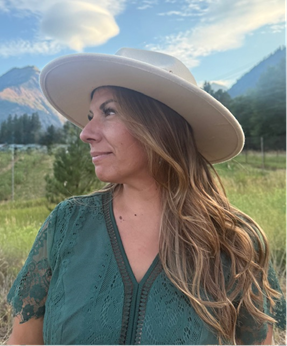
Employee Spotlight: Candis Coble, ECSE 619 Coordinator
We are thrilled to introduce Candis Coble as our new ECSE 619 Coordinator at OSPI! Candis steps into this role with a strong foundation in early learning and a deep passion for inclusive education. Before becoming a Program Supervisor on the OSPI Special Education Program Improvement team, she spent her career as an Early Childhood Special Education teacher, Board Certified Behavior Analyst (BCBA), and Special Education Administrator—bringing rich, hands-on experience from the classroom to the district and regional level and now, to the state level.
Candis is excited to continue championing inclusive opportunities for Washington’s youngest learners. “It’s an honor to serve and support systems that ensure all children can access high-quality, developmentally appropriate learning environments,” she shares. “I look forward to building upon the incredible work already happening across the state.”
Outside of work, Candis is embracing the joys of empty nest life with her husband. With their two daughters off on exciting life adventures of their own, she’s finding new rhythms and joy in the slower pace and plenty of time for coffee, laughter with good friends, boating, and cheering on her girls from afar.
Please join us in welcoming Candis to this important role!
|
Click here for this month’s Program Improvement updates on the following topics:
- Special Education Monitoring for 2025–26
- Disproportionality and Significant Disproportionality Notifications
- IDEA Correction of Non-Compliance Identified in 2024–25
- New Special Education Parent Survey – Spring 2026
- Upcoming Changes to the Annual IDEA Determinations and the Correction of Non-Compliance - Updated
- OSPI Special Education Data, Fiscal, and Program Office Hours
Click here for this month’s ECSE updates on the following topics:
- Greetings from OSPI’s New 619 Coordinator!
- ECSE Office Hours
- 2025 Northwest Early Learning & Pyramid Summit
- 41st Annual International Conference on Young Children with Disabilities and Their Families
- National Black Child Development Institute
- NAEYC Annual Conference
- FAQ
Click here for this month’s Fiscal & Data updates on the following topics:
- Safety Net Meeting Rescheduled
- Special Education Data, Fiscal and Program Office Hours
- FP 267 IDEA Part B Section 611 & 619 Substantially Approved Status (SAS) pre-application has been launched!
|