Across the country, public schools have a constitutional and moral obligation to provide a free, high-quality public education to all students residing within their school district boundaries. State and federal law prohibit public school districts from discriminating on the basis of race, color, or national origin; and state law further prohibits discrimination on the basis of citizenship or immigration status.
In response to conversations and actions underway at the federal level, OSPI has released new guidance on state and federal protections for immigrant students in Washington’s K–12 public schools. This guidance provides school districts with a roadmap of requirements related to student privacy, access to educational services, and immigration enforcement on school campuses.
|
Senate Bill 5007 has been scheduled for a public hearing on Tues. Jan. 28 at 8am in the Senate Committee on Early Learning & K-12 Education. This bill aims to support students who are chronically absent and at risk for not graduating. The bill addresses one of OSPI’s legislative budget priorities.
This bill would create new funding for:
- ESDs to support schools to build attendance into their early warning systems.
- Grants for community organizations and Tribes to support student attendance and engagement.
- Intensive wrap around supports, including barrier reduction activities for Open Doors Youth Reengagement programs.
You can watch the hearing live on TVW. The public may sign up to testify as well. Learn more about how to testify or submit written testimony here.
OSPI recently released Regular Attendance data from school year 2023-24 on the OSPI Report Card.
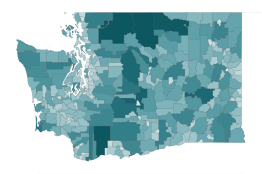
How do I find the Regular Attendance data on Report Card?
Check out this quick and easy walkthrough.
What is Regular Attendance?
Regular Attendance on the OSPI Report Card is defined as having on average, less than two absences per month, both excused and unexcused. Regular Attendance includes only full day absences reported to CEDARS, defined as missing at least half the school day. This measure includes students that were enrolled for at least 90 days at any given school.
Is Regular Attendance different than Chronic Absence?
Regular Attendance is the inverse of chronic absence, a research-based measure that includes students who have missed 10% or more of their school days, excused and unexcused.
What questions can Regular Attendance from the Report Card help us answer?
- Is our regular attendance improving or declining since last year or over time?
- Which student groups have the highest rates of absences?
- Which grades have the highest rates of absences?
Where do I find out more about Regular Attendance calculations?
Email OSPI's Report Card Redesign Team at ReportCardRedesign@k12.wa.us
|
Key Findings:
The study tested various messages to explain chronic absenteeism and motivate parents to send their children to school regularly. The most effective message emphasized the holistic benefits of in-person learning: “They’re more likely to develop personally, socially, academically, and emotionally.”
Teachers can use shortened versions of this message in newsletters and other communications. When speaking with parents and caregivers, highlight the “whole self” benefits of regular school attendance.
Example of Shortened Framing Message
When children and teens regularly attend school in person, they’re more likely to develop their whole selves—personally, socially, academically, and emotionally. They’re routinely able to connect with friends and adults, collaborate and problem-solve, make decisions, think critically, be creative, and engage in hands-on learning. In other words, showing up matters!
Submitted by Laurie Lafser through OSPI Attendance Newsletter.

Royal High School started additional attendance efforts last spring for the 24/25 school year by assembling an enthusiastic 14-person (with a solid core of 8) Tier 1 Attendance Team, which includes administrators, teachers, and support staff: attendance secretary, instructional coach, guidance counselors, graduation specialist, intervention/preventionist, migrant coordinator, district attendance liaison, and community prevention specialist.
|
Drafting a comprehensive research-based but customized action plan, the Tier 1 Attendance Team meets weekly for 30 minutes and has tackled a variety of tasks:
- Data Collection
- General Messaging About the Importance of Regular Attendance
- Individualized Outreach about Absences and Attendance
- Creating a Culture of Regular Attendance through Celebration
Royal High School Attendance Post Cards
Graduation The 2023-24 graduation, continuing, and dropout rates are now on the Report Card under “Report Card Graduation 2023-24.”
Enrollment Preliminary October Enrollment data for 2024-25 is available on the Report Card and OSPI Data Portal under “Report Card Enrollment 2024-25 School Year – Preliminary.”
School Quality and Student Success (SQSS) The 2023-24 SQSS measures (Regular Attendance, 9th Grade on Track, Dual Credit) are posted on the Report Card under “Report Card SQSS for 2023-24.”
Discipline Rate and Days Excluded Rate The 2023-24 Discipline Rate and Days Excluded Rate are on the Report Card under “Report Card Discipline for 2023-24.”

Topic: Chronic Absenteeism
Presenters: National Association of School Nurses | Rhode Island Department of Education
The National Association of Chronic Disease Directors is hosting a webinar on best practices to reduce chronic absenteeism and improve student mental and emotional well-being. Attendees will have the opportunity to explore successful strategies implemented in various states and school districts nationwide.
|
Looking for fun incentives to improve attendance?
 |
|
Join EveryDay Labs and Dr. Phillip Shelley, Director of Student Services at Berkeley Public Schools, as he shares insights from his annual March Madness competition designed to maintain high attendance during the Spring Slide.
Date: February 20, 2025, 10 am
|
Can 18-year-olds excuse their own absences?

A district can allow 18-year-old students to provide an excuse for an absence. When a student becomes an adult, RCW 26.28.010 simply requires that, "Except as otherwise specifically provided by law, all persons shall be deemed and taken to be of full age for all purposes at the age of eighteen years.” And that means that a parent’s rights and duties under law generally transfer to the adult child.
However, a school district maintains the authority to impose its own obligations on parents of adult students and students themselves. Districts may require that parents continue to communicate to the school when the student is absent, even when they are 18 years old. Districts may require that parents/guardians sign a release form providing their child the right to excuse their own absences.
|
Join us for OSPI Attendance Office Hours next month! This is a fantastic opportunity to get your attendance questions answered by OSPI's Attendance team.
|
The OSPI Attendance Team is eager to hear about your attendance initiatives this school year. We know that schools and districts are doing great work to improve attendance and build effective systems, and we want to highlight your efforts.
Please email your attendance highlights to the OSPI Attendance inbox at Attendance@k12.wa.us
|
|
|
 |
|
OSPI Attendance Team has a new voicemail to answer your attendance questions.
Please reach out to the OSPI Attendance Team by dialing 360-725-4957. Leave a voicemail with your name, email address, and inquiry. A team member will follow up with you within two business days.
|
|
 |
|