 We can’t wait to see you at the live, online OER Conference for Social Studies!
Have you seen the “can’t miss” line up of keynote speakers at the inaugural OER Conference for the Social Studies? Join OSPI Social Studies and the OER Project August 5-7 for a free, virtual, thought provoking discussion on how teaching practices can and should progress to meet future needs. This professional development opportunity for K-12 social studies teachers has already attracted thousands of educators around the country, so be sure to reserve your spot now.
When: August 5-7
Our conference is unique. We are making all of our Track Talks available to you before the conference so you can view the content and be ready to participate in live discussions during the live, virtual event August 5-7. These Track Talks are TED-style, 10-minute videos created by expert K-12 educators from diverse backgrounds, grade levels, and specializations. We’ve organized them into tracks based on topic.
Visit the conference website to:
-
Watch Track Talk Videos: View 10-minute TED-style videos authored and delivered by experienced K-12 educators for you to watch prior to the conference so you’ll be ready for our live discussions! Check back a few weeks prior to the conference for the complete roster of Track Talks.
-
Earn Clock Hours: Take advantage of this unique opportunity for conference attendees to earn clock hours.
Keynote Speakers
-
JOHN GREEN, Cofounder, Crash Course
-
NATE BOWLING, Teacher of AP US government & politics and global studies, American Community School of Abu Dhabi
-
LINDA DARLING-HAMMOND, Charles E. Ducommun Professor of Education Emeritus, Stanford University
-
DR. YOHURU WILLIAMS, Professor of history, McQuinn Distinguished Chair and dean of the College of Arts and Sciences, University of St. Thomas
-
JILL LEPORE, David Woods Kemper ’41 Professor of American History, Harvard University
Questions? This event is developing rapidly so keep your eyes peeled for updates and new information in the coming weeks. In the meantime, if you have any questions e-mail us at ocforss@oerproject.com.

Systemic racism is the betrayal of our commitment to human rights and equality. It also threatens our national security. To address it, Americans must be equipped to be effective agents of change with revitalized civic education. National security institutions will not meet current challenges if systemic racism undermines a significant segment of talent. Continue reading.
|
 CIRCLE's exclusive new poll of young Americans paints a comprehensive picture of their interest and engagement in the 2020 election. Four in five youth say that the pandemic has helped them realize that political leaders' decisions matter, and even more say that they believe in young people's power to change the country. Youth are also volunteering for campaigns, donating to candidates, and participating in marches and demonstrations at a higher rate than in 2016 and 2018. Read the story here.
 Our Children Are Taught in School to Be Active, Engaged Citizens
A Current Events Response by the National Council for the Social Studies
In response to President Donald J. Trump’s remarks at South Dakota’s 2020 Mount Rushmore Fireworks Celebration on Friday, July 3, 2020, that "our children are taught in school to hate their own country," we take issue with an attack on American educators for political gain. We affirm that teachers have a profound impact on students nationwide every day. Our teachers work tirelessly to help shape the minds of our young people, but not in the way that the President’s remarks imply. Our nation’s teachers focus on securing the future of our democracy by helping our students learn the skills, content, context, and dispositions necessary to become independent thinkers who can grapple with complexities of the world, form well-reasoned opinions, and take informed action to better their communities – both locally and globally. As members of a professional association who are dedicated to providing leadership, services, and professional support to educators nationwide, we are united in saying that we are proud of our teaching workforce for the immense and lasting good they provide to prepare students for active civic life – often under challenging circumstances and with limited resources.
At this moment, when the foundation and function of civic participation and health are at the forefront of national conversations, we know that our entire nationwide teaching workforce is dedicated to lighting that love of learning – a spark that leads to a lifetime of inquiry and informed civic action for every child. Our children are prepared for the possibilities and challenges of participation in civic life, because our teachers help us understand the vital role each of us plays – and the vital responsibilities each of us shares – to make our country, truly, a more perfect union. Teachers entrust our students with the skills to be the future stewards of our country, and enable it to grow and take new direction.
Each year, our nation celebrates Teacher Appreciation Week to thank all educators for their leadership and service. We simply do not think a week is enough. We gratefully appreciate and give thanks to our teachers every day, all year long.
NCSS shares six principles in its Revised Code of Ethics for the Social Studies Profession, and stands with social studies professionals and teachers across the nation who empower and educate America's youth for an informed and engaged civic life in a pluralistic democracy. Among these principles:
- It is the ethical responsibility of social studies professionals to provide to every student the knowledge, skills, experiences, and attitudes necessary to function as an effective participant in a democratic system. (Principle Two)
- It is the ethical responsibility of social studies professionals to foster the understanding and exercise of the rights guaranteed under the Constitution of the United States and of the responsibilities implicit in those rights in an increasingly interdependent world. (Principle Three)
- It is the ethical responsibility of social studies professionals to cultivate and maintain an instructional environment in which the free contest of ideas is prized. (Principle Four)
NCSS also advocates the teaching of social studies that includes multiple approaches, including fact-based curriculum, facing hard history, addressing controversial topics, and confronting false narratives.
Teachers, you’ve got this! Teachers, we’ve got you!
Sixth Annual IDM Summer Institute
The IDM™ Institute is back with a new virtual experience!
The Sixth Annual IDM™ Summer Institute will introduce the Inquiry Design Model (IDM) and provide you with hands-on opportunities to develop inquiry materials for use in your classroom. This is the perfect opportunity for you to join a larger community of educators who share an interest in invigorating their classrooms through inquiry-based teaching and learning.
When: July 27-30
The Inquiry Design Model is a unique approach to creating curriculum and instructional materials. Through whole group and small group work with classroom teachers, administrators, curriculum specialists and coaches, you will get the the tools and resources you need to design inquiry-based resources for classroom use.
Register

Teaching History Virtually
National History Day has a full range of online graduate courses for middle and high school educators who want to implement our project-based curriculum into their classrooms using the framework of the National History Day Contest.
All National History Day courses provide practical advice as well as pedagogical strategies. This content is relevant to all social studies educators, not just those who participate in History Day. Registration deadline is August 5.
This Summer's Course runs August 17 to November 16.
For more information, please visit the NHD website.
|
With high quality distance learning opportunities still in high demand, we’re excited to share that CAP’s Presidential Primary Sources Project is partnering with the National Archives to host a summer and fall distance learning series from July-October 2020.
The series offers free online interactive programs with educators from the National Archives and Presidential Libraries for students grades 2-12. Teachers can register and forward information to their students or individual students that are learning from home can register and log in.
For more information visit our blog post: https://www.internet2.edu/blogs/detail/17829.
|
 |
|
The updated TFDA site has over 150 lessons and resources for educators and schools looking to do high-quality teaching about elections and voting in 2020, including physically distanced learning. It also allows education leaders to sign the Growing Voters Commitment. Visit the TFDA website to learn more. |
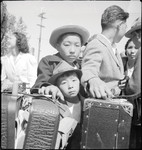
The Kip Tokuda Memorial program is created to do one or both of the following:
- Educate the public regarding the history and the lessons of the World War II exclusion, removal, and incarceration of persons of Japanese ancestry through the development, coordination, and distribution of new educational materials and the development of curriculum materials to complement and augment resources currently available on this subject matter; and
- Develop videos, plays, presentations, speaker bureaus, and exhibitions for presentation to elementary schools, secondary schools, community colleges, and other interested parties.
If you are a district, organization, or individual interested in applying please go to the OSPI Kip Tokuda Memorial Civil Liberties Grant web page for more details.
|

|