Integrated learning through school gardens:
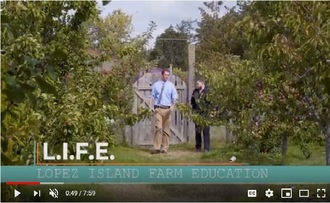 Integrating standards can be seamless. Can you identify a Health Education standard that is integrated in this story from WashingtonPrincipal on the Lopez Island Farm Education (LIFE) program? This video from AWSP shows elementary students hard at work in integrated learning.
The LIFE program supports all three of Washington’s Integrated Environmental and Sustainability standards. These are: Ecological, Social, and Economic Systems; The Natural and Built Environment; & Sustainability and Civic Responsibility).
CCSS.Math-2.MD.A Measure and estimate lengths in standard units.
CCSS.MATH.PRACTICE.MP2 Reason abstractly and quantitatively.
Health Education Standard 1: Students will comprehend concepts related to health promotion and disease prevention to enhance health.
Science Standard: K-LS1-1 From Molecules to Organisms: Structures and Processes
Use observations to describe patterns of what plants and animals (including humans) need to survive.
ENGLISH LANGUAGE ARTS:
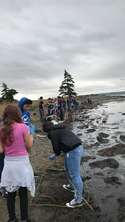
Students in Ashleigh Howell's 6th grade class at Central Elementary in Sedro-Wooley engage in integrated learning connecting their study of Oceans of Plastic with their ELA unit and readings about overfishing. This learning helped students understand the importance of fish and what that means for the environment. This was tied to studying a local beach and learning about how plastics are affecting oceans.
Science Standard: MS-ESS3-3 Earth and Human Activity
Apply scientific principles to design a method for monitoring and minimizing a human impact on the environment.*
CCSS.ELA-Literacy.W.6.2
Write informative/explanatory texts to examine a topic and convey ideas, concepts, and information through the selection, organization, and analysis of relevant content
|
RESEARCH and PRACTICE:
STEM Teaching Tools are produced through a National Science Foundation grant and focus on many cross content topics. This STEM Teaching Tool discusses using mathematics and computational thinking in science. Multiple resources are embedded via links within this research and practice brief.
|
DUAL/WORLD LANGUAGE:
We want to hear from you!
We will be shining a light on content integration, leading with different subject areas. Help us find excellent examples of content integration occurring in your classrooms and buildings to showcase. What are teachers doing in classrooms to integrate content? What building or district systems (e.g., PLCs, common planning times, classroom proximity, funding streams, etc.) encourage teachers to integrate content? What do you need from the state to support your work? Email Kathe Taylor with practices and ideas you would like to share. |