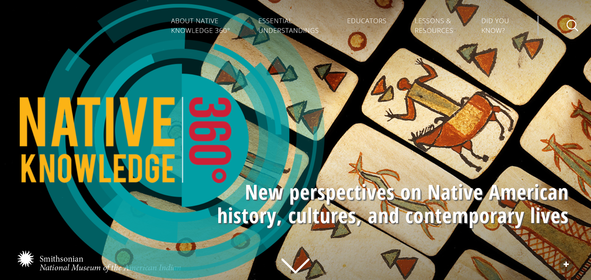
Designed to inspire and promote improvement of teaching
and learning about American Indians, Native Knowledge 360° provides educational
materials and teacher training that incorporate Native narratives, more
comprehensive histories, and accurate information to enlighten and inform
teaching and learning about Native America.
Allow plenty of time to explore the treasure
trove of lessons and resources that Native
Knowledge 360° provides. Two of particular interest for Washington teachers:
Pacific Northwest History and Cultures: Why do the foods we eat matter?
The Pacific Northwest Fish Wars: What kinds of actions can lead to justice?
These lessons follow the Inquiry Design Model (IDM) of
the College, Career, and Civic Life (C3) Framework. Enjoy!
.
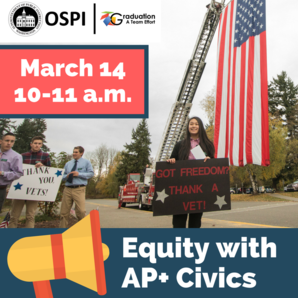 Have you heard about AP+ American Government? It’s one example of project-based learning. On March 14 you are invited to a GATE Equity Webinar to learn from its lead author, Dr. Walter Parker, College of Education, University of Washington.
Dr. Parker has recently been elected to the National Academy of Education. For the webinar, this distinguished academic will be joined by teachers who are using project-based learning in their classrooms: Jerry Neufeld-Kaiser, Katie Piper, and Rob Hallock, all of whom were contributors to the Social Education January/February 2018 issue, which focused on project-based learning.
If you wish to attend this GATE Equity Webinar, please do so by registering. After registering, you will receive a confirmation email containing information about joining the webinar.
|
 .
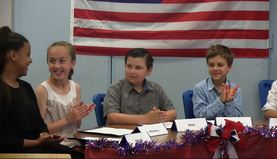 Take a look inside Karen Morley-Smith’s fifth grade class at
Sunset Elementary School, Evergreen School District, as students participate in
a Congressional Hearing.
Full video: Sunset Elementary
|
 .
The
Kip Tokuda Memorial Civil Liberties Public Education Program is a
quintessential example of civic collaboration. The legislature authorizes the
program; community groups and school districts submit proposals. The result:
curriculum materials, videos, plays, presentations, and exhibitions are
produced to help better educate us on the history and
the lessons of the World War II exclusion, removal, and detention of persons of
Japanese ancestry.
Kip Tokuda grantees for the 2017-19 biennium were announced by
Senator Bob Hasegawa, Representative Sharon Tomiko Santos, and Superintendent
of Public Instruction Chris Reykdal at a Day of Remembrance luncheon on
February 19.
Bainbridge Island
Japanese American Community: Karen Matsumoto, Lucy Ostrander
Honor & Sacrifice: Teaching WWII History through Documentary
Film
The main goal of the project is to provide training and
resources for teachers and enrich the common narrative about the WWII Japanese
American experience, specifically the story of the Nisei and Kibei in the
Military Intelligence Service in the Pacific Theater.
Densho: Tom Ikeda,
Virginia Yamada
Japanese American
Legacy Project
Densho
will create a new online course that trains and demonstrates to teachers the
similarities, differences, and patterns of the World War II discrimination
against Japanese Americans with other stories of discrimination based on race,
ethnicity, and religion.
Friends of KSPS: Dawn
Bayman, Bukola Breczinski
Injustice at Home: The Japanese American Experience of the World War II
Era
Injustice
at Home
will connect students with elders in the Japanese American community of eastern
Washington through the power of video. Open Educational Resources (OER)
curriculum units, built around themed videos featuring personal stories of
Japanese Americans and interactive online discussions, will allow classrooms to
learn from elders and civil rights experts.
Power of Theater:
Janet Hayakawa, Teresita (Tere) Martinez
Densho
and The Evergreen State College Masters in Teaching program are partners in
this project, which aims to engage teachers and high school students in the
Japanese American incarceration story and to deepen their understanding through
a theatrical experience and classroom-based workshops using drama in education
(DiE) techniques. Materials will be made freely available online.
Fred T. Korematsu
Institute: Karen Korematsu, Freda Lin
Teachers
will be led on an investigation of the landmark U.S. Supreme Court case Korematsu v. U.S. and how Americans of
Japanese ancestry resisted the military orders that forcibly removed and
imprisoned them without due process or evidence of wrongdoing.
Paterson School District:
John Seaton, Monica Burnett
The
overarching goal is to introduce this rural school community to the real story
of Japanese Americans during WWII and to challenge students to become aware of
the plight of many underrepresented members of our society.
 Middle and High
School Teachers: Are you interested in applying for the American Lawyers Alliance “2018 Law-Related Education Teacher of the Year”
contest?
One middle school
teacher and two high school teachers will be chosen as the ALA LRE 2018 Teachers of the Year.
Each winner will be presented a $1500
award at the Annual Meeting of the American Lawyers Alliance in Chicago on August 3, 2018. An
additional $500 for hotel and travel expenses will be given to each
recipient who attends the Awards ceremony.
The Application
Deadline is March 15, 2018. Please visit the ALA
website for information about the ALA Teacher of the Year Award.
|
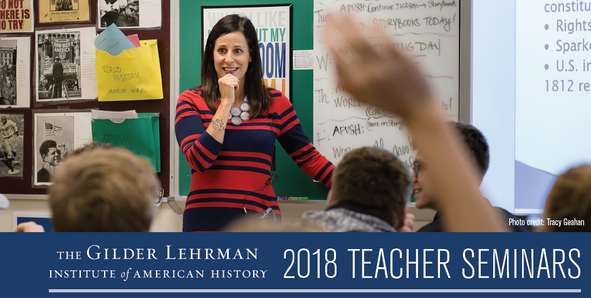
The Gilder Lehrman Institute of American History offers
high value Teacher Seminars for K-12 education.
Held at colleges and historic sites across the US and abroad, these weeklong
seminars offer teachers daily programs with American’s leading historians,
visits to local historic sites, and hands-on work with primary sources.
OSPI Social Studies supports standards-based learning and
teaching for students and teachers across Washington State. Information on
Social Studies K-12 Learning Standards and classroom-based assessments for
civics, economics, geography, and history are available on the website. The
site provides information on graduation requirements, the laws and
regulations governing social studies, and resources (people, organizations,
programs, and processes) that enhance social studies curriculum and practice.
OSPI’s Civic Education Initiative (CEI) seeks to ensure that every student is
provided a high-caliber civic education from kindergarten through high school
graduation. This year’s work focuses on building the Washington Social Studies Commons and WA C3 State Hub, an
open educational resource featuring high-quality, Washington-centric
inquiries for use by K-12 social studies students and teachers alike. If you
would like to participate, please contact Carol Coe, Social Studies Program
Supervisor, OSPI, by phone (360-725-6351) or email: carol.coe@k12.wa.us.
Visit Social Studies Teachers (SST) Connect. Explore the curriculum maps and the instructional maps to find contact information of colleagues in
Washington state who are teaching the same courses or working on the same
instructional practices as you. Share your contact information. Make 2017-18
the school year to meet and learn with colleagues beyond your school and
district.
|
 SST connect
|