|
|
October 2025
Washington State's FIFA World Cup 2026™ Safety & Security Planning Updates
|
|
|
Orca kicking a soccer ball in the Puget Sound (AI Generated Image created on September 22, 2025)
|
In This Issue
◊ Summary of September's Planning Efforts
◊ WA FWC2026 Subcommittee Updates
◊ Planning Tools & Resources
◊ Tournament Status
◊ Training Opportunities
◊ In the News
|
|
FIFA World Cup 2026™ brings the world's largest sporting event to Washington and 15 other locations across North America.
|
|
Summary of September's Planning Efforts
FIFA World Cup Lessons Learned from 2022 Host Nation Qatar
Seattle Police Department partners traveled to Qatar to exchange information and best practices with Qatari safety and security officials. In turn, Qatar partners visited Seattle from September 22 – 26, 2025, to share their lessons learned during a Knowledge Exchange Workshop jointly hosted by the Seattle Police Department and Seattle’s Local Organizing Committee (SeattleFWC26).
Key Takeaways from the Qatari Visit:
-
Qatar emphasized a whole-of-government approach, embedding law enforcement, intelligence, emergency services, and private security into a single coordinated framework. Stadium and fan-zone security was layered (outer perimeter, middle screening, inner venue security), supported by visible police presence and rapid response teams.
-
Extensive use of CCTV, drone monitoring, and centralized command centers improved situational awareness. Real-time video feeds were integrated with law enforcement databases to track crowd movements, suspicious activities, and potential threats.
-
Qatar prioritized early arrivals and controlled departures, using staggered transit schedules, pre-event communications, and fan ambassadors. Dedicated family/female zones and culturally sensitive crowd-management practices reduced incidents.
-
Strong international intelligence cooperation was critical. Qatar had embedded liaison officers from partner nations within its command centers, ensuring rapid threat assessments and shared awareness.
-
While large-scale protests and other security concerns were limited, Qatar invested heavily in monitoring potential flashpoints online, engaging with community leaders, and deploying liaison officers to diffuse tensions before escalation.
-
National teams and VIP delegations were treated as high-priority assets. Hotels were hardened with perimeter security, access controls, and embedded protective details. Security coordination extended to training sites and transit routes.
Implications for the 2026 FIFA World Cup:
-
The U.S., Canada, and Mexico present a much more open, democratic environment with higher risks of protests, counter-protests, and spontaneous gatherings. Seattle must plan for a broader protest spectrum, ranging from geopolitical disputes to domestic policy grievances.
-
National teams in Seattle will draw strong supporter groups, many traveling internationally. Expect higher levels of alcohol consumption, fan marches, and cultural rivalries that could lead to clashes.
-
Unlike Qatar’s centralized model, U.S. operations will require seamless coordination across federal, state, local, tribal, and private security partners. Establishing clear roles, authorities, and escalation pathways is essential.
-
Robust intelligence sharing and real-time information exchange between agencies will be critical to anticipating and mitigating risks. This includes cyber-threat monitoring and social media analysis for protest coordination and misinformation.
-
Qatar’s ability to mass staff around stadiums and fan zones was a key success factor. Seattle will need pre-planned surge staffing models (law enforcement, crowd managers, medical teams) for match days and major fan events.
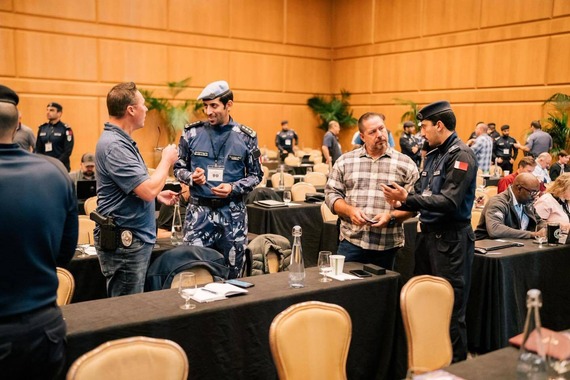 |
Member of the Qatar Security Force interact with local law enforcement at the Qatar Knowledge Exchange Workshop in Seattle, WA.
Washington FWC2026 Subcommittee Updates
|
Washington State’s FIFA World Cup 2026 (WA FWC2026) Safety and Security Planning Committee has become a well-established hub for partner integration. The six focused Subcommittees are: Communications, Emergency Management, Public Health & Medical, Safety & Security, Transportation, and Intelligence, Threat Analysis, and Investigations. Each group brings together subject matter experts from across local, state, tribal, federal, and regional agencies.
Please email emd.worldcup26@mil.wa.gov to connect with a subcommittee or follow-ups on any of the following information.
Currently, subcommittees are seeking input on these key topics:
- Suggestions and needs for health and public safety messages.
- Data or requests to display on the State Emergency Operations Center (SEOC) common operating picture (COP).
- Personnel to join communications and information sharing platforms (when established)
Highlighted Planning Updates:
- Washington SEOC Event Action Plan (EAP) first draft has been distributed to ESF State Agency Liaisons (SALs) for review and input.
- U.S. Office of Foreign Missions will share best practices on law enforcement diplomatic interactions and consult coordination. Time/date are TBD. Maximizing access to this information is important, therefore attempts for in-person, remote, recording, and written products are in the works.
- WA 211 is creating a Statewide Call Center and is working with the WA FWC2026 Planning Committee to include World Cup related messaging through their services.
- December 31, 2025, is the requested date from Washington's Federal Coordination Team (FCT) to submit resource requests.
Communications
- C4IT Workgroup – Oct 6 meeting with 211 on statewide call center capabilities.
- Public Information Workgroup – Messaging best practices, pre-canned messaging, new national host city PIO coordination (replacing FIFA comms calls).
- JIC/JIS & Crisis Communications Plans – Drafts due end of October 2025 for partner review.
- Information Technology Disaster Resource Center (ITDRC) may be a resource to fill gaps in communication capabilities. https://www.itdrc.org
Emergency Management
- GIS Workgroup – Developing COP feature layers.
- Mass Care Workgroup – Assessing sheltering/mass care capacity.
- VOAD/NGO/Volunteer Workgroup – Recently stood up for partner engagement.
- Coordinating with partners to address a concern over limited mass care sheltering capacity due to hotel/venue bookings.
Intelligence, Threat Analysis, & Investigations
- Washington State Fusion Center (WSFC) & CISA supporting Fan Zone SEAR/site safety assessments.
- Reviewing FIFA’s UAS plan; integrating FIFA TRX platform.
- WSFC & FIFA Intel to develop fan and team profiles after FIFA's tournament draw (Dec 5).
- Fan behavior, rivalries, and geopolitics may heighten risks at particular matches and other venues. Intel products will be updated as the threat environment changes.
- Contact the WSFC to receive FIFA World Cup intelligence products.
Public Health & Medical
- MCI/Reunification Workgroup – Guidance development; statewide engagement with LHJs, THJs, and healthcare partners.
- Surveillance Workgroup – Establishing disease surveillance baseline; DOH & PHSKC tool for prioritizing communicable diseases; national effort via CSTE.
- Fatality Management Workgroup – Collaborative planning underway.
- Coordinating with partners establish an isolation and quarantine plan, if needed during epidemiology related incident.
Transportation
- Maritime Workgroup engaging Area Maritime Security Advisory Committee on port/vessel security.
- Rail Workgroup is coordinating with BNSF, Amtrak, and Sound Transit to deconflict route use and enhance safety and security protocols ahead of the tournament.
Thank you to all partners for your collaboration!

Join Our Monthly Open Office Hours
The Washington State FWC2026 Planning Committee hosts monthly Open Office Hours via MS Teams providing a space to ask questions, share updates, or just listen in. Let's continue building momentum together as we prepare for one of the biggest events Washington has ever hosted!
Next Session: October 1, 2025, 11:00 AM – 12:00 PM. To receive an invite, email: emd.worldcup26@mil.wa.gov
|
Planning Tools & Resources
Tournament Status
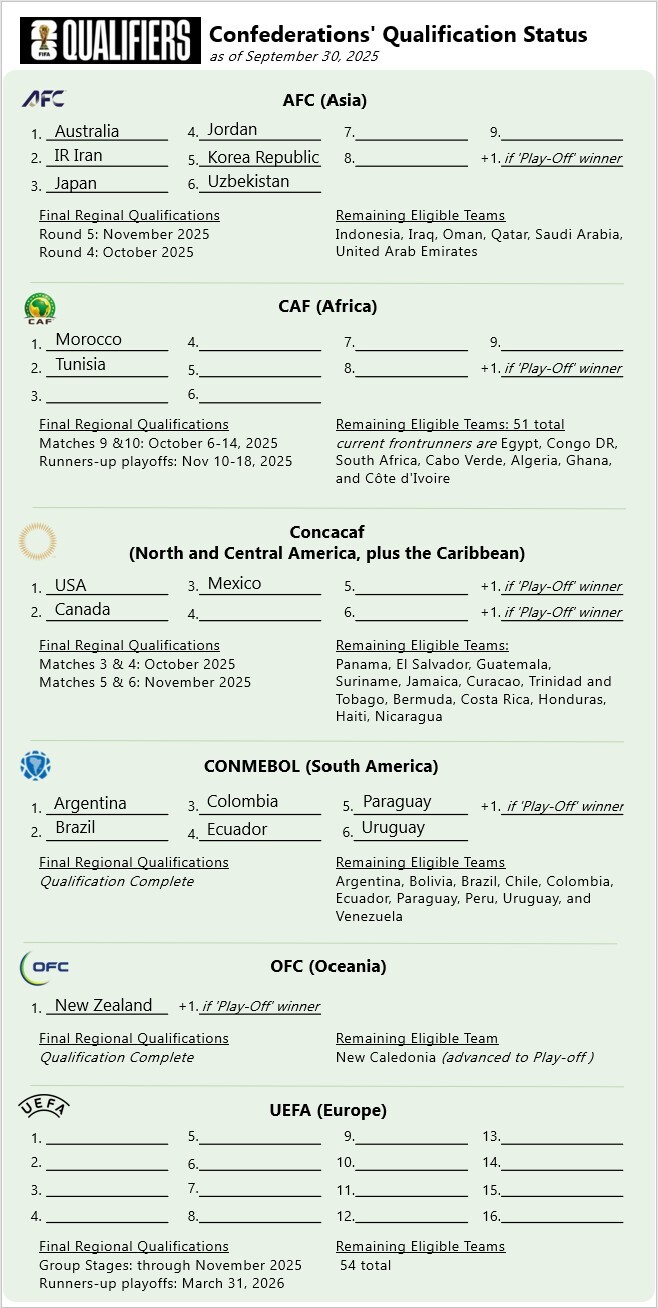
Key Takeaways from the FIFA World Cup 2026 Qualification Process
-
Current status: As of September 30, 2025, 18 teams have officially qualified.
- CONMEBOL (South America) finished qualifications and six more teams advance to the tournament.
- CAF (Africa) qualified their first two for the tournament.
- Qualification timeline: The qualification process began in 2023, continues through 2025, and concludes in March 2026.
- Majority of teams decided by end of 2025: 42 of the 48 total teams will be confirmed by December 5, 2025. The remaining 6 teams will qualify through March 2026 playoffs
- Team site selection begins soon: Bidding for base camps, training sites, and accommodations opens in December 2025, with final decisions potentially extending to April 2026.
Each confederation has its own path to qualification based on FIFA’s allocated slots. For the most current updates and explanations, visit FIFA’s official tournament page: FIFA World Cup 26™ Qualifiers
|
|
Training Opportunities
Washington State Emergency Management Division and our partners are coordinating many training opportunities to address the unique challenges of FIFA World Cup 2026.
Highlights from Washington Emergency Management Division
|
Course Title
|
Date(s)
|
Location
|
|
AWR-345: Uncrewed Aircraft Systems in Disaster Management
|
10/30/2025
|
Camp Murray, WA
|
|
MGT-467: Sport and Special
Event Public Information and
Emergency Notification
|
4/28 - 4/29/2026
|
Everett, WA
|
|
MGT-412: Sport and Special
Event Evacuation and
Protective Actions
|
5/12 -5/13/2026
|
Everett, WA
|
|
Registration for the above courses on the EMD Training Webpage: https://mil.wa.gov/training-and-exercise or email EMD.training@mil.wa.gov.
Subscribe to Training and Exercises' GovDelivery updates at Subscribe to WA EMD GovDelivery
|
Training Opportunities from Other Partners
|
|
In the News
September 10, 2025
Seattle, Vancouver to Welcome Millions for 2026 FIFA World Cup
"The two cities offer soccer fans a perfect double play"
by Justin Shaw, Sports Travel Magazine
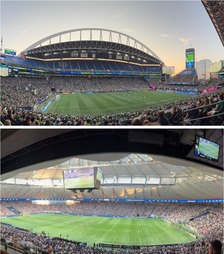
Sixteen cities across three countries North America will host the 2026 FIFA World Cup and for soccer fans who want to experience two different countries next summer, there isn’t an easier or better option than the Seattle-Vancouver double play.
Seattle’s proximity to Vancouver makes it the closest international pairing amongst host cities and the second closest stadium duo to New York and Philadelphia. The two cities sit 143 miles apart and have similarities as Pacific Northwest destinations, yet are different at the same time. Visit Seattle and Destination Vancouver showcased both cities to Sports Travel recently as they prepare to host the biggest sporting event in the world next summer.
“On one hand, it’s a challenge because they’ve got to be in two separate countries if visitors go to both. But on the other hand, that’s another opportunity,” said Kelly Saling, senior vice president and chief sales officer for Visit Seattle. “If they’re coming from another place in the world — Europe, Africa, Asia, South America — you have an opportunity to go to two countries and have that tournament experience. Vancouver is still uniquely Canadian in a way that Seattle is uniquely American. I think that’s a cool thing and I hope people take advantage of that opportunity.”
"Vancouver is one of the only cities in the world where you can see a pod of orcas and a grizzly bear on the same day."
Read the full article here.
|
September 17, 2025
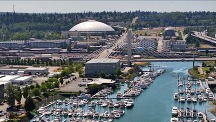
Fast ferry service proposed between Tacoma and Seattle ahead of World Cup
by Stella Sun, KOMO News
TACOMA, Wash. — A new proposal aims to launch a fast ferry service between Tacoma and Seattle in time for next year's World Cup.
Pierce County Executive Ryan Mello, a longtime advocate for the ferry service, wants to bring fully electric vessels to Pierce County.
In preparation for an estimated 750,000 visitors flooding into the region for the largest sporting event in the world, "They're not just coming for the World Cup, they're coming to see this place and experience this place," said Mello.
"What better way to move around this beautiful part of the world than on the water?" Mello added.
Read the full article here.
|
September 23, 2025
World Cup 2026 – what we’re hearing: FIFA alerted to 145 human rights concerns at Club World Cup
by Adam Crafton, The Athletic
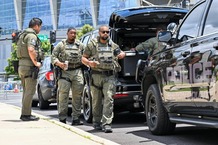
FIFA received 145 reports relating to human rights concerns at the Club World Cup in the United States, many of which were complaints submitted by supporters through the governing body’s own grievance mechanism portal. The highest number related to fans expressing concerns about U.S. government policies or their enforcement, with the second-most coming from fans who suffered from extreme heat during the tournament.
The grievance mechanism is in place for supporters who wish to express concerns about the organization or the experience at FIFA-led events. Some reports were received via the portal, some fans used FIFA’s human rights email address, and others were made on-site by venue teams reporting into FIFA.
Read the full article here.
|
September 1, 2025
Cybercriminals Eye 2026 FIFA World Cup – Malicious Domains Registered for Impending Attack
by Priya, Cyber Press
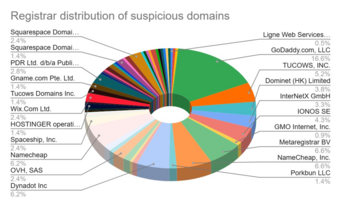
Cybersecurity researchers have uncovered a sophisticated campaign targeting the upcoming FIFA tournaments, with threat actors registering hundreds of malicious domains to exploit the global excitement surrounding the 2025 FIFA Club World Cup and the 2026 FIFA World Cup.
PreCrime Labs, the threat research division of BforeAI, identified 498 suspicious domains containing FIFA, football, and World Cup-related brand terms, revealing cybercriminals’ strategic preparation for large-scale fraud operations.
The investigation exposes a troubling trend: attackers are employing long-term domain aging strategies, registering domains up to two years in advance to avoid detection systems.
Read the full article here.
|

August 27, 2025
Bay Area Council Explores Cutting-Edge Safety Tech with Verizon Ahead of 2026 Super Bowl, World Cup
by Laura Hill, Vice President, Transportaion and Public Safety, Bay Area Council
As the Bay Area prepares to host two of the largest, most complex, and highest-security events in recent history – the 2026 NFL Super Bowl and FIFA World Cup – the Bay Area Council gathered last week at Verizon’s SF Innovation Lab to learn about the innovative safety technologies that power security operations at major events and in our daily lives, and the importance of cross-sector collaboration as we develop the future of safety tech.
Attendees heard from a panel of experts from the Bay Area Host Committee (Ruth Shikada, Vice President of Government and External Affairs), San Francisco 49ers and Levi’s Stadium (Francine Melendez Hughes, Executive Vice President and General Manager of Stadium Operations), San Francisco International Airport (Jeff Littlefield, Chief Operating Officer), and Verizon Frontline (Cory Davis, Vice President).
These Bay Area leaders emphasized how technology is reshaping safety preparedness for major events like the Super Bowl and World Cup, which together are projected to generate nearly $1 billion in economic activity and attract hundreds of thousands of visitors under the nation’s highest security designation. Innovations like frictionless stadium entry, advanced facial recognition, drone infrastructure, AI-powered network security, and real-time operations centers – combined with unprecedented cross-sector collaboration – are redefining emergency response, event security, and safety communications.
Read the full article here.
|
|
|
Want to share this newsletter with others? Include this link in your own publication: https://content.govdelivery.com/accounts/WAMILITARY/bulletins/3f3d227

For further inquiries, please contact the Safety & Security Planning Team at emd.worldcup26@mil.wa.gov
This newsletter was produced by Caroline Byrd and Bobby Kelly, Washington Emergency Management Division, at caroline.byrd@mil.wa.gov & robert.kelly@mil.wa.gov
|
|
|
|
|