Dear Friends and Neighbors,
Thursday, March 12, marked Sine Die, the final day of the scheduled 60-day legislative session. Like most sessions in Olympia, the past two months included long floor debates, late nights, and more bills than most people could keep up with. Some were good ideas. Others… not so much.
There is a lot to unpack from this legislative session. Instead of sending one very long update, I will share a few shorter newsletters over the next several days.
In this first update, I want to focus on two major developments from the closing days of the session: the passage of a new state income tax and the approval of my legislation, ESSSB 6066, aimed at improving safety on some of Washington’s most dangerous highways.
Income tax bill passes the Legislature
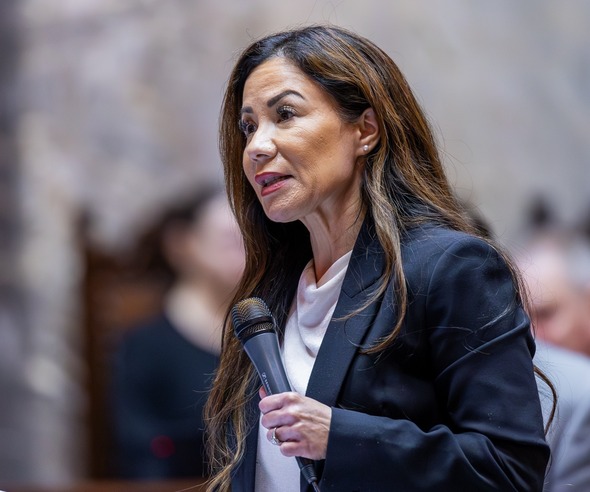 Senate floor debate, ESSB 6346, on March 11, 2026
One of the most debated issues this session was Engrossed Substitute Senate Bill 6346, which creates a new state income tax. The measure passed the Legislature largely along party lines and now heads to the governor’s desk for signature.
The bill imposes a 9.9 percent tax on income above $1 million and is expected to generate roughly $3 billion to $3.2 billion per year once fully implemented. The tax would take effect in 2028, with the first payments due in 2029.
I opposed this bill. Supporters continue to market this proposal as a “millionaire’s tax.” During the debate, however, an amendment was offered that would have permanently prohibited the tax from expanding beyond those high earners. The majority declined to adopt it.
If the intent were truly to limit the tax to millionaires, that amendment would have been an easy vote. Instead, it was rejected. Under current law, the $1 million threshold could be lowered at any time with a simple majority vote of the Legislature.
There are also concerns about how this change could affect Washington’s economic competitiveness. Our state has long been one of the few without a personal income tax, a policy that has helped attract employers, entrepreneurs, innovators, and investment. Changing that structure could have long-term consequences for jobs and economic growth.
In addition, the revenue from this tax is not dedicated to any specific purpose. The money would go into the state’s general fund, where it can be spent however the majority chooses.
If you share concerns about this proposal, you can still contact the governor’s office and ask him to veto the measure before it becomes law.
My highway safety bill, ESSSB 6066, passes the Legislature
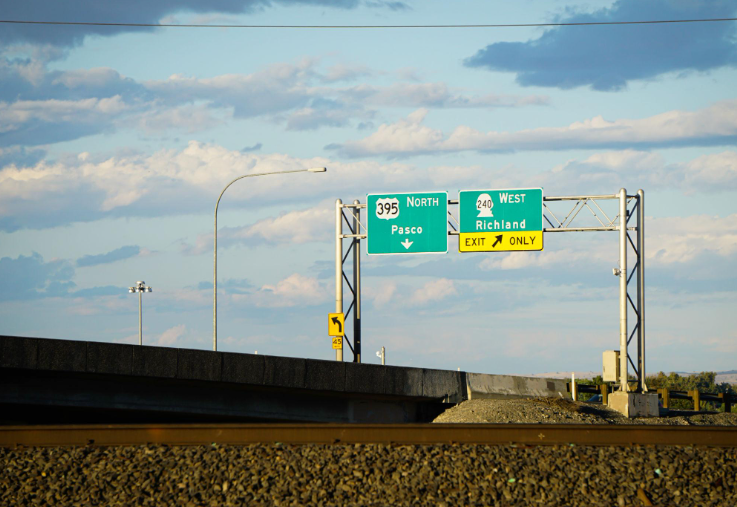 While much of the session's attention focused on tax policy and budget debates, we were also working on legislation to address real safety concerns in our communities. One of those efforts was ESSSB 6066, legislation I introduced to address dangerous crash hotspots on Washington roadways.
My bill creates crash prevention zones, a targeted approach that allows state and local officials to focus engineering reviews, enforcement, and safety improvements on specific corridors where serious injury and fatal crashes occur at higher-than-expected rates.
This legislation was inspired in part by a troubling pattern of crashes along U.S. 395 between Pasco and Mesa. Over the five years leading up to December 2025, 10 people lost their lives in the five-mile stretch between mileposts 23 and 30. Since 2021, more than 250 crashes have occurred in this corridor. Eighty-one resulted in injuries, including several serious injuries.
ESSSB 6066 provides the Washington State Department of Transportation and local governments with a framework to act when crash data show a pattern of serious or fatal collisions. Once a crash-prevention zone is designated, the responsible jurisdiction must conduct a formal engineering and traffic investigation to identify the factors contributing to crashes.
That review can lead to practical safety improvements such as adjusting speed limits, improving lighting or signage, modifying lanes or intersections, or planning longer-term infrastructure solutions such as roundabouts or grade-separated crossings.
The bill also doubles the penalty for the unlawful use of a personal electronic device while driving in a crash-prevention zone. Distracted driving continues to contribute to serious crashes, and stronger penalties are intended to discourage that behavior in high-risk areas.
Crash prevention zones are temporary. Once safety improvements are completed and the corridor becomes safer, the zone must be dissolved. The goal is to give communities a practical, data-driven tool to address specific safety problems.
ESSSB 6066 was approved by the Legislature with overwhelming bipartisan support. It passed the House 94–2 and the Senate 48–1. The bill now heads to the governor’s desk for signature.
Read more here:
More updates on the final state budgets
In my next update, I will take a closer look at the three supplemental budgets adopted this session: the operating, transportation, and capital budgets, and what they mean for communities across the 15th Legislative District.
Stay in touch!
In the meantime, although the legislative session has ended, my work for you continues year-round. If you have questions about state government or need assistance with a state agency, please do not hesitate to reach out. I am always glad to hear from you.
It’s an honor to represent you.
 Senator Nikki Torres
15th Legislative District
|