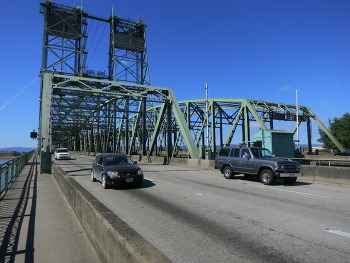
 I-5 Bridge from Vancouver to Portland. Photo courtesy of Erik Smith.
Those who live in Southwest Washington know all too well that the Interstate 5 Bridge over the Columbia River at Vancouver needs to be replaced. In truth, it has needed replacement for years.
When lawmakers debated a new bridge 13 years ago, the estimated cost was $3.5 billion. Today, that estimate has ballooned to $14.4 billion — and let’s be honest, no one truly knows what the final price tag will be. Large government infrastructure projects rarely come in under budget.
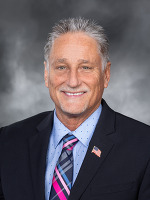
Sen. Jeff Wilson, R-Vancouver, serves as Senate Republicans’ representative on the Joint Oregon-Washington Legislative Action Committee overseeing plans for the bridge replacement. He echoed concerns many taxpayers share when he warned, “Something tells me this is the start of a financial nightmare.”
What’s especially concerning is that the original $3.5 billion estimate is now roughly what it would cost just to add light rail to the project. That raises an important question: Does light rail need to be part of this bridge replacement at all? Republicans have consistently argued that it should not.
Replacing the bridge between Portland and Vancouver will be the largest construction project Washington and Oregon have ever undertaken. While we are closer than ever to breaking ground, leaders still have not determined how the full project will be paid for.
We need a safe, modern bridge. But we also need a bridge taxpayers can afford — one that increases vehicle capacity and reduces congestion. The current proposal does neither. Despite being wide enough for four lanes in each direction, the bridge would still carry only three.
Instead, project proponents continue pushing light rail.
Yet Clark County voters — the very people who would help pay for light rail operations through local taxes — have rejected it three separate times. Their approval matters, especially when they are being asked to shoulder the financial burden. But that has not slowed efforts to move light rail forward anyway.
At this point, the project appears likely to move ahead in phases. Roughly $5.7 billion in state and federal funding has been identified, enough to cover the estimated $5.68 billion cost of the bridge structure itself. But the remaining billions needed to complete the broader $14.4 billion project remain unresolved.
Residents of Clark County and surrounding communities overwhelmingly support replacing the bridge. What they do not overwhelmingly support is light rail. Before light rail is added to the project’s scope, the people expected to pay for it should have the final say.
In the meantime, the best path forward is to put light rail on hold and begin construction on the bridge itself now. Continued delays only put interstate travel, freight movement, and regional commerce at greater risk — something Washington simply cannot afford.
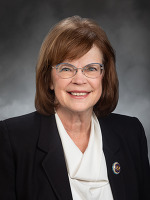
 The following is an excerpt from an op-ed by Sen. Judy Warnick that appeared in the Seattle Times.
Washingtonians hope every child in our state has the happy, carefree childhood they deserve. But as a lawmaker who has spent two decades in Olympia, I know that hope doesn’t prevent tragedy. Results do.
This month, a sobering reality shattered any sense of complacency. In a Pierce County courtroom, a jury delivered a record-breaking $130 million verdict against the Department of Children, Youth, and Families. The case involved the tragic, preventable death of 2-year-old Sarai Brooks.
The evidence was disturbing. Despite a court order, Sarai was returned to a home where her abuser remained. The state was warned multiple times; visible injuries were documented. Yet, the system designed to protect her looked the other way until it was too late. While the $130 million award is a staggering sum for taxpayers, the true cost — the loss of a child’s future — is a debt our state can never fully repay.
Sadly, Sarai is not an isolated case. State reports from early 2026 show that we are grappling with a terrifying spike in “critical incidents” — fatalities and near-fatalities — involving children already known to the state. While the number of children being removed from homes has decreased, the number of children dying in the homes where they were left has risen. This tells me one thing: The screening tools our state uses to assess danger are fundamentally broken.
Read the full op-ed.
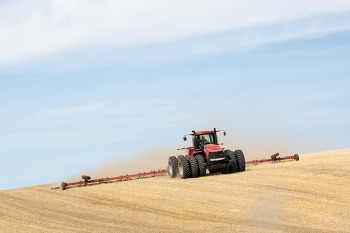 Wheat-growing on the Palouse.
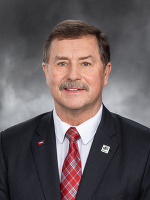
The following article written by Sen. Mark Schoesler appeared in his e-newsletter on May 1, 2026.
Even before it went into effect in 2023, other opponents and I argued that the state Climate Commitment Act was going to take away money from hard-working Washingtonians and spend it on programs that fail to do anything to actually reduce carbon emissions in the state.
Here in eastern Washington, the CCA and its cap-and-trade program (or “cap-and-tax,” as I prefer to call it) are especially unpopular since farmers and others have to pay so much more for gas and diesel compared to most other states. By the way, AAA reported that Washington had an average unleaded gas price of $5.57 yesterday, breaking our state’s prior record of $5.55, set in July 2022. AAA says Washington’s gas prices are $1.27 higher than the national average.
There could be another reason to dislike “cap-and-tax.” According to a Center Square story this week, Save Family Farming Executive Director Ben Tindall says an activist group located in Yakima received almost $500,000 in CCA funds and then used that money for political attacks on Washington farms.
“The reality for Washington drivers is that some of the money they’re paying when they fill up is being funneled directly to activist groups like Yakima-based We Are ELLA, which has made a name for itself by pushing misleading and outright false accusations against farmers,” according to Save Family Farming news release.
The Center Square article quotes Tindall saying, “One of the areas where we kind of saw the red flags in these videos was as they were presenting this manipulative or false message, they would then put the Department of Health logo at the end of their video, which caused us to really question, is this being sponsored by the Department of Health?”
It's bad enough that drivers and others have to pay “cap-and-tax” every time they get fuel. But if that money is being used to let some activist group attack Washington agriculture, that is absolutely unacceptable.
If you someone forwarded you this newsletter, you can subscribe to receive it directly.
|