This past Sunday, House Democrats took to X to express concern over our state’s budget deficit and potential cuts ahead, ending their post with: “How did we get here?”
That’s an excellent question—especially considering they’ve been in charge of the budget for years.
Just three years ago, Washington state had a $14 billion surplus. Today, we face a deficit ranging from $7 billion to over $10 billion—depending on analysts’ assumptions about spending and revenue.
So, how did we get here? The answer is simple: reckless spending by legislative Democrats.
Over the past decade, the state’s budget has ballooned from $30 billion to more than $70 billion. Despite this massive growth in spending, revenues have largely kept pace. In fact, tax revenue is still growing. This year, we’re collecting more than we did last year, and next year’s revenue will exceed this year’s. The issue is not revenue, but that Democrats continue to spend more than the state can afford.
Source: BudgetBreakdown.org
Had Democrats simply maintained 2023-25 spending levels, we’d have a $1 billion surplus instead of a multi-billion-dollar shortfall. Instead, they’ve overspent by $8.6 billion over the past three budget cycles, forcing the state into crisis despite record revenues.
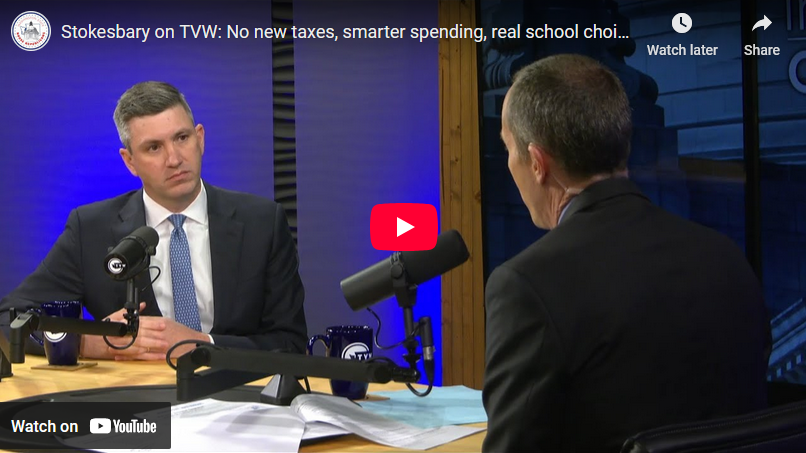
Now, rather than course-correcting and working with Republicans to draft a sustainable budget with necessary cuts, Democrats are pushing for massive new taxes. I discussed this and more with TVW’s Austin Jenkins during my recent appearance on The Impact.
While Governor Ferguson has so far rejected calls for major new tax increases, he hasn’t explicitly declared that he’ll veto any tax hikes that come to his desk later this session. I am, however, encouraged by the fact he has asked state agencies to identify savings of 3-6 percent to help reduce waste. The agencies responsible for delivering services are in the best position to pinpoint inefficiencies, and we should take their insights seriously.
For our part, Republicans are offering solutions that include:
Reducing spending to sustainable levels that align with revenues.
Requiring regular zero-based budget reviews to identify programs that aren’t working.
Prioritizing spending for essential services like education, healthcare, and public safety.
Budgeting based on the official revenue forecast rather than optimistic or unrealistic assumptions.
Reducing the quantity and frequency of nonessential agency reports.
Again, Washington doesn’t have a revenue problem—it has a spending problem. The responsible path forward is to adopt a sensible budget that reflects our state’s true needs, not an unchecked spending spree. We can balance the budget, protect essential services, and secure a prosperous future for all Washingtonians without raising taxes. I hope you will join us in this fight, and others, by engaging with us on Facebook, Instagram, X, and YouTube. I also encourage you to get involved in helping us stop bad bills that are still making their way through the legislative process.