Update on the COVID-19 reponse

Having trouble viewing this email? View it as a Web pageBookmark and Share

Washington House Democrats Legislative News: Washington House Democrats - Olympia, Washington


June Robinson 2019 banner

STAY HOME, STAY HEALTHY

Last night, on March 23, Governor Jay Inslee signed a statewide proclamation for a STAY HOME, STAY HEALTHY order in Washington state, similar to orders you have seen in states like California, also combatting this virus. The governor and other state officials have been thoughtful and deliberate in making these difficult choices. I support the governor’s decision and believe it is essential to our ability to control the virus and keep our healthcare system from becoming overwhelmed over the following weeks.

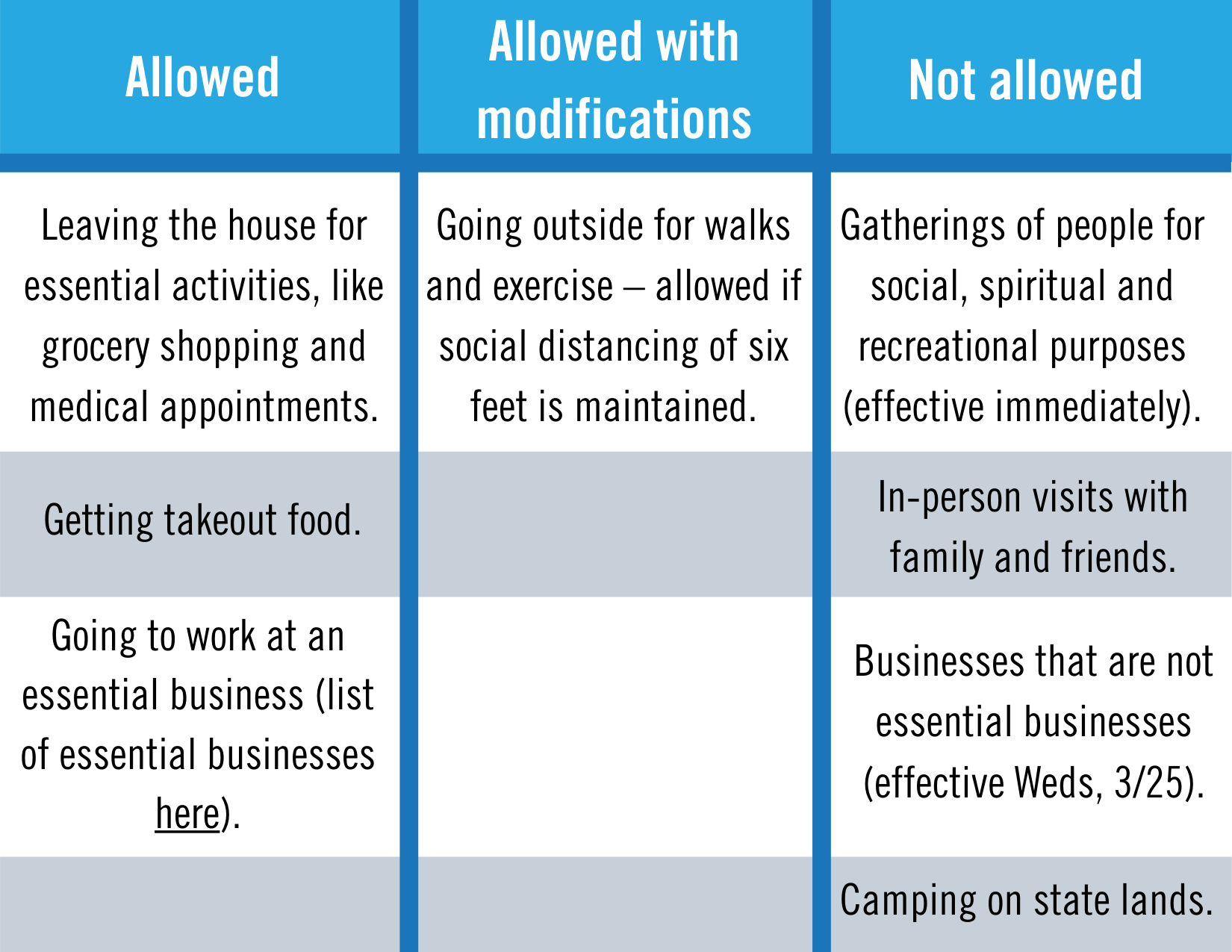
Here is brief list of what is and is not allowed during the STAY HOME, STAY HEALTHY order:

Information about Stay Home, Stay Safe order

Lastly, I join the Governor and other state officials in asking that when shopping, people buy only what they need. Our supply chain is strong: if everyone continues their normal shopping habits, we are not in danger of running out of ordinary household items. Please leave some for your neighbors!

More information about the Governor’s STAY HOME, STAY HEALTHY order can be found here.

Update on the COVID-19 Response

Over the last several weeks of the legislative session, it became clear that we would need a significant response to the outbreak of COVID-19 in Washington State. We passed legislation transferring $200 million from the state’s Budget Stabilization Account to help respond to the outbreak of COVID-19 out of both the House and Senate unanimously. From that amount, $175 million is slated for helping to slow the spread of the virus and for treatment of those infected. The remaining $25 million is for assistance to businesses forced to temporarily lay off employees as a result of the outbreak.

We know that this is a difficult and uncertain time for many people. Washington’s official website for all things related to COVID-19 is www.coronavirus.wa.gov. House Democrats have also created this a list of resources for families, workers, and employers, which we will continue to update as more information becomes available.

Support for parents and students during school closures

Schools are the cornerstones of our community. On March 13, Governor Jay Inslee and Superintendent of Public Instruction Chris Reykdal directed all schools statewide to close until April 27 at the earliest. We know that school closures will have a serious impact on Washington’s families. Here are some resources for families affected by this disruption.

OSPI will continue to be your best resource for updated information. Check their website or follow them on Twitter and Facebook.

Parents of students who receive free or reduced-price school meals should contact their school district about meal distribution.

Feeding Families during the COVID-19 Crisis

The governor has closed restaurants for the next two weeks, but not because food is the risk. There are plenty of ways to continue to access safe and healthy food, and extra help is available for families that need support getting food on the table.

Grocery stores, gas stations and convenience stores remain open. As the governor stated on Monday, there is no need to stockpile. Our supply chain remains strong. Practice social distancing and use good hygiene when making essential trips for groceries.

Order takeout and delivery while practicing social distancing. Again, the governor has closed restaurants for the next two weeks to increase social distancing, not because food is the risk. You can still support small businesses by ordering takeout and delivery. Make sure to maintain good social distancing and hygiene while doing so.

Assistance with buying food is available. If the COVID-19 crisis is creating extra strain on your household budget, you can apply for assistance through various state programs at https://www.washingtonconnection.org/home/.

Free school meals in some school districts. School districts are stepping up to continue to provide free school breakfasts and lunches. Check with your local school district to see if they are providing free meals for kids.

Food banks remain open. Food banks continue to provide assistance to families and are instituting increased social distancing and hygiene practices. For any questions about hours or practices, please contact your local food bank directly. If you are healthy and able to give time, consider volunteering.

Cooking at home. For those cooking at home, handle food with the same care that you usually would. Wash your hands. Only handle food when healthy. People who are coughing, feverish, short of breath, or otherwise sick should stay out of the kitchen.

Social distancing: a how to guide

Social distancing is one of the most effective ways to slow the spread of COVID-19 as the virus is transferred from person to person.  Even if you do not show signs on the virus, you could be a carrier and should practice social distancing whenever possible.

Social distancing means:  

  • Stay home unless pursuing an essential activity, like grocery shopping, going to a pharmacy, or medical appointments.
  • It’s okay to get fresh air, walk the dog, garden or ride your bike – but it is essential to maintain six feet of space from other individuals while doing so.
  • Eliminate nonessential trips outside the home. Use telecommute options and avoid public transportation whenever possible. Trips to the grocery store and pharmacy are okay.
  • Minimize contact with people, especially nonessential travel and visits with people over the age of 60. Seniors and people with compromised immune systems should stay home.
  • Reschedule nonessential travel.
  • There is a current statewide emergency ban on gatherings, including social, spiritual, and recreational gatherings.
  • Keep in contact with loved ones remotely.

Practice social distancing – get counted in the census online

The 2020 Census will determine how billions of dollars in public funding for roads, public heath and schools are spent, and how we are represented politically for the next decade. While the COVID-19 pandemic has made traditional person-to-person outreach more challenging, there are still ways you can get counted in the census while still practicing social distancing.

Between March 12 – 20, households all over the country will receive initial invitations in the mail to get counted in the census. Once you have received that invitation, which includes a 12-digit CensusID code needed for completion, the Census Bureau is encouraging responses be submitted online at my2020census.gov. The online form should only take around ten minutes to complete in full.

Shape your future, get counted.

Social distancing, not social isolation: tips for good behavioral health

While social distancing practices are one of the best ways to slow down the spread of infectious diseases, like COVID-19, stress and lack of human interaction can have negative impacts on our behavioral health.

Here are some recommendations and resources to stay mentally healthy over the next few weeks.


  • Know the signs of stress, depression and anxiety, and how to manage those symptoms.
  • Take care of your physical health. Eat healthy, nutritious foods, and go for walks outside – just maintain the six-feet social distancing rules.
  • Practice social distancing, not social isolation. Use technology to stay virtually connected with loved ones.
  • If you’re working from home or your child’s school has been cancelled, create and stick to regular schedules and routines.
  • There is going to be constant media coverage on COVID-19. You can avoid overloading on COVID-19 negativity by only consuming information from reliable official resources and know it’s okay to disconnect from time to time.
  • Find things to do that relieve stress that don’t involve screen time, like reading books, picking up old creative hobbies or indoor physical activities, including regular stretching.
  • Reach out to a professional if you need help. You don’t have to go through it all alone.
  • Remember, this won’t last forever. These are temporary situations and will eventually end.

Support for Workers & Businesses

The governor’s bold move to close nonessential businesses will help slow down the spread of coronavirus. However, workers and business owners are being impacted and are looking for answers as they wonder how they will get their families through this necessary shutdown.

State agencies have adopted emergency rules and developed comprehensive websites to help relieve the burden of temporary layoffs, isolation and quarantine for workers and businesses. Please keep in mind that the content in the links below will likely be updated as this situation continues unfolding, so check these sites often for the latest information.

For Workers: 

For Businesses: 

  • The Employment Security Department has information on what resources are available to help businesses keep employees, and information about tax filing lenience.
  • Governor Inslee’s website has a list of resources on:
  • How to apply for federal Small Business Administration loans.
  • How to request tax filing extensions or penalty waivers from the Dept. of Revenue.
  • Where to go for support from the Dept. of Commerce Export Assistance Team.
  • The Office of the Insurance Commissioner has a page on business insurance information, including one answering questions on event cancellation insurance.


Representative June Robinson
38th Legislative District