|
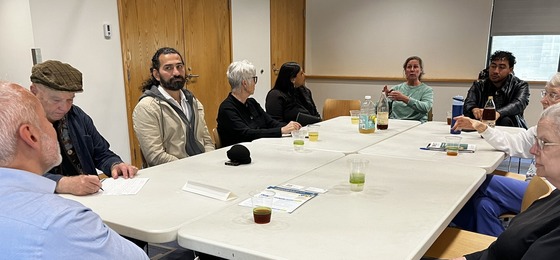
Pictured speaking with constituents who joined the October “Brewing Conversations with Jorge” session.
I would like to begin with a deep note of gratitude to the constituents who attended the “Brewing Conversations with Jorge” session earlier this month at the Broadview Branch Library. It was great to see so many familiar and new faces looking to be civically engaged in their community. If you were not able to join this session, please know that there will be future opportunities to connect with me and your neighbors!
It was recently brought to our attention that responses to my newsletter are sent to an inbox that is not monitored, and these messages may not reach our office. We looked into whether those messages could be forwarded to our team, but our email service provider does not support this, citing a security risk. To ensure your questions, comments, and feedback reach us, please email me directly at Jorge.Baron@kingcounty.gov. I am grateful to the constituent who raised this issue and apologize for any confusion or frustration this may have caused.
Lastly, I want to recognize and share my congratulations to the King County Department of Assessments for being awarded the Certificate of Excellence in Assessment Administration by the International Association of Assessing Officers for the fourth time! This prestigious honor recognizes the department’s commitment to professional excellence and best practices and is held by only about 60 assessment jurisdictions worldwide.
Read on for a reminder to return your ballots, updates on upcoming budget decisions, and other happenings at the council!
With gratitude,
 Jorge
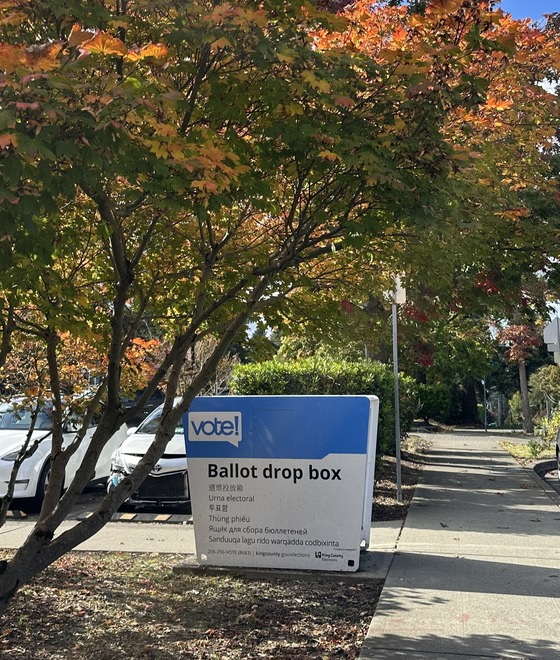
Can you guess where in the district this ballot drop box is located?
Make a Plan to Vote this November
Election Day is Tuesday, November 3, but you don’t have to wait until then to vote. Once your ballot arrives, take a few minutes to complete it and make a plan to return it.
Safe and secure elections – With election security on many people’s minds, King County has made investments to help protect residents’ ability to vote. In the supplemental budget passed in June, I worked with Councilmember Rod Dembowski and King County Elections Director Julie Wise to include $500,000 to add new ballot drop boxes and enhance the security of our system. You may have also heard that unvoted ballots were found in a dumpster at Golden Gardens recently. Law enforcement has noted that mail theft is unfortunately not uncommon, but the ballots do not appear to have been the target of the theft since they were left behind. King County Elections has already re-issued ballots to affected voters, and states that our system, which includes signature verification, works to ensure that votes are made only by people who are eligible. This is just one example of how King County is working to ensure every eligible voter can cast their ballot and have confidence in the process. If you are a registered voter and did not get a ballot, please contact King County Elections at 206-296-8683. There are also other options to get a replacement ballot, and you can find those online here.
Three Ways to Return Your Ballot
-
Ballot Drop Box – Drop off your ballot at any of the 100 ballot drop boxes countywide by 8 PM on Tuesday, November 3.
-
Vote Centers – Get in-person voting assistance or use accessible voting options. Vote Centers open on select dates before Election Day.
-
U.S. Postal Service – Your ballot can still be mailed and does not require a postage stamp, but to ensure it is received in time, voters are encouraged to drop their ballot in a drop box or visit a Vote Center.
Track your ballot – Use King County Elections’ My Voter Information tool to check your ballot’s status and confirm it has been received and counted. You can also sign up for text or email ballot alerts. For more information, including Vote Center hours and locations, visit the King County Elections website.
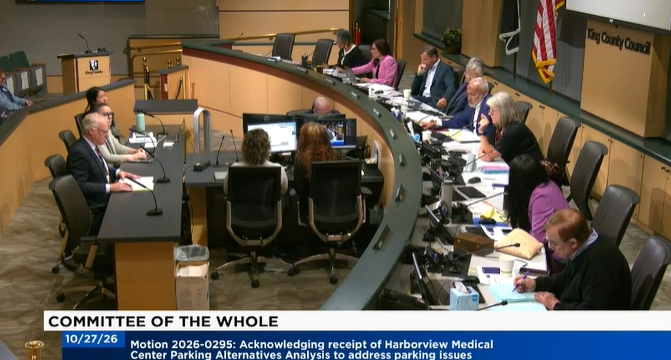
Click image to access the recording of the October Committee of the Whole meeting.
Chairing Committee of the Whole
We had a busy Committee of the Whole meeting in October. One of the key action items from this meeting was advancing the King County State Legislative Agenda.
Why this matters – This agenda, developed in partnership with Executive Zahilay, guides our lobbying team’s advocacy in Olympia for the upcoming 2027 Legislative Session. King County has a team of full-time staff and contract lobbyists who are on the ground in Olympia advocating for these priorities. We also work closely with other county governments, local cities, and community coalitions to advance the needs of King County residents.
Goals for this session – This upcoming legislative session, I will be most focused on preserving King County services. The state is in a difficult financial situation, but our team will be working to protect services for King County residents from harmful budget cuts. This includes advocating for funding for:
- Affordable housing and homelessness services,
- Our criminal and civil legal systems,
- Public health, and more.
I would also like to see legislators make headway on creating a more progressive tax structure for Washington State, meaning that those with the most resources pay a greater share of the tax burden. Lastly, I will be tracking our state’s response to federal threats closely, including protecting our immigrant community and voter rights. Once the final legislative agenda is approved, I will be sure to share it in next month's newsletter.
During the meeting, we also heard from Executive Zahilay’s office, both on updates to the Harborview Bond Program and their Return to Office Initiative for county employees. These are both important infrastructure projects for the council to consider as we take up the 2027 budget and weigh the many competing needs in our community.
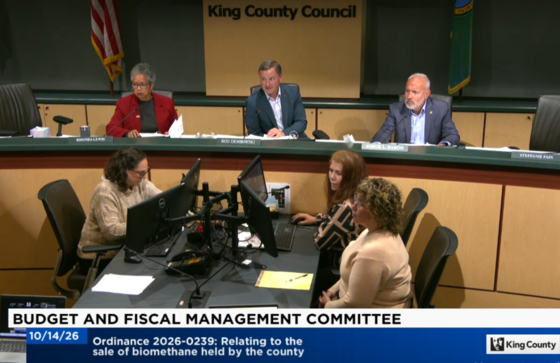
Click image to access the recording of the October 14 Budget and Fiscal Management meeting.
Looking Ahead to November’s Budget Decisions
Last month, I shared an overview of Executive Zahilay’s proposed revisions for King County’s current two-year budget. As the council reviews the proposal, I’m focused on three priorities:
-
Protecting and expanding homelessness services for youth and families,
-
Planning for long-term financial stability, and
-
Preparing for the local impacts of H.R. 1 including changes to health coverage and food assistance which are already affecting residents and putting additional strain on providers.
Why this matters – One example of what long-term financial stability means in practice is how we manage the county’s General Fund, which supports essential services like courts, public defense, prosecution, public health, and elections. The county faces a projected $120 million General Fund shortfall for the 2028-29 biennium, so decisions we make today will affect future budgets.
Even one-time investments, such as new staff positions, pilot projects, or additional workspace to meet in-office goals, can create ongoing costs. At the same time, program cuts may reduce spending today but lead to higher costs or greater needs down the road. We need to consider these long-term consequences as we make budget decisions.
Next steps – The council’s review is now underway. At the Budget and Fiscal Management (BFM) committee meetings on October 14 and October 28, we received an overview of the Executive’s proposal and had the opportunity to ask questions. In November, the process will move quickly as Councilmembers propose changes and work toward a final budget.
Key Dates
-
Monday, November 16 at 1:30 PM in Budget and Fiscal Management Committee
- Vote on amendments and the council revised budget legislation, known as the striker.
-
Tuesday, November 24 at 10 AM in Full Council
- Scheduled to vote on the final supplemental budget.
 Get involved – Your ideas and suggestions on how county resources are invested is crucial.
Way to Make Your Voice Heard
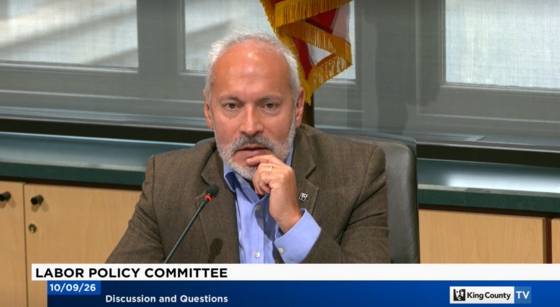
Click image to access the recording of the October Labor Policy meeting.
Taking a Fresh Look at King County’s Labor Policies
I recently participated in a Labor Policy Committee (LPC) discussion about how King County’s labor policies can better reflect today’s workplace. Under King County Code, the committee sets the policy framework that guides the county’s labor relations, while the Executive leads collective bargaining negotiations.
What we learned – At this meeting, we reviewed the history of the county’s labor policies and heard from labor partners about the issues they believe should be considered in the next comprehensive review. Representatives from the county’s Office of Labor Relations also joined the discussion.
Topics raised by labor partners for consideration included performance evaluations, hiring practices, wage compression, grievance resolution, and more consistent application of existing social justice principles. They also encouraged the county to consider how its policies address newer workplace issues, including artificial intelligence and remote and hybrid work.
What’s next – The last comprehensive review began in June 2019 and concluded in December 2020, resulting in the adoption and revision of a total of 15 policies. The workplace has changed significantly since then, making this a good time to take a fresh look at these policies and consider what updates may be needed. The LPC expects to begin comprehensive review after the new year.
Click image to learn more about what King County is doing to address the changes to healthcare coverage due to the H.R.1 Bill.
Preserving Access to Care
The proposed King County Behavioral Health Bridge Implementation Plan (Bridge) moved forward on October 6, when the Health, Housing, and Human Services Committee advanced it, along with the ordinance renaming the fund and updating the Advisory Committee, on a unanimous vote.
Why this matters – My priority throughout this process has been protecting care for people who are not covered by Medicaid. The Bridge’s equitable access strategy has served roughly 3,000 to 4,000 uninsured residents every year since 2008, and as H.R. 1 pushes more neighbors off of Apple Health (Medicaid), that local funding becomes a lifeline. I worked with Chair Teresa Mosqueda and council central staff to keep that funding protected in the plan.
Other changes I pushed for that were included:
-
Council notice before procurement – The council will get advance notice before programs are put out for bid, so we can ask questions early.
-
Continuity of care – People already receiving services will not lose them in the transition to the new plan.
-
A youth seat on the Advisory Committee – Young people will have a voice in how the Bridge is run.
-
Compensation for advisory committee members with lived experience – Members will be paid $75 per meeting, up to $150 per month, with recruitment support, so cost is not a barrier.
What’s next – The Regional Policy Committee held a hearing on both items on October 14 and is scheduled to consider revisions on November 5. A final council vote is targeted for November 17.
Resources for Residents Impacted by Federal Law Changes
For background on what H.R. 1 means for Apple Health, see last month’s newsletter. Some of those changes began on October 1, when about 4,000 King County residents who are lawfully present immigrants lost their Apple Health eligibility, and more changes follow in January 2027. Local behavioral health funding through the Bridge will matter more in the years ahead for people who lose coverage as a result of these federal changes.
Free and confidential help is available through Public Health – Seattle & King County’s Access and Outreach Program.
 Expanding Housing and Shelter
Earlier this month, the council approved a proposal I put forward to help us expand shelter capacity for families and youth. Throughout my time in office, I have heard from constituents and advocates about the youth and family homelessness crisis in our region. Parents have approached me about their experiences sleeping in their car with their children, and teenagers have shared how harmful it feels to have no safe place to go home to.
The data reflects this crisis and need:
- There are currently 967 youth and young adults experiencing homelessness in King County. There is only a total of 187 shelter beds for this population.
-
The number of families – that is unsheltered parents with minor children – has risen from 1,253 individuals in 415 households in 2022 to 2,224 individuals in 647 households to 2026. The number of shelter units for families has decreased during this time frame.
At the same time, shelter capacity is even more strained because average length of shelter stays has grown in recent years.
-
For families, the average length of stay in emergency shelters has grown from 93 days in 2019 to 173 last year.
-
For youth, it has also increased from 30 days to 44.
What this tells us – Those increases mean that each shelter unit can serve fewer people than it did previously. Our local youth and family homelessness crisis is likely to be compounded by federal funding reductions in the years to come, along with existing state and local budget constraints and high operating and capital costs for providers.
Why this matters – In addition to the urgent importance of bringing families and children indoors today, I also believe that addressing this issue is an investment in the long-term health of our region: the majority of adults experiencing homelessness locally were first unhoused as children. By bringing more young people indoors sooner, we can break the cycle and prevent both the human and financial cost of emergency medical care, criminal legal involvement, and addiction down the road.
I am grateful that my colleagues joined me in supporting a new revenue tool that will enable the operations of hundreds of shelter and housing beds per year. This will be a short-term measure that will allow us to address the urgent need outlined above for the next three years while we work towards creating more progressive, comprehensive, and sustainable solutions to this crisis.
King County Council largely determines spending through our annual budget process, occurring now. Through this process, my colleagues and I are working on accountability and transparency measures to ensure that these additional resources will be effective and efficient towards our goal of addressing youth and family homelessness.
Get involved – I will continue to advocate with the legislature in Olympia to enact more progressive taxes in the upcoming legislative session. I invite you to join me! If you don’t know where to begin, I encourage you to first start by finding your state representatives and contacting their office.
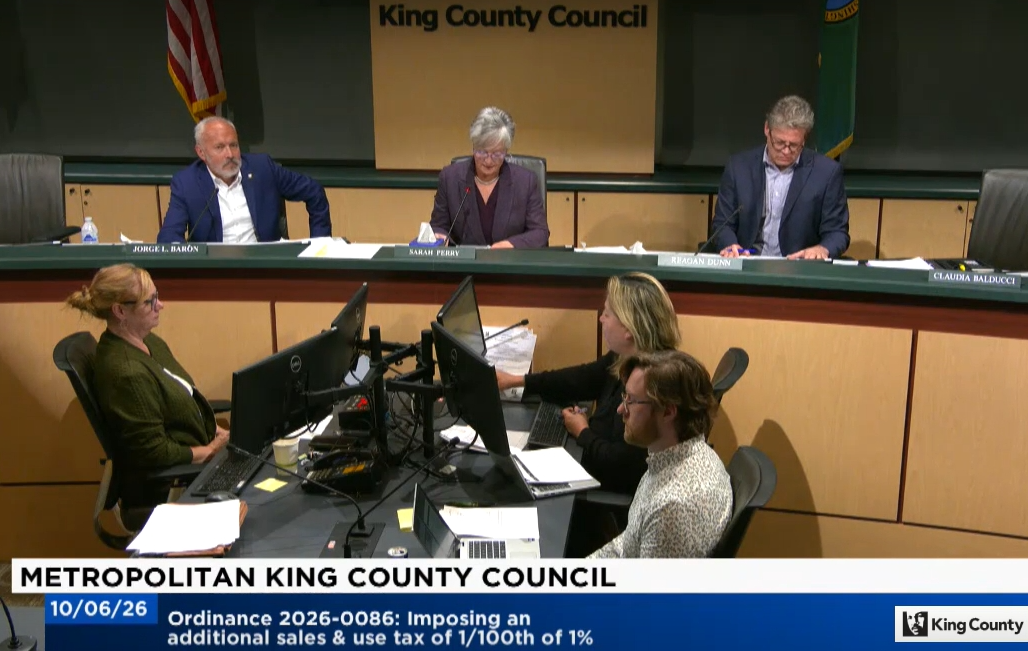
Click image to access the recording of the October 6 council meeting.
Independent Agency Legislation
As you’ve likely already read in one of these newsletters, the King County Council authorized the creation of an Inspector General position to investigate alleged instances of waste, fraud, and abuse within King County government. While appointed by the council, this position will join the King County Auditor’s Office, the Office of the Ombuds, the Hearing Examiner’s Office, and the Office of Law Enforcement Oversight in holding independent oversight authority. Throughout the appointment process, I noticed many small inconsistencies in the King County Code sections that govern these different agencies. While some made sense, others appeared to be remnants of a series of changes over time. That’s why my team put together legislation to provide more procedural consistency across these agencies. The legislation was approved earlier this month, on the same day that the council appointed the county’s first Inspector General, Stuart Robinson.
Click image to access the recording of the October Law and Justice meeting.
Law and Justice Committee
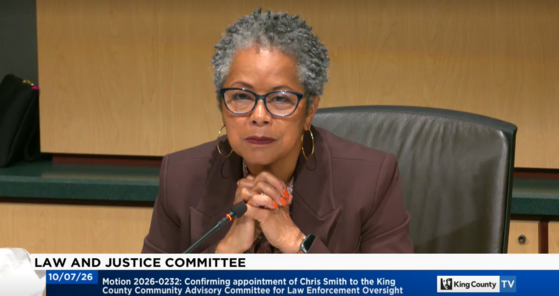
In early October, the Law and Justice Committee heard two briefings. The first briefing focused on juvenile recidivism data from the King County Prosecuting Attorney’s Office (KCPAO) and a specific juvenile diversion program that the KCPAO partners with. While difficult to draw broad conclusions from the limited data set, it was an interesting discussion and hopefully the first of many that centers on how to evaluate success in diversion programs. The second briefing was from King County Superior Court Presiding Judge Averil Rothrock and focused on the Superior Court Family Law Caseload and Judicial Needs Report. We’ve heard over the past few years about some slow-downs in family court due to a variety of different factors. It was helpful to hear directly from the Court on this important work, and the challenges they are facing.
 Be Flood Ready this Season
With flooding being one of the most common natural disasters in our region, the King County Flood Control District is ensuring our King County residents are well informed and prepared for flooding. Being prepared is the best way to keep you, your loved ones, pets, and property safe. Here are some ways you can be ready this season!
-
Have a plan for emergencies,
-
Store valuables up high and on a second story,
-
Update emergency kits with essential items,
-
Get involved in your community and talk about how you can help each other during a flood, and
-
Stay informed by signing up for all-hazard emergency alerts.
Celebrating at the Council
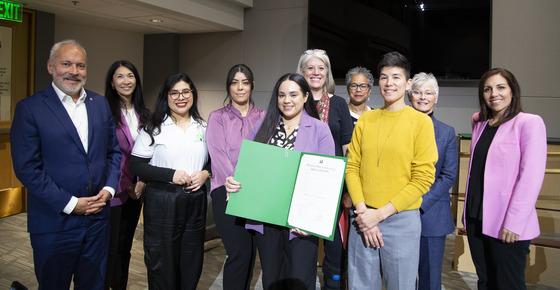
Pictured with my council colleagues and our guests who joined us for the occasion.
Standing with Survivors
I am proud to have joined Councilmember Claudia Balducci as a co-sponsor for the presentation of this year’s Domestic Violence Awareness Month proclamation. We were joined by Co-Executive Policy Director Amarinthia Torres and Co-Executive Programs Director Lea Aromin of the Coalition Ending Gender-Based Violence, and Executive Director Katya Wojcik of Project Be Free, all of whom graciously received the proclamation and provided remarks. King County Council continues to stand in solidarity with survivors.
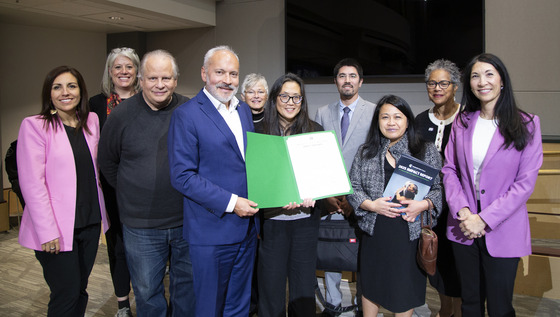
Pictured with my council colleagues and our guests who joined us for the occasion.
Representation for All
I am pleased to have presented this year’s proclamation celebrating Pro Bono Week, which is observed from October 25 to October 31, alongside Councilmember Steffanie Fain. Pro Bono Week acknowledges and celebrates the volunteer work of attorneys who help ensure critical civil legal aid needs are met. We were joined by Michael Terasaki, the Manager of Washington Pro Bono Council, Executive Director John Tirpak of Unemployment Law Project, Judy J. Lin with the King County Bar Association, and Executive Director Abigail Daquiz of Northwest Justice Project. We all deserve equal access to legal counsel regardless of financial status in critical civil legal matters. Unfortunately, this is not the reality in our current civil legal system, which is why pro bono work is crucial, impactful, and deserves to be commended.
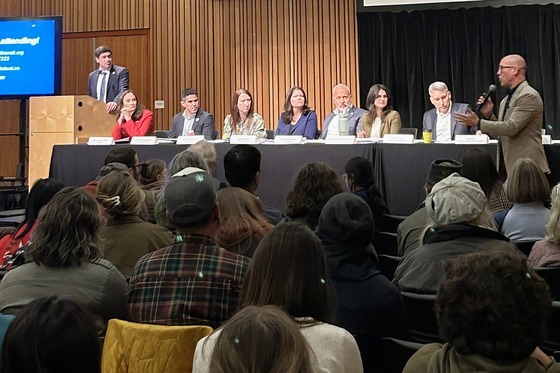
Picture with city and state representatives who took part in the panel and discussion.
Advocating for Link Light Rail to Ballard
On Monday, October 19, Ballard neighbors and transit riders filled up the Osberg Great Hall at the National Nordic Museum for a follow up community meeting to continue our conversation about the future of the Ballard Link Extension. There, I joined a panel of my city and state elected counterparts, including Councilmember Dan Strauss who organized the event, to hear more from constituents on this project. It was inspiring to see so many of you take time out of your evening to be civically engaged. While there is still much work to be done, I am hopeful that the immense advocacy and support coming from the community will push this project forward.
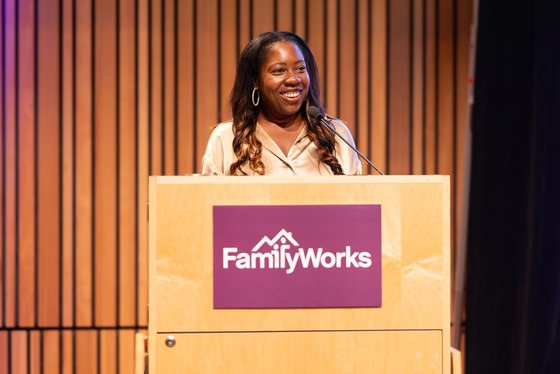
Executive Director Marcia Wright-Soika of FamilyWorks pictured addressing attendees.
FamilyWorks Sunday Supper
I was delighted to join community members and local leaders at FamilyWorks’ Annual Sunday Supper event at the National Nordic Museum. There, we heard about the positive impact their food access and family support programs have had on those who seek services. It was heartening to see so many community members come together who care about the well-being of their neighbors.
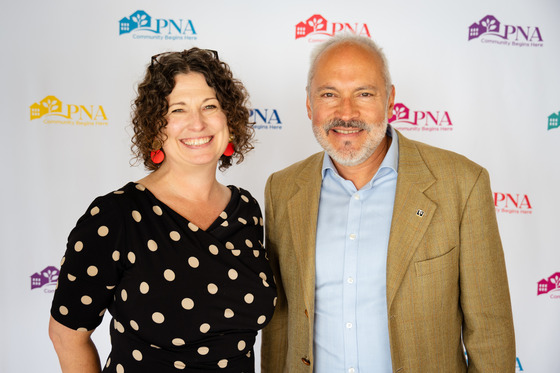
Pictured with Executive Director Christi Beckley.
Power of Community
I was honored to attend Phinney Neighborhood Association (PNA) at their Power of Community luncheon to hear updates on the work happening at PNA. Thank you to the PNA for the expansive impact their services continue to have throughout District 4, and for fostering an inclusive community where everyone can thrive.
 Investing in Our Children
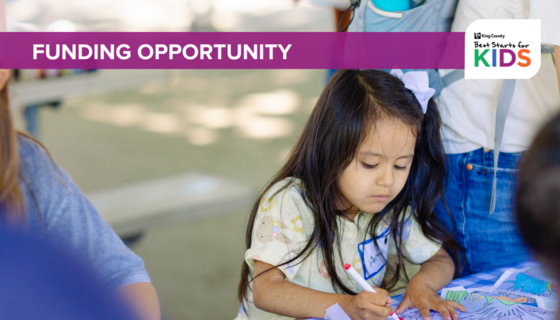
The King County Department of Community and Human Services is accepting applications for Workforce Development Mini Grants. This Request for Application offers mini grants of up to $9,999 to small King County organizations serving children from the prenatal period through age five and their families. Funding supports staff development in healthy childhood development, infant and early childhood mental health, racial equity, and disability justice. This funding is possible through the voter-approved Best Starts for Kids initiative.
Submit your application by Tuesday, November 25 at 2 PM.
|