|
Tuesday, September 8: Council
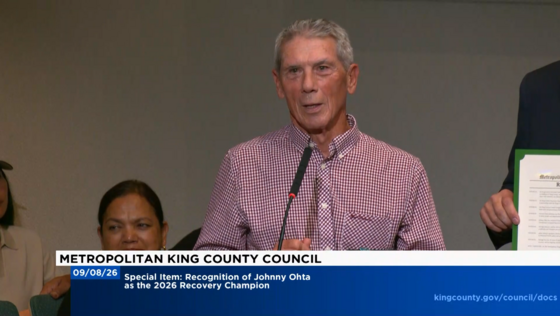
Click on image above to hear Johnny Ohta accept the 2026 King County Recovery Champion award. Ohta works with youth in the U-District who are facing addiction.
On Tuesday, the King County Council took a moment to recognize the outreach work to help young people facing addiction.
CM Lewis nominated Johnny Ohta – Youth Substance Abuse Disorder Professional - Ryther Center for his more than two decades of daily hard work to intervene for youth facing addiction in King County and specifically with youth in the University District in District 2.
Johnny Ohta – leader of a 4-person team – including a physician – focuses on people 25 years old and younger to get them to a safer, sober place. His life’s work is a commitment to youth facing addiction in King County that is unparalleled.
Per a 2021 Seattle Times profile of Ohta: “Ryther, one of the city’s longest-running treatment centers for vulnerable youth, employs Ohta, Rizzo and their colleague Abbie Woods. On average, they interact with 5-10 kids and young adults on a daily basis and another 15 or so once or twice a week. Recovery is lifelong, so the team is in touch with another several dozen people as needed.”
It takes a team!
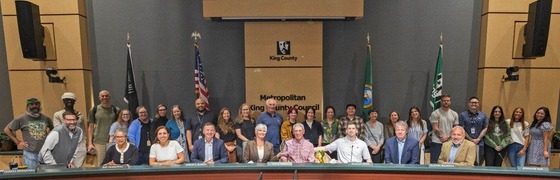
Johnny Ohta – recognized as King County Recovery Champion of 2026 is pictured here front row and center surrounded by others working in outreach to support young people facing addiction in King County.
Front row seated left to right: Councilmembers Lewis (D2), CM Mosqueda (D8), CM Dembowski (D1), Council Chair Perry (D3), Johnny Ohta, member of Johnny Ohta’s team, CM Dunn (D9) and CM Baron (D4).
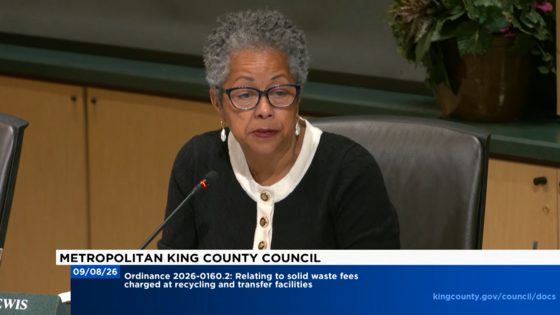
Click on image above to hear CM Lewis speak about the balance of affordability and maintaining Solid Waste (garbage & recycling) services to 37 city partners (not including Seattle) and unincorporated neighborhoods like Skyway.
The Council voted in support of an 8.5% increase in the Solid Waste rate to sustain services to cities and unincorporated areas of King County (not including Seattle). This was lower than the initial anticipated increase of 12.75% considered by the Solid Waste Division and was lowered in response to public concerns about affordability.
The King County Solid Waste Division operates transfer stations throughout King County and works in partnership with 37 cities (not Seattle) and haulers to ensure proper pick up and processing of waste. Solid Waste service is necessary to protect public health and the environment.
Tuesday, September 8: Flood Control District Board
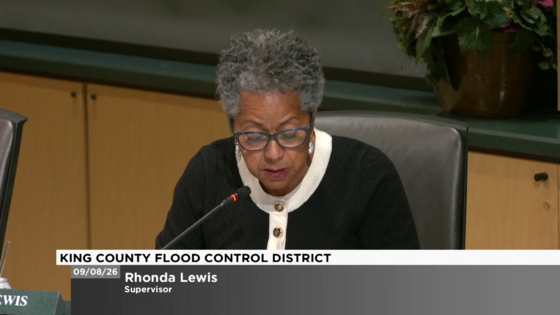
Click on the image above to hear CM Lewis speak about the Skyway Affordably Homeownership project in District 2 receiving a grant from the King County Flood Control District grant program.
The King County Flood Control District Board approved dedicating $14,307,027 to 39 projects across King County aimed at reducing flood risks and improving resilience for local communities
The Flood Reduction Grant Program was created in 2014 to provide a flood reduction benefit focusing on geographic equity, funding smaller flood reduction projects that generally would not be part of the Flood Control District’s capital program.
The program was expanded in 2020, adding three application categories. Today, the Flood Reduction Grant Program is comprised of four different categories: (1) original flood reduction grants; (2) urban flooding and small stream erosion; (3) coastal erosion and sea level rise; and (4) culvert replacement and fish passage.
This year, the application process included a new scoring criterion – 10 additional points for projects responding to new or exacerbated issues related to the 2025/2026 flood season.
The King County Flood Control District Board is composed of all nine councilmembers.
Wednesday, September 9: Budget and Fiscal Management Committee
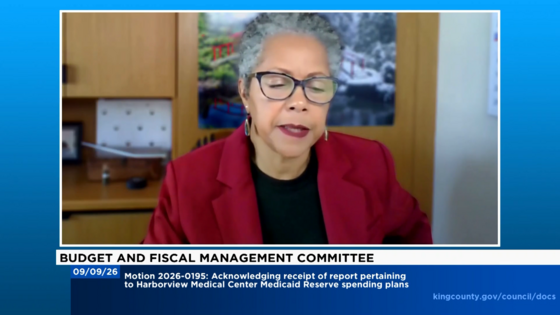
Click on the image above to hear CM Lewis ask for clarification of data on budgeting to cover the anticipated Medicaid deficit at Harborview caused by federal action HR 1 which increases barriers to enrollment.
The Budget and Fiscal Management committee heard a report by the Harborview Medical Center on budgeting to cover a large, anticipated Medicaid deficit caused by federal action HR 1 which increases the barriers to enrollment.
The Council had requested the report to determine if the $31 million Medicaid reserve it created will enable Harborview to continue serving people who cannot otherwise afford care.
The Harborview Medical Center is owned by King County and operated by the University of Washington. Harborview is the trauma hospital for Washington, Alaska, Idaho and Montana.
|