|
|
Dear Child Care Partners,
There is an air quality alert due to wildfire smoke for the King County region through Thursday, August 6th. In addition, we are expecting increased temperatures into the high 80s and low 90s on Wednesday and Thursday.
|
|
|
Wildfire smoke and heat can harm everyone’s health, but children are a sensitive group, which puts them at higher risk. To help you protect the health of your kids and staff, please review the following guidance.
1. Check smoke and heat forecasts.
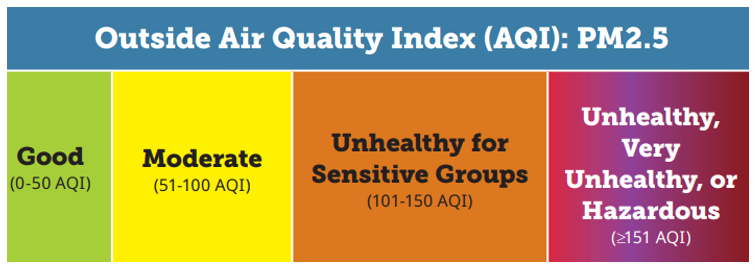
Heat and smoke are monitored with risk indexes that use numbers and colors to indicate potential harm.
- Get the most accurate predictions for wildfire smoke from AirNow.gov. Air quality can change quickly, so it’s important to check the air quality index (AQI) right before spending time outdoors.
|
|
|
2. Plan alternatives for outdoor activities on hot or smoky days.
- On days color-coded as orange—smoky days that are unhealthy for sensitive groups (101-150 AQI), or hot days with a HeatRisk of 2 (moderate): consider cancelling children’s outdoor recess and activities, or moving them indoors or to an area with good air quality. Provide plenty of water and options to cool off indoors. Children with heart conditions or respiratory conditions – such as asthma or the common cold – should stay indoors.
- On days color-coded as red or purple—smoky days that are unhealthy or very unhealthy/hazardous (151 AQI and higher), or hot days with a HeatRisk of 3 or higher (major or extreme): Public Health recommends canceling or rescheduling outdoor activities.
- Physical activity is still important. When you must stay indoors, you can lead structured activities that provide an opportunity for physical movement.
3. Cool down indoor spaces on hot days and improve indoor air quality on smoky days.
- Smoky days often overlap with hot outdoor temperatures. When it is hot out, use air conditioning or fans to keep indoor air cool. Set your AC or HVAC system to recirculate the air rather than bringing in outside air.
- To help keep the indoor air clean, keep windows and doors closed as much as possible. If you have to choose, opening the windows for a short time to cool off and letting some smoky air inside is safer than overheating.
- Consider getting HEPA air filters that provide 99% or higher filtration to reduce fine particles from wildfire smoke.
- For a low-cost option, you can make a DIY filter fan using a box fan, a MERV-13 filter, and a bungee cord or tape. Watch this how-to video for instructions.
4. Manage symptoms of smoke and heat exposure.
-
Watch for symptoms of wildfire smoke exposure: coughing, headache, sore throat, burning eyes, or wheezing. If children or staff experience these symptoms, limit time spent outdoors, avoid vigorous physical activity (like running or playing sports) and stay in an indoor space that has cleaner air.
-
Watch for symptoms of heat exhaustion: headache, nausea, dizziness, weakness, irritability, thirst, heavy sweating, elevated body temperature, or decreased urine output. If children or staff experience these symptoms, move them to a cooler place and give them liquids to drink. Remove unnecessary clothing, including shoes and socks. Cool the person with cold compresses or have them wash their head, face, and neck with cold water. Get medical attention for them immediately if they do not feel better.
-
Dial 911 for emergency assistance if symptoms are serious like shortness of breath, chest pain, confusion, altered mental status, slurred speech, loss of consciousness (coma), hot, dry skin or profuse sweating, rapid pulse, seizures, or very high body temperature (above 103°F).
|
|
|
Reminders about asthma:
- Children and people with chronic health conditions, such as asthma, are more sensitive to the harmful effects of wildfire smoke. They should stay indoors when the AQI is color-coded as orange (101-150), red or purple (above 150).
- If staff members have asthma, you may need to make alternative staffing plans.
- Make sure you have an up-to-date and complete care plan for any children who have asthma. You can find care plan documents for asthma on our care plan documents webpage.
- Check to make sure asthma medications are in the Grab ’n Go Bag, are not expired, and have doses available.
For more information on air quality and wildfire smoke, visit: http://www.KingCounty.gov/WildFireSmoke.
In Health,
The Child Care Health Program
|
|
|
|
|