|
 July 31, 2026
|
|

Dear Neighbors,
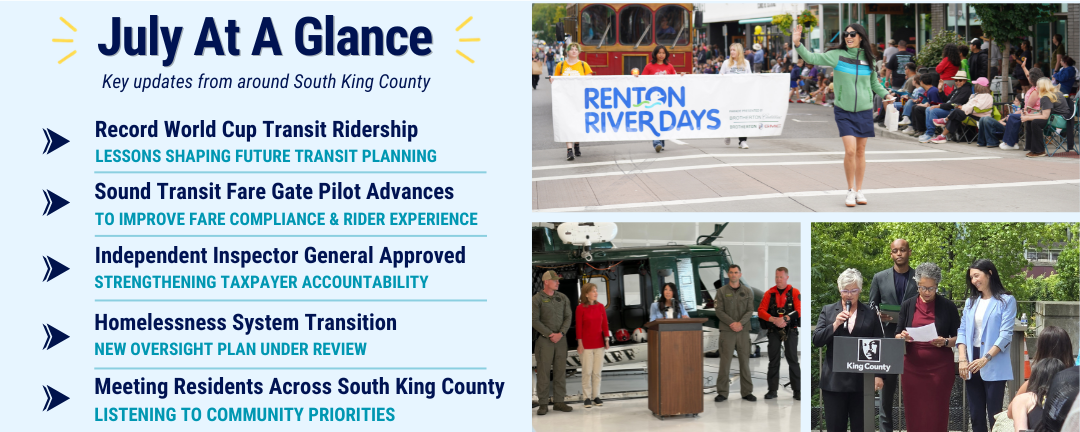
Last month, I shared what South King County residents needed to know as the FIFA World Cup came to our region. Now that the tournament has concluded, we're already applying those lessons to improve transit safety, strengthen accountability, and prepare for the decisions ahead.
The World Cup brought record ridership to Sound Transit and King County Metro, demonstrating both the strength of our regional transit system and the importance of continuing to improve safety, reliability, and the rider experience. Those lessons are already shaping decisions about transit safety and Sound Transit's proposed fare gate pilot.
This month, I'm also sharing updates on several other issues that will affect South King County residents:
-
Transportation: Regional agencies are advancing new transit safety strategies, and the Sound Transit Board is expected to vote on a proposed fare gate pilot in August.
-
Affordability: The Council is reviewing a proposed solid waste rate increase and preparing for this fall's supplemental budget.
-
Accountability: The Council approved a new Inspector General Division to investigate fraud, waste, and abuse in County funding, and we'll soon receive the next phase of the King County Regional Homelessness Authority transition plan.
Below is a look at what changed this month, why it matters for South King County, and what comes next.
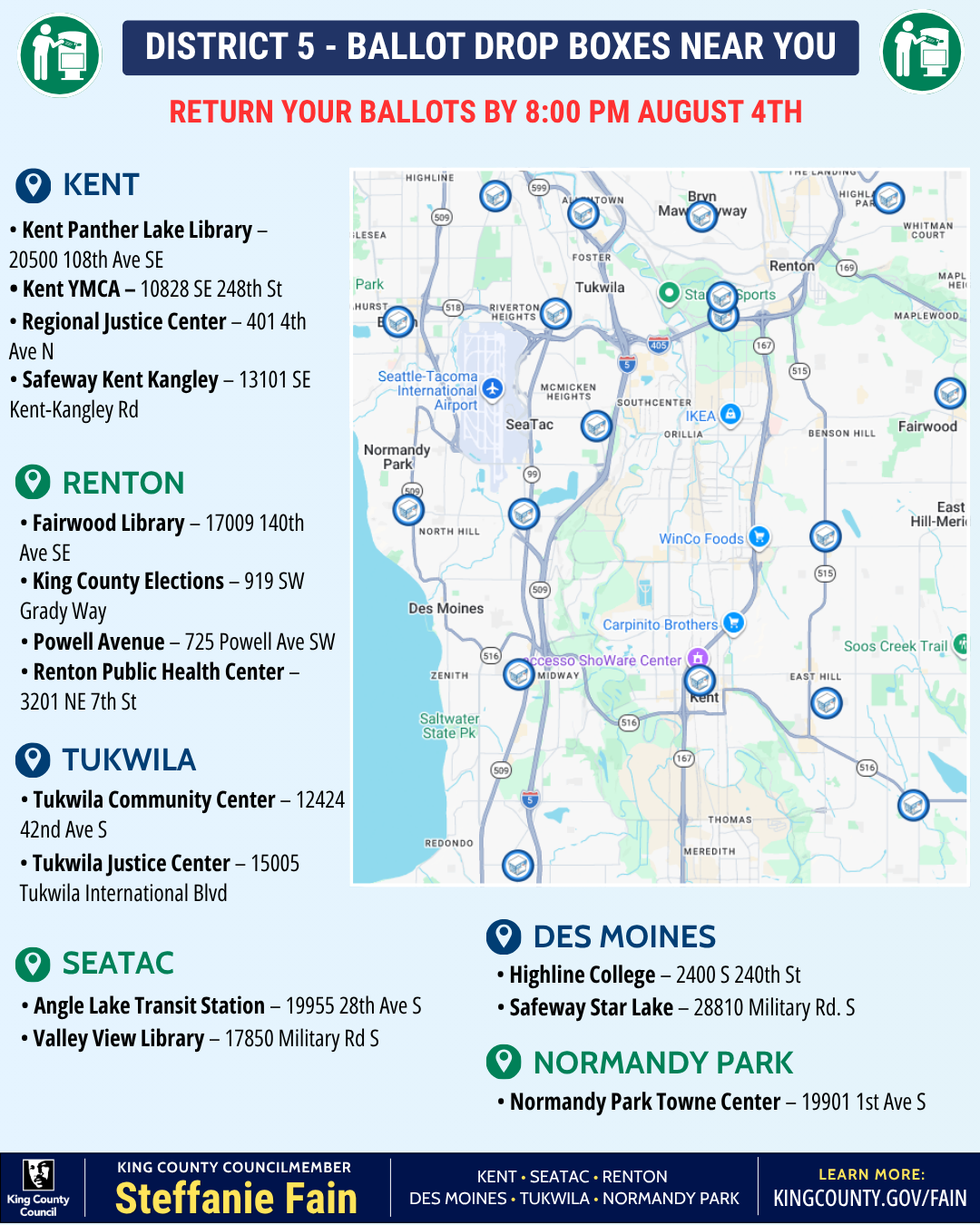
Finally, a reminder that Election Day is Tuesday, August 4. Ballots must be returned or postmarked by 8:00 p.m. Whether you vote by mail or use a local ballot drop box, I encourage you to make your voice heard. To see a full list of ballot drop boxes and learn more about how to turn in your ballot visit the King County Elections website.
As always, thank you for the opportunity to serve you.
 Steffanie Fain
King County Councilmember | District 5
steffanie.fain@kingcounty.gov
206-477-1005
Kingcounty.gov/fain

When something goes wrong on transit, riders don't care which agency owns the station, bus, or sidewalk. They just want to feel safe and know someone will respond quickly.
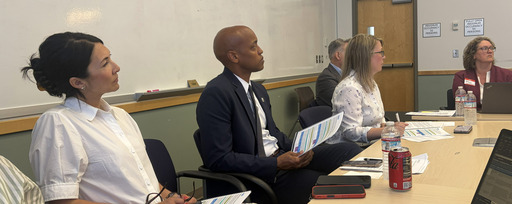
As our region managed record transit ridership during the World Cup, it also reinforced the importance of clear coordination among the many agencies responsible for keeping riders safe. This month, I joined regional partners for another Regional Transit Safety Task Force meeting to focus on improving that coordination.
Featuring CM. Fain, Executive Zahilay, and King County Metro General Manager Michelle Allison
The Kent/Des Moines and Tukwila International Boulevard Stations are good examples of why this matters. A single trip through one of these stations may involve Sound Transit, King County Metro, local police, transit police, city streets, parking facilities, and nearby businesses. While each has different responsibilities, riders should experience one seamless and safe system.
Regional partners identified several immediate priorities, including:
-
Clarify who responds to specific incidents.
-
Create station-specific safety plans.
-
Improve coordination between transit agencies, cities, local businesses and neighborhoods, and law enforcement.
Transit safety doesn't begin or end at the station entrance. It includes the sidewalks, bus stops, parking areas, and surrounding public spaces that riders use every day. Improving safety means making sure agencies communicate with one another, understand their responsibilities, and respond consistently—regardless of who owns the property.
Sound Transit Fare Gate Pilot
My goal is to strike the right balance. Public transit should remain accessible and welcoming, while riders should also be expected to tap their ORCA card every time they board and exit a train. Reliable fare collection helps support the transit service that everyone depends on.
One of the study's key recommendations is a bidirectional fare gate system, where riders tap both when entering and when exiting gated stations. This approach improves fare compliance because riders who begin their trip at a station without fare gates must still tap their ORCA card to exit at a gated station. In other words, even if someone doesn't tap when boarding at an ungated station, they cannot leave a gated station without tapping.
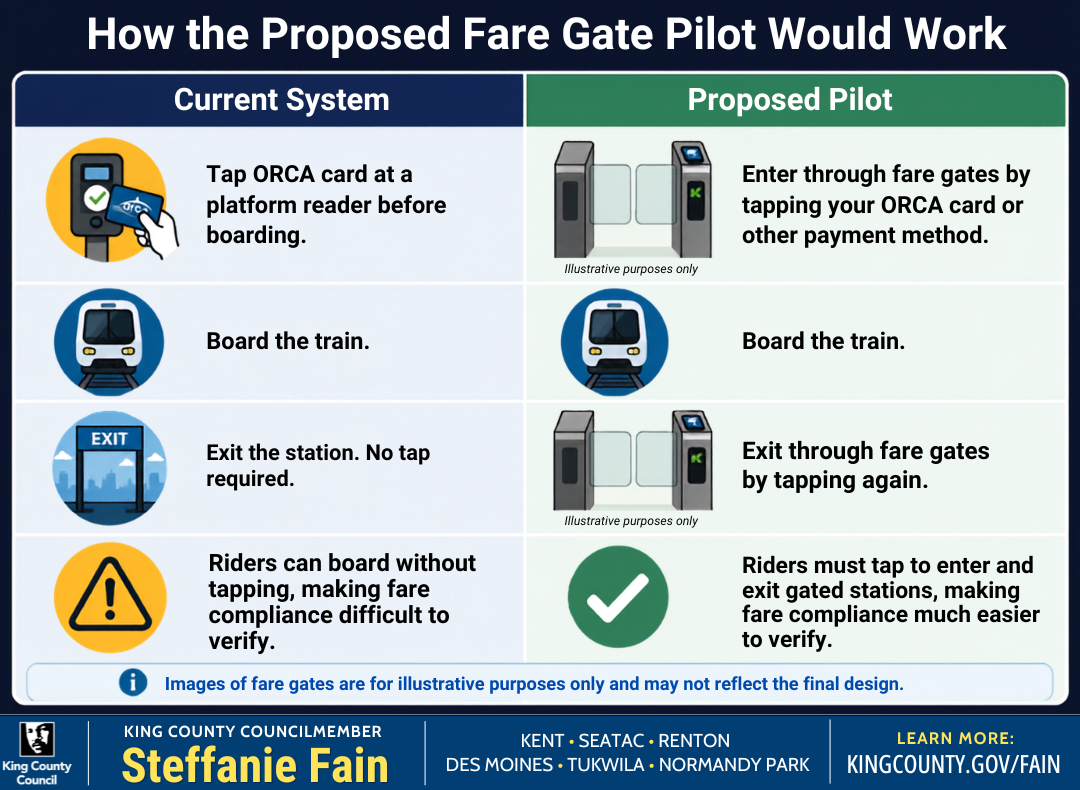
The proposed pilot would begin at stations where installing fare gates is both practical and likely to have the greatest impact. According to the study, those locations were selected based on three primary factors:
-
Station layouts that can accommodate fare gates
-
Strong projected financial returns from improved fare collection
Several important questions remain before any final decision, including accessibility for riders with disabilities, emergency egress, accommodations for youth and ORCA LIFT riders, customer education, and overall rider experience.
The Sound Transit Board is expected to consider the proposed pilot in August. I'll continue evaluating the proposal with a focus on improving both rider access and fare compliance before any final vote.

King County Regional Homelessness Authority
Last month, King County Executive Girmay Zahilay and Seattle Mayor Katie Wilson announced a proposal to reorganize how homelessness services are managed in our region.
Under the proposal, King County would once again oversee County-funded homelessness service contracts, while Seattle would manage the contracts it funds. The King County Regional Homelessness Authority (KCRHA) would continue leading regional efforts that work best across city and county lines, including coordinating federal funding, maintaining regional homelessness data, planning for severe weather, and managing the annual Point-in-Time Count.
The goal is to improve financial oversight while preserving the regional coordination needed to address homelessness effectively. King County and Seattle have also brought in an independent financial management team to strengthen financial controls, improve billing, and help ensure service providers are paid accurately and on time during the transition.
The Executive will present a more detailed transition plan on August 25. Residents should expect homelessness services to continue during the transition while financial oversight is strengthened. As that work continues, my priorities remain the same: keep services available for those who rely on them, strengthen oversight of taxpayer dollars, and ensure any new system delivers better accountability and better results.
New Inspector General Division
Residents deserve confidence that County tax dollars are spent responsibly. The Council also recently approved legislation to establish an independent Inspector General within the Office of Public Complaints to strengthen accountability across County government. The new office will help identify waste, fraud, abuse, and systemic issues while working alongside the County Auditor and Ombuds to ensure concerns are reviewed by the office best equipped to investigate them. Creating the office is only the first step, however, and implementation will continue over the coming months.
I successfully sponsored an amendment requiring a detailed implementation plan before the office is fully operational. The goal is to ensure the Inspector General can begin its work effectively while coordinating with existing oversight agencies, avoiding duplicative investigations, and giving residents a clear process for reporting concerns. The plan must address staffing, organizational structure, coordination with the County Auditor and Ombuds, complaint intake procedures, criteria for assigning investigations, implementation of a public hotline, and a phased timeline for launching the office.

Proposed Solid Waste Rate Increase
The Council is now reviewing a proposed 8.5% increase in residential solid waste rates. With many families already feeling the effects of rising costs for housing, utilities, and other necessities, I believe every proposed rate increase deserves careful scrutiny.
While the proposed increase would add about $0.73 per month for the average residential customer, even modest increases add up, particularly for seniors, families on fixed incomes, and others already struggling with affordability. I'm also concerned that the existing low-income discount program may not provide enough relief for households that need it most.
Before considering any increase, we must all understand both how the additional revenue would be used and what the Solid Waste Division has done to control costs before asking ratepayers to pay more. Among the questions I've asked are:
-
Why is the increase needed? The Solid Waste Division says the proposed increase is driven by higher operating costs, inflation, environmental requirements, and investments in maintaining and upgrading facilities. Officials also noted they reduced the original proposal from more than 10% to 8.5% after identifying savings.
-
How will the additional money be used? The Division says the additional revenue would help pay for day-to-day operations, maintain facilities and equipment, meet environmental requirements, and fund major capital projects. I have asked for a clearer breakdown of how the additional revenue would be spent.
-
What has been done to control costs? The Division says it reviewed its budget and found savings to reduce the proposed increase. I have asked for more information about those efforts and whether additional efficiencies could help keep rates lower.
-
Will the increase improve affordability for everyone? I'm particularly interested in whether the current low-income discount program provides meaningful relief for households struggling with rising utility bills. The Division shared that over 28,000 people used the program in 2025.
Before the Council considers any rate increase this year or in the future, we need to be clear on how the additional revenue will be spent, what steps have already been taken to control costs, and whether there are opportunities to reduce the impact on ratepayers. My priority is to ensure ratepayers understand where their money is going, that every effort has been made to control costs, and that any increase is both justified and as affordable as possible.

The Council will soon begin work on the County's fall supplemental budget, which adjusts this year's spending to reflect changing needs and priorities. While it does not create an entirely new budget, it provides an opportunity to respond to unexpected costs, redirect funding to higher priorities, and invest in programs and services that need additional support.
As I review the Executive's proposal, my priorities will be protecting essential public services, ensuring taxpayer dollars are spent responsibly, and focusing investments on the issues residents tell me matter most, including public safety, transportation, affordability, and government accountability.
Our office will also open an application for organizations seeking councilmanic grants to serve District 5 residents. We will share eligibility information, application instructions, and deadlines in an upcoming newsletter.
Could You Qualify for Lower Property Taxes?
Property tax assessment notices are arriving in mailboxes, making this a good time to review whether you qualify for property tax relief before next year's taxes are calculated.
If you're a senior, veteran, or living with a disability, you may be eligible for a King County property tax exemption or deferral that can significantly reduce your property tax bill. Recent changes to the income limits mean more homeowners now qualify for assistance.
Many eligible residents never apply because they assume they don't qualify or aren't aware the program exists. If rising housing costs are making it harder to stay in your home, I encourage you to check your eligibility, even if you've been turned down in the past.
My office is happy to help connect residents with the King County Assessor's Office and the resources needed to apply.
 Des Moines Waterland & Renton River Days. The Des Moines Waterland Parade and Renton River Days, two longstanding South King County summer traditions, brought thousands of residents together while supporting local businesses, nonprofits, and community organizations.
|
|
 Featuring Highline College President Dr. Penn and Councilmember Fain
|
|
Kent/Des Moines Station Housing Discussion
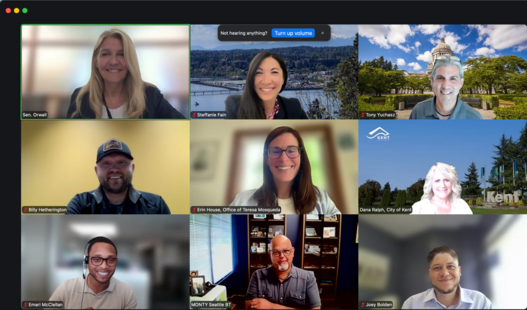
I joined local and regional partners, including Senator Orwall, Kent Mayor Dana Ralph, and leaders from LiUNA 242 and the Seattle-King County Building Trades, to discuss housing and redevelopment opportunities around the Kent/Des Moines Link station.
North Renton Neighborhood Association
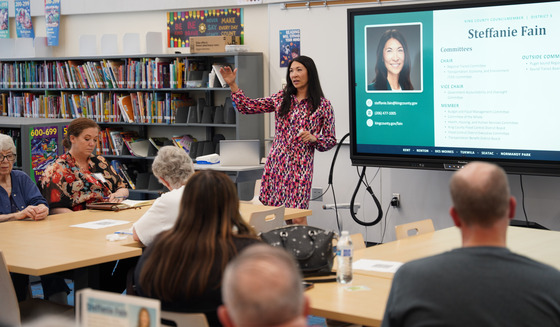
Residents asked thoughtful questions about transportation, housing, public safety, and the County budget. Those conversations help shape the questions I bring back to County departments.
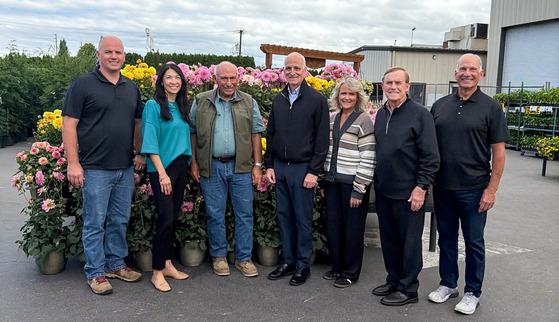
Local leaders and stakeholders, including King County Councilmember Pete Von Reichbauer, Kent Mayor Dana Ralph, Representative Adam Smith, and representatives from Carpinito Brothers Farm, met to discuss ongoing flood recovery efforts and lessons learned from this winter's flooding.
LIUNA Local 242 Training Facility
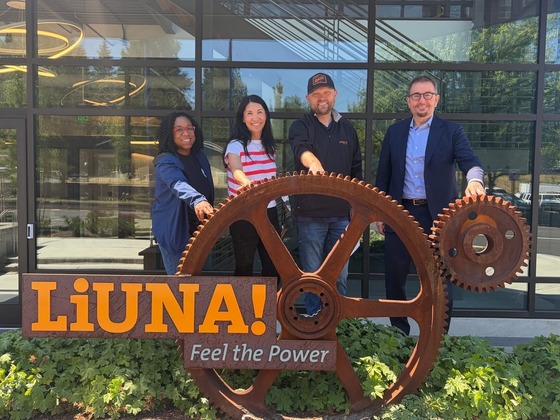
Visited LIUNA Local 242's new training facility with Renton Mayor Armondo Pavone. Skilled trades apprenticeships prepare workers for family-wage careers while helping build the roads, bridges, transit, and public infrastructure our region depends on.
 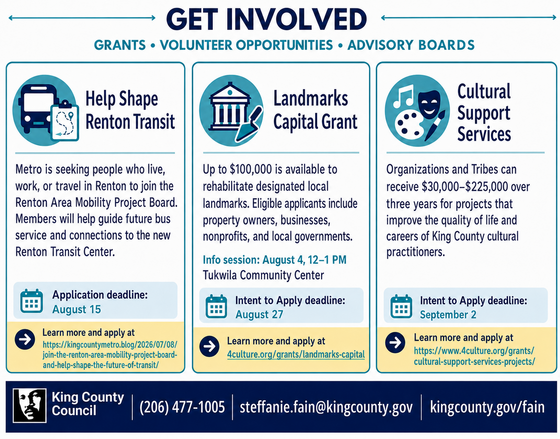
Learn more about the Renton Area Mobility Project Board Here
Learn more about the Landmark Capital Grant Here
Learn more about the Cultural Support Services Grant Here
In August, I'll continue sharing updates on the proposed fare gate pilot, the KCRHA transition plan, and the Council's work on the supplemental budget.
Whether you have a question, concern, or idea, I want to hear from you. You can also follow along on Facebook and Instagram for more frequent updates from around District 5.
|
|
|
Steffanie Fain
King County Councilmember, District 5
(206) 477-1005 Send me an email
www.kingcounty.gov/fain
|
|
|
|
|