|
West Point treats wastewater 24/7/365, but our focus shifts with the seasons. During the rainy “wet season,” staff focus on treatment operations. This is because the plant receives higher flows from both wastewater and stormwater. When summer arrives and rainstorms take a vacation from our region, flows drop. This dry‑season window allows us to make major progress on construction while keeping the plant fully operational.
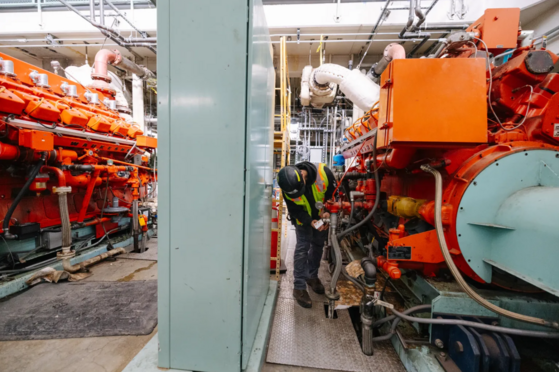
A crew member working around the engines of the Raw Sewage Pump Building.
Crews working on the Raw Sewage Pump (RSP) Replacement Project have been working late into the night. Night work is essential because flows are lowest during these hours. The four pumps together can move up to 440 million gallons of wastewater through the treatment process each day.
Starting this summer, crews are removing and replacing one RSP engine and pump at a time. Only one engine and pump can be replaced each dry season to make sure West Point can still treat its maximum permitted flow. The current engines have been humming since 1966! They can run on biogas from the treatment process and propane when biogas isn’t available. The new engines will be fully electric, more powerful, and efficient. This allows us to use just three pumps to handle 440 million gallons. Work continues through 2029.
While most of this work is behind the scenes, people in the area may see lights, trucks driving through, or hear noises. As construction picks up, we’ll keep the community informed and share updates about any potential impacts.
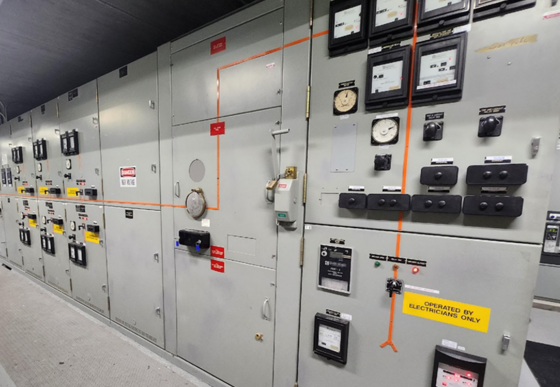
Electrical control equipment within West Point.
West Point Treatment Plant was first built in the 1960s, with major upgrades added in 1991. Many parts from before the 1991 expansion now need to be replaced as soon as possible. Even much of the electrical equipment added in 1991 is old and getting worn out. The project will replace about 830 electrical components. These critical equipment helps ensure plant reliability, improve safety, and allow us to treat wastewater and protect the environment. Without these investments, we could risk potential overflows or permit violations.
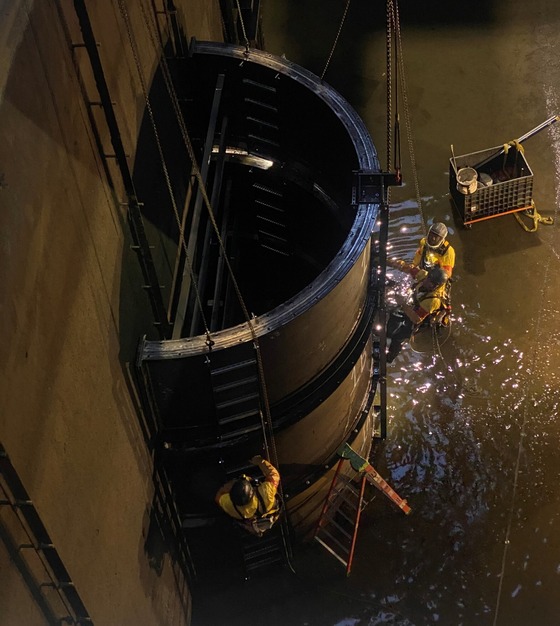
Contractor crews build a cofferdam to move equipment. A cofferdam allows crews to create a dry and safe space to continue working around water.
The EPS project is now into its second construction season. Last year, crews removed and replaced one of the four EPS gates. These gates are large, roughly 8 feet by 8 feet, and nearly 40 feet underground. The project team plans to complete replacing the remaining three gates this year.
The EPS system pumps fully treated wastewater out of the plant and to Puget Sound. Plant staff need the ability to shut off individual effluent pumps for maintenance. Otherwise, they must shut down the entire EPS system to work on one pump. The project will improve safety and allow for easier maintenance.
To complete this work, crews must work at night when flows are lowest. They install cofferdams to keep the work area dry and use a temporary bypass pipe to keep the plant running safely during construction.
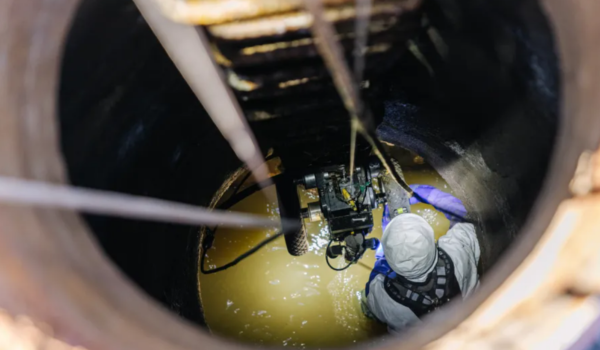
Crew member Aaron Squires stands at the edge of a maintenance hole in Redmond, pulling on a pair of waders.
Our 15-member conveyance inspection team works year-round across our service area to maintain and survey the pipes in our regional system. They follow a 10-year cycle to inspect every inch of pipe, building a record of how conditions change over time. Some sections are checked more often, about every three years, depending on age, material, or location. In 2025 alone, the team completed nearly 25 miles of pipe inspection and cleaned more than 40,000 feet of sewer lines. Inspecting pipes and repairing them before they fail protects public health and saves ratepayers money.
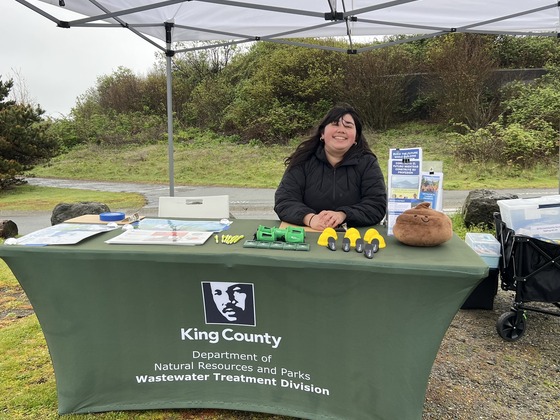
West Point team members at the Discovery Beach pop-up.
In April, West Point staff hosted a pop-up at the Discovery Park Beach for Earth Day. Thank you to everyone who stopped by and chatted with our team. Didn’t have the chance to see us? This summer, the team will be returning to the Magnolia Farmers Market and Seafair Indian Days Powwow.
- Pop up at Discovery Park – South Beach area on Friday, June 26
- Seafair Indian Days Powwow on Friday, July 17 to Sunday, July 19
- Salmon Days on Saturday, Aug. 15
- Magnolia Farmers Market on Saturday, Sept. 26
We’ll be sharing fun facts about the wastewater treatment system and updates about the ongoing projects at West Point. Stay tuned for more dates and we hope to see you there!
|