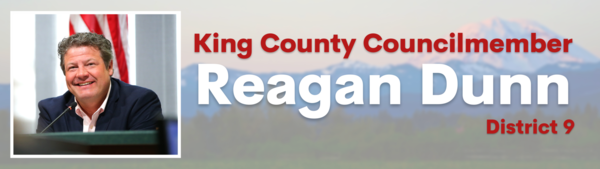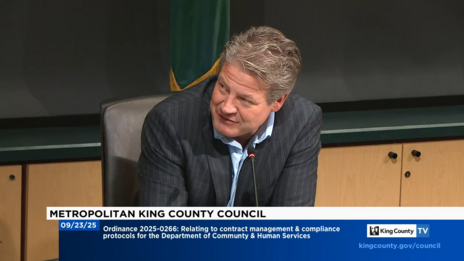
Councilmember Dunn address the King County Council regarding his Grant Oversight Legislation.
The King County Department of Community and Human Services (DCHS) has officially implemented several new policies and procedures to strengthen financial stewardship and oversight of public dollars. The department is launching a Provider Training Series to better prepare and support small community-based providers.
These reforms stem directly from the audit I requested years ago, which found widespread financial mismanagement within DCHS, including improper payments, potential fraud, and serious gaps in oversight in contracts. Following the report, I introduced legislation, which was passed unanimously by the King County Council, to overhaul oversight of taxpayer-funded grants within DCHS.
This announcement also comes on the heels of actions I took last week, joining Councilmember Rod Dembowski and Chair Sarah Perry in calling for new reforms to improve financial oversight and accountability in King County. This follows a joint report released last week by the King County Auditor and Ombudsman that outlined recommendations to strengthen King County’s financial security. The report was produced as a result of an amendment from Councilmember Dembowski to my legislation last year.
Read more about the report here: Dunn, Dembowski, Perry call for financial oversight reforms after Auditor, Ombuds report
It’s good to see DCHS begin implementing the Auditor’s recommendations to strengthen financial accountability. There’s still more to be done, but this is clear progress in the right direction.
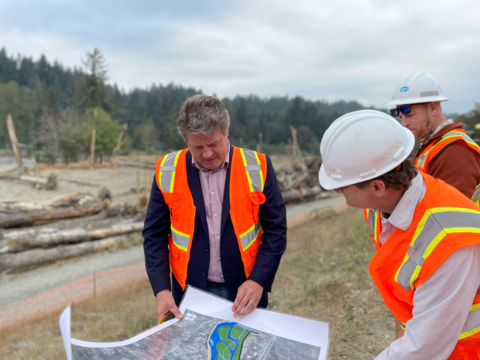
Councilmember Dunn visits Cedar River project site.
The historic flooding we experienced in December 2025 underscored the significance of prior flood risk reduction investments and the need to fund new repairs and recovery efforts. As Chair of the King County Flood Control District (KCFCD), I am proud that this year we are prioritizing funding for projects that directly respond to the recent flooding impacts, helping communities recover, rebuild smarter, and better prepare for the future.
The KCFCD is making more than $14 million available in 2026 to support local projects that reduce flood risk, protect communities, and enhance the health of our rivers and shorelines.
Applications for the Steve Bleifuhs Memorial Flood Reduction Grant Program opened on April 2nd and must be submitted by May 22, 2026. LEARN MORE HERE.

In October 2024, the Flood Control District’s Board of Supervisors renamed the program in honor of Steve Bleifuhs (pictured here), a longtime King County floodplain management leader. Bleifuhs, who passed away in July 2024, was instrumental in shaping flood hazard management in the county, including the development of the 2006 King County Flood Hazard Management Plan. Renaming this program in Steve’s honor was an important step in recognizing his vision and commitment to flood risk reduction.
|
This competitive grant program supports a wide range of projects across King County, from improving stormwater systems in urban neighborhoods to restoring shorelines and replacing culverts that both reduce flooding and improve fish passage.
What Types of Projects Are Eligible?
The program supports projects in four categories:
- Flood Reduction
- Urban Streams
- Coastal Erosion and Coastal Flooding
- Culvert Replacement and Fish Passage Restoration
Projects must directly address existing or potential flooding while delivering broader public benefits, such as protecting infrastructure, improving water quality, restoring habitat, or maintaining safe access to homes and businesses.
Examples of eligible projects include:
- Upgrading aging or undersized stormwater systems
- Addressing flooding from creeks, lakes, and blocked drainage systems
- Relocating or protecting structures in coastal flood zones
- Replacing culverts to improve flow and restore fish passage
To learn more, attend the information session, or begin your application, visit the Steven Bleifuhs Memorial Flood Reduction Grants webpage
 King County planners will post the first draft of the Greater Maple Valley/Cedar River Subarea Plan online on April 15. This draft represents an important milestone in shaping the future of this community. It reflects input gathered from residents, stakeholders, and partners over several years.
The plan is designed to guide growth while preserving the area’s rural character, natural resources, and quality of life. It outlines a long-term vision for land use, housing, transportation, environmental stewardship, economic development, and community services in the area.
Community members are invited to review the draft plan and share their feedback during the public comment period on the county's public outreach website.
A virtual information meeting will be held at 6 p.m. on Wednesday, April 23 to help residents better understand the plan and ways to provide input. Find information on how to join on the public outreach website linked above.
Read more on the King County Local blog
|