|
After a brief pause since the end of 2025, we’re excited to reconnect and share the progress we're making throughout the region.
From celebrating a quarter century of salmon recovery to converting a 122-year-old wooden railroad trestle into a trail bridge in Bellevue and wrapping up construction of a major project to improve recycling and solid waste disposal options for people and businesses in South King County, our teams continue delivering lasting benefits for the people, fish, and wildlife of King County.
Here’s what we’re highlighting this month.
Salmon recovery anywhere is challenging. Salmon recovery in one of the largest metropolitan regions in the country after decades of development and growth is daunting.
When nine salmon runs in the Pacific Northwest were listed as threatened under the Endangered Species Act in 1999, our department and our partners developed a first-of-its-kind approach to salmon recovery actions that unified land-use regulations, flood-risk reductions, and environmental protections.
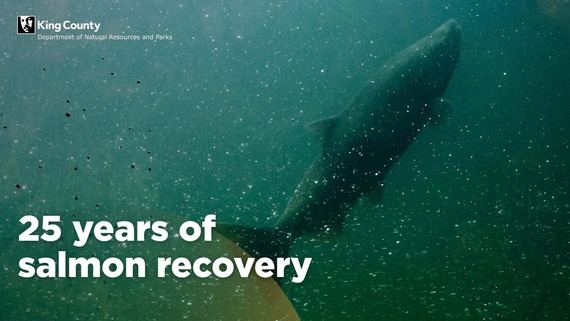
In this retrospective video, we show how an enduring partnership has reconnected 730 acres of floodplain, completed 719 salmon recovery projects, and planted native vegetation in nearly 1,500 acres of habitat while also improving water quality, reducing flood risks, and expanding public access to greenspace.
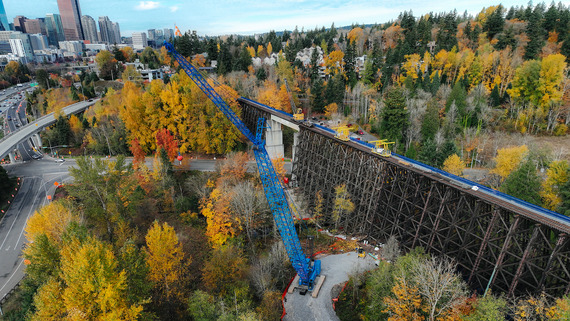 Exciting progress is unfolding at the Wilburton Trestle in Bellevue! Construction crews are removing old railroad decking, replacing deteriorated wood, and reinforcing the 120-year-old structure with modern safety upgrades designed to improve resilience during earthquakes.
The project will convert the iconic 1,000-foot-long structure – the longest wooden trestle in the Pacific Northwest – into a key segment of the emerging 42-mile Eastrail.
Read the latest construction update on our blog.
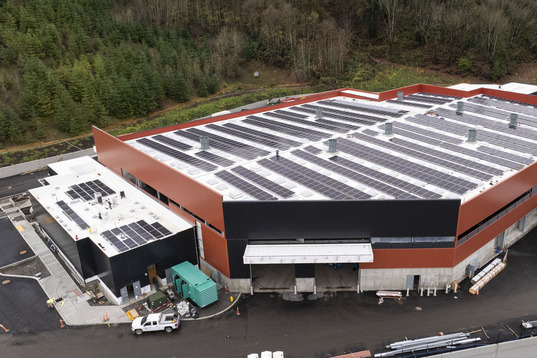
When the South County Recycling and Transfer Station in Algona opens this summer, customers of King County’s newest solid waste facility will find convenient waste disposal and a wide range of recycling options. They’ll also find a station designed with a focus on environmental stewardship.
The new station includes sustainability features such as rooftop solar panels, improved stormwater treatment systems, efficient traffic flow for customers, rainwater collection systems and other environmental upgrades that reflect our stewardship commitment. Construction also included restoration work near the site to improve wildlife habitat and strengthen protections for nearby waterways.
Replacing the smaller and less efficient Algona Transfer Station, the new South County Recycling and Transfer Station represents a long-term investment in public health, environmental stewardship, and reliable solid waste services for the growing South King County region.
Learn more about the environmental benefits of the new station.
|