|
As 2025 comes to a close, we’re taking a look back at King County’s climate action work -- made possible in partnership with community members, local and national organizations, and other cities, towns, and agencies. We’re excited to celebrate direct impacts for the people who call our region home: cleaner indoor air quality, more efficient heating and cooling, more shade on hot days, and support for grassroots efforts on food justice, heat safety, and youth climate education. Here are 25 milestones for 2025:
 |
|
Passed King County’s 2025-2030 Strategic Climate Action Plan: King County councilmembers unanimously adopted the plan in October, formalizing the County’s climate action roadmap for the next five years. Frontline communities – people most impacted by climate change – contributed time and expertise to shape solutions, alongside County staff, sustainability agencies, environmental action groups, local businesses, and other partners. Read about the SCAP, which outlines efforts to prepare for climate impacts, support sustainable and resilient frontline communities, and reduce greenhouse gas emissions, here: kingcounty.gov/SCAP |
 |
|
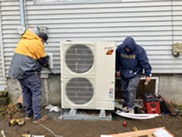
Installed heat pumps & made home upgrades in 150+ households making low-to-moderate-incomes: King County’s Energize program launched in 2024, installing low- to no-cost heat pumps in single family homes in White Center and Skyway. In 2025, Energize expanded to serve households across south King County, as well as in-home childcares and adult family homes – providing reliable heating and cooling to more than 67 people who didn’t have it before. This includes 29 households who had broken heating systems. |
 |
|
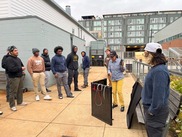
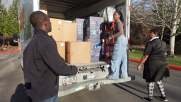
Expanded King County JumpStart workforce program: The King County JumpStart program offers a pipeline for underrepresented communities to enter the green workforce, providing paid work opportunities, additional training, and wraparound services including covering the costs of certifications and equipment. King County doubled the number of local contractors providing paid work-based learning, and prepared to expand in 2026. New offerings will include a King County Parks cohort, along with programs in Kitsap, Pierce, and Snohomish Counties, using a $50 million region-wide EPA Climate Pollution Reduction grant. To date, 72% of program graduates have received a job offer following their training. |
 |
|
Improved indoor air quality for thousands of people living near airports: King County partnered with community-based organizations to distribute more than 5,000 air purifiers, plant hundreds of trees and shrubs in urban forests, provide home upgrades, and distribute indoor air quality education for people living near airports. The work was funded using a $6 million grant from the Department of the Ecology supported by the Washington state Climate Commitment Act. |
 |
|
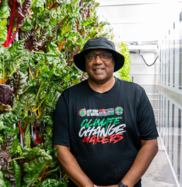
Awarded $204,000 in grant and sponsorship funding to 26 frontline community organizations doing climate work: Through the Community Climate Resilience Grant program, King County awarded $180,000 to organizations working on food systems and food security, housing security and anti-displacement, energy justice and utilities, community health, emergency preparedness, and other issues intersecting with focus areas in King County’s Strategic Climate Action Plan. King County also distributed $24,000 in sponsorships to support community-led climate work. Supporting existing, community-led solutions is key to King County’s approach to climate action, while also ensuring funds are spent on efforts providing direct services and programs through ongoing tracking and personal check-ins. One of this year’s grantees, African Young Dreamers Empowerment International, used their funds to support a community garden growing managu, an African vegetable, which was served at a local event and donated to a local senior shelter. |
 |
|
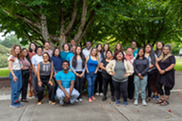
Convened new group of Climate Equity Community Task Force (CECTF) members and partnered on 8 Climate Justice Learning Series Events: The CECTF, a group of frontline community leaders, convened to help shape County policymaking on climate action work. They also partnered with King County staff to offer “Climate Justice Learning Series” events for staff and community, helping everyone understand how climate intersects with other issues and how to build power for community-based climate resilience. One example: “City Planning and Climate Justice,” which focused on zoning, housing justice, comprehensive plans, and the Growth Management Act, and how to get involved in decision-making around those issues. |
 |
|
Voters pass King County Parks levy: Voters overwhelmingly approved the 2026-2031 King County Parks Levy, which will protect critical green space and support local programs for community. Much of Parks’ day-to-day work reduces emissions and supports climate resilience, from stewarding forests that capture carbon to offering safe spaces for people to shelter during hot or cold weather. In addition to maintaining, expanding, and enhancing regional parks and trails throughout King County, the levy will create more equitable access to forest parks in urban heat islands, help cities create more splash pads, and install park amenities that are climate resilient. |
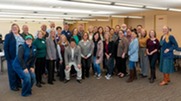
Supported Puget Sound cities, towns and Tribes with Small Communities Cohort Program and Puget Sound Climate Preparedness Collaborative: The Puget Sound Climate Preparedness Collaborative is a network of 30+ local governments, Tribes, and organizations working to build resilience to the impacts of climate change, chaired by King County and the Point No Point Treaty Council. This year, King County grew staffing and support for work across jurisdictions, funded by a $2 million grant King County secured from NOAA. Work of the Collaborative included launching the Small Communities Cohort Program, which offers technical assistance and support for climate projects in towns, small cities, Tribes, and other jurisdictions.
 |
|
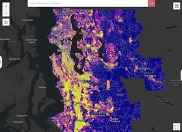
Launched Heat and Health Data Explorer Tool: Extreme heat is most common weather-related cause of illness or death, and King County doubled down on efforts to prepare for and respond to heat events following the deadly heat dome in 2021. This year, King County launched a Heat and Health Data Explorer tool to help organizations and governments identify areas most vulnerable to extreme heat. This information can be used to support evidence-based decision-making for community planning ahead of extreme heat events. |
 |
|
Led King County-Cities Climate Collaboration (K4C), a coalition including king County, the Port of Seattle, and 22 cities that make up 90% of the region’s population: K4C convenes elected officials to push for climate-friendly policies and unites staff from different governments to coordinate on advancing climate planning, strategy, tracking, and transportation work. K4C has contributed to the passage of impactful state policies such as the Clean Fuels Standard and the Recycling Reform Act, has streamlined regional inventory and tracking of greenhouse gas emissions, and continues to offer a forum for shared knowledge about running programs to serve frontline communities. |
Filed for a $6.5 million clean energy tax credit, earning back funds for King County after completing climate-friendly work: Direct pay allows tax-exempt entities, including local governments and nonprofits, to receive federal clean energy tax credits as a cash payment from the IRS. In November, King County filed a claim for 200 electric vehicles, three solar projects, nine EV charging ports, and a battery storage project at West Point – totaling $6.53 million in revenue expected to return to King County.
Increased climate skills training and strengthened local networks: King County worked to strengthen staff and community climate training and networks with a variety of programs and events. That included enrolling more than 40 staff in the Envision certification program, 19 staff in the Green Janitor Education program, and 30 staff in the TRUE Advisor program. King County also sponsored 5 NextGen Climate interns and co-hosted a Coalition for Climate Careers convening during PNW Climate Week. That event brought together more than 100 climate and workforce partners to network and strategize about filling gaps in the workforce pipeline.
 |
|
Launched 2025-2030 Climate and Workforce Strategy: The King County Council unanimously passed the new Climate and Workforce Strategy, which outlines paths to connect frontline communities to living-wage opportunities, building a skilled and diverse workforce across the career spectrum. The Strategy, designed in collaboration with County departments and local partners, details steps to boost the workforce and economic benefits driven by climate action over the next five years, in line with the County’s Strategic Climate Action Plan. |
 |
|
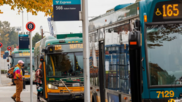
Invested in transit service across King County: King County Councilmembers passed a budget that will add more than 400,000 service hours through King County Metro between 2026-2027, doubling down on efforts to increase accessibility and responding to an increase in ridership. Taking transit instead of putting a single-vehicle gas-powered car on the road is one of the best ways to reduce personal transportation emissions and a simple way to contribute to climate action! |
Updated code requirements to promote green building across King County: King County’s Strategic Climate Action Plan includes a number of measures to improve energy efficiency and reduce waste across King County’s planning, design, construction, remodeling, renovation, maintenance, and operations work. Updates were made to the King County Code to formalize requirements and ensure accountability for these practices. This came in addition to ongoing education efforts about the Green Building Ordinance, and sharing of the Green Building Handbook.
Launched the Green Building Equity & Social Justice Training Series: King County’s capital projects are uniquely positioned to impact King County’s equity and sustainability goals in the ways that they intersect with our local environment, communities, residents, and economy. King County launched an eLearning course to help project managers incorporate equity and social justice into their work on these projects.
Department of Commerce grant funds 50 new EV chargers and counting: King County and partners will have installed 50 new EV charging ports in 6 different fleet and multifamily housing locations by the end of 2025. Another 220 ports are currently in design or construction at 4 multifamily and 11 fleet locations, and will finish in 2026. Work on over 80 public fast-charging ports are underway at 14 locations across the County and will conclude from May through November 2026.
 |
|
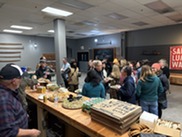
Salvaged lumber gathering: King County and Seattle Public Utilities sponsored an event at Re+ grantee Earthwise’s Salvaged Lumber Warehouse in SoDo, bringing together 50+ salvaged lumber enthusiasts. This was an opportunity to build networks and work toward efforts to reduce waste through salvaged lumber. King County plans to hold additional salvage-related meet-ups, trainings, grant opportunities, and other programs in 2026. |
Collaborated with other counties to expand Energize services and coverage area: King County, in collaboration with Kitsap, Pierce, and Snohomish Counties, launched new programs to offer heat pumps and other upgrades in multifamily homes and community spaces, with installations expected to begin in 2026. The program is funded through an EPA Climate Pollution Reduction grant, which will also support efforts to salvage lumber and reduce embodied carbon.
Helped residents reduce energy costs: Provided weatherization upgrades to 87 households to reduce energy bills and improve indoor air quality, and began solar installations to help reduce energy bills. Connected residents with utility discount programs, reducing electricity costs for each participating household by 60 percent. King County also helped 57 households convert away from oil heating, representing a community savings of up to $57,000 annually.
 |
|
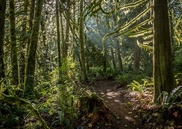
Conserved more than 3,000 additional acres of open space: The King County Council approved the purchase of more than 3,000 acres of open space through land conservation awards, protecting that land for climate resilience, agriculture, environmental justice, recreation, and habitat restoration. This supports the goals in King County’s Strategic Climate Action Plan, Land Conservation Initiative, Local Food Initiative, and Clean Water, Healthy Habitat strategies. |
 |
|
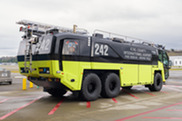
King County unveils hybrid electric airport fire truck: This year, King County replaced an aging fire vehicle at King County International Airport-Boeing Field with a hybrid electric fire engine, reducing exposure to diesel exhaust for firefighters and contributing to better air quality and reduced climate pollution. |
Saved money through PSE Green Direct Extension: King County councilmembers approved extending an agreement with Puget Sound Energy (PSE) that energy purchased for county operations should come from renewable sources. This is expected to save the County more than $1 million, while reducing King County’s carbon footprint. Council also approved an agreement for the County to sell credits generated by County electric fleets through the Washington State Clean Fuel Program. King County is expected to generate revenue exceeding $500,000 annually across several County departments.
 |
|
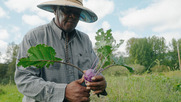
Updated Local Food Initiative to meet current needs: King County updated its Local Food Initiative to address some of the most urgent challenges facing the local food economy, including access to hunger relief, rising farmland cost, a lack of food distribution infrastructure, and increasing threats from climate change. Top priorities moving forward include expanding local food markets by investing in people and programs; developing long-term, sustainable funding for farm-to-community and food access programs; making farmland more affordable; and helping farmers adopt climate-friendly and regenerative farming practices. |
Achieved LEED for Cities and Communities Platinum Certification: LEED certification offers a third-party assessment of climate leadership, and King County secured the highest distinction, scoring high in greenhouse gas reductions, transportation electrification, and categories including Innovation and Regional Priority. Some of the strategies that contributed to the score include driving community-led solutions, guided by the Climate Equity Community Task Force; reducing emissions from homes, government buildings, and community spaces through deployment of a $50 million Climate Pollution Reduction Grant; integrating workforce development into climate action efforts; and resilience planning, both in King County and in collaboration with regional partners through the Puget Sound Climate Preparedness Collaborative and King County – Cities Climate Collaboration (K4C).
One final note: this year also brought exciting change to King County as climate champion Girmay Zahilay took office as King County Executive. Executive Zahilay and his team have started to implement their new staffing structure, and as 2026 begins, much of the work previously housed in the Executive Climate Office will be moving into the King County Department of Natural Resources and Parks, King County Metro, and the Department of Executive Services. Nothing is changing about King County’s commitment to climate action – this change is about how the work is structured. King County looks forward to continuing to work with all of our climate and conservation partners in the New Year! We hope you have a restful holiday season.
|