|
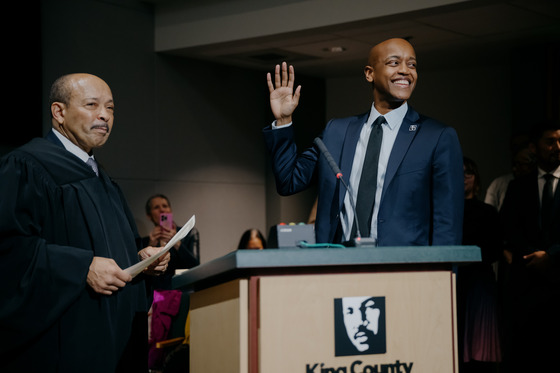
Picture of U.S. District Court Judge Richard A. Jones swearing Girmay Zahilay in as King County Executive.
On November 25, the King County Council witnessed the swearing in of our former colleague and our new King County Executive Girmay Zahilay. The new Executive took over earlier than normal because our previous elected executive, Dow Constantine, resigned his position earlier this year. I look forward to working with Executive Zahilay in the coming years, building upon the strong relationship that we established as Council colleagues. In the years to come, I am excited to further our shared goal of making King County a thriving, healthy community for ALL residents.
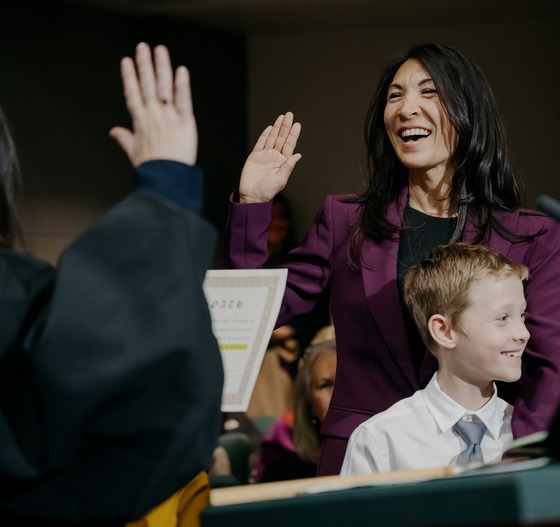
Picture of Steffanie Fain being sworn in by Judge Rebecca Robertson as District 5 King County Councilmember.
Welcome Councilmember Steffanie Fain! Councilmember Fain was also sworn in early following her election to represent the residents of District 5. I look forward to working with her. I look forward to tackling issues affecting residents with you and your District 5 team. Councilmember Fain brings a wealth of knowledge to the Council, having served on the Board of Trustees for Harborview Medical Center as a community leader and advocate for health care access. Congratulations!
Picture of Councilmember Rhonda Lewis on the dais in Chambers following her appointment.
Following Executive Zahilay’s departure from his seat on the King County Council, the council appointed Rhonda Lewis to serve as the District 2 Councilmember until a new councilmember is elected in November 2026. Councilmember Lewis brings a wealth of knowledge and direct experience serving the residents of District 2. I am excited to work with her in this new role. Congratulations to Councilmember Lewis!
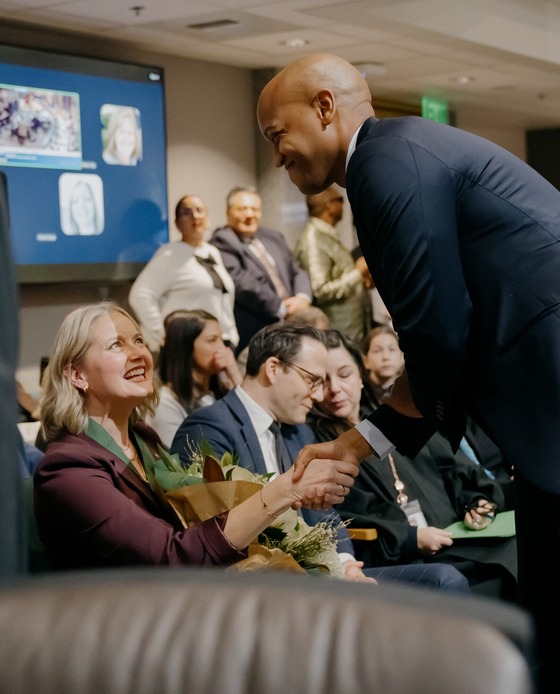
These changes to the composition of the Council also led to some important milestones: with the election of Councilmember Fain and the appointment of Councilmember Lewis, women are now the majority of the Council for the first time in its history. Moreover, Councilmember Fain is the first Korean-American to serve on the Council and Councilmember Lewis is the first African-American woman to serve on the Council. We are thrilled to see the Council reflect the diverse communities across our county.
Along with all of these transitions, it was also a time for the Council to select new leadership. My colleague Councilmember Sarah Perry was elected to serve as chair of the Council, and I was honored to have been selected as one of two Vice-Chairs for the Council, along with Councilmember Reagan Dunn.
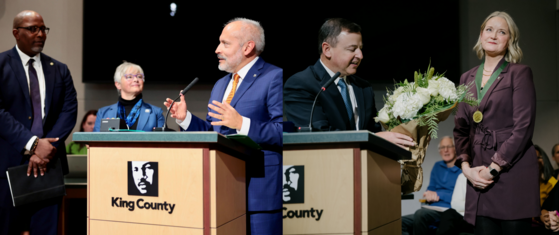 We also gave a heartfelt thank you and farewell to now former King County Executive Shannon Braddock and District 5 King County Councilmember De’Sean Quinn for their public service and diligence in representing the residents of King County. I wish both of them the best in their future endeavors. I am grateful for everything they contributed to the well-being of our county residents and know they will continue to be active community leaders.
 After an intense seven weeks of deliberations, the Council voted on November 18 to approve the county’s two-year budget for 2026 and 2027. Throughout the budget process, I participated with residents, councilmembers, and county staff at two dozen committee and Budget Leadership Team meetings, an evening public comment hearing, and a town hall at North Seattle College with Budget Chair Councilmember Rod Dembowski. My team and I also read hundreds of emails, talked with and responded to constituents, and met with stakeholders, all of whom shared important feedback about budget priorities.
At the end of it all, I can share that this budget prepares King County to maintain vital and core services, enhances community safety, and stabilizes homelessness services, especially for youth and young adults.
In my September newsletter, I identified some of my top issues in this budget cycle. Here’s how they will be supported in this budget:
-
Safety and security on public transit – The approved budget secures $2.4 million for a new diversion program partnership for people referred by Metro police and security, expands services to address challenges on transit, supports transit service along the Waterfront, and assesses Access Paratransit, which is vital to ensuring that this service meets the needs of those who rely on it.
-
Mitigating harm from federal cuts – The budget sets up a mechanism for the executive to create a reserve to mitigate the possible loss of federal homelessness services funding, establishes a reserve of $31 million to offset the loss of Medicaid payments to Harborview Medical Center, and calls for a report on steps that King County is taking to help residents retain health care coverage and assess impacts on the behavioral health system.
-
Investing in social services – Includes $13 million for food banks and other providers, $1.6 million to maintain civil legal assistance capacity and expand know your rights trainings, and $17.2 million for shelters, tiny home villages, and youth homelessness programs.
What is next – While we've made key investments to sustain vital services, including youth homelessness programs and our county’s legal system, our capacity to expand critical services in areas that will face increasing pressure in the coming years is limited. To navigate these challenges, collaboration with our city, state, and local partners will be essential. I look forward to working with Executive Zahilay and my council colleagues to keep these issues at the forefront of our work with those elected leaders.
To read more about these and other investments in community safety, transit, housing, health, and county operations included in the 2026-27 Biennial Budget, please visit the Council’s budget portal.
Investing in our Residents
One of the joys of my work is the opportunity to meet and learn about the many ways that people are working to enhance the quality of life for residents in District 4 and King County broadly.
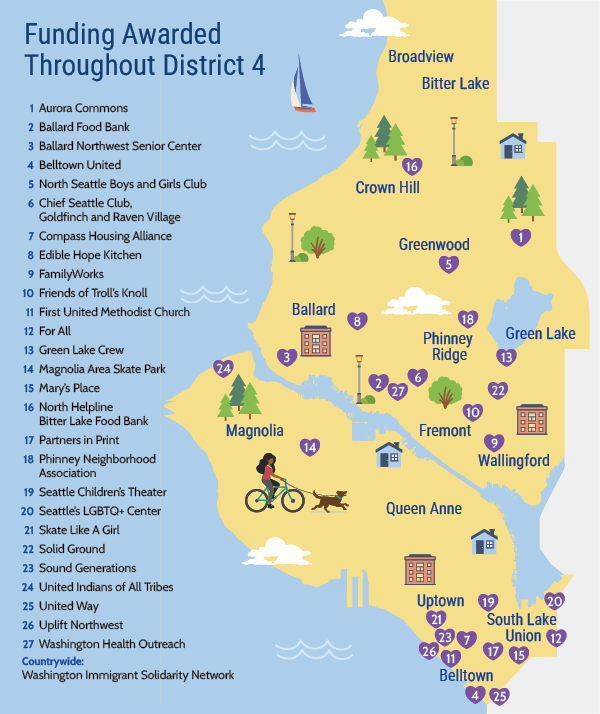
Recipients of District 4 funding in the 2026-27 budget and where to find them in the district.
Every year, Councilmembers award grants to support important work happening in our districts. Interested organizations serving District 4 can share their proposals with me by completing an Expression of Interest form, the opening of which I announce via my e-newsletters and on social media. This round, our office received 49 proposals from 40 distinct organizations. In this budget, we were able to award $2.9 million in operating and capital funds to 27 organizations.
I’d like to highlight just a few grantees and how they will use these funds to support their work and District 4 residents.
Click on image for source.
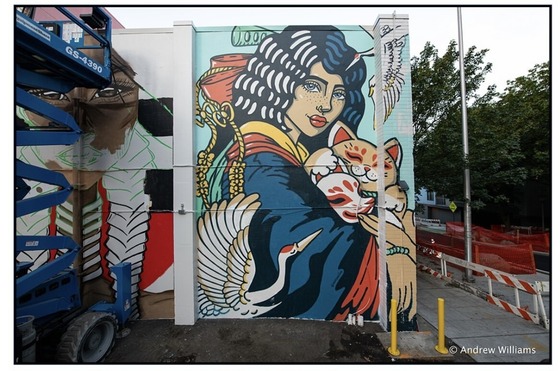
Belltown United – A community-led coalition representing residents and businesses, Belltown United works to ensure that a beloved part of our community is vibrant, healthy, and diverse. Their work highlights the neighborhood by hosting events that draw attendees from across the county, projects that beautify the area, and welcome all to enjoy everything that Belltown has to offer.
How Will the Grant Support Their Efforts?
These resources will support the Belltown Mural Festival. While only begun in 2024, the Belltown Mural Festival is an important community initiative that draws artists and attendees from around the region and beyond. Over the past two years, over 20,000 people have been involved with the Mural Festival and related events, including block parties, neighborhood walks, outdoor movies, and community clean-up events.
Click on image for source.
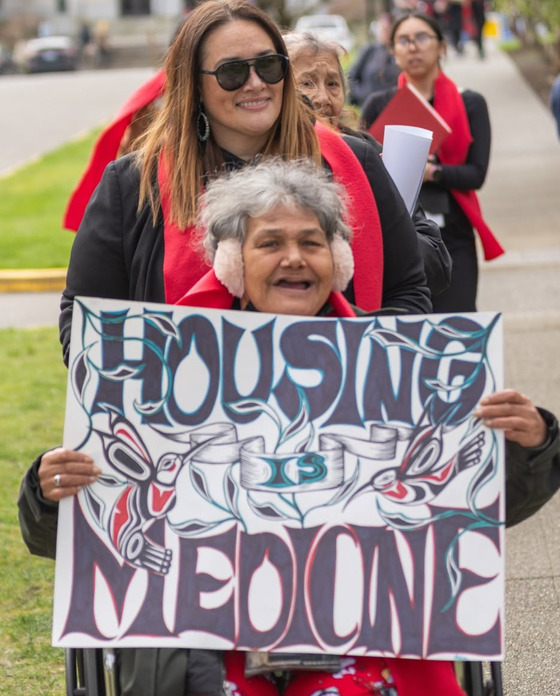
Chief Seattle Club – As a Native-led housing and human services agency, Chief Seattle Club leads with Native values to provide culturally appropriate and affirming resources. Chief Seattle Club provides housing and housing assistance, as well as health care, legal aid, and cultural programs to support stability, healing, and community for urban Native people.
How Will the Grant Support Their Efforts?
Chief Seattle Club operates two housing communities in District 4. Goldfinch provides stable housing for Elders, paired with wraparound health, wellness, and engagement with community. Raven Village provides safe shelter and housing, paired with culturally responsive services.
Click on image for source.
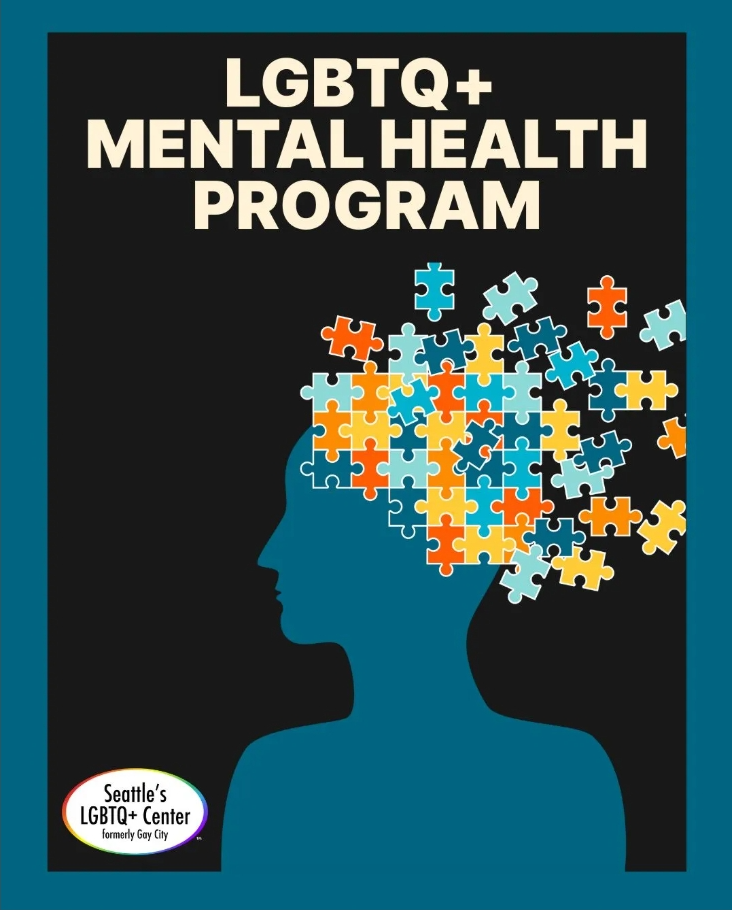
Seattle’s LGBTQ+ Center – With a commitment to promoting self-determination, liberation, and joy, Seattle’s LGBTQ+ Center provides affirming health, wellness, resources, youth-support, and art services for LGBTQ+ residents. As a by-and-for organization, all their programming is decided upon based on community input.
How will the Grant Support Their Efforts?
This effort will enhance mental and behavioral health care services through structured groups, care integrated into health care services, and peer-to-peer training, which is the number one request from community members. These resources will support community members through a variety of care options, including individuals experiencing a mental or behavioral health care crisis.
 Unveiling the Torrent
I was thrilled to join hockey players, team staff, and the media as they revealed the name of Seattle’s first professional women’s hockey team: Seattle Torrent! As a sports fan, I was thrilled to be a part of this moment and am excited to see the team on the ice! Thank you to Professional Women’s Hockey Legue Seattle for bringing women’s hockey to our region and for inviting me to this launch event.
Group photo with all the attendees who joined the celebration.
Commemorating the 80th Anniversary of Korea’s Liberation
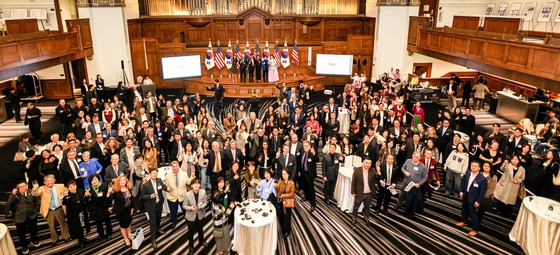
I attended an event to mark the 2025 National Day of the Republic of Korea and commemorate the 80th Anniversary of Korea’s Liberation alongside other community members, elected officials, and leaders. The event was meant to honor the sacrifices many made when Korean citizens were fighting to liberate themselves from Japanese colonial rule.
Speaking with Undocumented Students
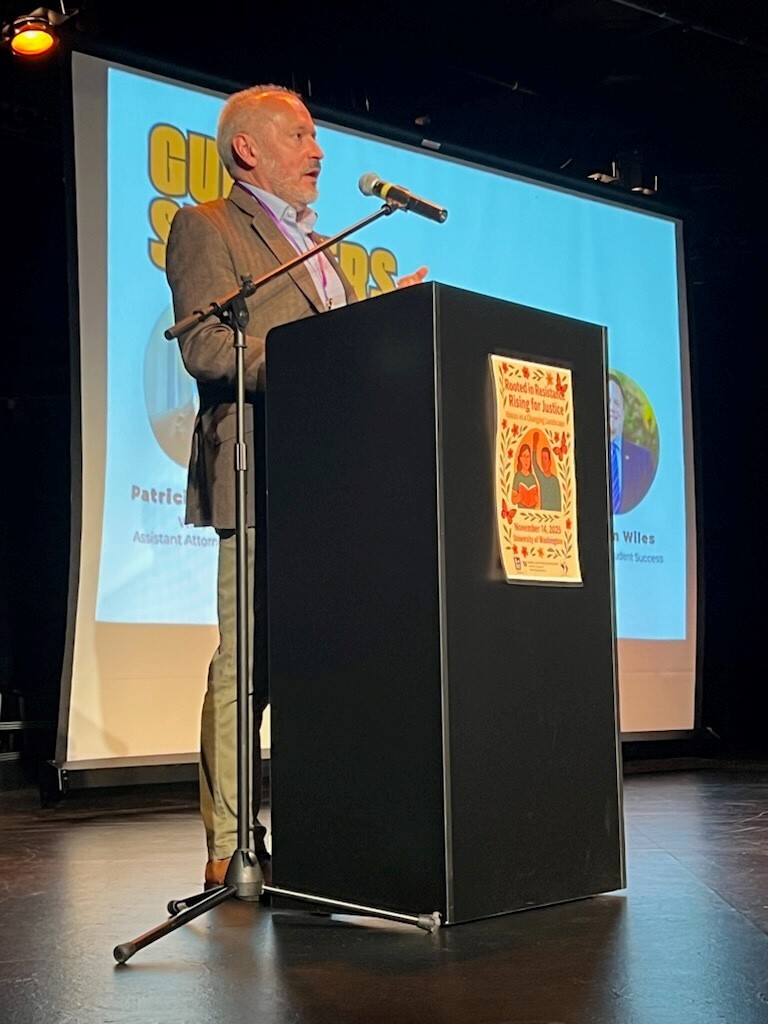
With immigration policies shifting more than ever and as an immigrant myself, I was thrilled to join students at the University of Washington and colleges around the state for this year’s Undocu Summit. This is a statewide gathering where students, educators, and advocates come together to share tools, push for meaningful policy, and celebrate the strength of undocumented communities. At this event, the University of Washington gathered to reaffirm their commitment to ensure access, equity, and opportunity for undocumented students. I hope that students left this conversation with a sense of solidarity and unity.
 Advocating for Housing
Last month, the federal department of Housing and Urban Development (HUD) released an application for the department’s Continuum of Care (CoC) grant program. Funding from this program provides our region with over $60 million for essential homelessness services – especially permanent supportive housing.
The bad news – HUD has dramatically changed its funding priorities, deprioritizing many of the critical, evidence-based services that the CoC program funds in King County. The application also appears to discriminate against jurisdictions that provide care to our undocumented and trans neighbors and precludes agencies that practice harm reduction and culturally specific care from receiving CoC funds. These changes to program priorities make it likely that King County will experience funding reductions from this essential program.
Actions we took – I joined other elected leaders in voicing our concern about these funding changes and the impact they will have on our community. I regularly hear from constituents that we are not doing enough to solve unsheltered homelessness. Unfortunately, our local projections show that these program changes would force thousands of currently housed neighbors back into homelessness and dramatically worsen our regional crisis.
We have been anticipating this issue for months, during which time I have worked with city, county, and state government leaders to help prepare our local response.
- In November, I joined approximately 70 elected leaders from throughout Western Washington in signing a letter to our federal delegation expressing our concerns. Earlier this month, I joined a meeting with Senator Patty Murray to discuss our next steps.
- Through the Council’s budget process, I worked closely with my colleagues on the Budget Leadership Team to identify and recommend ways that we can prepare for funding losses in our 2026-2027 budget. I am grateful to have partnered with Councilmember Mosqueda on this work, and I am glad that her amendment to create a reserve fund to account for potential cuts was included in the final budget.
- I have continued to collaborate on a nearly weekly basis with state and local leaders on what regional preparedness will look like in the face of these potential cuts.
In addition to these actions, I am proud that Washington State and King County have joined lawsuits to pause this discriminatory and deeply harmful process.
What is next – On December 8, HUD withdrew the CoC funding application in advance of the court hearings for the two pending lawsuits discussed above. HUD has indicated that the application will be revised and relaunched in response to the legal issues raised. They have indicated, however, that they are committed to the principles set out in the funding application. I remain concerned about both the impact of funding delays and problematic policy proposals in this application and will continue to track the issue closely.
Dive Deeper – Read more about the legal efforts, and local coverage of this issue, below:
Law and Justice Committee
This month, I chaired the Law and Justice Committee for the last time as our committee assignments will change for next year as part of our annual Council reorganization. I will continue as a member of the committee next year and look forward to passing the reins over to new committee chair, District 2 Councilmember Rhonda Lewis, as I step into other leadership roles.
At this month’s meeting, we:
-
Confirmed appointment of Heidi Jackson to the Community Advisory Committee on Law Enforcement Oversight.
-
Revisited a report we first reviewed in September that analyzed Department of Adult and Juvenile Detention (DAJD) data to assess whether there are racial disparities related to infractions assessed against individuals in county custody. The report did show racial disparities for more serious infractions, so I made it clear that DAJD should be taking steps to reduce or eliminate those disparities. My office will continue monitoring this work closely.
-
Received a briefing regarding the Restorative Community Pathways (RCP) program, a youth diversion program that the County has operated for several years. In this year’s budget, the Council approved plans to end the RCP program and implement a revised approach to juvenile diversion, so this was a well-timed opportunity to explore the strengths and weaknesses of the former program.
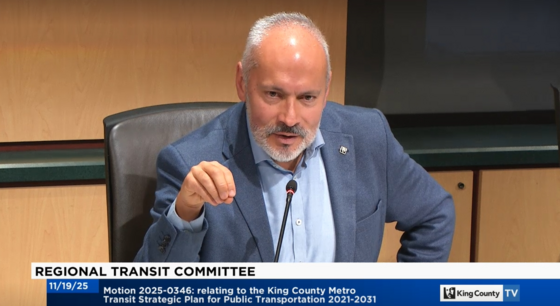 |
Click image to access the Regional Transit Committee November meeting.
Regional Transit Committee
This month in the Regional Transit Committee, we:
-
Heard a presentation from the Regional Transit Safety Task Force on the work that’s being done to promote transit safety across King County.
-
Reviewed Metro’s 2025 System Evaluation, an annual report that analyzes data from the past year to identify gaps in service, areas of growth, and transit needs across fixed route service, Metro Flex, and the water taxi program.
After a productive year of serving as Chair of the Regional Transit Committee, I will also be stepping away from the committee and want to express my gratitude to my colleagues from Seattle and the Sound Cities Association that make this regional partnership so enjoyable and fruitful.
Click image for source.
General Election Highlights
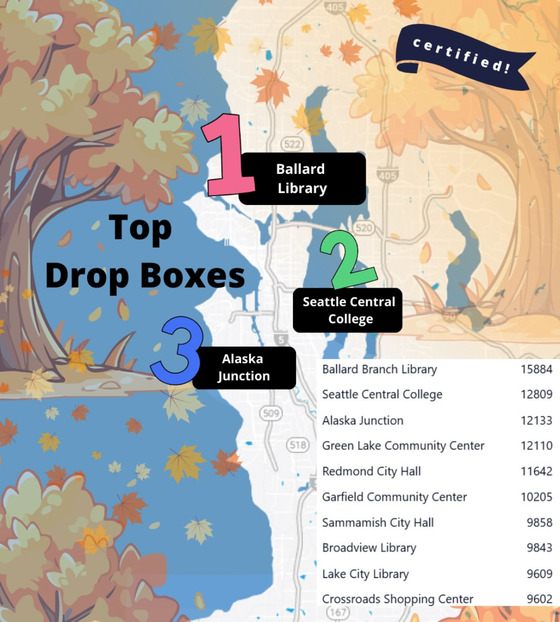
If you voted in the November General Election, you were one of the 659,693 King County voters who cast a ballot. This puts turnout for this election at 46%, a figure that is higher than recent local elections.
This election brought many transitions to the elected leaders representing District 4 residents. Across the region, ballot measures and races were held for King County, the Legislature, cities, and other local governments. View the final election results, which were certified on November 25, on the King County Elections website. As always, I am grateful for the hard work of our King County Elections team, who help ensure we have accurate and trustworthy results for this key aspect of our democratic process.
Working with our State Legislators
Every fall, county leaders prepare for the upcoming state legislative session by adopting a list of policy priorities and inviting state Legislators who represent King County residents to meet. This is a unique opportunity to share the county’s priorities and concerns with state leaders, and for us to hear their insights about the upcoming session
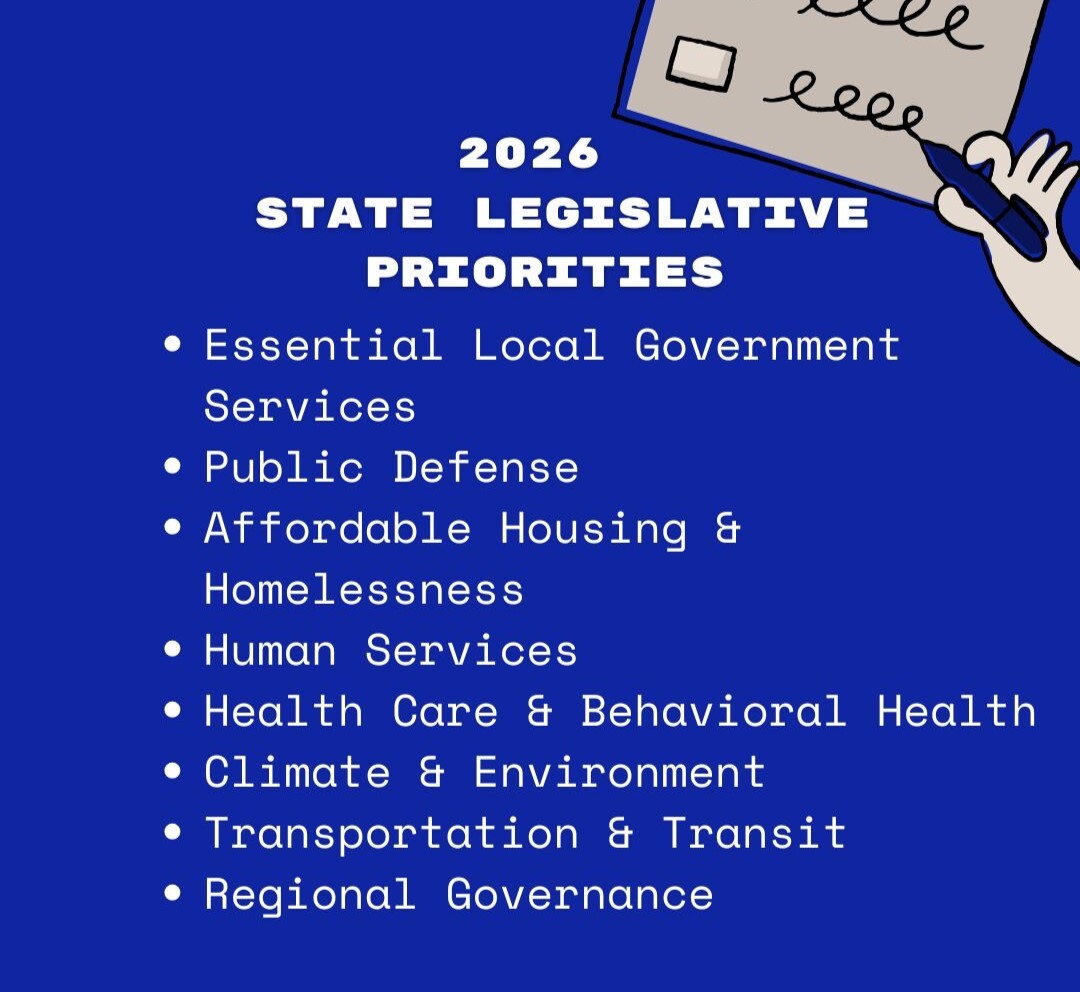 The County’s 2026 State Legislative Priorities call for policies that would address foundational revenue challenges faced by local governments, as well as those that would enhance services provided by the state and local governments. These priorities will focus our advocacy efforts with state leaders, including Governor Ferguson who recently stated that his budget proposal will rely on budget reductions, rather than new revenue.
Priority for this season – I will be particularly focused on advocating for state assistance to support public defense, which is foundational to the fairness and legitimacy of our legal system. Local governments have struggled to adequately fund and administer the public defense system, which has resulted in unsustainable caseloads, high attrition, and, in severe situations, dismissed cases because there is no public defender available to assign to the case. To reduce these strains on the public defense system, new standards that require reduced caseloads in the coming years have been issued by the State Supreme Court.
In order for King County to comply with these new standards within the 10-year timeframe called for by the State Supreme Court, the county estimates needing 360-380 additional full-time staff, half of which are attorneys, at an additional cost of approximately $70 million per year. Particularly given the current fiscal constraints that the county is facing, the county will not be able to manage this additional cost unless the state provides dedicated support for this function or creates new funding mechanisms for county government.
The 2026 Legislative Session starts on January 12, 2026 for a 60-day term. I look forward to working with Legislators and the Governor in the coming session on these and other matters.
Revive I-5 Project Continues
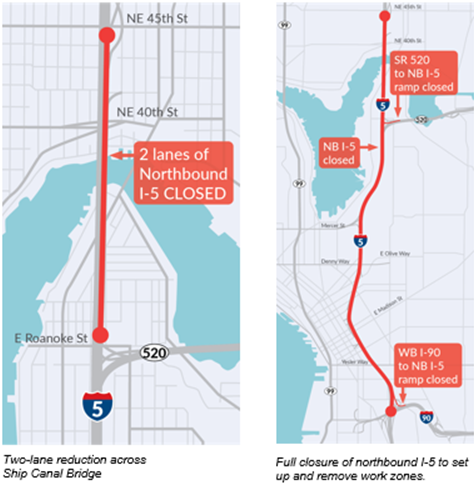
The Washington State Department of Transportation is resuming their work to rehabilitate the I-5 Ship Canal Bridge next month. As early as Friday, January 9, expect a weekend-long full closure of northbound I-5 from I-90 to Northeast 45th Street to set up a work zone across the Ship Canal Bridge. But please note that road work can be impacted by the weather which is difficult to plan for. For timely updates, visit the WSDOT page.
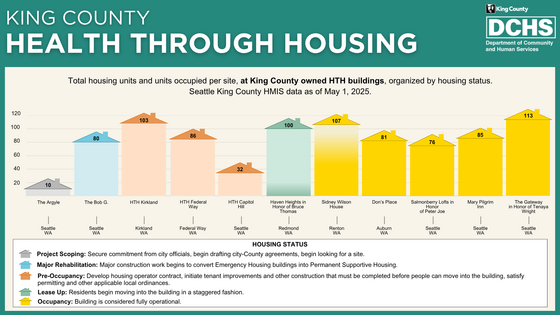
Click image to learn more about Health Through Housing.
Be a Part of King County’s Housing Initiative
King County’s Department of Community and Human Services is recruiting six new members for the Frank Chopp Health Through Housing Advisory Committee. The Advisory Committee is a 12- to 16-person committee that provides recommendations to the King County Council and the Executive’s Office on matters impacting the regional Health Through Housing initiative, including:
-
Advising on current and future implementation,
-
Reviewing performance data to assess initiative impact, and
-
Reporting to King County Council and the community on expenditures, accomplishments, and effectiveness of the initiative.
If you or someone you know would be a good fit, please consider joining and helping build a better community!
Nominations will be accepted through January 15, 2026
Click image to access source.
Investing in Our Open Spaces
King County is seeking applications for 2027 King County Conservation Futures land acquisition grants. These grants are used to buy or conserve sites that will be used as parks and open spaces - for example, urban greenspaces and parks, natural areas, sites for habitat and stream restoration, forests, community gardens, farms, and trails.
Applications are due by Monday, February 9, 2026.
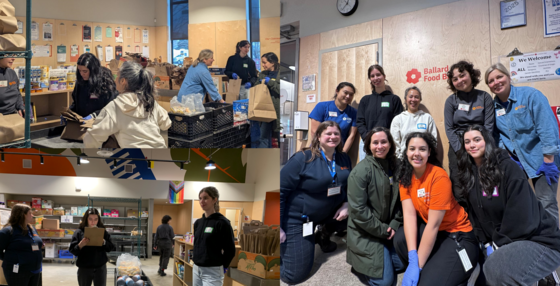
The District 4 Team volunteered at the Ballard Food Bank and packed 240 Home Delivery dry bags packed, ready to be filled with fresh produce and proteins and delivered to over 500 neighbors in our community who may otherwise not be able to access our services. Click image to learn how you can donate your time!
Food Banks in King County
With the recent passage of the 2026 -2027 county budget, I am glad to report that my council colleagues and I included funding to expand food access to support our neighbors impacted by historically high rates of food insecurity. If you or someone you know is currently experiencing hunger due to federal food assistance benefits being withheld or other life challenges, please know that your county government and many community organizations are here to help. Our District is home to many food banks and places to get a hot meal,
Find additional food pantries near you here.
 Calling All Local Artists
King County Metro and 4Culture are seeking six artists to create a total of twelve short-form graphic novels inspired by the communities, histories, and landscapes that define the existing and planned RapidRide lines, A–K and R.
Submit your application by 4 PM on Tuesday, January 13, 2026.
Being Prepared for Storm Season
The recent flooding in our region has impacted thousands of people. I am deeply grateful for the efforts of first responders, government and nonprofit workers, and many others who have been doing their best to keep community members safe. These events are an important reminder of the need to prepare for inclement weather. While we cannot always be certain of the future weather forecast, we can make sure you know what to do should you or a neighbor need to seek help with permitting after storm damage. Get storm ready by watching this explainer video on how permitting works for areas in unincorporated King County! And for emergency information and resources, you can visit kcemergency.com.
|