|
Dear Friends and Neighbors,
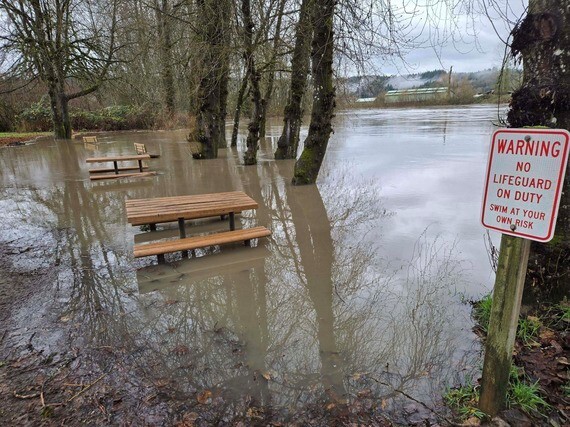
Over the past week, we have experienced one of the most severe flooding events in decades, and my heart aches for all those affected. With flood levels still at dangerous levels for many in our community, and others just now beginning the recovery process, below are a number of updates from across King County.
In addition to the Proclamation of Emergency by Executive Zahilay and the Declaration of Emergency by Governor Ferguson, the federal government has accepted Washington state’s request for an expediated declaration of emergency and have issued an emergency declaration. This enables our communities to access resources from the federal government for natural disaster recovery.
Remember, for additional updates, you can always visit www.kcemergency.com.
An Update from the Flood Control District
Earlier this week, before the worst of the current flooding arrived, the King County Flood Control District worked in close partnership with the U.S. Army Corps of Engineers and King County to take swift, proactive action to help stabilize the Desimone Levee on the Green River.
With forecasts indicating Phase 3 and the potential for Phase 4 flood conditions on the Green River, crews installed a seepage blanket on the landward side of the levee. This temporary protective measure is designed to block potential water seepage through the structure, helping to prevent internal erosion and maintain the levee’s stability during high flows.
These emergency actions are short-term flood protections intended to safeguard nearby communities and businesses while the Flood Control District advances its long-term repair project on the Desimone Levee. The Flood Control District is currently in early stages of a comprehensive repair of the Desimone Levee, which provides essential flood risk reduction for the cities of Tukwila and Kent.
I am grateful to the Corps of Engineers for their rapid coordination and commitment to protecting residents, infrastructure, and local businesses along the Green River.
River Status
-
Issaquah Creek: In Phase 0 and receding. The peak was in Phase 4.
-
Cedar River: In Phase 4 with a forecast to slowly recede starting last night. The apparent peak flow at the Landsburg gauge was the highest since 1990.
-
Green River: In a high Phase 3. Dam drawdowns may reach Phase 4 and high flows are expected for several days.
-
White River: In Phase 4. Dam outflows may remain high for several days.
The Flood Warning Center remains open and flood patrols are continuing to check on flood facilities throughout the county. The center serves as an information exchange and can answer questions, interpret river gage information, direct you to sandbag locations, and provide updated information about problem areas and evacuations. You can reach the Flood Warning Center at 206-296-8200 or 800-945-9263.
Visit the King County Flood Control District’s Resources page for preparedness tips and to sign up for free flood alerts: 👉 https://kingcountyfloodcontrol.org/flood-resources/.
You can also install the free Flood Warning App for real-time river conditions and alerts:📱 https://flood.kingcounty.gov/.
An Update from the Department of Local Services
Sandbags are available for filling for free at several locations in King County. For more information, visit kingcounty.gov/sandbags or call 206-477-4812 (language interpretation available).
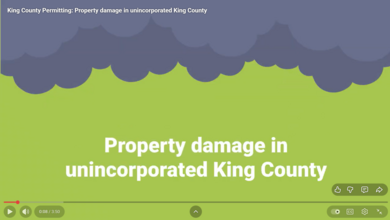
You can also watch the below video to learn more about obtaining permits to fix property damage as a result of a natural disaster.
Stay safe and remember to:
- Never walk or drive over flooded roads or standing water. For more information, visit the National Weather Service’s Turn Around Don’t Drown page.
- Contact the 24/7 Road Helpline at 206-477-8100 if you see something on the road. For the most up-to-date information on road closures and lane restrictions in unincorporated King County, visit the MyCommute page (kingcounty.gov/MyCommute).
- Avoid touching flood water, which can have sewage and other chemicals. Wash hands and pets after any contact with flood water. Throw out any food from gardens that have touched flood water.
- Wear gloves, goggles, an N95 mask, and protective gear when cleaning after a flood to protect from cuts, sewage, mold, and other health risks.
- Have a septic system? Don't use the system during a flood, visit https://doh.wa.gov/community-and-environment/wastewater-management/septic-system/floods for tips on how to manage sewage impacts.
An Update from Puget Sound Energy
- Never touch or go within 35 feet of downed power lines because they might be energized. Call PSE at 1-888-225-5773 or 911 to report problems.
- If your gas meter becomes partially or fully submerged in flood waters, report it by calling us at 1-888-225-5773.
- Stay out of flooded basements. Energized wiring or electrical outlets below the water line may pose a hazard.
- Know the signs of a possible gas leak: a “rotten egg” smell, bubbling in standing water, or a hissing sound near the damaged equipment. If you notice any of these signs, leave the area right away. Avoid anything that might spark, then call 911 and PSE at 1-888-225-5773 once you are safe. Learn more at PSE.com/GasSafety.
- Be aware of the dangers of carbon monoxide poisoning:
- Never install or use a generator indoors or in enclosed or partially-enclosed areas, even those that are ventilated. When using your generator outdoors during a power outage, avoid placing it near windows, doors and vents. More generator safety tips: pse.com/en/pages/generator-safety
- Never use a natural gas range for heating, or charcoal as an indoor heating or cooking source.
- Additional carbon monoxide safety information: pse.com/en/pages/carbon-monoxide
- Never charge your phone or other devices in a running vehicle with the garage door closed.
- Make sure that natural gas appliances are maintained and operated according to manufacturer recommendations.
- If you’re using portable heaters, keep them away from furniture, draperies and other flammable materials.
- Always use flashlights instead of candles.
Please continue to stay safe and look out for your neighbors!
 Reagan Dunn
King County Councilmember
District 9
|