What's New in the Snoqualmie Watershed
*Snoqualmie and South Fork Skykomish River area flooding: we hope everyone is staying safe through this week's weather. For the latest information on conditions, forecasts, sandbag availability, road helpline, and more, please visit King County's website.
In this edition...
Arbor Day in North Bend
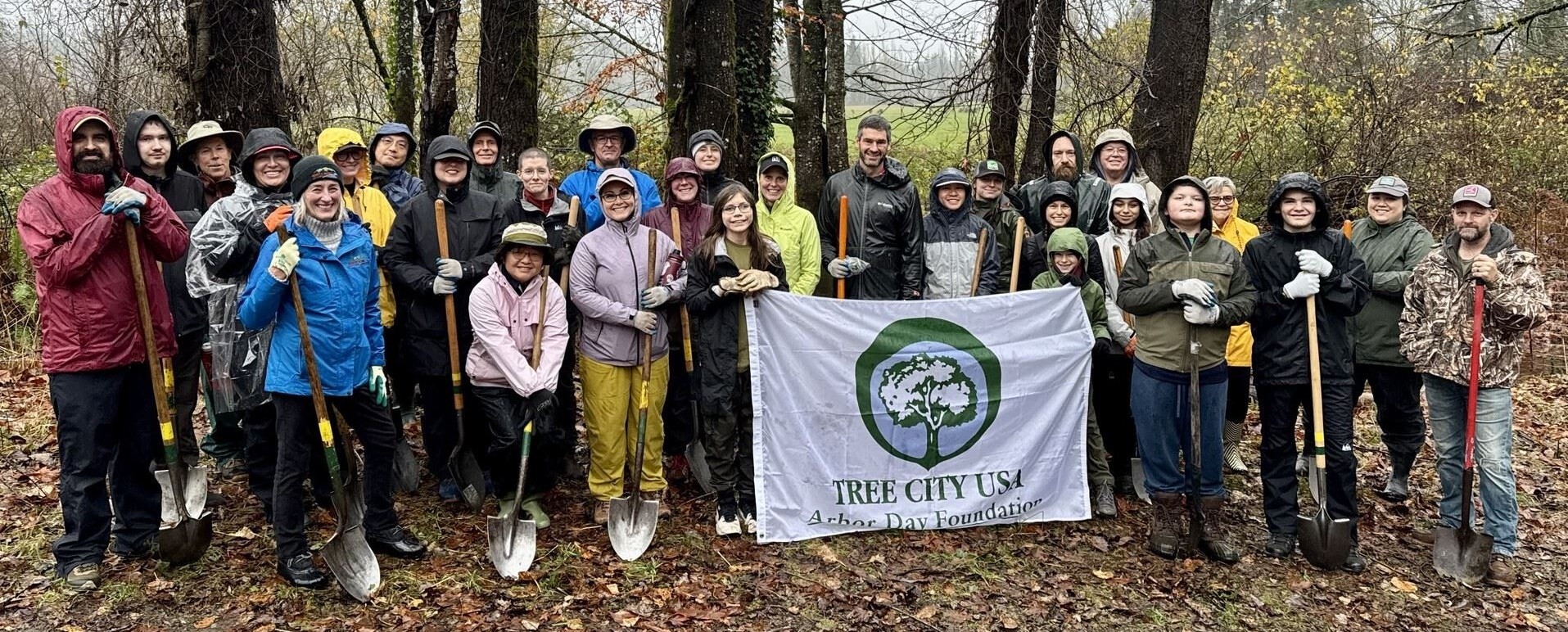
The City of North Bend celebrated Arbor Day with a tree planting at Ribary Creek and the South Fork Snoqualmie River on Friday, November 14. The planting was a part of a broader project coordinated with the Mountains to Sound Greenway Trust funded by a 2022 Cooperative Watershed Management Grant to restore habitat along Ribary Creek and the South Fork Snoqualmie River. You can get further information from the City’s news release thanking our volunteers.
Youth Working for the Watershed: YESS!
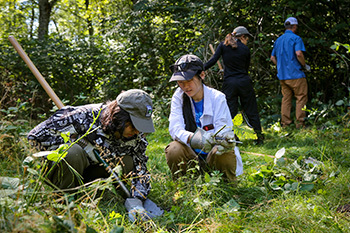
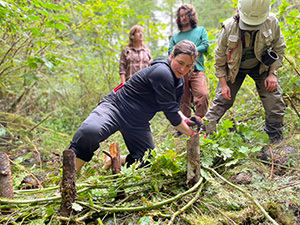
This summer, the Mountains to Sound Greenway Trust hosted 18 students in the Youth Engaged in Sustainable Systems (YESS) internship—a new record! Through a new partnership with the WANIC Skills Center, the program expanded to high school students across seven districts, including Riverview and Snoqualmie Valley. Interns worked alongside professionals from local Tribes, agencies, and nonprofits to gain hands-on experience in restoration ecology. Fieldwork was focused on the Snoqualmie Valley and Issaquah, where students removed weeds, restored riparian and forest habitats, maintained trails and recreation sites, planted native species, and contributed to meaningful conservation efforts across the Mountains to Sound Greenway National Heritage Area.
Photo by Lars Nelson, King Conservation District
On the Trail with Wildlife at the Fall City Floodplain Restoration Project
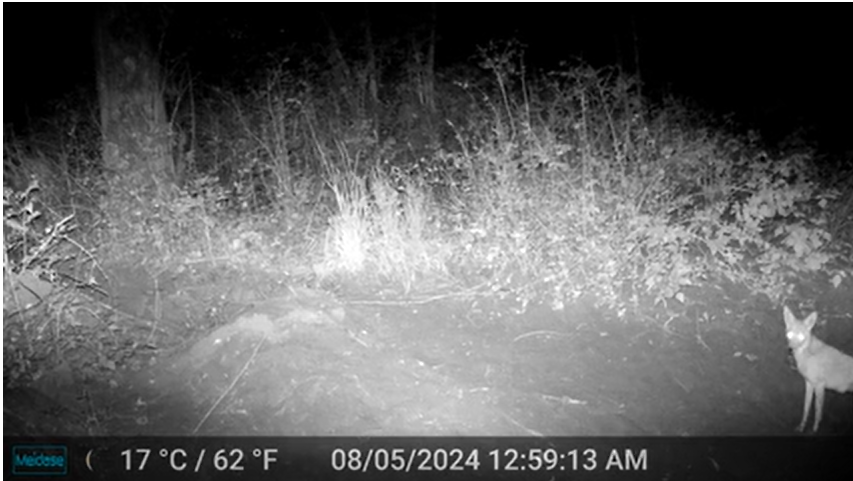
Click or tap the image to the right to watch a surprising video from a trail camera at our Fall City Floodplain Restoration Project. The coyote on the right is trailing another animal... what do you think it could be?
Volunteers Keep Restoration Efforts Going at Fall City
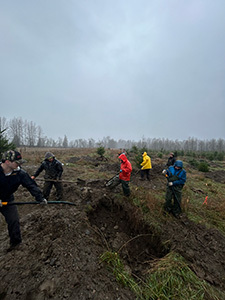
The Snoqualmie Tribe recently hosted 42 volunteers to plant large, salvaged trees, continuing restoration efforts in the Fall City floodplain. Volunteers worked hard to plant these large trees, seed wildflowers at their bases, and participate in the largest floodplain restoration project taken on by King County and their restoration partners. This event was funded by the King County Flood Control District through the Cooperative Watershed Management grant program.
The Snoqualmie Tribe hosts monthly volunteer restoration events from fall through spring, and invites you to participate too! Scroll down for an upcoming event this month, or visit the webpage to learn more!
Two New Noxious Weeds to Watch out for
|
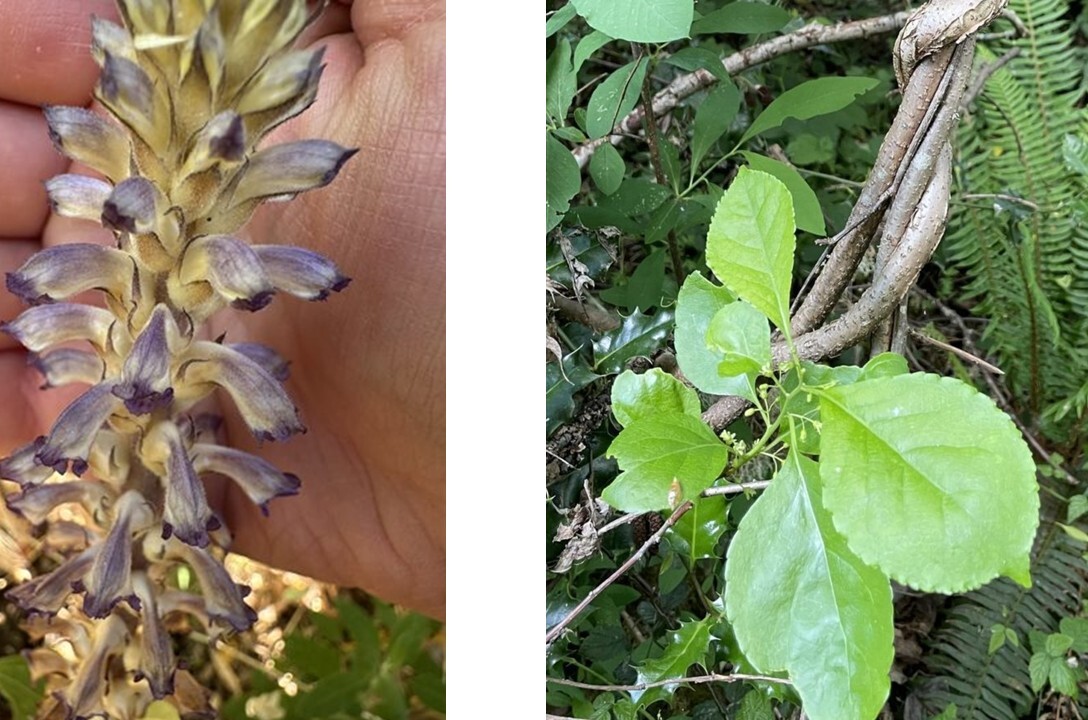
Above left: sunflower broomrape; right: roundleaf bittersweet
|
The King County Noxious Weed Program is learning about two new invasive plant species of concern. Please join King County environment and restoration specialists and Snoqualmie Valley residents in reporting any time you see sunflower broomrape (Orobanche cumana) and roundleaf bittersweet (Celastrus orbiculatus), an invasive woody perennial that could smother our forests. Sunflower broomrape was first detected in Yakima County and is a threat to Washington’s farmlands anywhere it occurs. Roundleaf bittersweet has been found in flower arrangements with viable seeds (berries) – beware!
If either of these plants are found, please contact the King County Noxious Weed Control Program.
Wild Fish Conservancy Takes a Cue from Beavers
In 2024, Wild Fish Conservancy partnered with the Wilderness Awareness School in Duvall, Washington, to create wetland habitats on the school’s property using beaver dam analogs. This low-tech restoration technique mimics natural beaver processes, supporting the ecological and hydraulic benefits that provide and sustain vital stream habitats for salmon, amphibians, and waterfowl in areas where beavers have been displaced. Explore Wild Fish Conservancy’s interactive StoryMap for an in-depth look at the project—and learn if beaver dam analogs could support restoration on your property!
DNR's Watershed Resilience Program Takes to the Skies
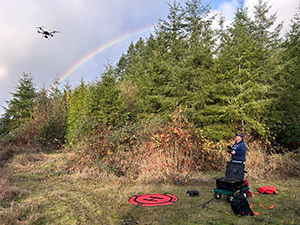
After nearly 2 years of surveying the Upper Cherry Creek watershed on foot, the Washington Department of Natural Resources’ Watershed Resilience Program completed an aerial drone survey to identify invasive plants, map channel morphology, and create an invaluable reference for future restoration planning. This effort will produce an orthomosaic (created from several aerial photos) and digital surface model of the creek and its riparian buffer from above Cherry Creek Falls to the confluence of Margaret Creek. The Watershed Resilience Program team share their gratitude for the collaborators who enabled this survey, for the diligent Cherry Creek working group members, and for the funding provided by King County Flood Control District’s Cooperative Watershed Management grant program.
King County's Septic System and Maintenance Rebate Program is Back!
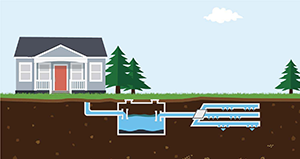
Maintaining a septic system regularly can help homeowners catch issues earlier and save money. This rebate program offers up to $500 to pay for septic system inspection, pumping, or riser installation. Septic property owners can plan for routine maintenance activities with the rebate program. A rebate is offered once per property until July 2027, or until the funding is exhausted.
Learn more and apply now.
Clean Car Campaign - Small Actions, Big Impact for Puget Sound
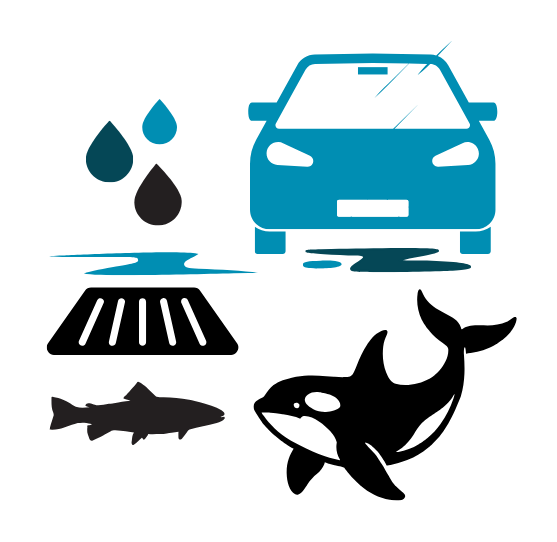
Why Clean Car Care? Tire dust, car leaks and car wash soaps wash off our roads and flow untreated to streams and Puget Sound. Tire dust releases a chemical called 6PPD-q, a toxic chemical deadly to salmon and harmful to aquatic life. Don't Wait to Inflate– check your tire pressure monthly to protect for savings, safety and clean water.
Join in and make a difference! Thousands of drivers have learned how to check their tire pressure with our helpful video. Don't Wait to Inflate — (DontWaitToInflate.org) tips are in Español/Spanish, 한국어/Korean, Tiếng Việt/Vietnamese and English. Get more Clean Car Care tips on tire maintenance, car washing, and fixing car leaks. Want to help spread the word? Use our PARTNERS & PALS TOOLKIT.
Sponsored by local governments and communities across the region that celebrate Puget Sound Starts Here, a shared commitment to protecting our waters through everyday actions at PugetSoundStartsHere.org.
Upcoming Water Quality Study in the Snoqualmie Watershed
The Washington State Department of Ecology’s Watershed Health and Effectiveness Monitoring Unit is preparing a new water quality study in the Snoqualmie Watershed, building on a 2003–2005 TMDL (Total Maximum Daily Load) effectiveness monitoring effort. From July 2026 through October 2027, the project team will collect samples to test for bacteria and nutrients and measure temperature, dissolved oxygen, conductivity, and pH at monitoring stations on the Snoqualmie River and tributaries not already monitored by King County. Findings will help identify stream segments of concern and guide future strategies to address persistent water quality problems, leading to water that can better support healthy salmon and recreational water uses. For more information, contact Daniel Nelson by email or call (564) 669-1770.
Want to get BeaverWise with the Snoqualmie Valley Preservation Alliance?
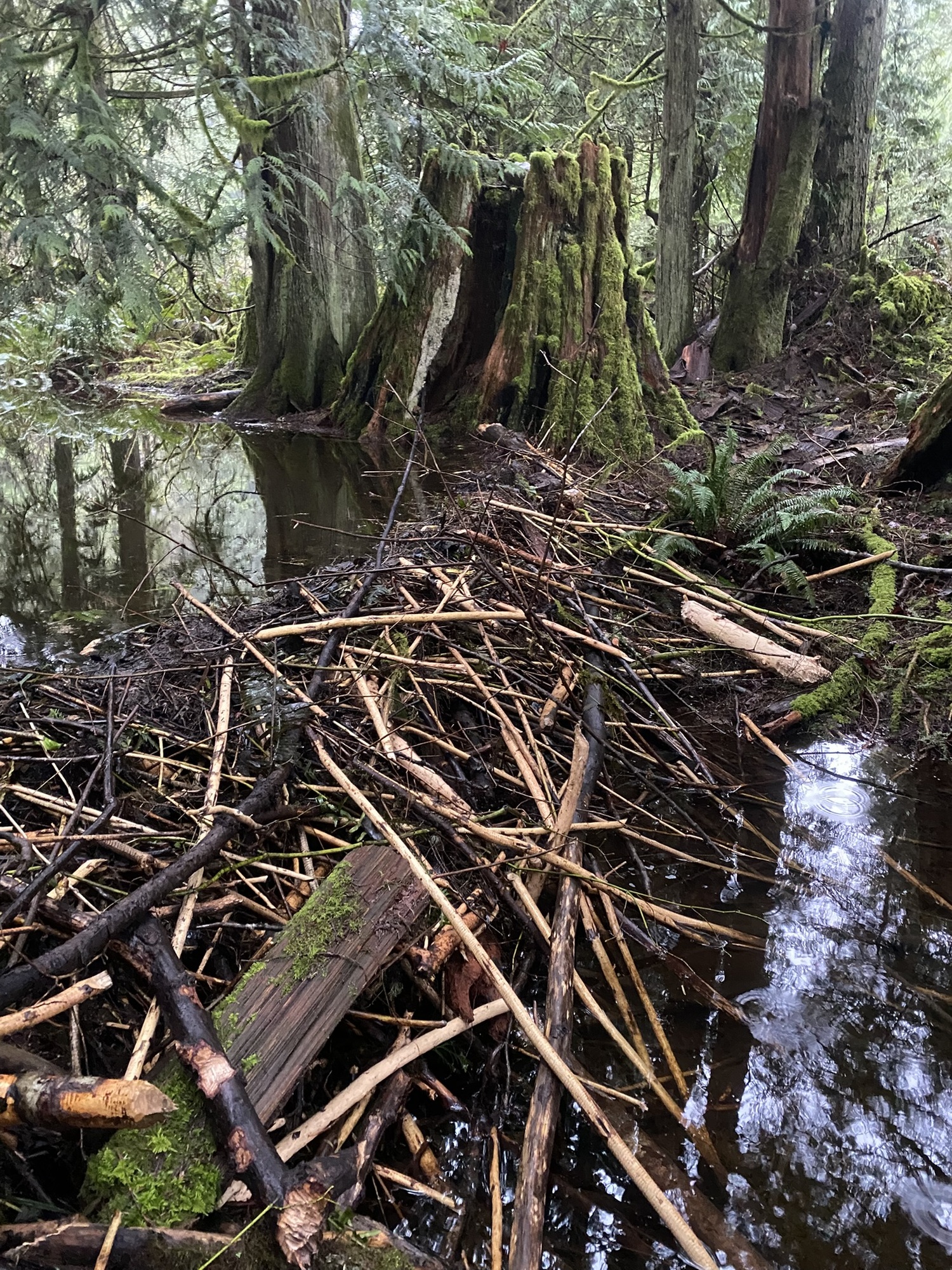 |
In the Snoqualmie Valley and throughout Washington, seasonal drought brings major challenges, but beavers can help. As ecosystem engineers, they shape waterways, create wetlands, and stabilize streambanks by building dams and feeding on trees species, like willows, that naturally regenerate. Their dams hold water that slowly releases into the ground and recharges underground aquifers. By raising the water table, beaver activity can reduce irrigation needs during drought and keep water cooler and slower-moving, conditions that support salmon and other native fish. Beaver wetlands boost plant diversity, improve forage for livestock and wildlife, and trap sediment and pollutants, leaving nutrient-rich deposits that can benefit crops. Even after beavers leave, abandoned dam sites remain fertile and lush, often in stark contrast to surrounding drought-stricken areas. Interested in the benefits beavers can provide or need help with beaver impacts? Contact Justine Casebolt or visit the Snoqualmie Valley Preservation Alliance's BeaverWise website.
Events and Volunteer Opportunities
Volunteer with the Snoqualmie Tribe at Three Forks Natural Area
Join the Snoqualmie Tribe’s ENR (Environment and Natural Resources) Department and our King County partners in the field as we restore floodplain and relic meadow habitat along the upper Snoqualmie River on December 20th from 10am to 1pm! Help us continue to build healthy habitat and resilient ecosystems at this project over a decade in the making!
We will be removing elk protection from plants, pulling blackberry from the restoration area, and removing trash. All are welcome to attend and no experience is necessary.
Sign up and find out more here.
Restoration Events Coming up with Sound Salmon Solutions
Sound Salmon Solutions is excited to offer several habitat restoration volunteer opportunities near Carnation in the new year! Come join us in getting your hands dirty doing invasive species removal, as well as learning about restoration strategies and the importance of native trees and shrubs to the riparian ecosystem from members of our crew.
Registration is required and will be found on the Sound Salmon Solutions website as dates approach.
- MLK Day Event: January 19th, 10 am - 2 pm
- Grub with Love Valentine’s Day Event: February 14th, 10 am - 2 pm
- Go Green for St. Patty’s Event: March 14th, 10 am - 2 pm
Job Opportunities
Snoqualmie Valley Preservation Alliance Hiring a BeaverWise Field & Outreach Technician
BeaverWise is the SVPA’s beaver management program. The BeaverWise Field & Outreach Technician is a part-time (20 hours/week), limited-term, non-exempt position funded for nine months (February–October 2026) with the possibility of extension if funding allows. This unique role blends hands-on fieldwork, beaver coexistence, beaver relocation support, community outreach, and volunteer engagement to advance SVPA’s BeaverWise program across the Snoqualmie Valley. See the full job description and apply by December 21, 2025.
King County Hiring an Aquatic Toxicologist
King County is seeking a passionate Aquatic Toxicologist to spearhead our fight against "forever chemicals" (PFAS) and other Contaminants of Emerging Concern (CECs). In this role, you will do more than write reports; you will drive the science that protects the aquatic food web—from the orcas in the Sound to the fish on our dinner tables. If you are driven to address health disparities through rigorous science and want to protect those with the least resources from toxic contaminants, we want to hear from you! See the full job description and apply by December 21, 2025.
King County Hiring a Fish Passage Engineer II
The Fish Passage Engineer II plays a key role in delivering capital projects that restore fish passage through removal or remedy of in-stream barriers to fish passage. You’ll work across all phases of fish passage restoration—from assessment to design to construction. Your responsibilities will include preparing engineering plans and bid documents, conducting hydraulic and hydrologic modeling, completing fish passage barrier assessments, writing technical reports, and supporting construction oversight. See the full job description and apply by December 28, 2025.
Funding Opportunities
Cooperative Watershed Management Grant Program – Now Open!
Restoration & Protection - Education & Outreach - Monitoring & Assessments
Each year, the King County Flood Control District (FCD) allocates a portion of its capital budget to fund implementation of Water Resource Inventory Area (WRIA) Forum priority activities via the Cooperative Watershed Management Grant Program (CWM). For the 2026 grant round, the FCD has approved $2,393,176 to fund watershed restoration and protection projects in the Snoqualmie & South Fork Skykomish Watersheds – the King County portion of WRIA 7.
Project Sponsors are asked to submit a notice of intent to apply by January 14, 2026. Full applications will be due in March. Check out the website for details or contact Karen Reagan, Project Coordinator.
Snohomish Basin 2026 Salmon Recovery Grant Round Request for Proposals – open soon!
Snohomish River Basin Salmon Recovery staff will soon begin soliciting proposals for projects that implement strategies identified in the Snohomish River Basin Salmon Conservation Plan.
Notices of intent to apply will be due in mid January, 2026, with full applications due mid February. Visit the Snohomish Basin Grant Round webpage for more information - exact dates will be added when they are finalized.
Other relevant grant opportunities:
King County Conservation Futures Open Space Acquisition Funding Available
The King County Conservation Futures grant round is open, with applications due on February 9, 2026, for awards of 2027 funding.
Conservation Futures land acquisition grants can help governmental agencies and qualified conservation nonprofits purchase land or easements for open spaces and parks for passive recreation. Grants may help purchase land to be used as urban greenspaces, passive parks, natural areas, restoration sites, forests, community gardens, farms, trails, stormwater parks. Along with acquisition, Conservation Futures grants can fund initial site stabilization costs such as demolition.
Visit the Conservation Futures application webpage for key grant-related information and register for workshops offered in mid-November and early December 2025. Contact Ingrid Lundin with questions.
The Washington Native Plant Society will accept grant applications for projects that promote native plants and their habitats within the State of Washington starting January 1, 2025, until midnight March 1, 2025. Successful projects must provide public benefit and must support the WNPS mission to promote the appreciation and conservation of Washington’s native plants and their habitats through study, education, and advocacy. Applications will be accepted in three categories: Conservation, Education, and Research & Plant Inventory. Please review the committee description and grant criteria for each program to determine the best fit for your project or program before applying. Please visit our website for application information and contacts for conservation grants, education grants, and research.
Salmon and Orca in the News
Orcas stalk seabirds to hone hunting skills: researchers – Vancouver Sun
“I've been thinking about this possibility for 15 years": Killer whale experts make new discovery off North American coast – Discover Wildlife
Coho eDNA Measurable In The Air Along Seattle-area Salmon Stream – NW Sportsman
Young Chinook salmon in Puget Sound near urban waterways found containing ‘forever chemicals’ – KIRO 7
Rare orca superpod comes to Seattle - KUOW
Endangered orcas return to Puget Sound without newborn J64, presumed dead – KUOW
Why too many pink salmon in Snohomish County may not be a good thing – Everett Daily Herald
Orca mom carries dead newborn calf in San Juans – KUOW
What's happening with salmon in Washington state? Spawning, threats and recovery – Tacoma News Tribune
WA pink salmon populations surge in some Puget Sound areas, stagnant in others – FOX13
And, as always, remember that the beautiful "From Mt. Si to Wild Sky" watershed posters – featuring the photography of talented Valley residents – are available FREE from Renee Leichliter or by calling 206-848-0836.
|