|
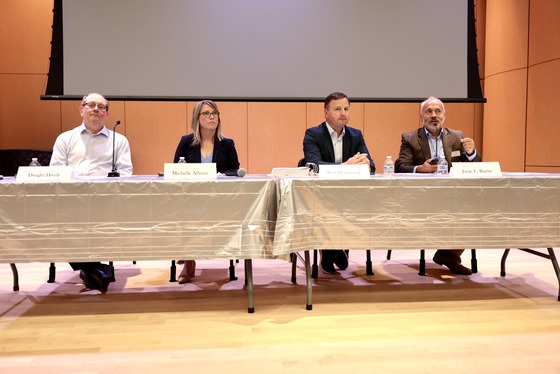
Pictured from left to right: King County Performance, Strategy, and Budget Director Dwight Dively, King County Metro General Manager Michelle Allison, Councilmember Rod Dembowski, and me at the Budget Town Hall last month. Source: www.brianchuphotography.com.
I would like to begin this month’s newsletter with a sincere note of gratitude to everyone who joined last month’s County Budget Town Hall. Your questions, feedback, and insights will serve us well as we make difficult decisions about the county’s 2026-2027 budget. I also want to thank Michelle Allison, Dwight Dively, district staff, and Sai Guo of North Seattle College for their efforts in ensuring the event was a success. My hope is that attendees were able to walk out of that auditorium with a clearer understanding of your county budget. If you could not join but would like to make sure YOUR thoughts are considered in the budget process, feel free to submit them here.
The King County Council has made much progress this month with our budget panels, and hearing from residents, community organizers, and leaders about the needs of those they serve in our community. More on the topic can be found later in this letter.
Read on to learn about recently funded water quality improvement projects, a reminder to return your ballot, ongoing investments in behavioral health access, and more!
With gratitude,
 Jorge
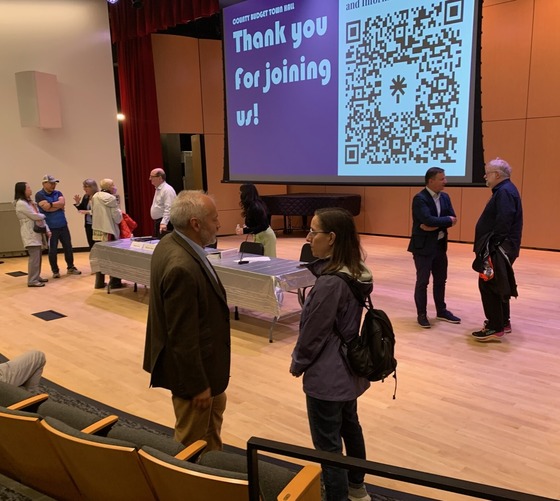
Thank you for spending the evening with us to learn and share your priorities for the county budget.
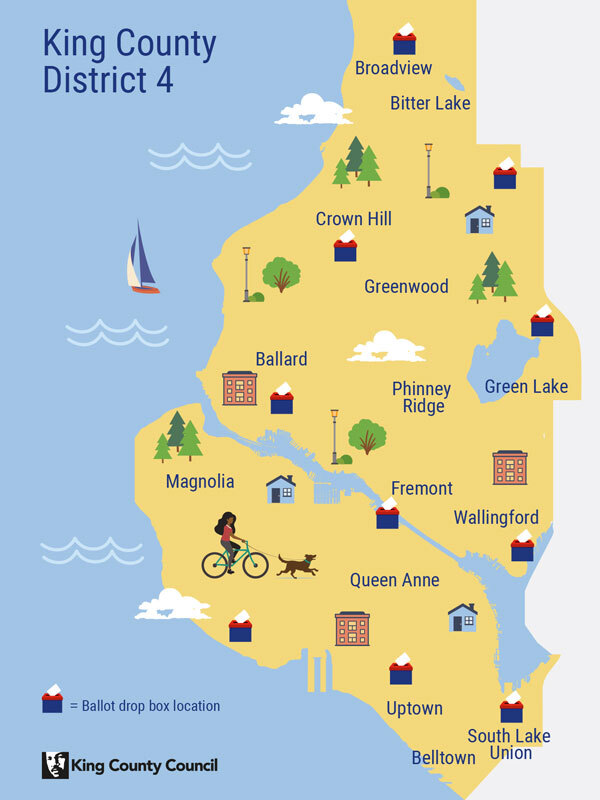
Click on image to find a ballot drop box near you.
If you are a registered voter, ballots should have arrived at your home this month. Find your nearest ballot drop box and cast your vote by Tuesday, November 4 at 8 pm sharp. Ballot drop boxes are the fastest way to get your ballot back to King County Elections Headquarters for counting.
🗳️ Why does voting matter? – Casting your vote …
-
Elevates issues that matter to you,
-
Communicates to elected officials what you as a voter are holding them accountable for, and
-
Empowers you to have a say in your government.
Didn’t receive your ballot in your mailbox? – King County Elections asks voters to call 206-296-VOTE (8683) for assistance.
Need accessible voting tools? – Check out available tools on King County Elections’ website.
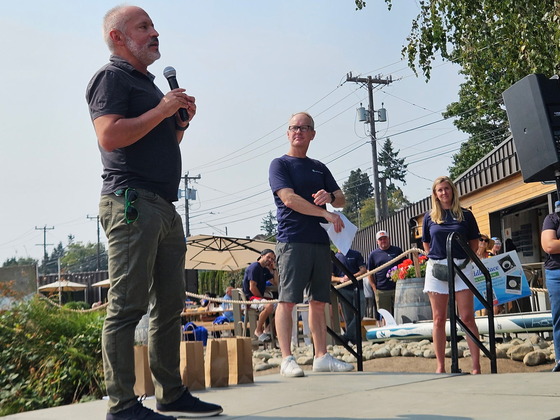
I was happy to announce that Clean Lake Union was awarded a WaterWorks grant at their event last month.
Earlier this month, the council named the recipients of this year’s WaterWorks grants. These councilmember-directed funds invest in projects that improve water quality across the region. Recipients included five projects in District Four:
-
Beavers Northwest will expand an existing volunteer program to test water quality near beaver-created wetlands to better understand the impact that beavers have on urban and suburban streams. This proposal is funded in partnership with Councilmembers Claudia Balducci, Rod Dembowski, and De’Sean Quinn.
-
Clean Lake Union will support construction of a bioswale that will filter 250,000 gallons of stormwater runoff annually before it flows into northern Lake Union.
-
Earthcorps and UW Green Futures Lab will partner to maintain their Floating Wetlands project at Shilshole Bay Marina.
-
Long Live the Kings will oversee modeling and engineering needed to identify evidence-based solutions to address high temperatures and low dissolved oxygen levels in the Lake Washington Ship Canal. This proposal is funded in partnership with Councilmember Girmay Zahilay.
-
United Indians of All Tribes will develop a pipe rainwater diversion system at Daybreak Star Cultural Center to protect local waterways and combat erosion.
💧 Why are these projects important? – These local projects aim to address water quality, climate, and healthy marine ecosystems.
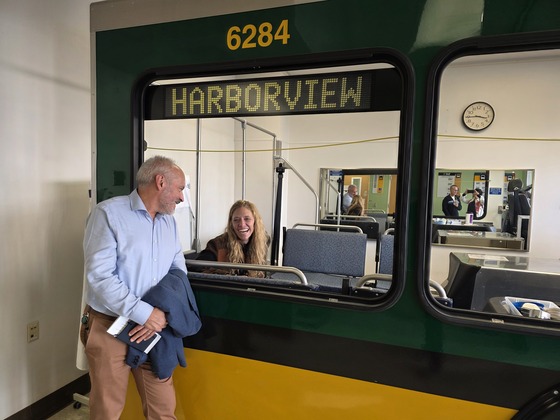
Pictured with Cecelia Black, a community organizer with Disability Rights Washington, during our visit at Harborview Medical Center.
Riding Paratransit
To celebrate the Week Without Driving, observed during the week of September 29, I had the pleasure of joining Disability Rights Washington on a paratransit ride along with an Access rider. We also paid a visit to the paratransit evaluation center, which is part of Harborview Medical Center. The “Week Without Driving” highlights the barriers and challenges experienced by individuals who may not be able to afford a car or are unable to drive. Learning from community members about their experiences provides me with critical information as we work to improve accessibility in our public transit systems.
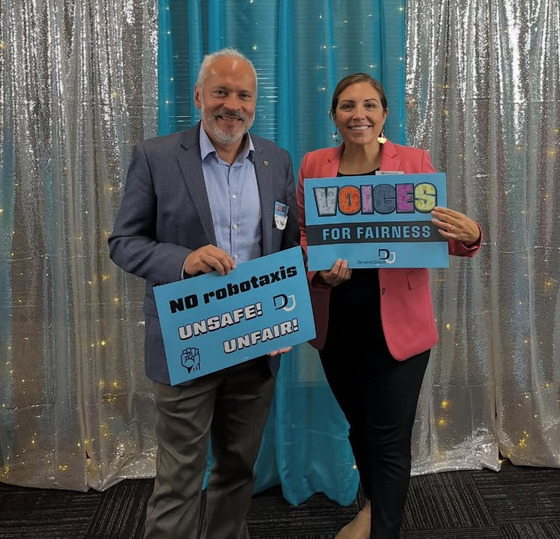
Pictured with Councilmember Teresa Mosqueda.
Advocating for Rideshare Workers
I had the honor of joining the Drivers Union’s annual Voices for Fairness fall gathering alongside local leaders, drivers, and allies. The goal of this gathering was to hear from drivers working for Uber, Lyft, and other app-based transportation platforms on how we can continue to fight for fairness and justice in their line of work.
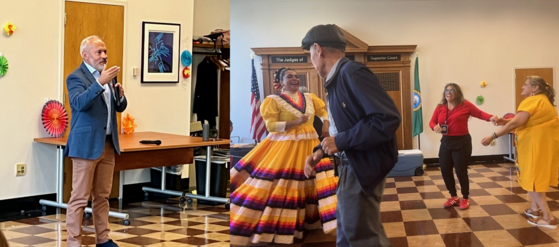
We were joined by a dancer from Ballet Folklórico to get in the spirit.
Celebrating Latine Heritage Month at Superior Court
I was thrilled to have been asked to deliver a welcoming speech at the Latine Heritage Month event hosted by the King County Superior Court. It was wonderful to meet and connect with some of the individuals whose work helps our court systems function.
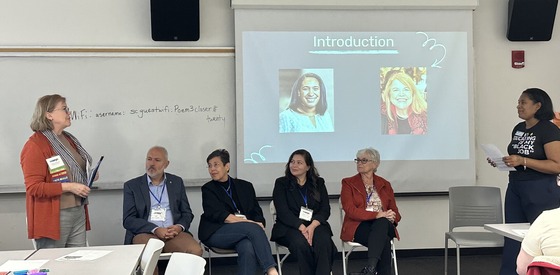
Pictured from left to right: Washington Association for the Education of Young Children Board Member Joellen Monson, me, Executive Producer Roberta Romero of KING5’s Facing Race, Executive Director Malou Chávez of NW Immigrant Rights Project, State Representative Carolyn Eslick, and WAEYC Public Policy Fellow Raishawn Swensen.
Connecting with Early Learning Professionals
I was honored to be a panelist for the 2025 Washington Association for the Education of Young Children Conference at South Seattle College. I joined the panel discussion on Social Justice in Action, which focused on how early childhood educators, students, and education professionals can engage in grass roots advocacy and policy development to make a difference. Immigrants and women of color make up much of the education workforce and bring a vital and needed perspective to discussions about public policy. I appreciated the opportunity to interact with and learn from early learning professionals who are helping raise the generations to come.
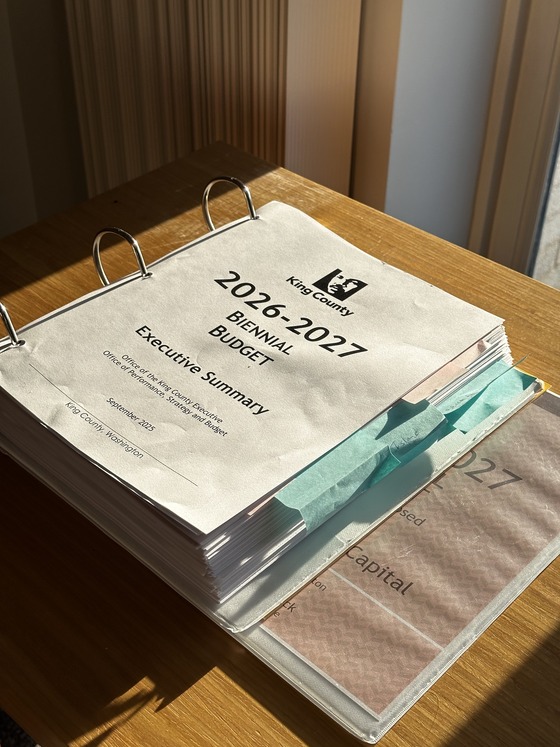
Click on image to access the Executive’s 676-page budget proposal. Some light reading.
2026-2027 King County Budget
The District 4 team has been busy this month reading, asking questions, receiving reports, and discussing Executive Braddock’s proposal for the 2026-2027 budget. This 676-page document outlines her vision for how the county should invest nearly $20 billion over the next two years. We’ll continue this focus for the next few weeks until the final vote, anticipated for November 18.
Listening to resident voices – As I hear from residents about their priorities and concerns, I continue to work to identify ways the county can meet community needs through smart investment of our resources.
What I have heard most frequently from constituents is about the need for:
-
Reliable health and social services,
-
Investments that will promote public safety,
-
Strong environmental stewardship,
-
Improved transit infrastructure, and
-
Action to address potential harm from state and federal funding cuts.
What I’ve learned – Throughout these conversations, a few themes that have become apparent:
-
The Safe and Stable Communities Sales Tax will help preserve critical services – The 0.1% sales tax that the council approved earlier this year is projected to generate enough revenue for the general fund such that we can avoid devastating cuts in the 2026-2027 budget. Without it, these cuts would have fallen heaviest on the county’s criminal legal system, which accounts for 73.5% of general fund spending.
-
Residents are deeply concerned about federal cuts and policy changes – Some federal reductions have already taken place while others, such as upcoming Medicaid eligibility changes, will take effect next year. The impact of these policy changes is already significant but will be felt even more over the coming years.
-
Challenges can’t be addressed in isolation – Whether it’s homelessness, public safety, or behavioral health, our chances of success improve significantly when we invest in efforts that benefit multiple systems.
My goal – These concerns reinforce the importance of a budget that makes smart investments to strengthen our local infrastructure and ensure continued access to vital services.
Thinking ahead – Because costs are expected to continue rising faster than projected revenue, the county forecasts a general fund shortfall beginning in 2028, and there is no scenario in which local funds can wholly or even substantially make up for reductions in federal funds. We will therefore have to be judicious in the investments we make now as we protect vital services for our residents.
 Get involved – Stay updated and tell us your thoughts as we consider the upcoming budget from now until November 18.
In-Person
Remote
Other support – Request free translation and interpretation services through Tera Chea, Equity and Social Justice Coordinator, at tera.chea2@kingcounty.gov or (206) 477-9259.
 Expanding Behavioral Health Access
On October 7, the council authorized funding for the building purchase for a new Crisis Care Center on Capitol Hill. This action was a necessary step to meet urgent behavioral health needs in our community. While there is still much work to be done, I am heartened that this location will eventually include enough space for both walk-in and inpatient treatment.
During my deliberations, I listened to residents both in support and opposed to establishing a crisis care center at this location. In the end, I joined my colleagues in adopting the legislation, which included direction to ensure that concerns raised by neighbors to the future center are addressed. This includes requiring the development of a ‘Good Neighbor Agreement’, which will provide a path for community concerns to be raised with operators so that these issues can be addressed in a timely manner.
Next steps – Renovations on the property are expected to begin in 2026 to prepare for the center’s opening in 2027. While we wait for this location to come online, Crisis Care Center levy proceeds are already being used to stabilize our region’s behavioral health workforce and provide mobile crisis services throughout King County. You can read more about accomplishments from the first year of the levy here.
 Securing Care for Our Residents
Earlier this month, the council approved a nine-year extension of the county’s Mental Illness and Drug Dependency Behavioral Health Sales Tax (MIDD).
What is MIDD? – A countywide 0.1% sales tax generating about $200 million per two-year period authorized by the state legislature.
- Since 2007, MIDD has funded essential behavioral health services throughout King County, including crisis response, school-based mental health, behavioral health for elders, and sexual assault/domestic violence response services.
- The MIDD tax has been renewed every nine years since 2007 with the most recent renewal taking place in 2016.
Why this matters – Without the reapproval, the tax would have expired at the end of this year and leave critical gaps in our region’s essential mental health and substance use treatment infrastructure.
Discussions about the MIDD tax duration – This year’s deliberations featured robust discussion about the appropriate renewal time frame – a shorter two-year term or an extended nine-year period. Historically, the MIDD tax has been renewed alongside an updated implementation plan that sets priorities for the new term. This year the process was slightly different – the legislation to reauthorize MIDD was passed this month, and the council will consider legislation to extend the existing implementation plan later this year.
While unusual, I believe that this was the right approach this time for the following reasons:
-
A new King County Executive will be elected and take office next month – This person will be responsible for implementing the updated MIDD and it is appropriate that they have an opportunity to determine the most up-to-date priorities.
-
The timeframe allows a new plan to consider the impact of federal policy changes – Such as impending Medicaid cuts to behavioral health services.
My perspective – During this process, I heard concerns from providers about the negative effects a short-term renewal would have on staff and programming. I also considered the decreased reliability of federal government funds and the effect that will have on services. Ultimately, the council unanimously voted to enact a nine-year levy to ensure stability in our region’s behavioral health response.
Next steps – I look forward to working with the new Executive in 2026 to implement a proposal for the next nine years of MIDD. I invite you to share your priorities with me as we look towards the future of behavioral health in our region.
 Recognizing Small and Local Businesses
We all have our favorite small and local businesses. At this year’s 2025 Executive Small Business Awards event, King County officially recognized some of the entrepreneurs and businesses that make our communities special.
And the District 4 honorees are…
If you’re a small business, consider applying to next year’s awards.
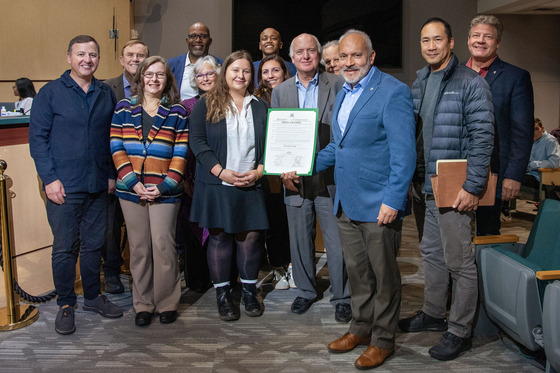
I was pleased to have Councilmembers Dembowski and Dunn join me in presenting a proclamation to acknowledge the week of October 20 to 26 as Pro Bono week, to recognize the important work that staff and volunteers at legal aid programs in our county provide to low-income residents. Executive Director Karen Pillar of TeamChild joined us for the occasion and accepted the proclamation.
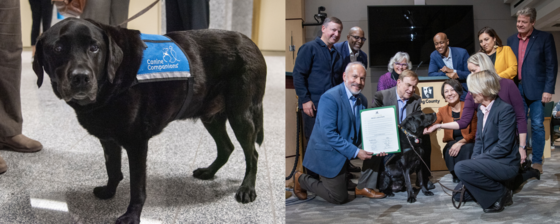
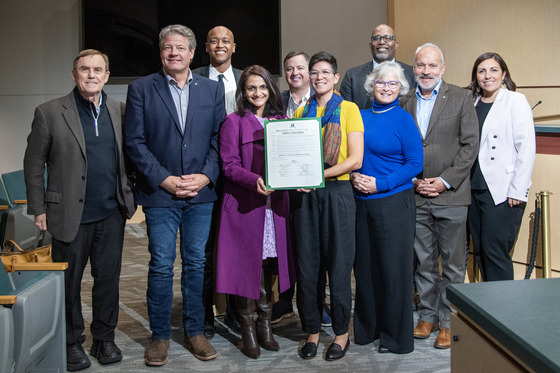
Executive Shannon Braddock and I presented a joint proclamation to acknowledge October 21, 2025 as Errol the Courthouse Dog Day. Errol is retiring after serving the people of King County for nearly a decade, providing support to residents navigating the legal system. We were joined by Errol himself, Chair of the Elder Abuse Unit and Errol’s handler Page Ulrey, King County Prosecuting Attorney Leesa Manion, and Director of Legislative and Public Affairs Douglas Wagoner who received the proclamation. Thank you, Errol!
Councilmember Claudia Balducci and I presented a proclamation to recognize the month of October as Domestic Violence Awareness Month. We were joined by Director of Gender-Based Violence Services Shwetha Panchal of Atlantic Street Center and Executive Director Amarinthia Torres of the Coalition Ending Gender-Based Violence who received the proclamation.
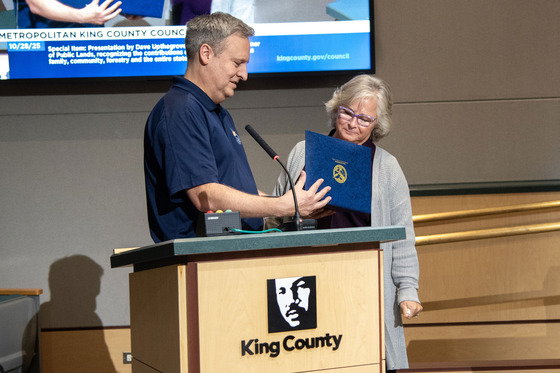
Our former colleague, Washington State Commissioner of Public Lands Dave Upthegrove joined the council to present a special item recognizing the late state Senator Bill Ramos for his endless contributions to his community, and our state. The recognition was received by Senator Ramos’ wife, Councilmember Sarah Perry.
 Fostering Healthy Relationships
Applications are now being accepted for the King County Best Starts for Kids’ Promoting First Relationships Agency Training Project 2026. This funding opportunity aims to ensure babies grow up with a strong foundation for lifelong health and well-being. Promoting First Relationships Agency Training is an evidence-based curriculum that trains service providers in the use of practical, in-depth, effective strategies for promoting secure and healthy relationships between caregivers and young children ages zero to five.
Applications are due by Tuesday, November 4 at 2 PM.
 Calling All Forestry Experts
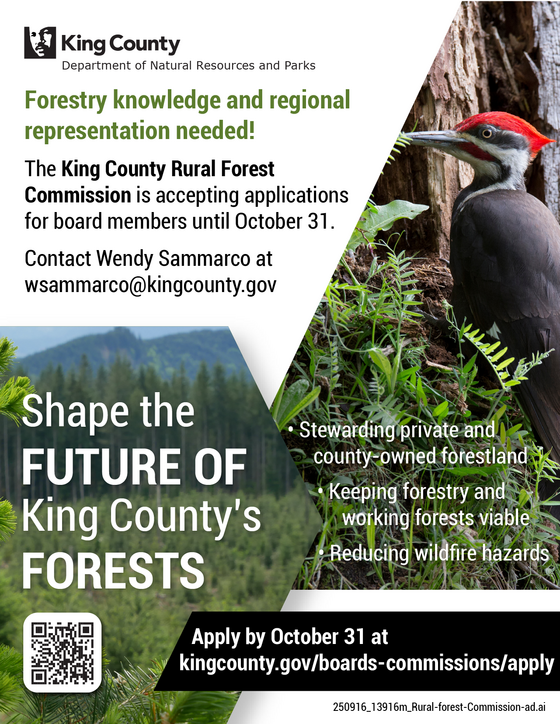
The King County Rural Forest Commission is an advisory group of 13 volunteer members who represent a variety of rural forest interests and are appointed by the King County Executive. Applications are currently open to residents who have working knowledge, strong commitment, and availability to serve a 3-year term on the commission representing King County Rural forestry.
If you or someone you know has a passion for forests, applications are due by Friday, October 31.
 Nominate a Local Leader for the Larry Gossett Service Award
I want to share a reminder that nominations for the Larry Gossett Service Award are still being accepted. Named in honor of the former Councilmember and local civil rights icon, this award recognizes and affirms an individual or organization that has made significant contributions in the areas of racial equity, social justice, and/or human rights in King County.
Nominations must be submitted by December 1.
Assistance for Immigrant Families
Legal Counsel for Youth and Children (LCYC) is now offering virtual one-on-one appointments with trained LCYC staff to create individual Immigrant Safety Plans with community members who live, work, or study in Seattle. The Immigrant Safety Plan is a community resource to help parents plan for the care of their children (with or without status) in the event that a parent is unable to care for their child, particularly if the parent is detained or deported.
Virtual appointments are available in Spanish and English.
|