|
This newsletter is written by the King County Executive Climate Office (ECO) in coordination with departments across the county. You can learn more about us at the bottom of this newsletter.
Counties across region collaborating on work to support climate-resilient buildings
In the summer of 2024, King, Kitsap, Pierce, and Snohomish Counties announced we’d received a $50 million grant from the U.S. Environmental Protection Agency to lower greenhouse gas emissions from buildings and construction throughout the region.
At the time, King County shared that the Executive Climate Office (ECO), using funding from that grant, would partner with local governments in an effort to reduce climate-warming pollution while ensuring access to healthy heating on cold days and cooling on hot ones.
A year later, that work is well underway, with new programs set to launch soon across the four-county region over the coming months!
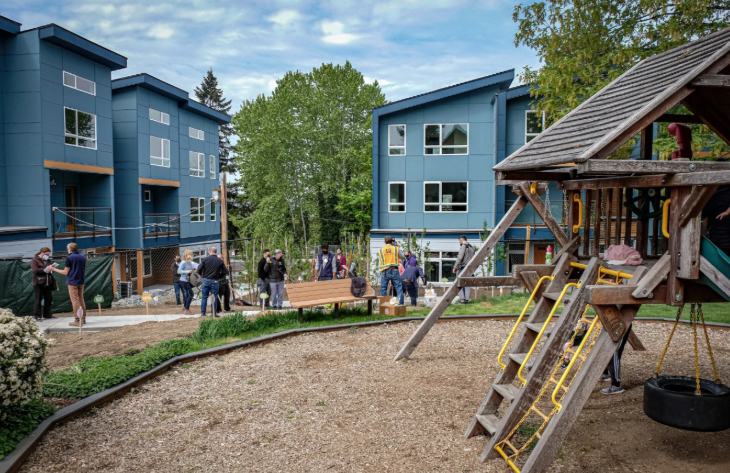
An advisory committee with representatives from county and city governments in King, Kitsap, Pierce, and Snohomish Counties has been working with community and other local government partners to design programs providing direct installations of electric heat pumps to provide heating and cooling, grants for local governments, and financing supports.
King County readers will be familiar with the “Energize” program, which has installed nearly 200 heat pumps in single-family homes, adult family homes, and family home child cares across King County. While that program offering will continue for King County residents, “Energize” is expanding to provide direct installation services for the following types of buildings in King, Kitsap, Pierce and Snohomish Counties:
-
Multifamily homes (apartment buildings)
-
Community spaces (non-government owned community buildings that serve as gathering spaces or provide community services)
In addition, the four-county region will be providing building decarbonization grants for local governments.
Get to know King County’s current Climate Equity Community Task Force (CECTF)!
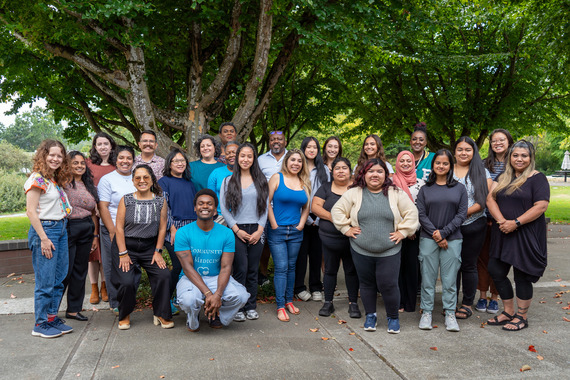
You’ve probably seen or heard us mention the “Climate Equity Community Task Force (CECTF)" in past newsletter and social media posts. We’d love to introduce you to the current members, as pictured alongside consultants at a recent in-person meeting! You can find their names and some of their affiliations here.
The CECTF is a community working group of frontline community leaders partnering with the County on climate initiatives, funding decisions, and policymaking. “Frontline communities” are people disproportionately impacted by climate change due to existing and historic racial, social, environmental, and economic inequities. They often experience the earliest and most acute impacts of climate change, but they also often have experiences that empower unique strengths and insights into climate resilience strategies and practices. The first group of CECTF members developed King County’s first climate justice framework, which ensures all parts of the Strategic Climate Action Plan (SCAP) center frontline communities.
The CECTF has been an active group since 2019, with some members transitioning off while new members join to expand geographic and youth representation. The CECTF recently added new members and held its first in-person meeting of 2025 at the Tukwila Community Center, where they began a collective visioning process for their work moving forward. The CECTF will be instrumental in guiding the implementation of the “Sustainable and Resilient Frontline Communities” section of the SCAP.
Meet the ECO team: Elena Hamblin!
We’re also excited to introduce you to some of the King County staff members working with community and partners to implement climate work. There are folks working in climate all across King County, and the office coordinating, elevating, and accelerating that work is called the “Executive Climate Office,” or ECO. Meet Elena Hamblin – ECO's Climate Equity Engagement Project Coordinator!
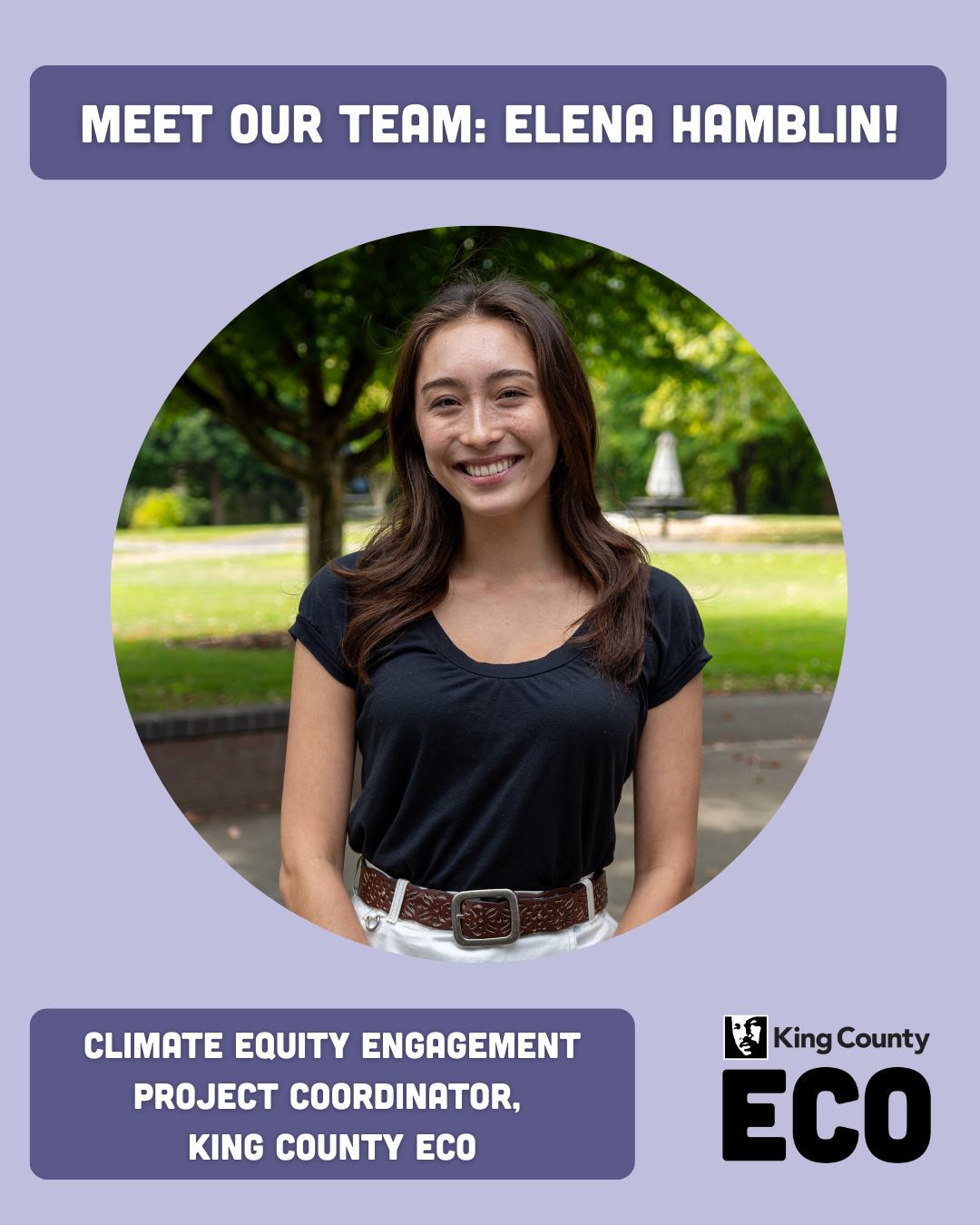
Elena is passionate about promoting youth voices in policymaking, sharing education about climate justice, and connecting with community groups making a difference in our region. In her role, she facilitates work with youth on the Climate Equity Community Task Force, organizes the Climate Equity Sponsorships program, and co-coordinates the monthly “Climate Justice Learning Series,” which is open to community members and County staff.
Elena grew up in King County and was always passionate about the environment, but her interest in climate action as a career was sparked during her time in the King County NextGen internship program and while attending the University of Washington.
Supporting hunger relief and food security in King County
This month, Executive Shannon Braddock announced $755,000 in grant funding to support local hunger relief organizations, farm businesses, and food distributors after cuts in federal funding halted plans to build a regional hub. The funds will allow grant recipients to purchase commercial refrigerators, freezers, ovens, and other critical infrastructure needed to safely store, process, prepare, and distribute fresh food to those in need.
Approximately one out of nine households in Washington experience food insecurity. In South King County, nearly twice as many people face food insecurity compared to the state average. These disparities are seen even more among certain groups; for example, people with lower incomes and less formal education experience food insecurity at twice the countywide rate.
These disparities will grow as climate change worsens and threatens food supply and security both within the region and globally. Climate change impacts will affect crop yields, available crop varieties, prices, and the nutritional value of food, putting already under-resourced populations at further risk of food insecurity and increased adverse health impacts. Because of this, food systems and food security is a focus area in the Executive-proposed 2025 Strategic Climate Action Plan.
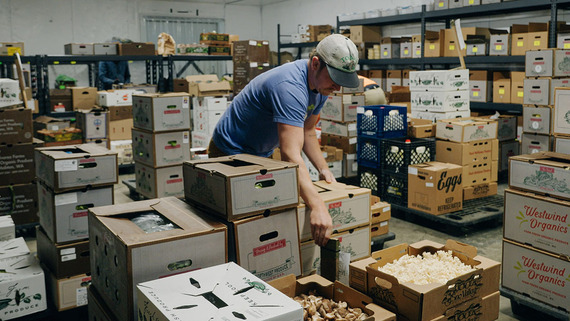
The recent announcement is in line with King County’s longstanding commitment to support community organizations providing hunger relief.
“King County is stepping up to support trusted organizations that help our neighbors who are experiencing hunger,” said King County Executive Shannon Braddock. “These small grants support the infrastructure that helps get nutritious food from farmland to table for those most in need.”
The grants also advance King County’s Local Food Initiative, a policy and funding strategy that strengthens the local food economy so more people have access to healthy, locally grown food.
Your input requested: Puget Sound Clean Air Agency Comprehensive Climate Action Plan!
The Puget Sound Clean Air Agency (PSCAA) is currently working on a Comprehensive Climate Action Plan (CCAP), funded by a Climate Pollution Reduction Grant. The plan will identify high-impact regional strategies and actions to reduce greenhouse gas emissions, with a focus on maximizing benefits in overburdened communities. The plan will be built on the foundation of climate planning work already underway across the region and state.
You’re invited to register for a virtual workshop on October 6 to kick off the public input period! If you can’t make it, you’ll also be able to submit input through an online engagement hub.
Latest on the Strategic Climate Action Plan
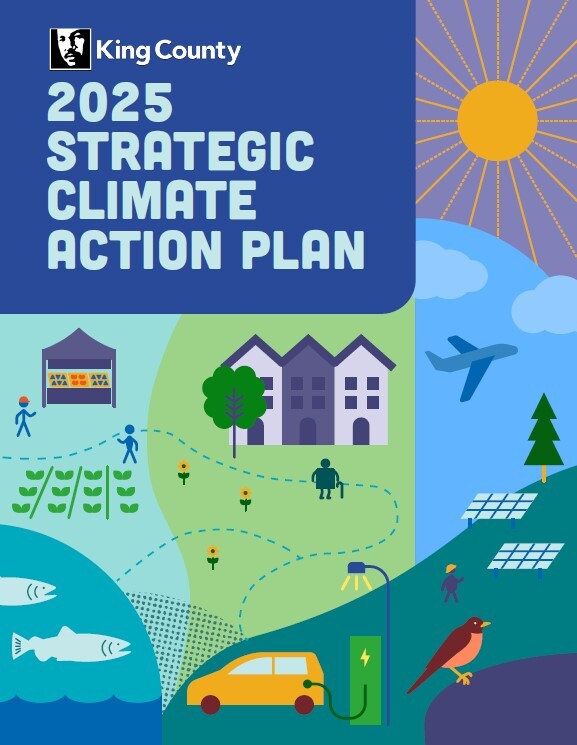
The proposed 2025 Strategic Climate Action Plan (SCAP) was submitted to the King County Council in June, and was recommended for adoption by the Transportation, Economy, and Environment Committee this month. Stay subscribed to this newsletter for updates on adoption and ways to get involved once it is approved!
You can review the proposed SCAP and learn about the new “flagships” section here.
Join us for the September Climate Justice Learning Series workshop!
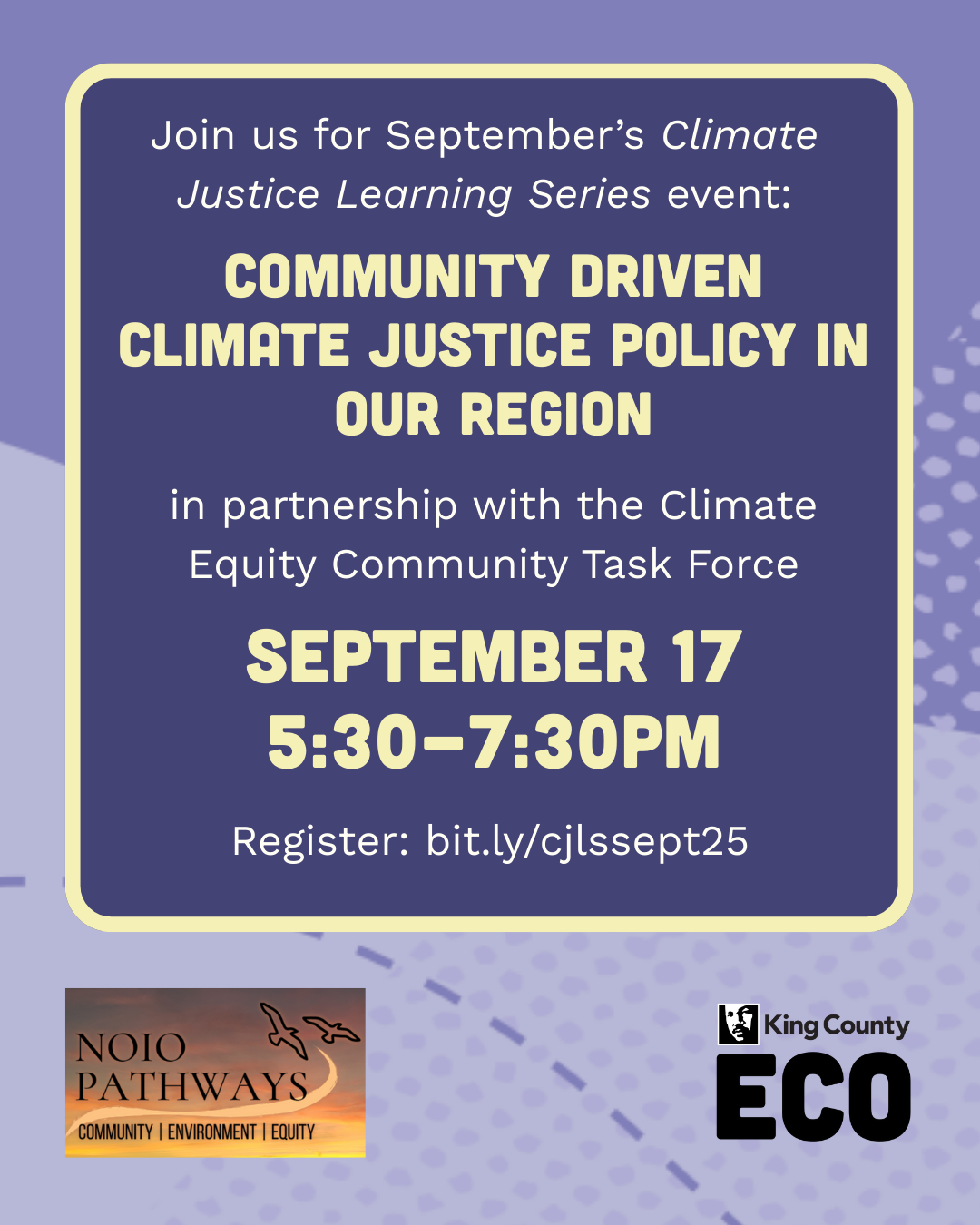
Join us for the September edition of King County’s Climate Justice Learning Series, produced in partnership with the Climate Equity Community Task Force! The Climate Equity Manager for the King County Executive Climate Office (ECO) will lead a conversation about community-driven climate justice policy in our region, including:
-
Uplifting stories of those who came before us in climate justice policy
-
Impact of the SRFC section beyond King County
-
Dreaming the future of climate justice policy
King County WaterWorks Grant Program: Applications now open!
King County’s WaterWorks Grant Program has $4.6 million in funding available for community-driven projects that protect water quality, control pollution, and build healthy communities. Projects must provide an improvement to water quality within the Wastewater Treatment Division service area, and non-profits, Tribes, cities, schools, and special purpose districts are eligible to apply.
Applications are open now and due September 30, 2025. The application process begins by filling out a short Letter of Intent form through the online grant portal. Selected applicants will be invited to submit full proposals in February 2026.
Translation and interpretation services are available upon request. Email water.grants@kingcounty.gov or call 206-477-3968.
Are you familiar with the King County Executive Climate Office (ECO)? Here’s a little more about who we are, and what we do:
Departments across King County implement climate action within their work. King County ECO elevates, coordinates and accelerates those efforts and manages several in-house programs. That includes work on building decarbonization, climate preparedness, climate equity and building a workforce for climate-related careers. Our agenda is set based on the approaches laid out in the Strategic Climate Action Plan.
ECO works with the broader King County Climate Team, which includes climate leads from different departments.

Please share this newsletter with a friend, and we’ll be back in October with more news and updates. Until then, you can find us on Instagram and LinkedIn!
|