Let me share with you straight-up, I am concerned about food security in South King County. So, on Tuesday, with Council on recess, I asked Food Lifeline if I could come speak with them to learn about what is happening with our food safety net.
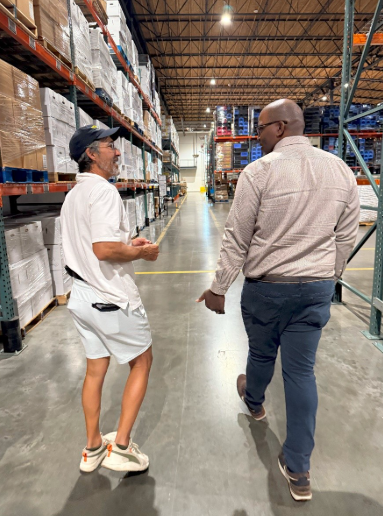
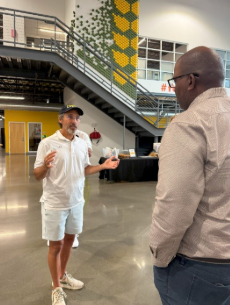
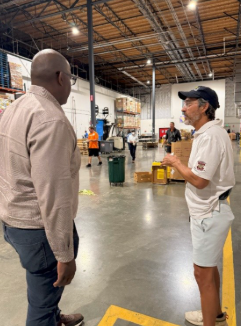
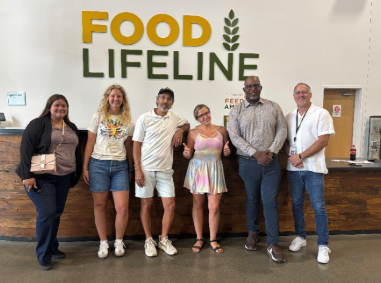
Aaron Czyzewski, Director of Advocacy and Public Policy, showed CM Quinn the Food Lifeline Warehouse and Distribution Center in South Park.
As the news has reported, the President proposed, and Congress approved the largest cuts in history - over $200 billion in cuts or 20% of the program - to the Supplemental Nutrition Assistance Program (SNAP) which provides funding for food for families in need across our nation. (Washington State’s Senators opposed this proposal). But what do those cuts mean here in South King County?
Food Lifeline distributes food to over 300 food banks in Western Washington, 150 are here in King County. Food Lifeline both buys food and relies on donations of food as well from farmers and grocery stores.
Aaron Czyzewski, Director of Public Policy, showed me around the warehouse in South Park. It was a busy place. Workers and volunteers moving stacks of canned beans, big sacks of potatoes, fresh produce to be shipped by the over 40 Food Lifeline trucks to food banks. Shipments must be timely. Food Lifeline relies on funding for transportation costs to move 70 million pounds of food over 500,000 miles annually. Food needs to get to the right place in good condition.
Aaron explained that demand has increased dramatically since 2019. Food Lifeline served approximately 800,000 people before the pandemic. That number grew to 1.2 million during the pandemic and then, due to supply chain issues and inflation, demand for food grew to 1.8 million people today.
Food Lifeline transports 70 million pounds of food in 40 trucks over 500,000 miles anually to food banks throughout Western Washington.
Food Lifeline is working to help prevent useable nutritious food from being added to the landfill by participating in the Washington State Commodity Donation Program which provides state funding to pay for gathering and transporting excess harvests from farmers to food banks. Leadership from our state legislature has been critical to create this program.
Food in landfills is a significant contributor to greenhouse gases which affect climate change. It is estimated that approximately one third of our food is not eaten in this country. The EPA estimates that each year, this waste generates the carbon-dioxide equivalent to the emissions of 42 coal-fired power plants (source: EPA).
It is estimated that a third of the food planted, harvested, processed, packaged and transported in out country is not eaten. Food banks can help get food to where it is needed most.
Ensuring useable food stays out of the landfill is significant in our effort to protect our climate. Food Lifeline is equipped to help make this happen.
Getting food for the families and people most in need is also the work of a vast network of hundreds of local neighborhood food banks.
I have been pleased this summer to direct county funding to some of our food banks in District 5 including ACT – A Common Thread in Kent, Communities in Schools Renton/Tukwila, Salvation Army – Renton, SeaTac Senior Services and Des Moines Food Bank.
I am particularly committed to helping ensure kids are adequately nourished and fed so they can be successful in school.
Thank you Food Lifeline for showing us your work to support families in South King County and Western Washington.
Left to right: Jazmin (D5 staff), Abby, Aaron, Sarah, CM Quinn and Mark
The goal of the D5 e-news is to share information about council business, upcoming community events, access to services, opportunities, and ways for us to build an even better King County.
The King County Council is on the annual summer recess, meaning that there are no scheduled council meetings or committee meetings. Our office remains open for business and our work continues.
 |
|
On Monday, I participated in the third meeting of the Regional Fare Forum along with King County Executive Shannon Braddock and representatives from Metro Transit, Sound Transit, and Washington State Ferries. |
The Regional Fare Forum is a series of 4-5 meetings of transit leaders to explore ways to make the fare system easier for riders to use. On Monday we discussed ways to make fares more available for people with low-income levels. This is vital so that those who need to get to jobs and medical appointments can do so.
If you have ideas on how to simplify and make the fare system easier to use, please send me your thoughts to desean.quinn@kingcounty.gov or call 206 477-1005.
I also met with the Sound Transit South King County sub-area for a briefing on issues related to Sound Transit service in South King. As you may know, we are anticipating an early opening of the Federal Way LINK light rail extension this fall. Stay tuned!
On Tuesday, my staff and I toured Food Lifeline and asked questions about the impacts of federal funding cuts on the availability of food for families in Western Washington.
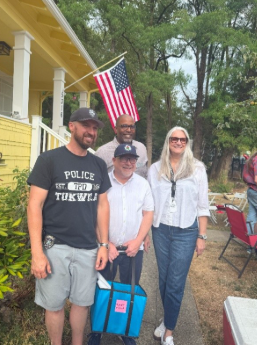
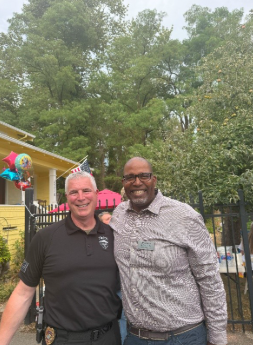
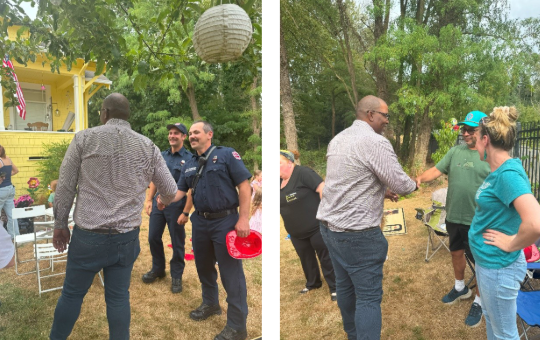
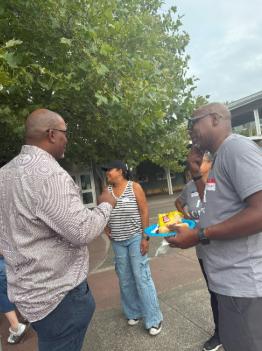
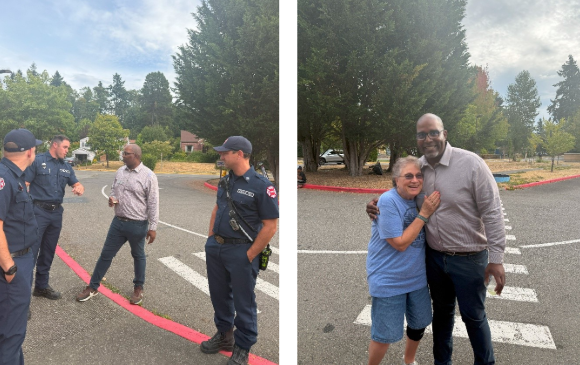
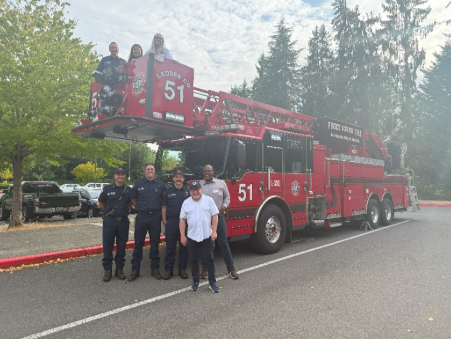
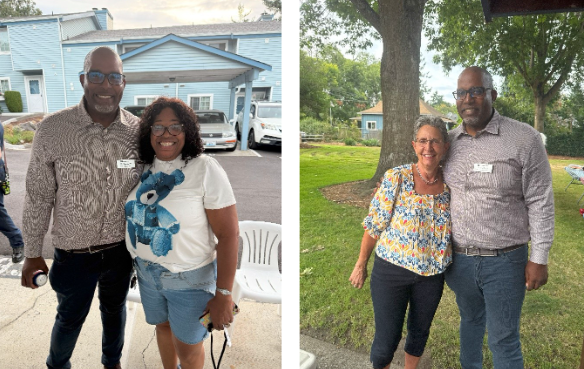
My staff and I also joined Tukwila Mayor Tom McLeod and Tukwila Councilmember Verna Seal for National Night Out – a night for police officers and fire fighters to join neighborhood block parties.
|