|
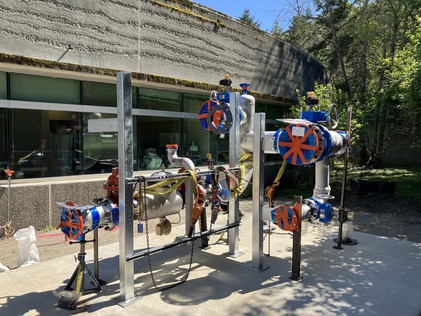
The Reduced Pressure Backflow Assemblies (RBPAs) and Pressure Relief Valves (PRVs) for City water at West Point. The RPBAs and PRVs bring West Point’s fire suppression up to current fire code.
Another important safety upgrade at West Point is nearly complete! The Fire Suppression System Project is in its final phase of construction.
This new system enhances fire safety at the plant by improving detection and response capabilities and ensuring continued compliance with updated safety standards.
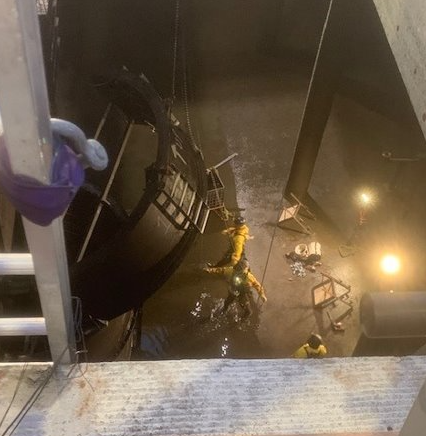
Crews install cofferdams to safely continue work on the EPS gates.
The Effluent Pump Station (EPS) pushes the treated wastewater through the outfall pipe into Puget Sound. West Point has four EPS pumps and a gate for each. The gates allow for a pump to be taken offline for maintenance and service. After 30 years of service, the current gates need to be replaced to improve safety and reliability.
Construction for the Effluent Pump Station (EPS) Isolation Gate Project is officially underway, with the first gate arriving this month. To prepare, the project team is coordinating closely with treatment plant teams to ensure a smooth delivery.
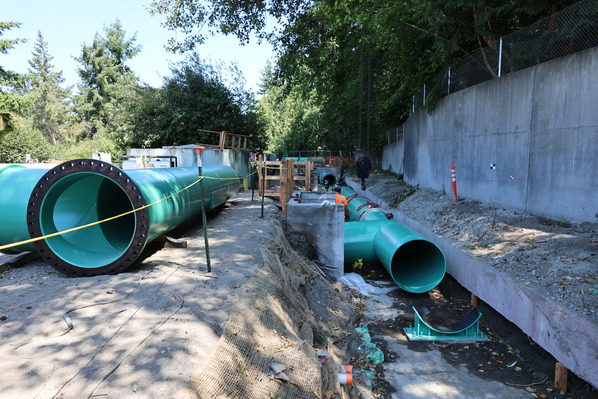
Construction contractors began installing EPS cofferdams, a key structure needed for safe gate installation, last month. The cofferdams will let workers safely install the new isolation gates below the waterline by keeping water out of the work zone during construction. Staff across the project team and operations crews are working together to plan for a smooth transition to minimize disruptions. For this reason, a lot of this work happened at night in late July.
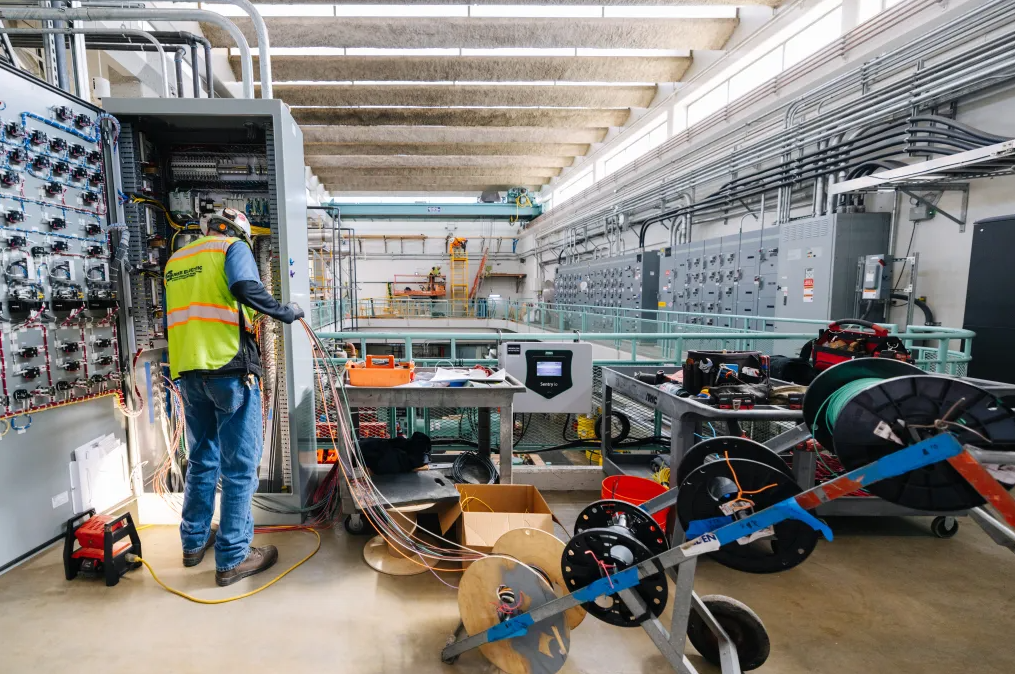
An electrician runs new wire for the Raw Sewage Pump Building.
West Point can treat up to 440 million gallons of wastewater a day – more than 660 Olympic swimming pools worth! A big reason why it can treat so much is due to the four raw sewage pumps (RSP) that help move wastewater through the treatment process. The pumps are powered by four engines that have been in use since the plant came online in 1966! These engines are typically fueled by biogas created by the wastewater treatment process.
The time has come to replace the pumps and the engines with newer and more efficient electric motors and pumps. The plant will only need three of the four electric motors to meet its 440 million gallon peak capacity. Having a fourth motor allows for easier maintenance and provides a backup motor.
Construction contractors and King County operations staff have had to coordinate closely as crews demolished walls, moved the control room, rebuilt a wall and added seismic upgrades to the RSP building while operations staff are actively running the RSP equipment to keep water flowing through the treatment process.
Remember the plant never sleeps!
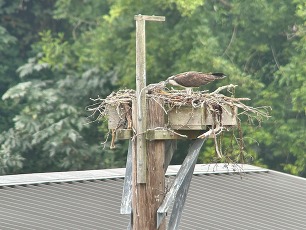
A nest of ospreys on the raptor perch at Magnolia Wet Weather Storage Facility. Photo credit: Elaine Chuang.
The Magnolia Wet Weather Storage Facility near Smith Cove Park was completed in 2017. During design, the project team added an osprey nest platform and gourd nests for purple martins to support local wildlife. Ospreys, commonly called “fish eagles” like to nest near waterbodies where they can catch fish for their young. Purple martins’ prey on insects flying near water.
Volunteers who track purple martin nesting sites across King County sent us photos of an osprey family using the nest platform.
At King County, we look for ways to protect nature in every project for people and wildlife. We also work with neighbors to make sure community voices help shape each facility.
The raptor perch is just one example of how we aim to improve the environment while listening to you.
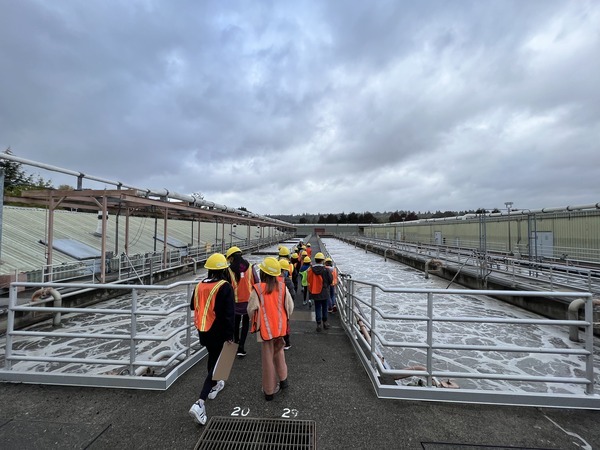
Community members exploring aeration tanks during the treatment plant tour.
In 2024, our Education and Engagement Unit reached over 12,000 people through 468 programs! We host tours at Brightwater Center in Woodinville, South Treatment Plant in Renton, and Georgetown Wet Weather Station. We most recently added public tours of West Point as well! The next available West Point tour is Saturday, Aug. 16 from 1 p.m. to 3 p.m.
Our tours help show how the wastewater treatment process protects our health and the environment. Our free education programs make it easy for schools and community groups to visit and our Wheels to Water provides free bus transportation to schools and community groups.
|