|
Partner Updates
Flood Control District Awards $12.2 Million in 2025 CWM Grants
The King County Flood Control District (KCFCD) is proud to announce the successful allocation of over $12.2 million in grant funding through its 2025 Cooperative Watershed Management (CWM) Grant Program. This essential investment will support dozens of habitat restoration, salmon recovery, and water quality improvement projects across the region’s critical watersheds.
Now in its 13th year, the CWM Grant Program remains a vital tool for advancing locally led, scientifically grounded watershed restoration efforts. In 2025, the program received 99 project applications totaling more than $21.5 million, far exceeding available funds and demonstrating both the need and enthusiasm for environmental restoration work throughout King County. Visit the website to learn more.
City of Tukwila and King County Flood District Partner to Preserve Critical Duwamish River Property
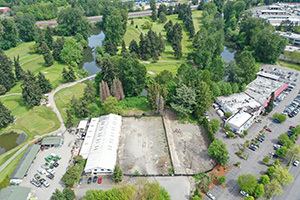
The City of Tukwila and the King County Flood Control District today announced the successful transfer of the former George Long Property, located at 14800 Interurban Ave South in Tukwila, WA, for $4.5 million. The acquisition preserves over three acres of critical shoreline along the Duwamish River, opening the door for potential future uses including flood risk reduction, habitat restoration, and public access to the river.
"This acquisition marks an important step in safeguarding the safety and health of the Duwamish River and the surrounding community," said King County Flood Control District Chair Reagan Dunn. "By securing this property, we’re not only preserving critical shoreline habitat—we’re also creating the opportunity to thoughtfully consider its best future use as part of our comprehensive planning for the Lower Green River Corridor.”
The Lower Green River Corridor Flood Hazard Management Plan is a comprehensive, multi-year effort led by the King County Flood Control District to reduce flood risks while also enhancing fish habitat, improving public safety, and supporting local communities. The plan is being developed in partnership with Tribes, local and county governments, businesses, and area residents to ensure an inclusive, science-based approach that balances flood protection with ecological restoration and other multi-benefits. Visit the King County Flood Control webpage to learn more or to get involved.
Abundance of Pink Salmon May be Harming Orcas
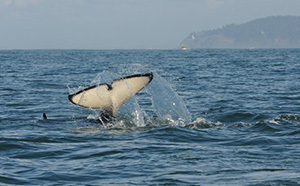
Pink salmon now comprise nearly 80% of all adult salmon in the North Pacific. This record abundance is coming at a cost to other salmon species such as threatened Chinook, which compete with pinks for spawning territory. A new study shows that the ecological toll may extend all the way to endangered southern resident killer whales.
Read the full article in Salish Sea Currents magazine.
Port of Seattle’s Elliott Bay Hydrophones Launching in July!
The Port of Seattle will launch an underwater noise assessment program in July. Acting on its commitment to better understand the underwater soundscape and reduce its negative effects on marine life, the Port has partnered with underwater acoustics specialists to deploy two hydrophones in Elliott Bay. Over two years, the team will collect, analyze, and report on continuously recorded acoustic data to establish a multi-year baseline. They will also assess the impact of maritime activities on the underwater soundscape and use the baseline data to set actionable noise reduction targets. Read their blog to learn more!
SHADOW Lake Nature Preserve is Providing Critical Filtration to the Greater Seattle Area
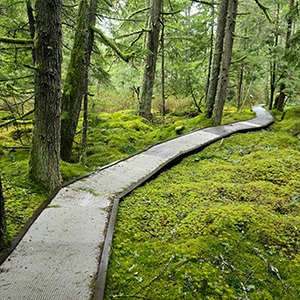
SHADOW Lake Nature Preserve is home to a 10,000-year-old peat bog that provides critical filtration ecosystem services to the greater Seattle area and the Salish Sea. While standard garden soil can only filter a quarter of its weight in water, peat can absorb twenty times its weight in water, making it especially well-suited for filtering out water pollution. Water from the bog drains into a tributary of Jenkins Creek, which then flows into Soos Creek, the Green River, and then to the Salish Sea, providing clean water to the Green-Duwamish River Watershed and creating healthy salmon habitat.
Septic System Maintenance Rebate Programs
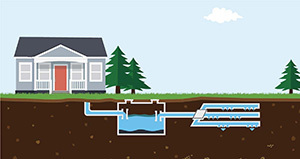
Do you own a septic system and live in King County? King County’s septic system rebate program is offering up to $500 for income-eligible residents to have their septic system inspected, pumped, or have riser(s) installed. The rebate is available throughout all of King County (not just unincorporated areas), however there is an income eligibility requirement for properties outside of Vashon-Maury Island and the Poverty Bay Shellfish Protection District in South King County. Businesses are eligible if they are a small business (the simple definition is in the application).
The rebate program website has an eligibility map where you can add an address to and find out what rebates are available for your property.
Grant Announcements
WaterWorks Grant Program to Open Two New Grant Cycles
King County Wastewater Treatment Division’s WaterWorks Grant Program will open two new grant cycles for applications in July and August 2025. WaterWorks funds projects that help improve water quality and build healthy communities in the region. Nonprofits, schools, tribes, and agencies are eligible to apply, and partnerships are encouraged. Types of projects eligible include raingardens and other green stormwater infrastructure, restoration, education and community engagement on water quality issues, monitoring, research, and pollution prevention. Funded projects can begin in 2026. Visit the webpage for details and to get added to the email list or contact water.grants@kingcounty.gov with additional questions.
Water Quality Combined Fund applications will open on July 22
The Water Quality Combined program offers multiple state and federal funding sources through a single application. Each year, applicants submit their application through Ecology’s Administration of Grants and Loans (EAGL) system. State fiscal year (SFY) 2027 funding applications will open on July 22, 2025, and close on Sept. 3, 2025. Final funding offers will be made July 2026. To learn more, visit the webpage or contact Karen Izumoto.
Applicant training workshop series will be July 22-26, 2025.
|