|
|
Dear Child Care Partners,
This month’s email from the Public Health – Seattle & King County (PHSKC) Child Care Health Program (CCHP) includes the following topics:
Health & Safety Information for Child Care Providers
What is the CCHP Reading?
Continuing Education & Financial Opportunities
|
|
Health & Safety Information for Child Care Providers |
|
Immunization Tracking Made Easier - But Sign Up by August 15
The Washington Immunization Information System (WA IIS) School and Child Care Immunization Module allows child care and early learning programs to:
- access a roster showing each child's immunization status
- run an “at risk report” to see which children are not up-to-date on their immunizations (without having to go through paper records), which could come in handy if there is a disease outbreak in your program
- print parent letters for children missing immunizations
Providers who are using this system do not need to fill out the annual immunization report for DOH, which is another benefit and time saver.
If you’ve been putting off signing up for access, now is the time! DOH will only be accepting new Information Sharing Agreements (ISAs) from schools and child cares through August 15. Due to a decrease in staffing, from August 16 through the end of December they will be pausing onboarding new child cares.
During the pause, the School and Child Care Module team will focus on supporting existing users with the start of the new school year and annual immunization reporting to DOH. They anticipate reopening onboarding of new users in January 2026. Any ISAs submitted after August 15 will be processed in the order they are received starting in January.
You can find the ISAs on www.doh.wa.gov/SchoolModule. Please also see the CCHP’s step-by-step guide to help you with getting access to the Module.
Two NEW Videos on Cleaning and Bleach on our Website
|
|
|
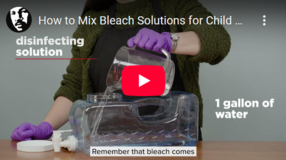
The CCHP has created two new videos to share with you.
-
How to Mix Bleach Solutions for Child Cares and Early Learning Programs shows two methods for mixing/making sanitizing and disinfecting bleach solutions: one for larger programs (using a gallon-sized mixing container) and another for smaller programs (using a quart-sized bottle).
-
3-Step Method for Cleaning covers the proper technique to clean, rinse, and then either sanitize or disinfect using the 3-Step Method, as well as the rationale and role of each step in preventing the spread of germs.
These short (4-6 minute) videos discuss the safety considerations to follow and reference other cleaning and bleach resources (many available in multiple languages) on our Cleaning, Sanitizing, and Disinfecting webpage.
|
|
What is the CCHP Reading? |
|
Lice – What to Know to Reduce Stigma and Avoid Unnecessary Exclusion of Children
From time to time, the CCHP shares articles that we find interesting. This month we are discussing the American Academy of Pediatrics 2022 Clinical Report on Head Lice.
Even though head lice do not pose a health threat, there is still significant stigma associated with them. Children are often teased, labeled, isolated, or excluded from school, activities, and social events, which can cause stress and unnecessary harm to the child. Below are some facts and information about head lice to help avoid misinformation, reduce stigma, and, ultimately, eliminate unnecessary exclusion from child care and early learning programs.
Fact #1: Head lice are NOT a sign of poor hygiene, nor are they a health hazard or disease. The most common symptom of head lice, and the only health issue they cause, is itching.
Fact #2: By the time head lice are found on a child’s head (commonly when they are scratching their head), they likely already have been there for 4 to 6 weeks. This is how long it takes for the allergic reaction from the bites on the scalp to cause itching.
|
|
|
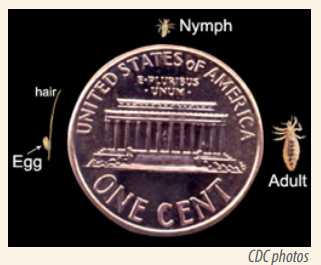
Fact #3: A treatment is considered successful if it kills live, adult lice. No treatment kills 100% of the nits (lice eggs). Remaining nits can be manually removed, but they are less concerning because:
- Nits bond tightly to the hair shaft and are very unlikely to transfer to other people.
- You cannot “catch” nits. Only the adult lice can crawl from person to person.
- Nits found more than ¼ inch from the scalp are almost always dead because they are too far from the heat of the scalp they need to hatch and survive.
|
|
 |
|
|
|
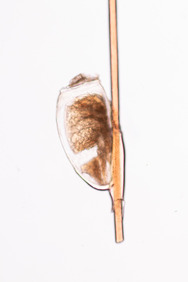
Fact #4: According to studies, policies that exclude children from early care and education programs do not actually reduce the spread of head lice. The Centers for Disease Control (CDC) and the American Academy of Pediatrics (AAP) currently recommend abandoning no-nit policies, especially because nits are very commonly misdiagnosed during head checks conducted by nonmedical professionals. (Dandruff, hair products, empty shells [i.e., casings of dead lice], and other debris can easily be mistaken for nits.)
Steps programs can take to prevent head lice from spreading:
-
The main way lice spread is by crawling directly from one person’s head to another (they cannot jump or fly), so any efforts you can make to prevent children’s heads from touching will be the best prevention. This includes separating children during naptime and placing nap mats toe-head and head-toe to keep children’s heads as far apart as possible while they are sleeping.
- It’s possible, but less likely, for lice to fall off the hair or crawl onto clothing or furniture, then crawl onto another person’s head. Lice die within about 1 day if they aren’t near the scalp where they can feed, so these steps are less important, but may be helpful to prevent the spread:
- Preventing children from sharing clothing, hats, helmets, dress-up clothing, and bedding/sleeping cots or mattresses
- Washing items that touched the heads of children with head lice with hot water and drying in a dryer on the hottest setting
- Vacuuming floors, carpets, and furniture
Families play a vital role in preventing and controlling the spread at home. Encourage families to:
-
Check everyone at home and treat anyone with head lice. If someone else in the home has head lice, lice from their head could crawl to the head of the child who received a treatment. This would lead to reinfestation, which means the child gets head lice again. Share this handout with families: How to Examine for Head Lice.
|
|
-
Follow treatment instructions closely. There are a lot of products available to treat lice, and each has its own instructions. It’s important for families to pay attention to how long to leave a product on the hair, how it should be washed out, and instructions for re-treatment, if needed.
-
Take steps to stop the spread at home. Share the CCHP Head Lice Notification Letter with families whose children have head lice so they have instructions.
-
Talk with their health care provider about treatment options, especially if the first at-home treatment was unsuccessful. Healthcare providers may recommend different treatments depending on what’s been tried before, the child’s age, etc.
Unnecessary days out of child care and early learning programs cause a burden to the children, families, and communities and far outweigh the risks associated with head lice. The CDC and AAP recommend children with head lice return after they received a treatment.
Consider adopting our policy on head lice, which aligns with CDC and AAP best-practice recommendations, and reads:
Lice: Children can remain in care until the end of the day head lice are found. Children may return after they have received their first treatment. Parents should consult with a child’s healthcare provider for the best treatment plan for the child. The life cycle of a louse is about 25 to 30 days, so sometimes treatments need to be repeated 7 to 12 days after the first treatment to kill newly hatching lice.
|
|
Continuing Education & Financial Opportunities |
|
Haring Center Open Virtual Hour on Tuesday, June 17
The University of Washington Haring Centerfor Inclusive Education is hosting an open virtual office hour on Tuesday, June 17, from 12:00 - 1:00 PM. Do you have questions about the building blocks framework, social-emotional learning, or navigating challenging behaviors from The Haring Center’s trainings with DCYF? Even if you haven’t taken any of their trainings and you just want a chance to chat with experts and get your questions answered, the Haring Center invites you to this open space to ask questions about supporting children with complex needs in early learning environments.
Join the conversation online via Zoom: https://tinyurl.com/HCOfficeHour.
What: A space to ask questions and receive support
Facilitator: Cassie Borges, M.Ed., BCBA, LBA
When: Tuesday, June 17, from 12:00 - 1:00 PM
Contact: caborges@uw.edu
|
|
|
|
|