|
Happy Holidays from WRIA 9! Wishing all of our partners a great year ahead.
Partner Updates
Lower Russell Levee Setback Project Receives 2024 King County Executive’s John D. Spellman Award
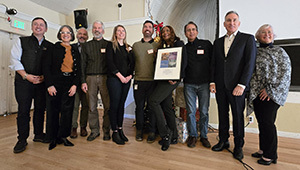
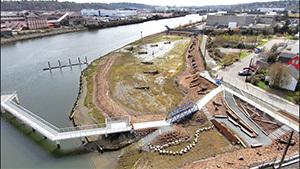
The King County Flood Control District is thrilled to announce that the Lower Russell Levee Setback Project received the 2024 King County Executive’s John D. Spellman Award for Exemplary Achievement in Historic Preservation in the Preservation Partnerships category. This prestigious recognition honors the extraordinary collaboration and innovative efforts undertaken to preserve the cultural and historic significance of the Green River while achieving critical flood risk reduction, restoring salmon-friendly ecological features, such as wetlands and other habitat, and enhancing recreational amenities. In October, the Project also received a national award, first place in the Innovative Water Project Award presented by NAFSMA.
Duwamish River People’s Park and Shoreline Habitat (DRPP) Selected as a Finalist for Antoine Rufenacht Prize
The Duwamish River People’s Park and Shoreline Habitat (DRPP) project was recently selected as a finalist for AIVP’s prestigious Antoine Rufenacht prize. AIVP is a non-profit organization that promotes cooperation and sustainable development between cities and ports worldwide. The selection jury cited many factors in its decision to pick the project as a finalist, including importance to Chinook salmon, community access features, public engagement, and environmental justice. The prize was ultimately awarded by former French Prime Minister Eduard Philipe to Tanger Med, Africa’s largest port. The Port of Seattle’s Jenn Stebbings participated in the awards ceremony, which was held in Lisbon, Portugal on August 29th.
Miller and Walker Creeks Salmon Surveys – Miller-Walker Basin Stewardship Program
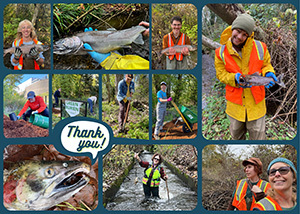
The 2024 salmon survey season is coming to a close! Volunteers surveyed Miller and Walker Creeks daily October through December, observing 245 live salmon and dissecting 95 carcasses to look for signs of pre-spawn mortality – an important issue for coho salmon in Miller and Walker Creeks, as well as other urban creeks in WRIA 9. Volunteers also supported a new research study on Miller Creek led by University of Washington, Washington State University, and the USGS Western Fisheries Research Center. This new research investigates the impacts of stormwater and tire chemicals on coho embryos and young coho.
Click here to sign up for Miller-Walker emails! You’ll receive updates on research results and Community Salmon Investigation (CSI) surveys, information about the Miller-Walker Basin Stewardship program, and notifications of volunteer opportunities.
Salmon Season at the Vashon Nature Center
Volunteers on creeks on Vashon have counted 100 salmon returning to creeks in the annual Salmonwatch program. Thanks to Vashon Nature Center volunteers for logging over 200 collective hours on the creeks so far! Read about one Salmonwatcher's experience.
Additionally, Vashon Nature Center just completed Salmon and Healthy Watersheds unit for all 5th graders on Vashon. This unit includes class visits and field trips to learn about salmon biology, habitat, and conservation.
A Season of Joy by Mid Sound Fisheries Enhancement Group
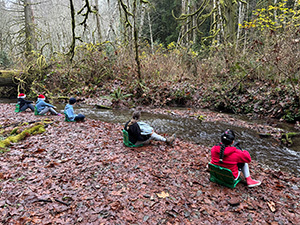
A Season of Joy, a video by Mid Sound Fisheries Enhancement Group, highlighting their Fall Field Trips to see returning coho and chum salmon in the Green River at Flaming Geyser State Park. We believe that these salmon have so much to teach us about our watershed, about knowing where home is, about respect and reciprocity, abundance and prosperity, and the connection that salmon bring to our communities. Allowing students to see spawning adults, the redds that hold hope for the next generation, and the complexity in habitat that surrounds these streams and the mighty Green River is critical to their journey with Salmon in Schools for the elementary students and to developing stewardship actions within the watershed for middle school and high school students.
Sediment Cleanup Work Has Begun in the Upper Reach of the Lower Duwamish Waterway Superfund Site
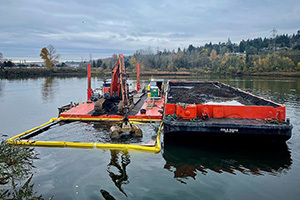
Led by the U.S. Environmental Protection Agency and implemented by the City of Seattle, King County, and Boeing, sediment cleanup work has begun in the upper reach of the Lower Duwamish Waterway Superfund Site. The in-water project will continue to improve water quality and reduce the risks sediment contamination presents to people and fish after more than a century of heavy industrial and commercial use. Cleanup is expected to take about 10 years. Once complete, the cleanup of contaminated sediment and pollution source control is anticipated to reduce the waterway’s PCB sediment contamination by over 90 percent.
For more information read the King County press release or The Seattle Times article.
Springbrook Creek Restoration
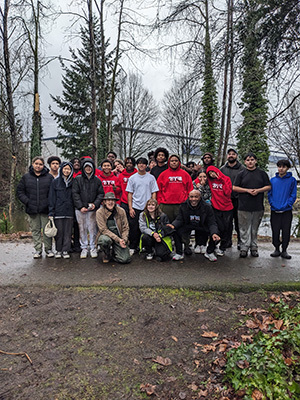
This year Mid Sound Fisheries Enhancement Group partnered with Puget Soundkeeper Alliance (PSKA) and Unleash the Brilliance (UTB) to do 5 restoration events along Springbrook Creek in Renton as part of PSKA’s Lost Urban Creeks Program. With youth from UTB and public volunteers 5,750 square feet of blackberry was cleared and 285 native trees and shrubs were planted along the bank of the creek to create shade, provide young salmon with insects to eat, and improve water quality for salmon of all life stages.
Open Recruitments
Mountains to Sound Greenway Trust is Hiring Seasonal Positions
Learn more about the organization, positions, and benefits at mtsgreenway.org/careers.
- Restoration Crew Members
- Restoration Crew Assistant Lead
- Restoration Crew Lead
- Volunteer Specialist
- Educators
- Trail Specialists (coming soon!)
Priority will be given to applications received by January 5th (Restoration Crew positions) or January 15th (Volunteer and Education positions).
Grant Announcements
King County Conservation Futures Land Acquisitions Grant
King County is seeking applications for 2026 King County Conservation Futures land acquisition grants. Applications are due on Monday, February 10, 2025. Conservation Futures grants can be used to acquire land for open spaces and parks used for passive recreation. These grants can help purchase land to be used as urban greenspaces, natural areas, restoration sites, forests, community gardens, farms, and trails – including stormwater parks or parks near affordable housing. Acquisitions serving historically underserved communities may qualify for a match waiver to cover the full purchase price. Acquisitions must be located within King County. Along with acquisition, we can fund initial site stabilization costs of demolition, signage, and fencing.
Reach out to, Ingrid Lundin with any questions.For more information, view the Conservation Futures application webpage.
The Climate Smart Communities Initiative (CSCI) is Now Accepting Grant Applications
This funding will help communities accelerate their climate resilience plans and projects. The grants offer funding (up to $100,000 per award) along with training and technical support. These funds can be used over 12 months for activities such as risk assessments, community engagement, project prioritization, and initial implementation. The initiative will accept grant applications into March of 2025 and expects to announce multiple awards in the summer of 2025. For more details on the grant program, visit the Climate Smart Communities webpage
NOAA Seeks Proposals for Transformational Habitat Restoration Projects
NOAA is announcing the availability of up to $100 million in funding for transformational projects that restore coastal habitat and strengthen community resilience. This is the third and final round of this funding opportunity under the Bipartisan Infrastructure Law.
NOAA will accept proposals with a federal funding request of between $750,000 and $10 million for the entire award. Typical funding is anticipated to range from $4 million to $6 million. Applications are due by April 16, 2025. For more information, view the Transformational Habitat Restoration and Coastal Resilience Grants funding opportunity.
Five Star and Urban Waters Restoration Grant Program 2025 Request for Proposals
Proposal Due Date: January 30, 2025 by 11:59 PM Eastern Time
The National Fish and Wildlife Foundation is soliciting proposals through the Five Star and Urban Waters Restoration Grant Program. This program seeks to develop community capacity to sustain local natural resources for future generations by providing modest financial assistance to diverse local partnerships focused on improving water quality, watersheds and the species and habitats they support. Approximately $2.5 million in grant funding is available. Learn more.
Climate Resiliency in Stormwater Management
The Stormwater SIL opened RFPs for Climate Resiliency in Stormwater Management, Regional Facilities and Stormwater Parks, and three Toxics in Fish priorities this week. Applications are due by 12/31. If you plan to apply, please also complete the voluntary Intent to Apply form to help the SIL gauge interest and support your application.
New Washington State Department of Ecology Climate Resilient Riparian Systems Grants
This funding opportunity will support riparian restoration programs that work with communities and landowners to improve the overall function of river and stream riparian systems.
Grant award limit: Up to $2.75 million, with a minimum award limit of $500,000. Applications are due January 15, 2025 at 5:00 pm
Read more about the Climate Resilient Riparian Systems Grants. If you have questions about this funding opportunity, please contact Libby Gier, Ecology’s Climate Resilient Riparian Systems Grant Lead.
EPA Thriving Communities Grant Program
Funding will be awarded to organizations for assessment, planning, and project development activities addressing the unequal impacts of environmental justice issues in local communities throughout the Pacific Northwest. There are three types of awards:
- Type 1 (Assessment): up to $150,000
- Type 2 (Planning): up to $250,000
- Type 3 (Development): up to $350,000
To learn more about these opportunities and application due dates visit the EPA Thriving Communities Grant Program website. If you have questions about this grant, please reach out to Olivia Zimmerman, Ecology’s Coastal Resilience Project Coordinator.
King County Septic System and Side Sewer Rebate Programs
Receive up to $500 to have your septic system inspected, pumped, or have riser(s) installed. The rebate is available throughout all King County (not just unincorporated areas), however, there is an income eligibility requirement for properties outside of Vashon-Maury Island and the Poverty Bay Shellfish Protection District. Businesses are eligible if they are a small business (the simple definition is in the application).
The side sewer repair rebate offers up to $5,000 to eligible homes in Lakehaven and Midway Sewer Districts. The eligible repair activities include but are not limited to disconnecting roof downspouts or sump pump from your side sewer; lining leaking side sewer pipes; or capping a side sewer cleanout. The repairs must be conducted by contractors authorized by the Lakehaven or Midway Sewer District. Apply for a rebate at www.kingcounty.gov/picrebates. You can use the eligibility map to add an address and find out what rebates are available for that property. Contact picrebates@kingcounty.gov for any questions.
Washington Department of Ecology Educate About Local Environmental Projects
The Washington Department of Ecology will begin accepting applications on Jan. 7, 2025, for a popular grant program that supports people and eligible nonprofits who are working to improve Washington’s waste management system. These grants help get their communities involved with local clean-ups. Applications for the 2025 grant cycle will be accepted through Feb. 4, 2025. If your nonprofit is concerned about toxics and the release of hazardous substances, the impact of climate change, reducing waste and contamination by encouraging reuse, recycling, composting, or supporting other solid waste priorities, our Public Participation Grant (PPG) program may be for you.
Eligible nonprofits and individuals affected by the release of hazardous substances are encouraged to apply. Other projects that could qualify for a grant through this program include plastics and food waste reduction, or public education on toxics and safer alternatives to common products. Visit the grant webpage for more information.
EPA Seeks Applications for 2025 President’s Environmental Student and Teacher Awards
EPA’s Office of Environmental Education is requesting applications for the 2025 President’s Environmental Youth Awards (PEYA) and Presidential Innovation Awards for Environmental Educators (PIAEE). Applications for both awards are due no later than Monday, January 15, 2025. Application and eligibility information is available on EPA’s PEYA page and EPA’s PIAEE page. Learn more about this year's competitions by reading the full press release.
Questions about the 2025 President’s Environmental Youth Awards (PEYA) can be directed to PEYA@epa.gov and questions about the Presidential Innovation Awards for Environmental Educators (PIAEE) can be directed to PIAEE@epa.gov.
Coastal Habitat Restoration and Resilience Grants for Tribes and Underserved Communities
$20 million in funding is available for projects that will advance the coastal habitat restoration and climate resilience priorities of tribes and underserved communities under the Bipartisan Infrastructure Law. Through this funding, NOAA will help support community-driven habitat restoration and build the capacity of tribes and underserved communities to more fully participate in restoration activities.
Proposals must be received by 11:59 p.m. Eastern time on May 12, 2025. View the webpage to learn more or register for upcoming webinars.
|